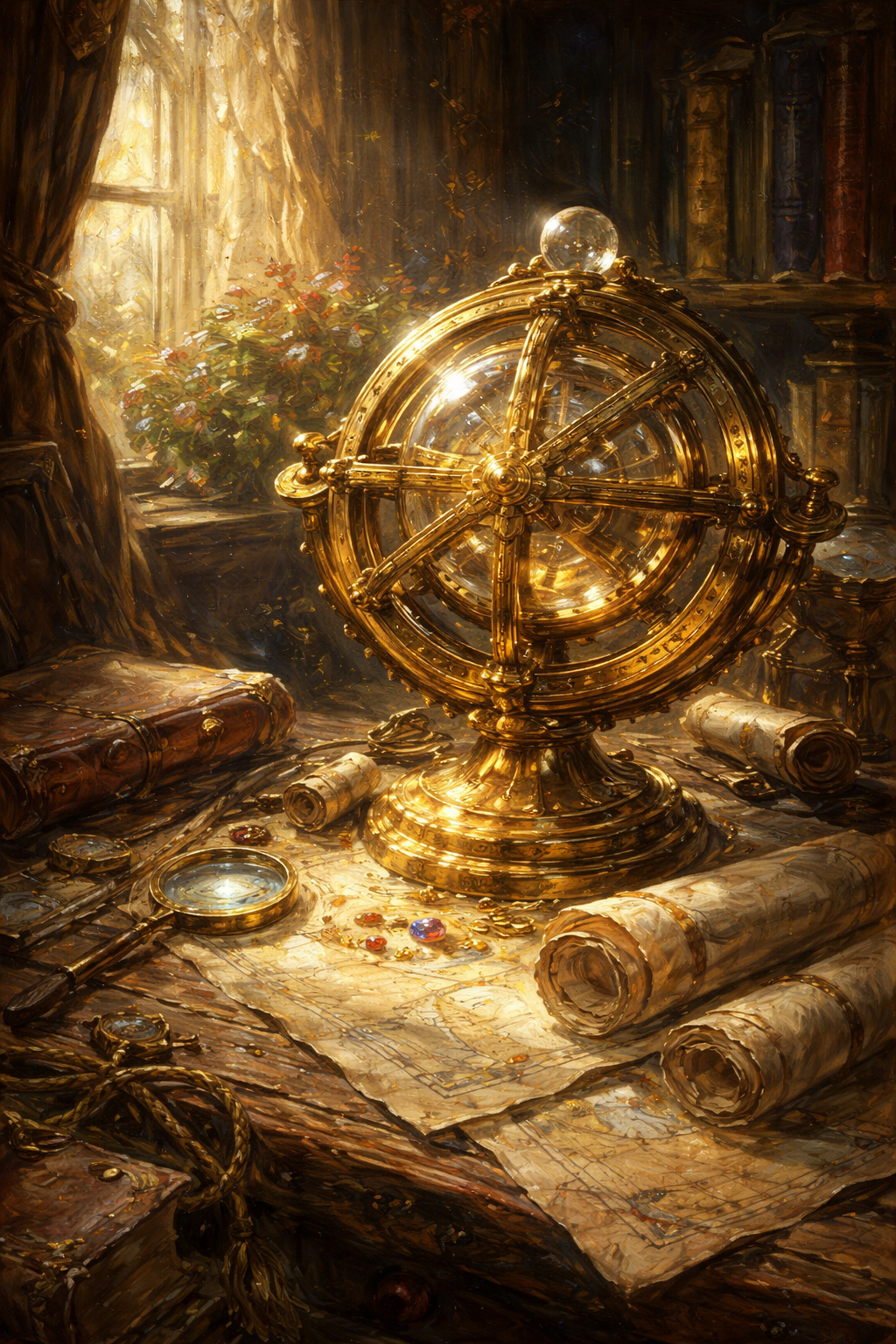
Wandering Through the Celestial Spheres
Critique
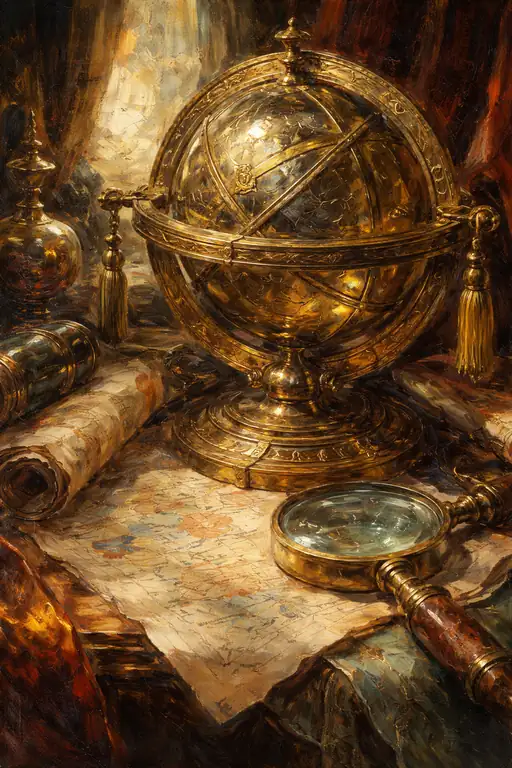
1. Introduction This vertical oil painting depicts a scholarly sanctuary, likely the study of an astronomer or a world explorer during the Age of Discovery. The composition is centered around a magnificent, ornate golden astronomical instrument resting on a cluttered wooden desk. Through a masterful use of chiaroscuro and a rich, warm palette, the work evokes a sense of profound intellectual curiosity and the relentless pursuit of knowledge that defined a pivotal era in human history. 2. Description The central focus is an intricate armillary sphere or celestial globe crafted from gleaming gold, which captures and reflects the intense sunlight streaming from a nearby window. Spread across the desk are various artifacts of exploration: detailed parchment maps, rolled scrolls, a brass magnifying glass, and a scattering of precious gemstones. To the left and in the background, thick leather-bound books and heavy curtains frame the scene, while the sunlight illuminates dust motes dancing in the air, adding to the atmospheric depth of the room. 3. Analysis The artist employs a sophisticated monochromatic scheme of ochre, gold, and deep umber, creating a harmonious and venerable atmosphere. A strong diagonal composition, established by the direction of the incoming light, leads the viewer's eye from the window down to the scrolls and maps in the foreground. The contrast between the hard, reflective surfaces of the scientific instruments and the soft, tactile textures of the aging paper and fabric is rendered with exceptional clarity. This interplay of materials enhances the realism and sensory richness of the workspace. 4. Interpretation and Evaluation This painting serves as a powerful tribute to the human spirit of inquiry. The celestial instrument acts as a bridge between the earthly study and the vast cosmos, symbolizing the bridge between known reality and the unexplored. The artist’s technical proficiency is evident in the meticulous rendering of the complex metallic gears and the delicate scripts on the maps. By imbuing the scene with such dramatic, almost sacred light, the work elevates the act of study to a spiritual endeavor, celebrating the beauty found in scientific rigor. 5. Conclusion What initially appears as a still life of historical objects becomes a compelling narrative about the desire to understand the universe. The fusion of rigorous detail and evocative atmosphere results in a composition that is both intellectually stimulating and visually captivating. This work not only honors the traditions of classical painting but also offers a timeless reflection on the value of exploration and discovery. It leaves the viewer with a lingering sense of wonder and a renewed appreciation for the quest for truth.
Same Subcategory
 Symphony of Spheres
Similar Artworks
 Whispers of the Old Cartographer
 Touching the Infinite
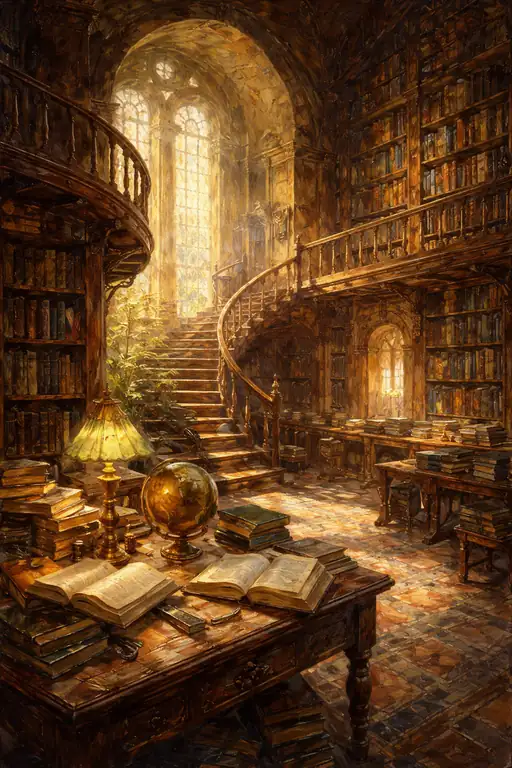 The Golden Spiral of Timeless Knowledge
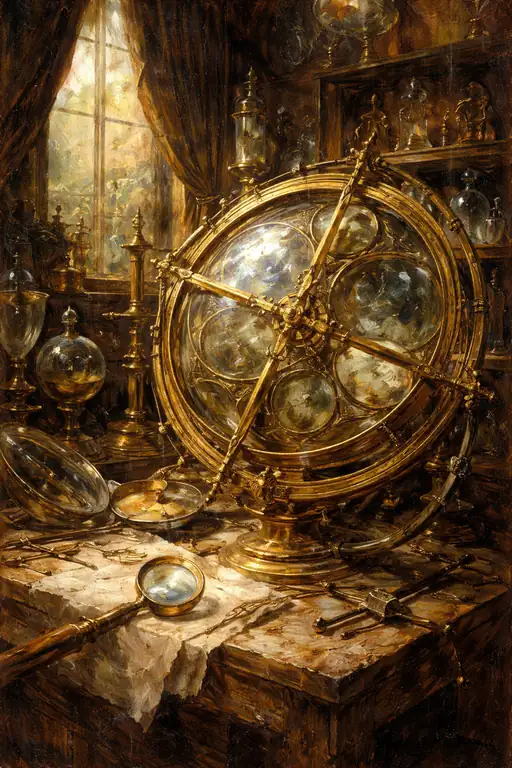 Gleaming Relics of the Astral Study
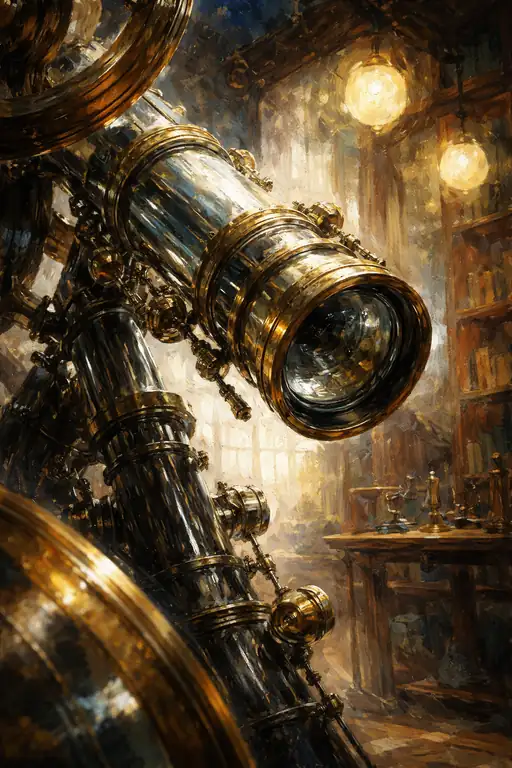 The Scholar's Cosmos
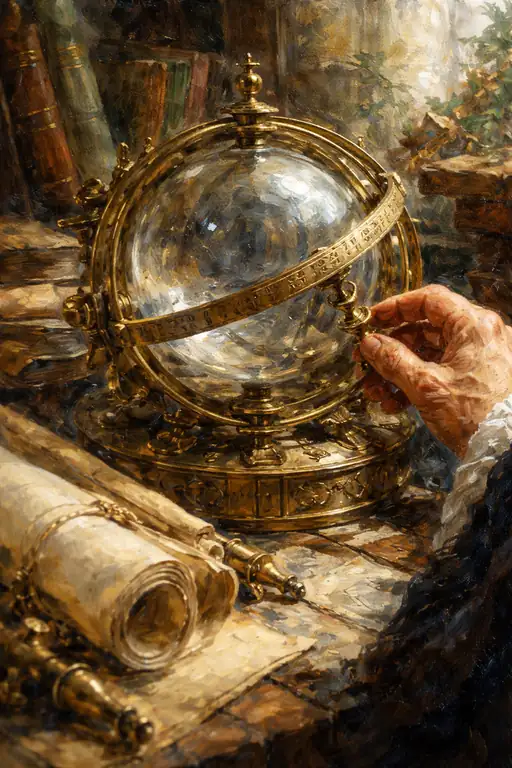 Touch of Time Upon the Stars
 The Golden Map
 Voyage Beyond the Scholar's Desk
 Where the Silent Ages Speak
 The Compass that Knows My Heart's Direction