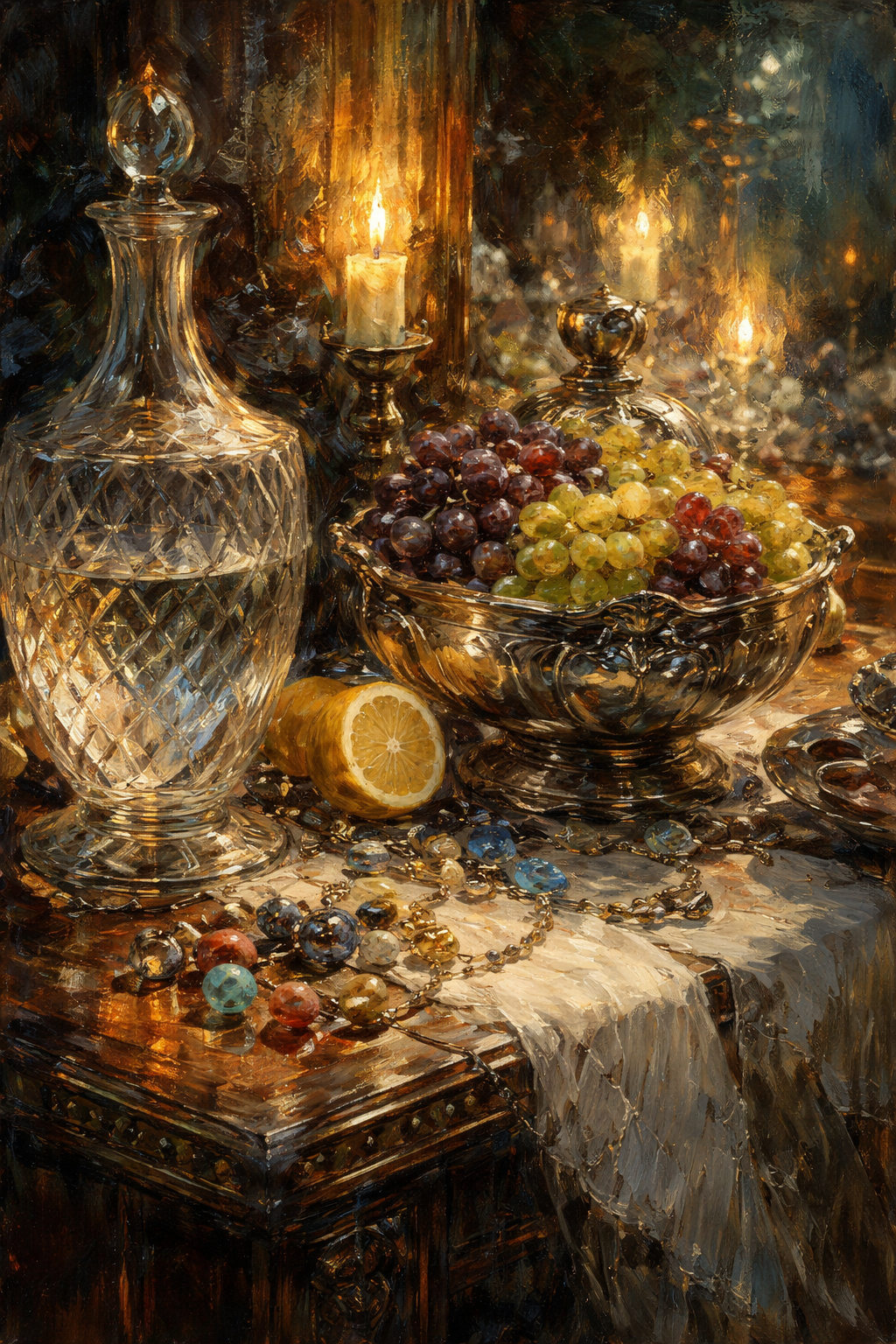
Whispers of Golden Light
Critique
1. Introduction The presented artwork is a luxurious still life that evokes the opulence of classical traditions, specifically reminiscent of 17th-century Dutch masterpieces. It features an array of exquisite objects, including a crystal decanter, a silver bowl of grapes, and scattered jewelry, all bathed in the warm glow of candlelight. The interplay between light and various textures creates an immersive atmosphere of refined beauty. The following critique will analyze the formal composition and the exceptional rendering of light and materiality. 2. Description On the left, a finely faceted crystal decanter stands as a centerpiece, its transparent body refracting light in complex patterns. In the center, a decorative silver bowl overflows with purple and green grapes, its metallic surface mirroring the surroundings. The foreground is adorned with a sliced lemon and a string of colorful beads, while background candles emit a golden radiance. Every surface, from the heavy wooden table to the delicate lace cloth, is depicted with striking clarity. 3. Analysis The composition is built upon a stable triangular structure, where the vertical decanter balances the horizontal spread of the fruit bowl. The color palette is dominated by warm gold tones derived from the candlelight, accented by the deep violets of the grapes and the bright lemon. Dramatic chiaroscuro is employed, using sharp highlights and deep shadows to enhance three-dimensionality. The artist skillfully varies the brushwork, combining sharp precision for foreground details with softer strokes for the atmospheric background. 4. Interpretation and Evaluation This painting explores the relationship between physical matter and the intangible quality of light. By selecting reflective materials like crystal and silver, the artist successfully visualizes the dynamic movement of light. The technical execution is superb, particularly in the ability to differentiate between diverse textures like cold metal and soft fruit. Furthermore, the work demonstrates a sophisticated reinterpretation of classical aesthetics, transforming decorative abundance into a coherent and harmonious visual order. 5. Conclusion Through the masterful manipulation of light and meticulous realism, the artist has created a definitive work of still life. While the initial impression is one of overwhelming luxury, a closer inspection reveals a profound commitment to observation. The initial attraction to the reflections evolves into an appreciation for the quiet presence of each object and the balanced beauty of the arrangement. Ultimately, this piece stands as a remarkable achievement that revives traditional aesthetic values through a contemporary lens.
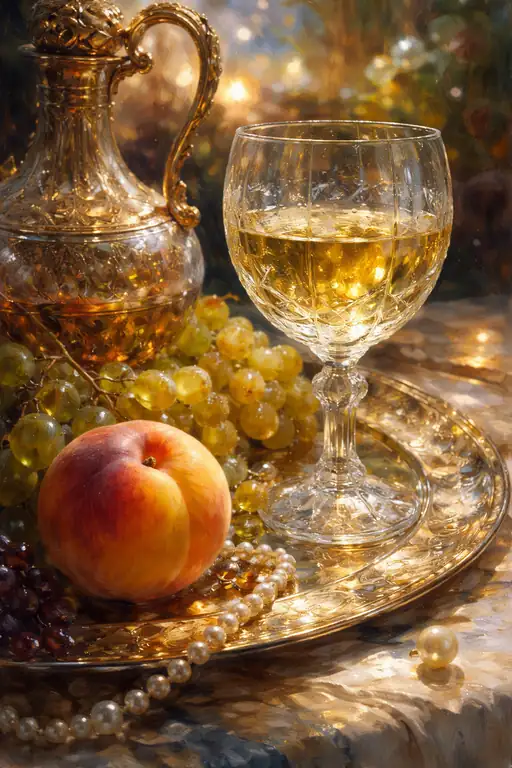 Whispers of Golden Abundance
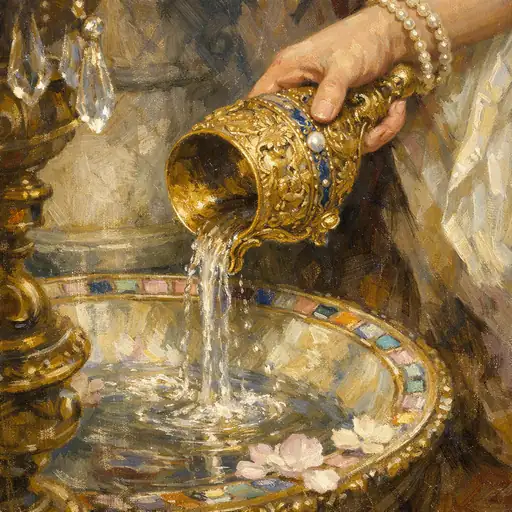 Ritual of the Golden Stream
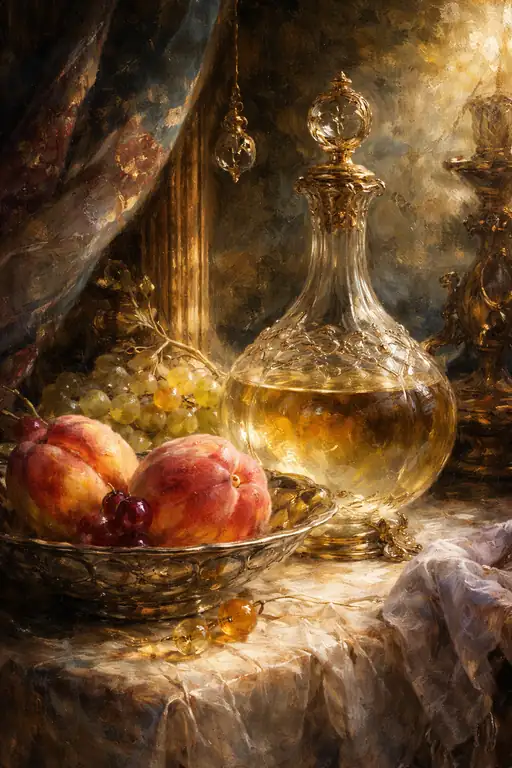 A Feast for Shadows
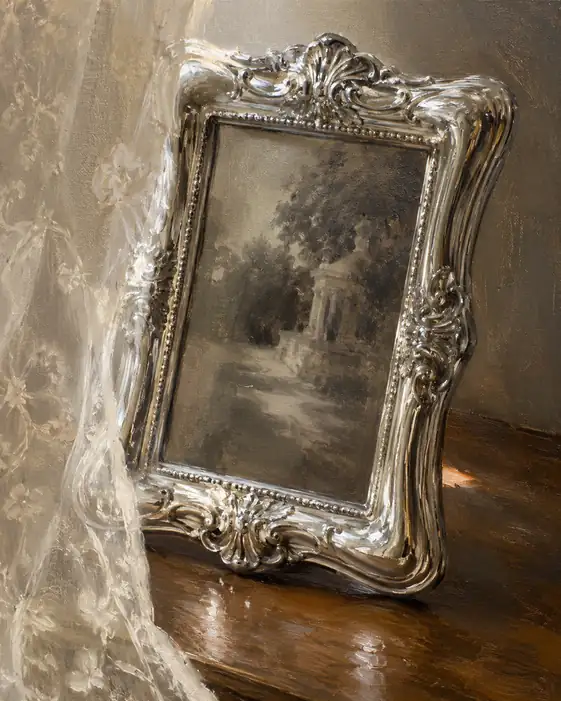 Eternal Reflections in Silver
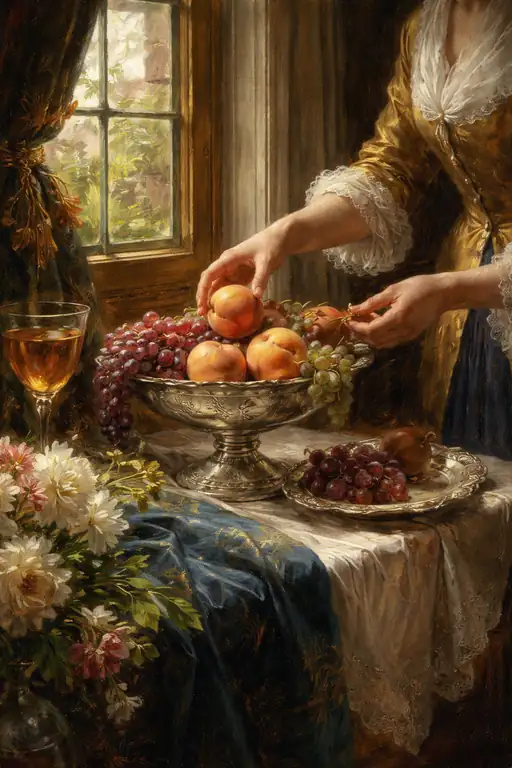 Golden Afternoon Preparations
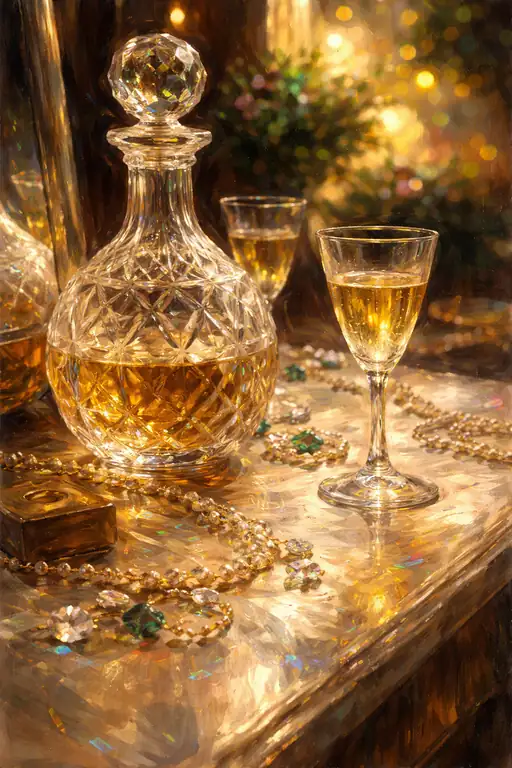 Tears of Amber and Crystal Light
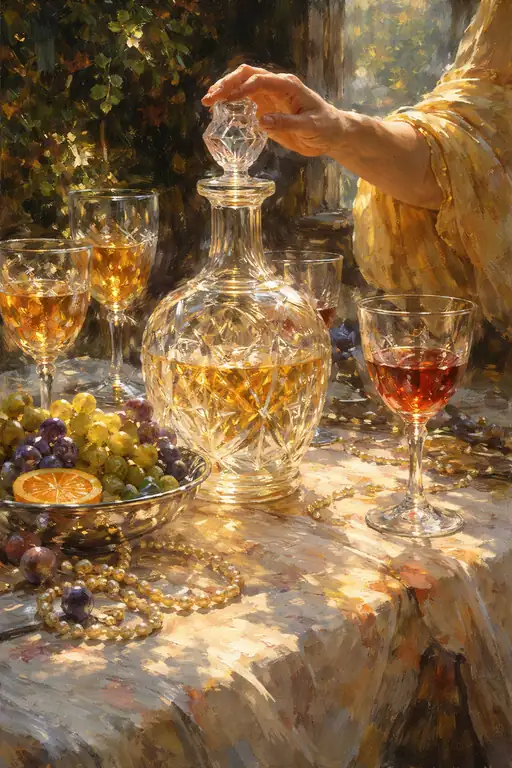 Amber Memories of a Festive Noon
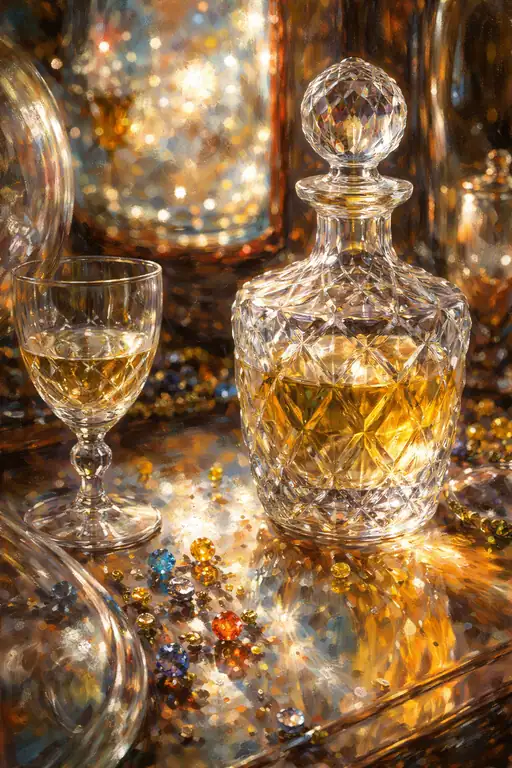 Tears of Amber and Light
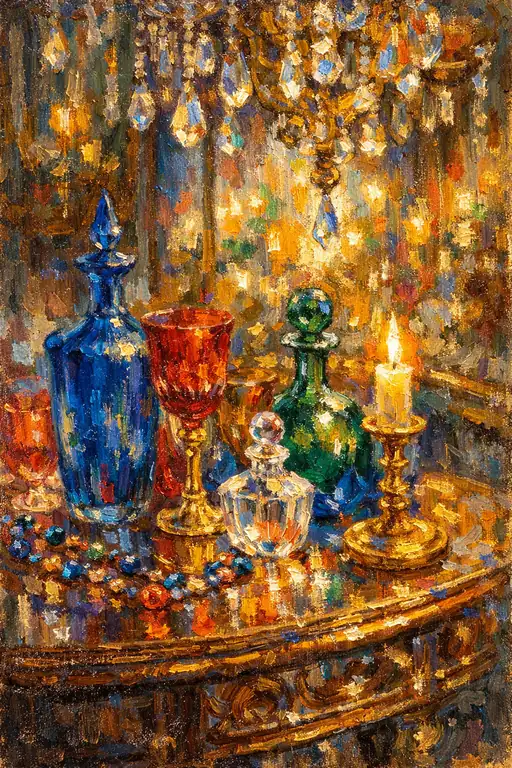 Memories of Sparkle
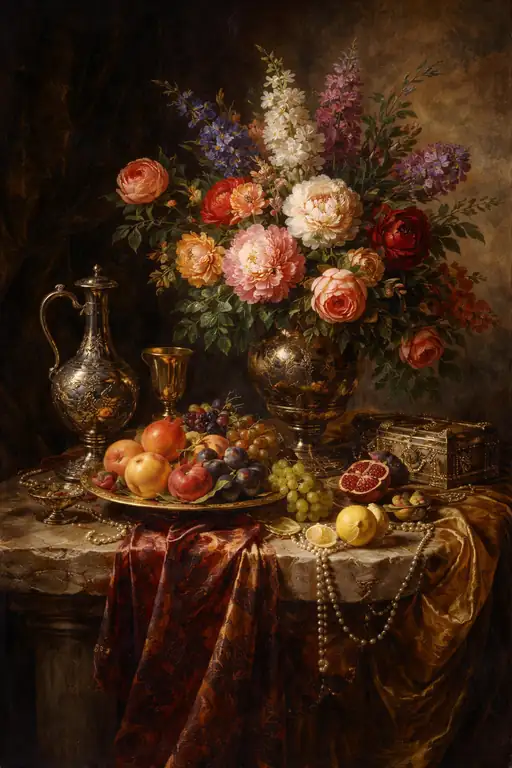 Flowers, Fruits, and Precious Objects
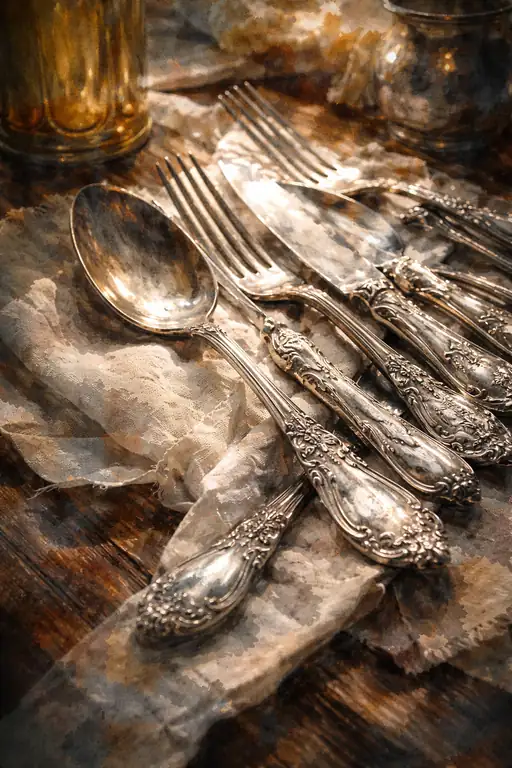 Silver Memories of Extravagant Feasts