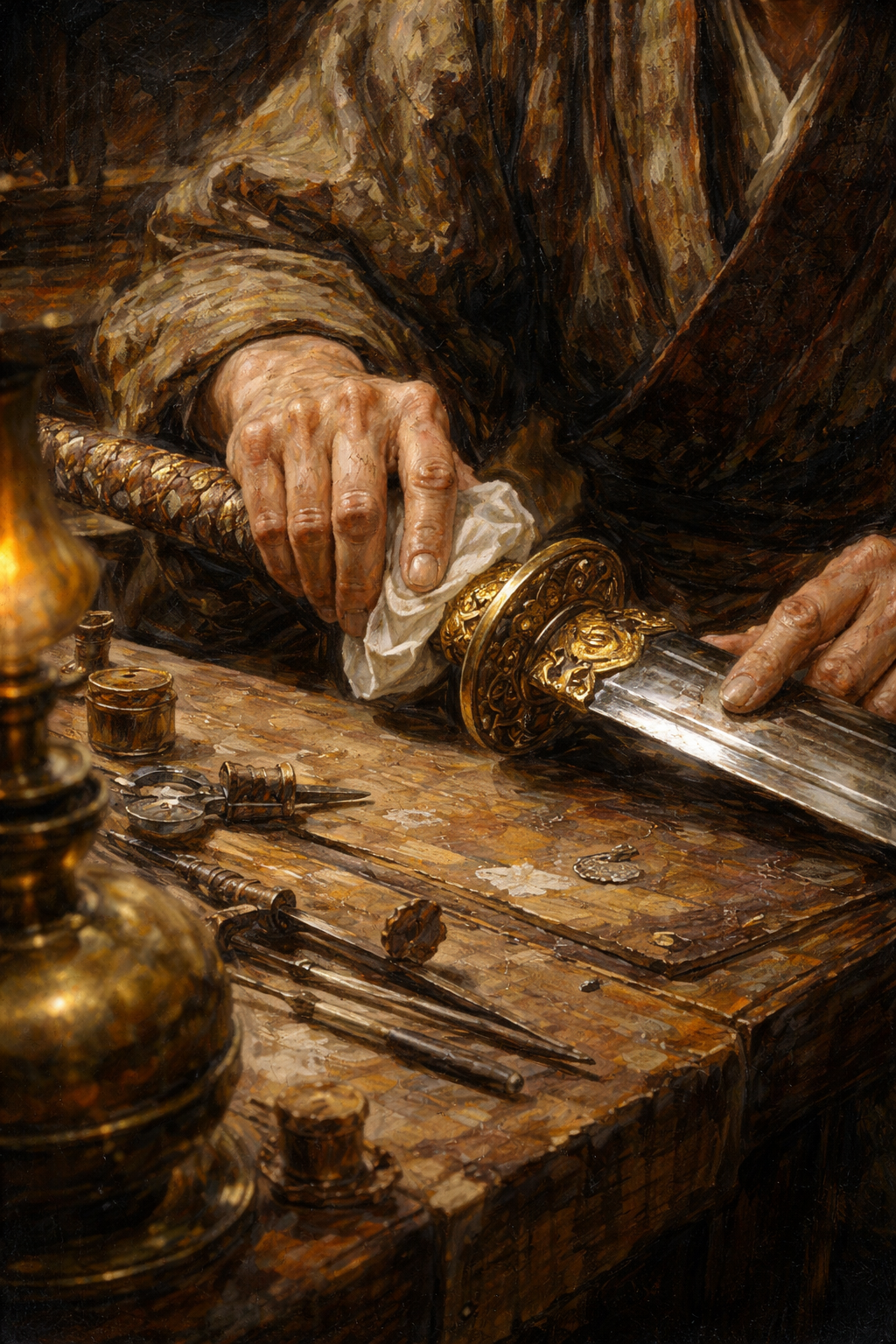
The Swordsmith's Soul Bathed in Warm Light
Critique
1. Introduction The painting depicts a compelling close-up of a craftsman's hands meticulously maintaining a Japanese sword, or katana. Set in a dimly lit workshop, the scene is illuminated by a warm, flickering light source, likely an oil lamp, positioned to the left. The focus is centered on the rugged, experienced hands of the artisan as they use a white cloth to wipe the polished blade near the ornate tsuba, or handguard. This composition captures a moment of intense concentration and reverence for a traditional craft. The overall atmosphere is one of historical weight and quiet dedication, emphasizing the intimate connection between the maker and the object. 2. Description Visually, the work is characterized by a rich, earthy color palette dominated by browns, golds, and deep shadows. The craftsman's hands are rendered with remarkable detail, showing the weathered texture of the skin and the strength in the fingers. The sword itself features a gleaming blade and a highly detailed, golden tsuba that reflects the ambient light. On the wooden workbench, various traditional tools and small containers are scattered, further defining the setting as a professional workspace. The brushwork is thick and expressive, particularly in the clothing of the artisan and the grain of the wood, adding a tactile quality to the image. 3. Analysis The artist employs a strong chiaroscuro effect, creating a dramatic contrast between the illuminated central action and the dark, receding background. This lighting choice effectively directs the viewer's attention to the precision of the craftsman's movements. The composition follows a high-angle perspective, looking down onto the workbench, which enhances the sense of being a witness to a private, focused activity. The use of impasto-like textures provides a sense of physical substance to both the human elements and the metal of the sword. The balance between the sharp lines of the blade and the organic forms of the hands creates a powerful visual tension. 4. Interpretation and Evaluation This piece can be interpreted as an homage to the enduring spirit of traditional craftsmanship and the discipline required to master it. The focus on the hands rather than the face of the artisan suggests that the skill and the process are the true subjects of the painting. Technically, the work is outstanding, particularly in its ability to convey different materials—the cold steel of the blade, the intricate metalwork of the tsuba, and the living texture of human skin—through varied brushwork. The artist successfully captures the solemnity of the task, elevating a routine act of maintenance into a significant cultural statement. 5. Conclusion In conclusion, the painting is a powerful and technically proficient exploration of tradition and craftsmanship. The careful use of light and texture brings a profound sense of realism and emotional depth to the scene. By focusing on the tactile relationship between the artisan and the sword, the artist invites the viewer to appreciate the hidden labor and dedication behind a masterwork. The transition from a simple workshop setting to a study of focused human energy is handled with great skill. Ultimately, the piece leaves a lasting impression of the timeless dignity inherent in the pursuit of perfection through manual skill.
Same Subcategory
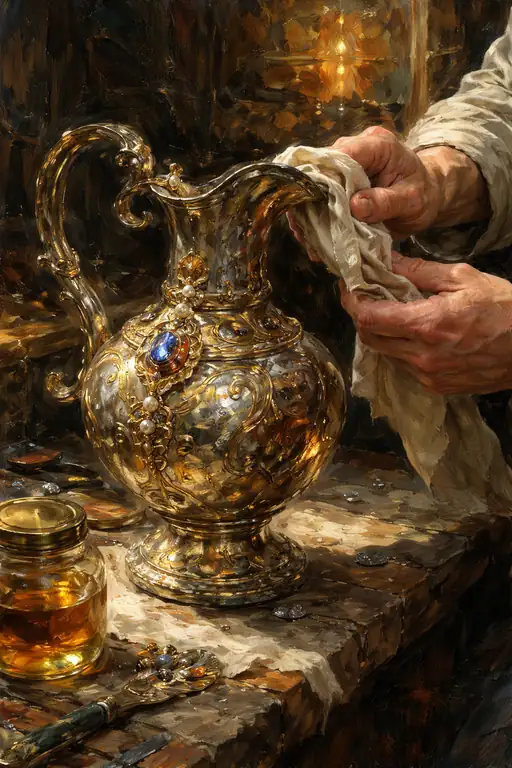 The Artisan's Devotion in Silver and Gold
 A Luthier's Passion Illuminated in the Workshop
Similar Artworks
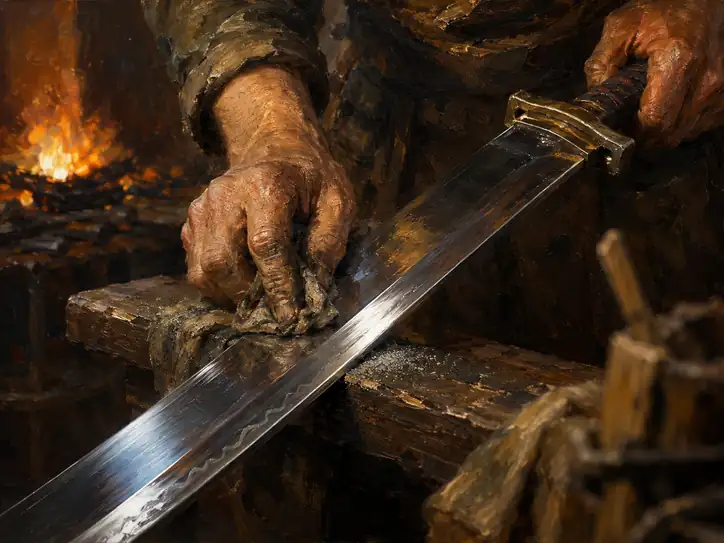 The Artisan's Silent Vow
 A Wish Learns to Spread Its Wings
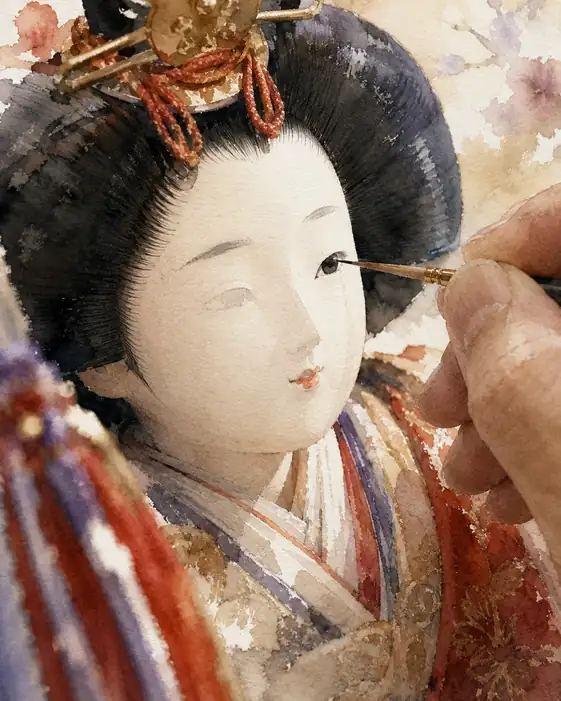 Breathing Soul into the Figure
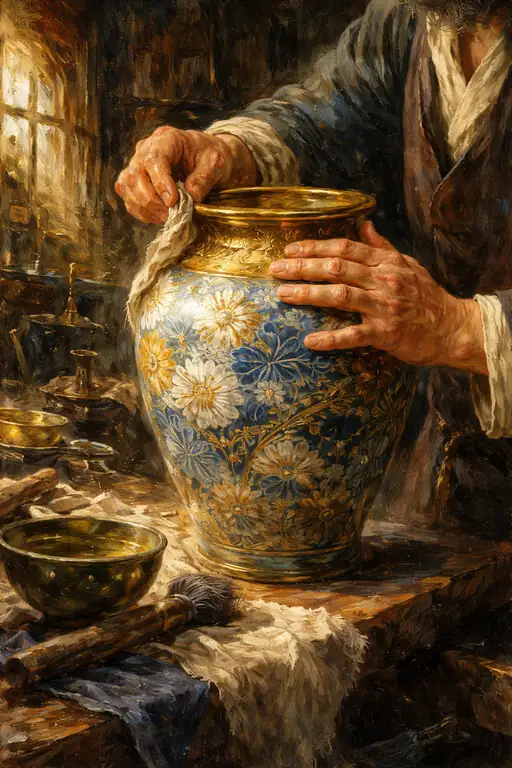 The Master's Touch: Awakening the Azure Bloom
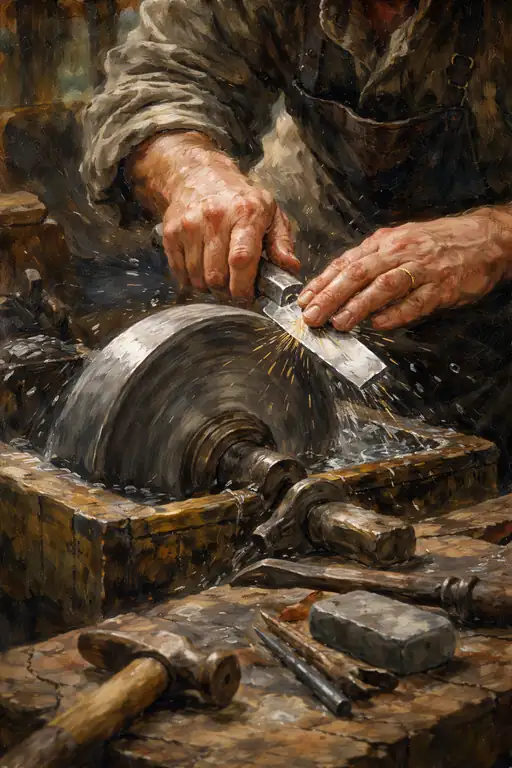 Sparks of the Iron Soul
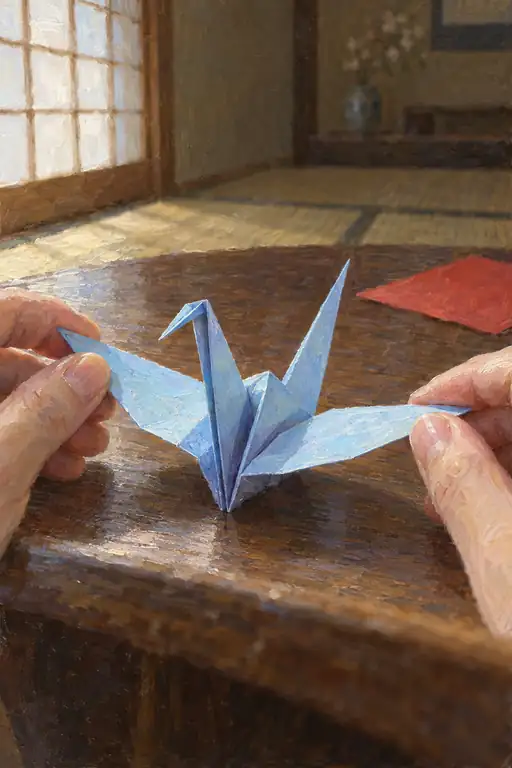 A Little Sky Between My Hands
 Crossweave of the Indigo Line
 The Heart of Chivalry: A Lifetime in Steel
 Reviving the Sole
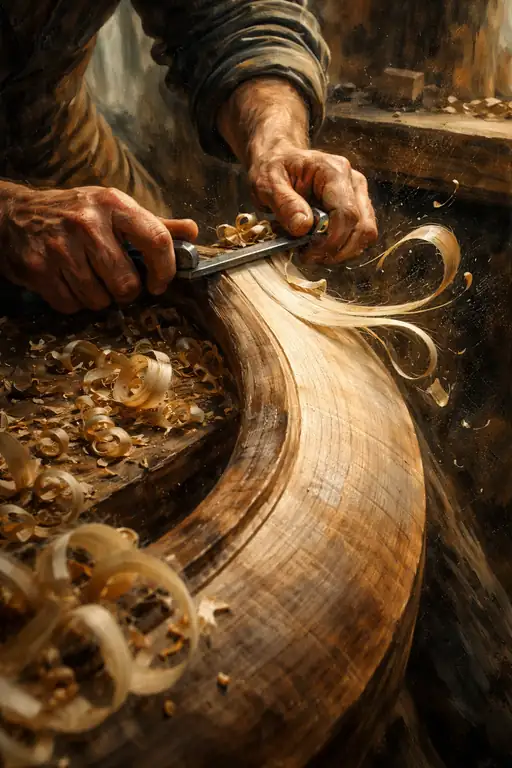 Whispers of the Wood