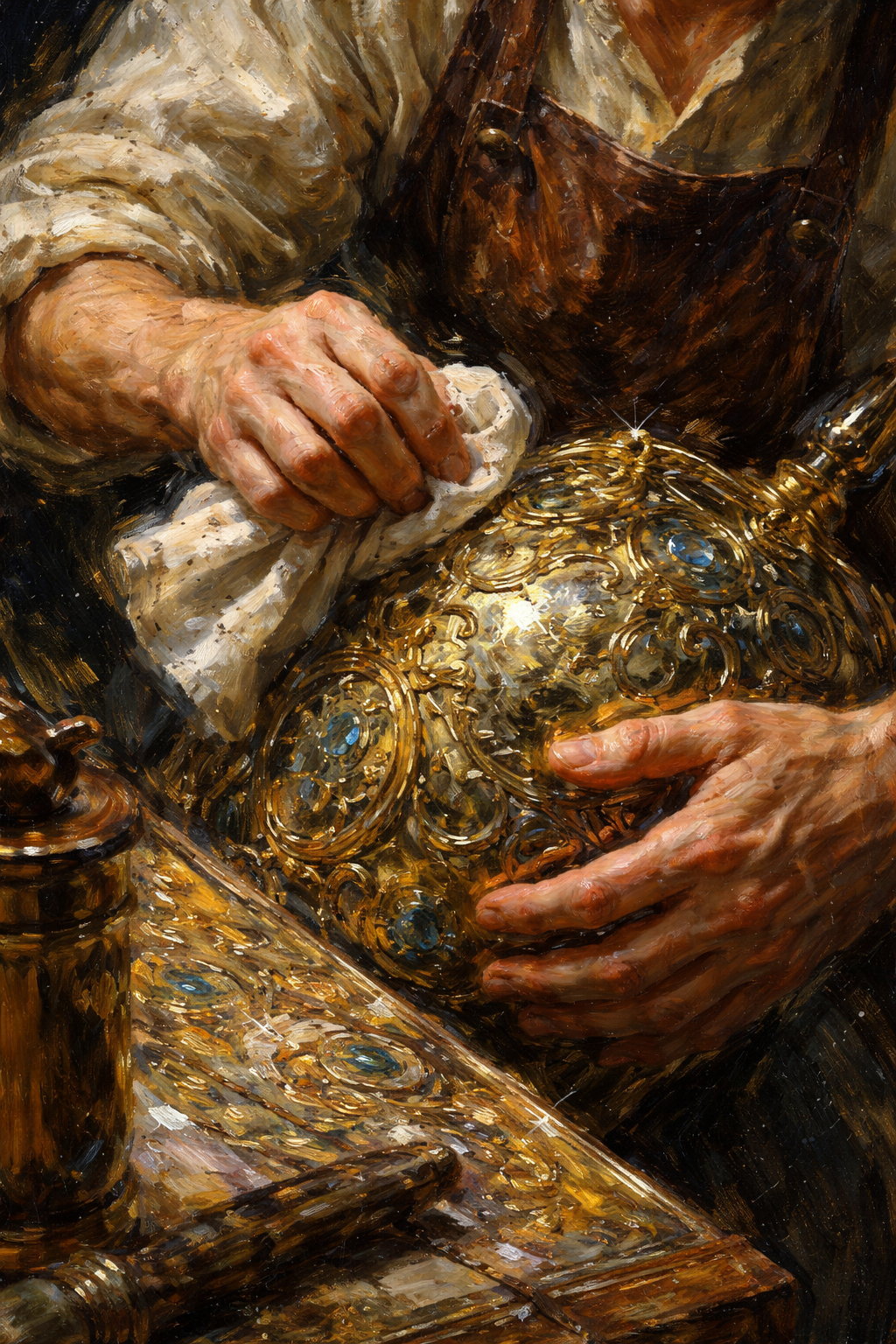
Devotion Reflected in a Golden Vessel
Critique
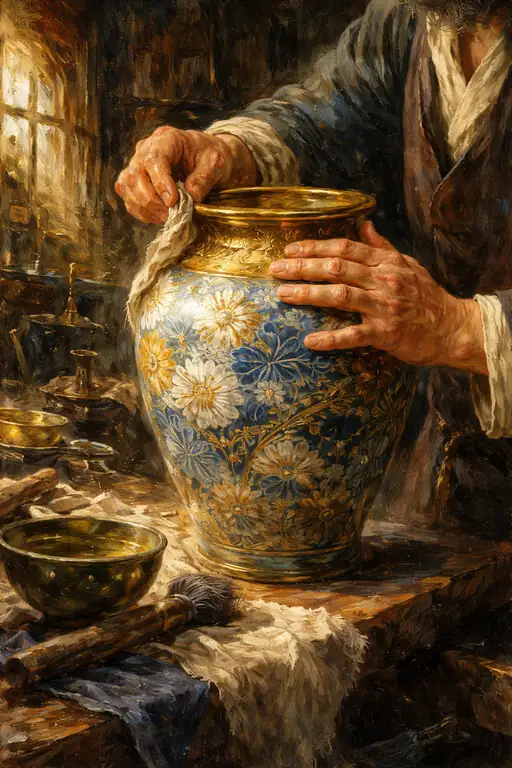
1. Introduction This oil painting presents a focused, intimate scene centered on the meticulous work of a craftsman. The composition captures a moment of maintenance or final polishing of a highly decorative golden vessel. Without identifying the specific historical period, the work emphasizes the timeless nature of artisanal dedication and the tactile relationship between the creator and the object. 2. Description The central focus is a large, ornate golden ewer encrusted with numerous blue gemstones and intricate filigree patterns. Two weathered, muscular hands are shown gripping the object; the left hand uses a white cloth to polish the surface while the right hand supports the base. The artisan wears a simple, light-colored shirt and a dark brown leather apron, suggesting a workshop environment. A wooden table with similar decorative elements is visible in the lower-left foreground, partially obscured by shadows. 3. Analysis The artist employs a dramatic chiaroscuro technique, with a strong light source coming from the upper left that highlights the reflective surfaces of the gold and the texture of the cloth. The brushwork is vigorous and visible, creating a sense of movement and physical energy in the hands. Color-wise, the warm yellows and deep browns of the gold and leather contrast sharply with the cool, brilliant blue of the embedded jewels. This contrast directs the viewer's eye across the curved surface of the vessel. 4. Interpretation and Evaluation The painting serves as an eloquent tribute to the mastery of craft and the dignity of labor. The emphasis on the hands, rather than the face of the artisan, shifts the narrative toward the act of creation and preservation itself. The technical execution is exceptional, particularly in the rendering of light on different textures, from the metallic sheen of the gold to the soft folds of the polishing cloth. The work demonstrates a sophisticated understanding of composition and light, making it a compelling study of focus. 5. Conclusion By isolating the hands and the object, the painting creates a powerful dialogue between the human element and the material world. The initial impression of a mere still life evolves into a deeper appreciation for the silent, disciplined effort required to maintain such beauty. Ultimately, the work succeeds in elevating a routine task into a moment of profound artistic significance through its masterful use of light and texture.
Same Subcategory
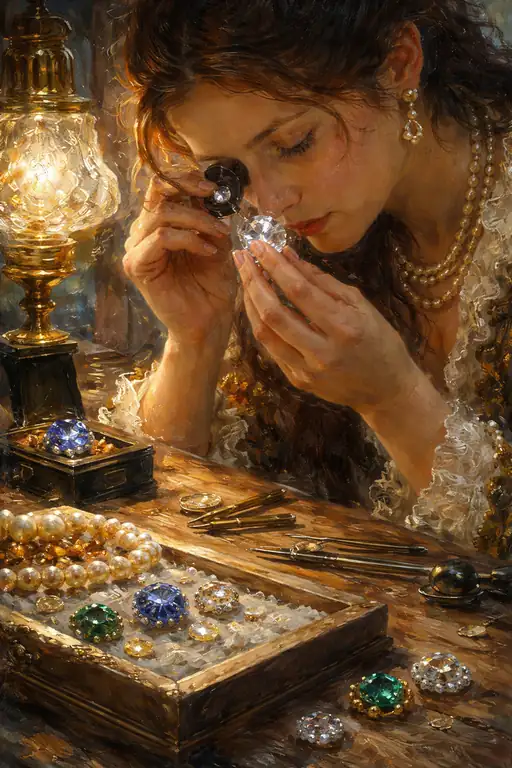 Fascination in Amber Light
Similar Artworks
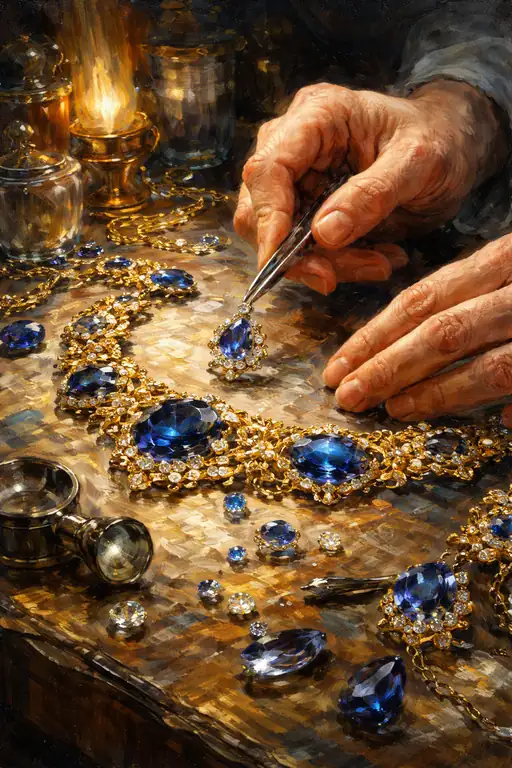 Weaving Starlight into Gold
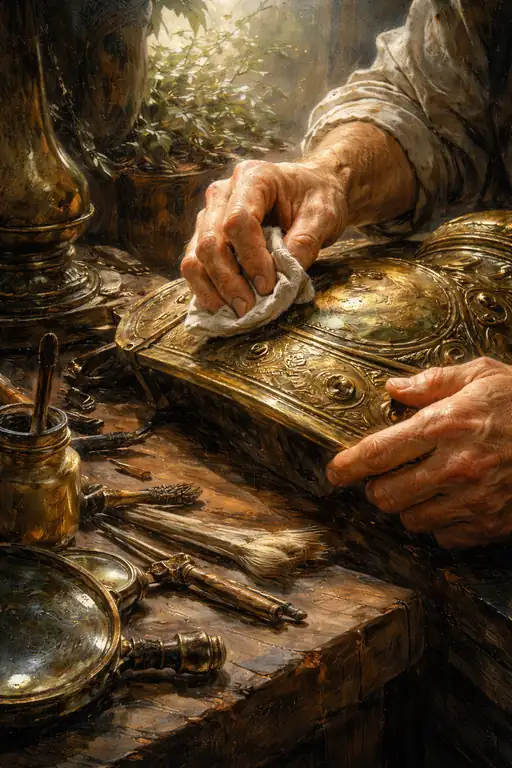 The Alchemist's Touch: Polishing the Soul of Gold
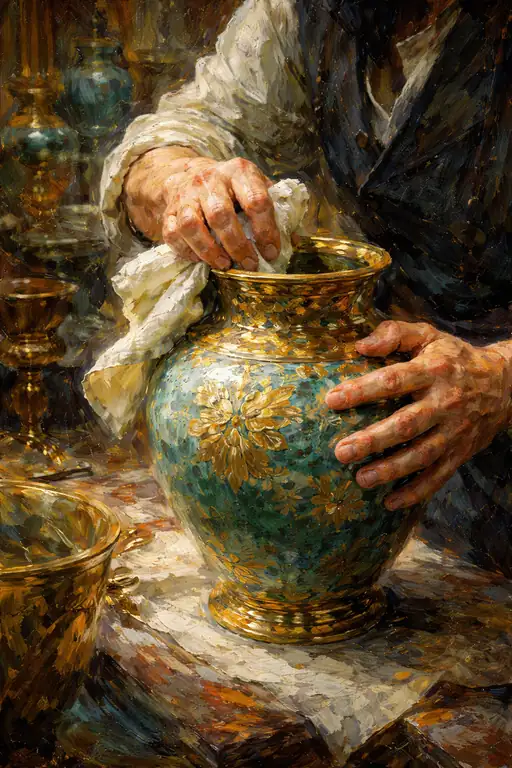 Polishing the Echoes of Time
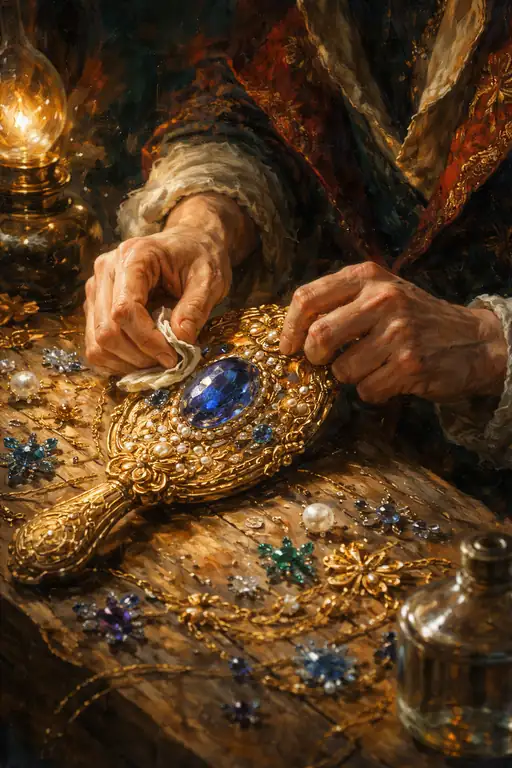 Echoes of Eternity in a Golden Reflection
 The Heart of the Blue Gem
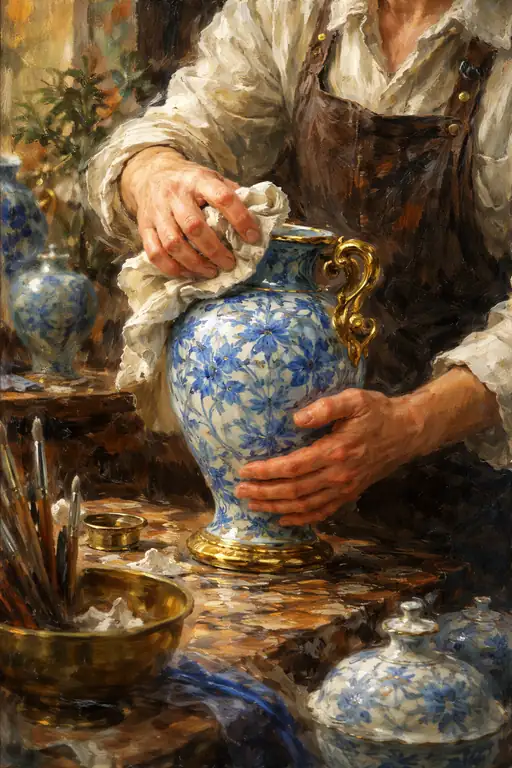 Gentle Hands of the Blue Heritage
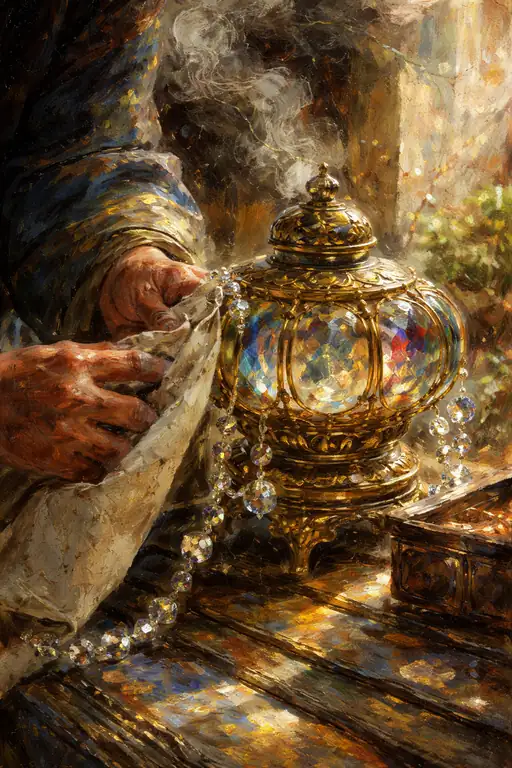 The Artisan's Prayer
 The Master's Touch: Awakening the Azure Bloom
 The Silver Pride of a Fallen Era
 Opulence in Stillness