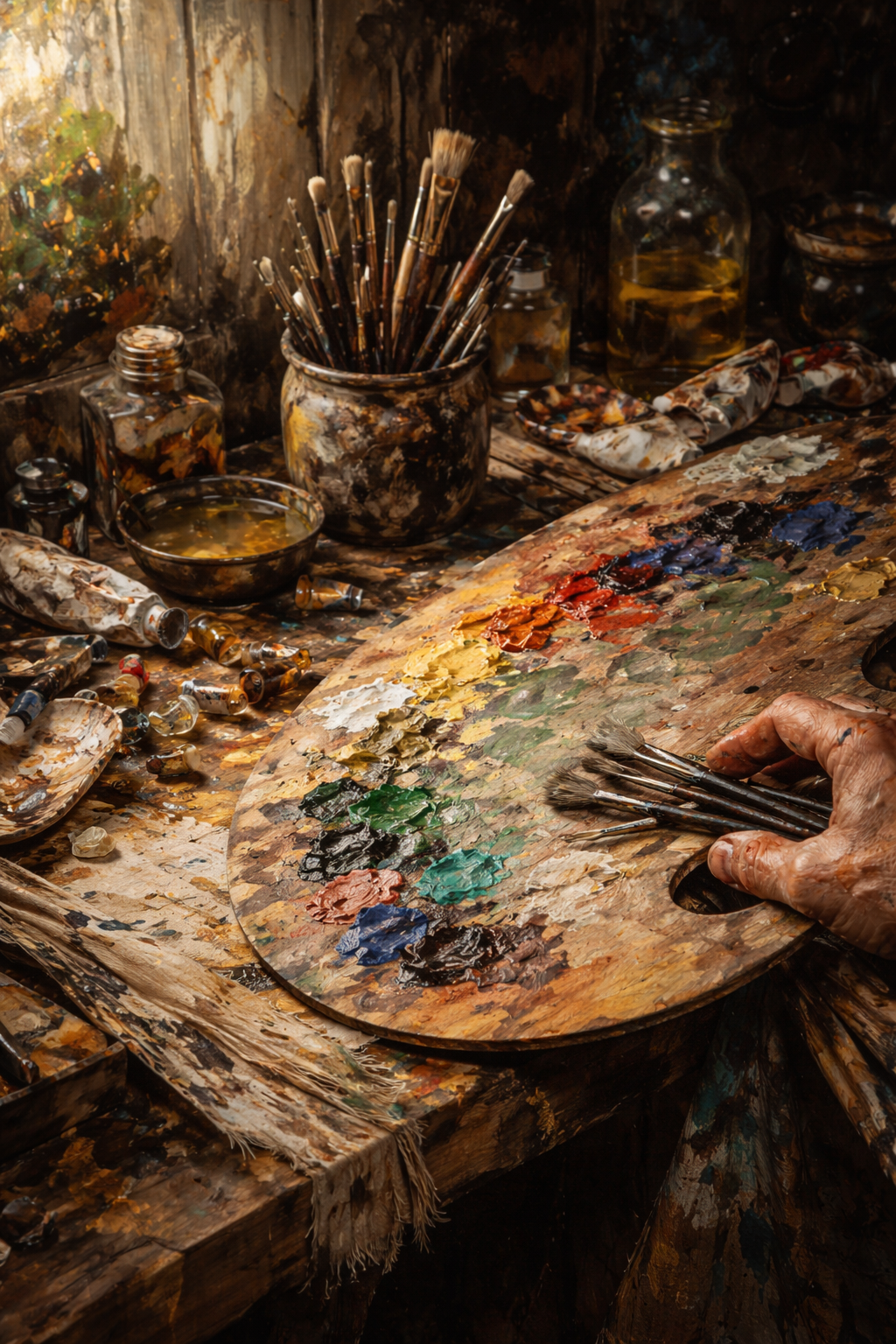
The Restless Genesis of Creation
Critique
1. Introduction This oil painting provides a visceral glimpse into the private world of an artist, focusing on the essential tools of the craft. The composition is dynamic, dominated by a large, paint-encrusted wooden palette that occupies the foreground and middle ground. The scene is illuminated by a soft, natural light coming from the upper left, which highlights the varied textures of the studio environment. 2. Description A weathered hand enters from the right, firmly gripping the palette and several thin brushes. The palette itself is a mosaic of vibrant colors—reds, yellows, blues, and greens—amidst a sea of earthy neutrals. In the background, a ceramic jar overflows with long-handled brushes, while glass containers, squeezed paint tubes, and a shallow bowl of murky liquid are scattered across the stained wooden workbench. 3. Analysis The artist utilizes a sophisticated interplay of textures, contrasting the smooth glass of the jars with the rough, dried impasto on the palette. The color palette is predominantly warm and grounded, reflecting the organic nature of the materials, yet punctuated by the pure pigments of the oil paints. The diagonal line of the palette creates a sense of depth, drawing the viewer’s gaze from the active hand toward the cluttered tools in the distance. 4. Interpretation and Evaluation This work serves as an homage to the physical labor and creative chaos inherent in the artistic process. The signs of wear on the tools and the accumulated stains on the table suggest a long history of production and dedication. The technical execution is exceptional, particularly in the rendering of reflective surfaces and the diverse consistencies of the paint itself. The composition successfully captures the spirit of a working studio without relying on sentimentality. 5. Conclusion While the scene initially appears as a chaotic arrangement of objects, it eventually reveals itself as a highly organized system of creation. The painting invites the viewer to appreciate the raw materials before they are transformed into a finished work of art. This piece is a masterful representation of the artist’s environment, standing as a testament to the enduring power of traditional techniques and materials.
Same Subcategory
Similar Artworks
 Colors Born from the Soul
 Symphony of Colors Beneath the Open Sky
 The Alchemist's Chromatic Pulse
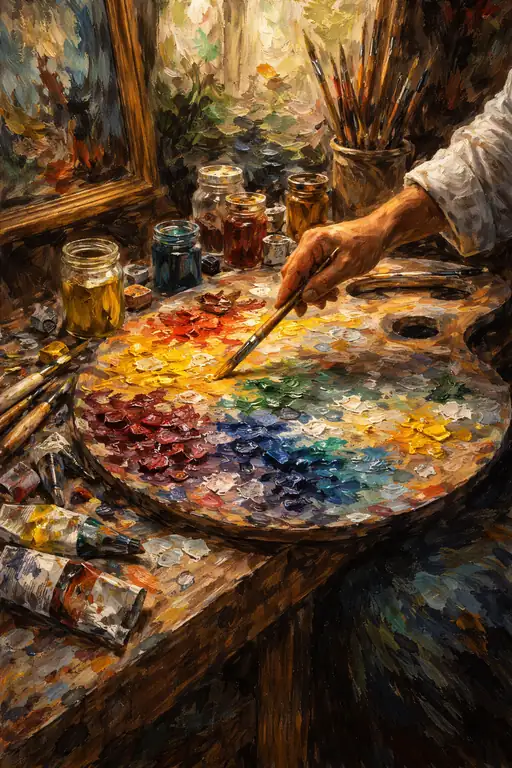 Genesis of a Masterpiece
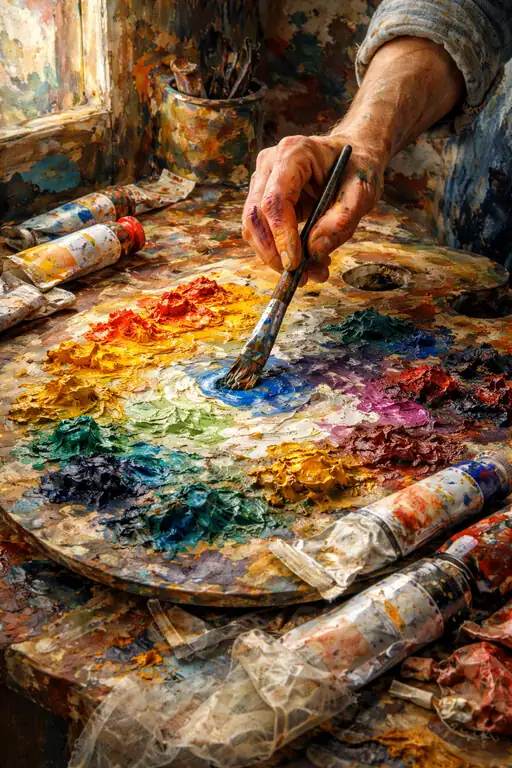 The Alchemist of Colors
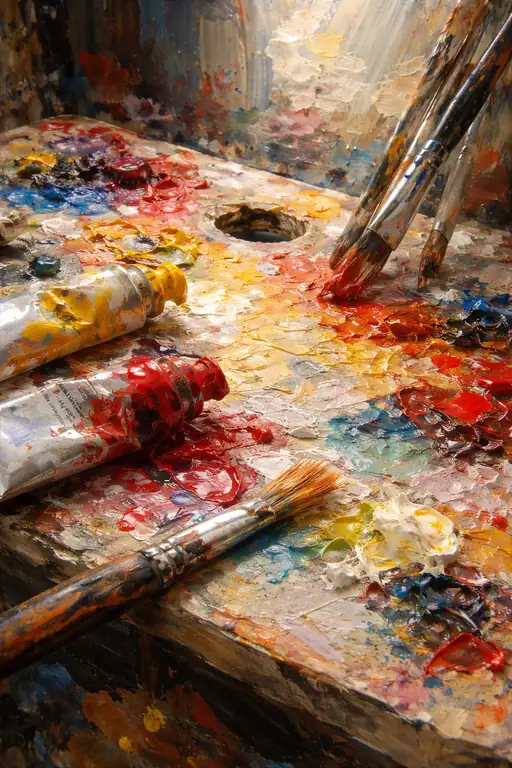 The Alchemist's Stage: Where Inspiration Takes Color
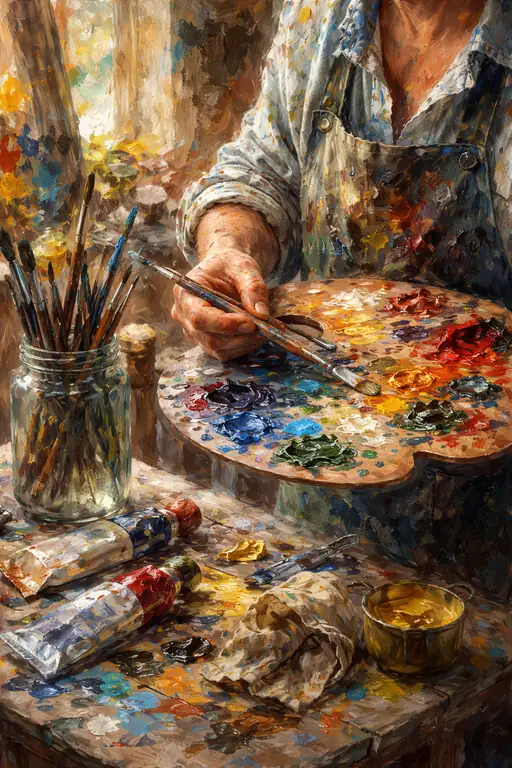 Birth of Colors on the Master's Palette
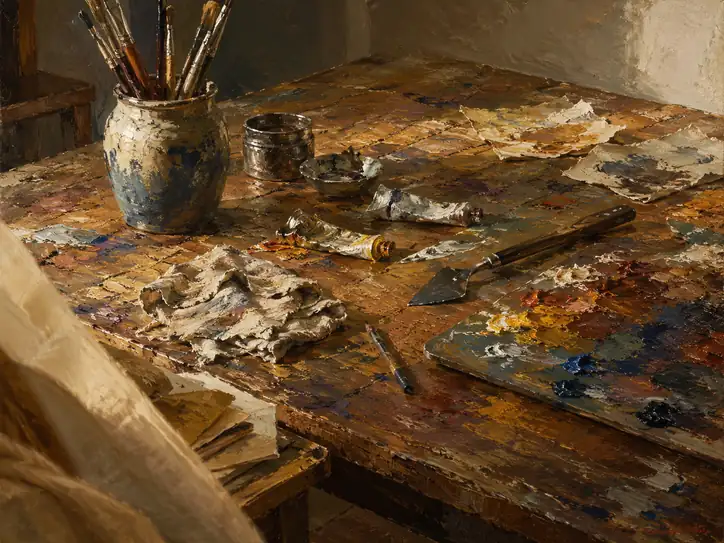 Echoes of the Creative Spirit
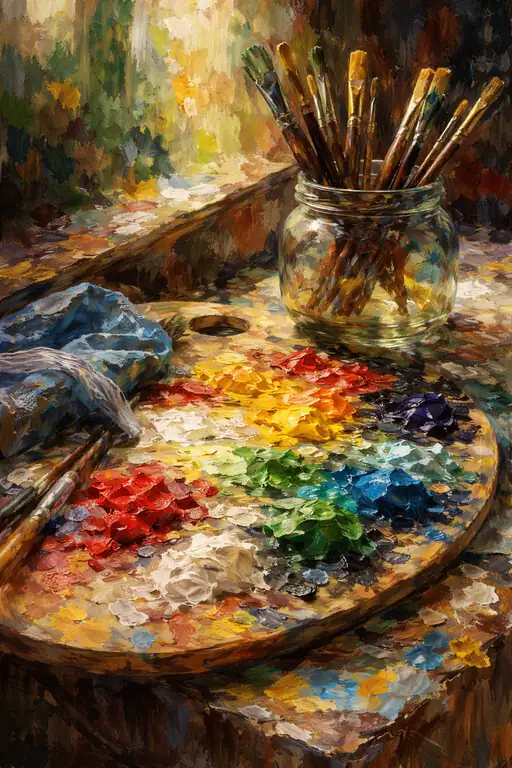 The Silent Heat of Creation
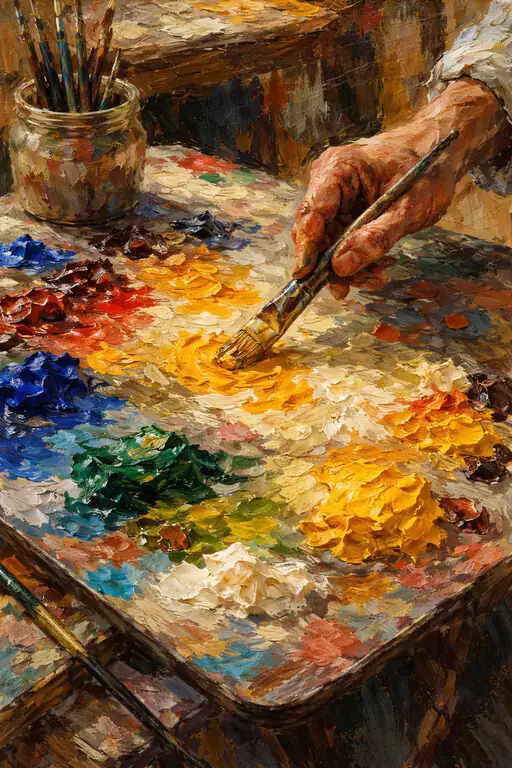 Genesis of Color: The Pulse of Creation