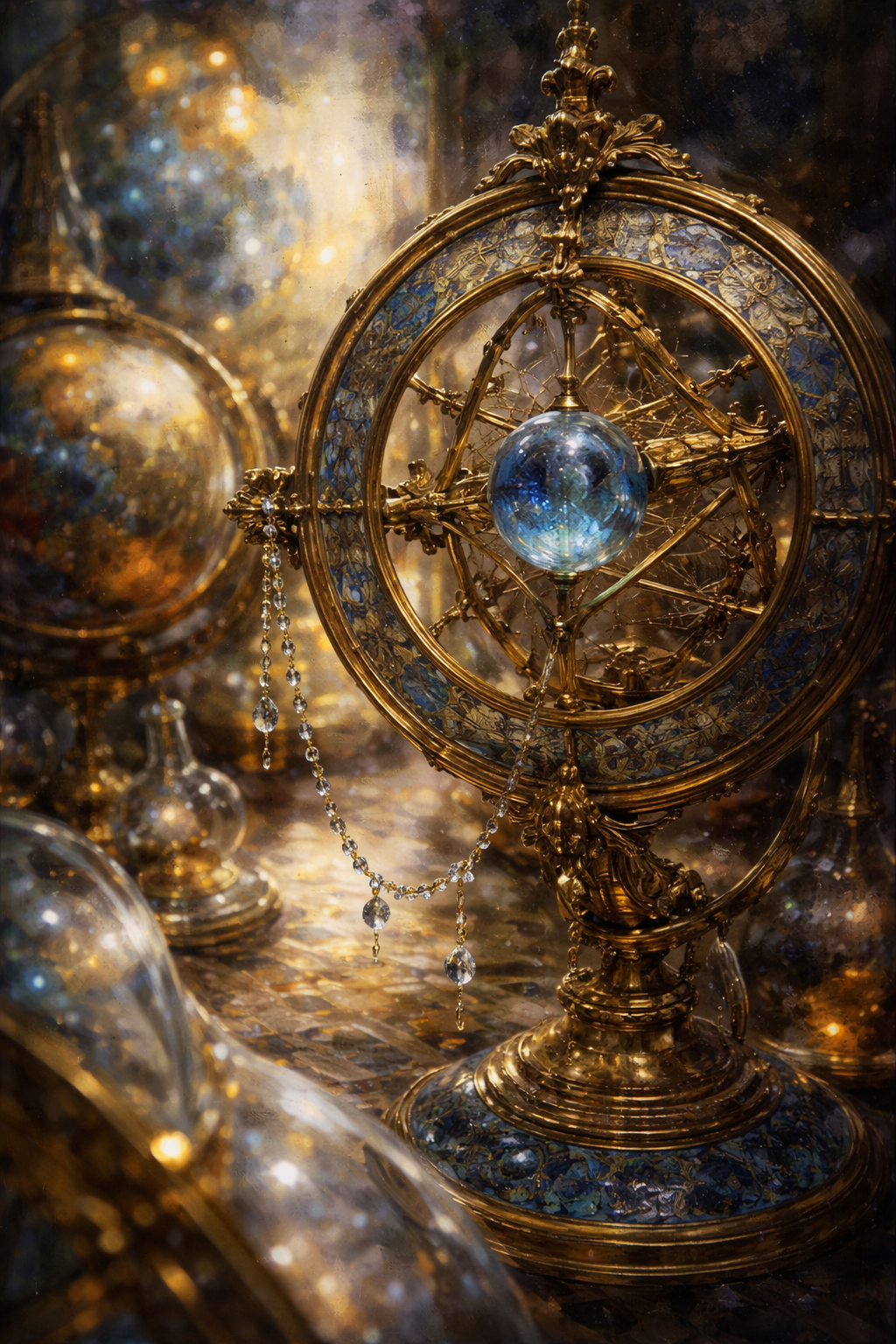
Symphony of Spheres
Critique
1. Introduction This painting presents an elaborate, mystical device resembling a golden armillary sphere, where scientific precision meets fantastical artistry. Standing majestically in the center, the apparatus seems to embody the cosmic order, inviting the viewer on an intellectual journey into the unknown. Surrounded by glass globes and vials, the scene is filled with refracted light that lends a mysterious, ethereal atmosphere to the composition. The work succeeds in depicting material opulence while simultaneously attempting to visualize the unseen laws of the universe through a sophisticated artistic lens. 2. Description The central device consists of multiple overlapping golden rings and intricate engravings, featuring a translucent blue sphere at its core that glows with an inner light. Within this sphere, nebula-like patterns appear, harmonizing with the surrounding polyhedral structure. Delicate crystal chains hang from the device, with drop-shaped beads reflecting and scattering the ambient light. To the left, another globe showing continental outlines is visible in a soft blur, while various glass containers line the background shelves. The base of the instrument is adorned with blue enamel-like patterns, further enhancing the brilliance of the gold. 3. Analysis In terms of formal elements, the complex arrangement of lines and planes provides the image with immense visual density and depth. The contrast between the hard, reflective sheen of the gold and the soft, diffused light passing through the central sphere and surrounding glass emphasizes a rich diversity of textures. The palette relies on the complementary relationship between gold and blue, creating a high-toned, noble tension. Furthermore, while the focus is sharply fixed on the central apparatus, the skillful use of bokeh in the periphery organizes the intricate details and emphasizes the primary subject. 4. Interpretation and Evaluation The work can be interpreted as a modern reconstruction of a rare artifact found in a Renaissance "Wunderkammer," rendered with contemporary visual clarity. The artist demonstrates flawless technical skill, particularly in the meticulous metalwork and the realistic portrayal of light refraction. The composition emphasizes verticality while employing circular motifs to symbolically represent a cyclical view of cosmic time. Its originality lies in transcending the mere imitation of historical scientific instruments, instead building a unique microcosm that fuses technological achievement with magical imagination. 5. Conclusion A closer look reveals a level of structural complexity and craftsmanship that is truly overwhelming. What begins as a fascination with the overall form of the device eventually shifts toward the individual particles of light trapped within each crystal bead, revealing the artist's profound dedication. This painting is a masterwork that elevates human curiosity into a visual celebration, standing firmly at the intersection where aesthetics and science meet.
 Light Among the Flasks
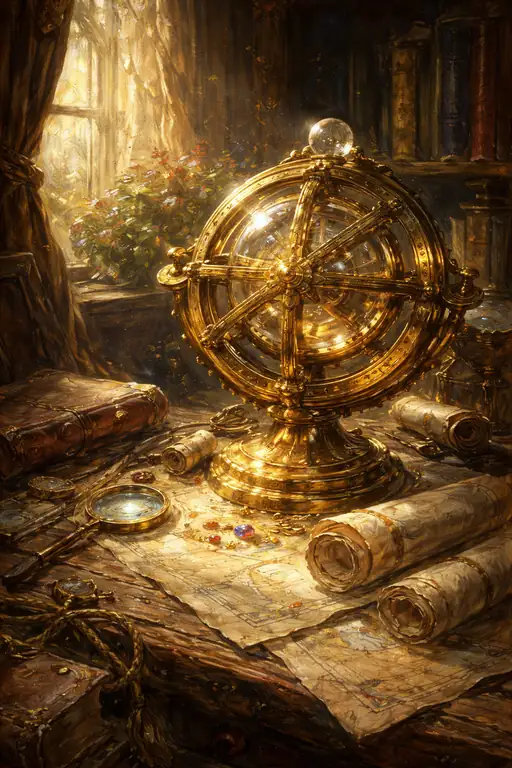 Wandering Through the Celestial Spheres
 The Astronomer's Jewel Box
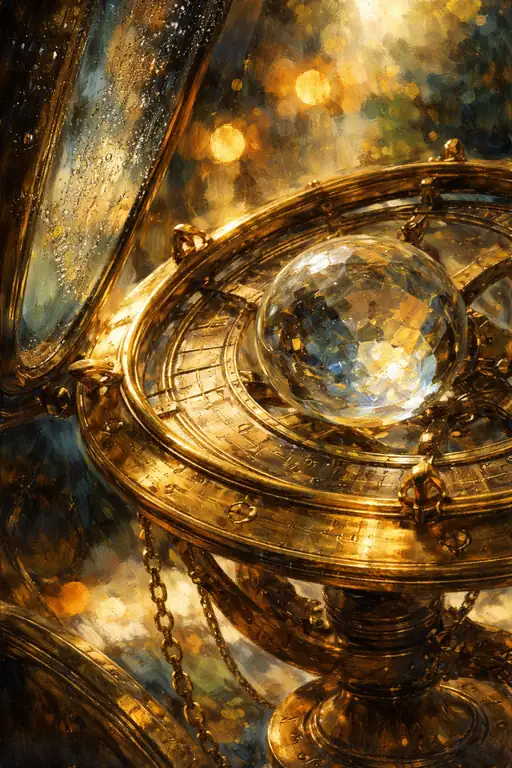 Starlight Bound in Gold
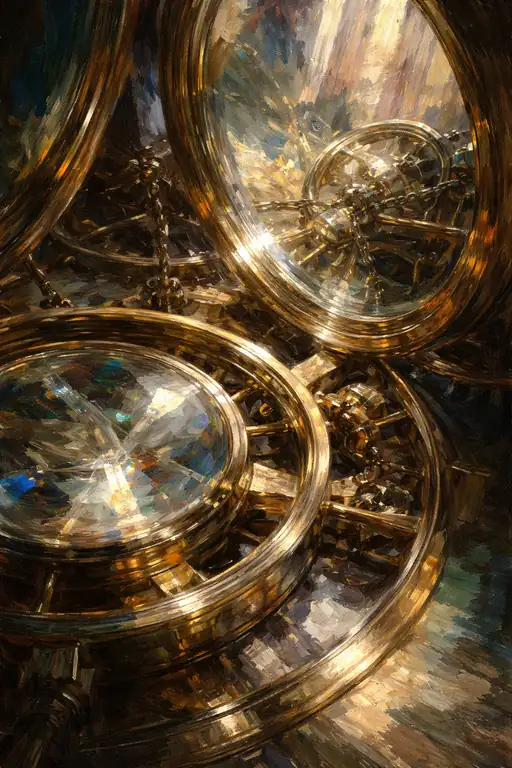 The Heartbeat of the Luminous Machine
 Touch of Time Upon the Stars
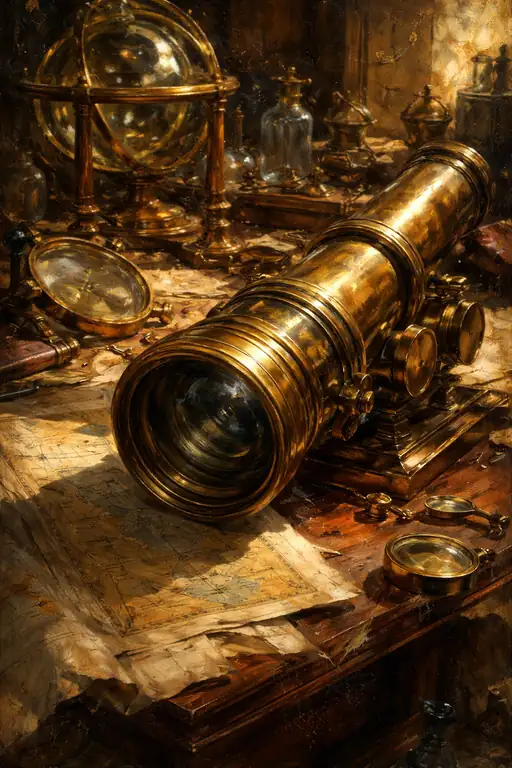 Whispers of the Cosmos in Brass
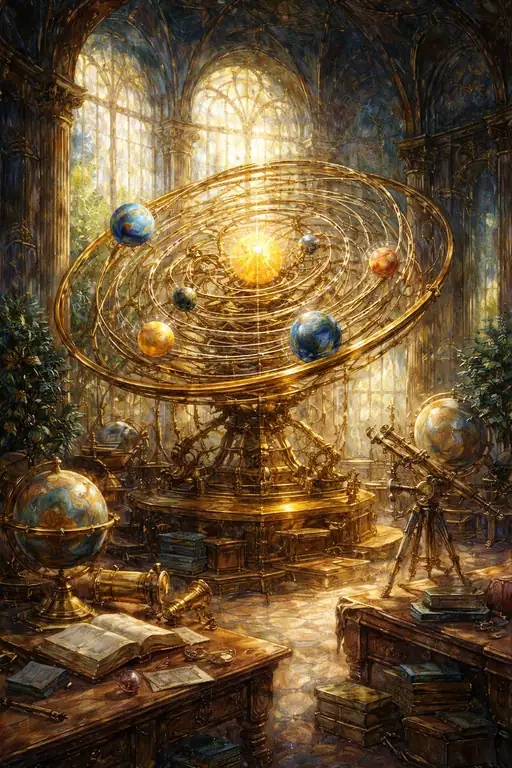 Tracing the Cosmos in the Golden Sanctum
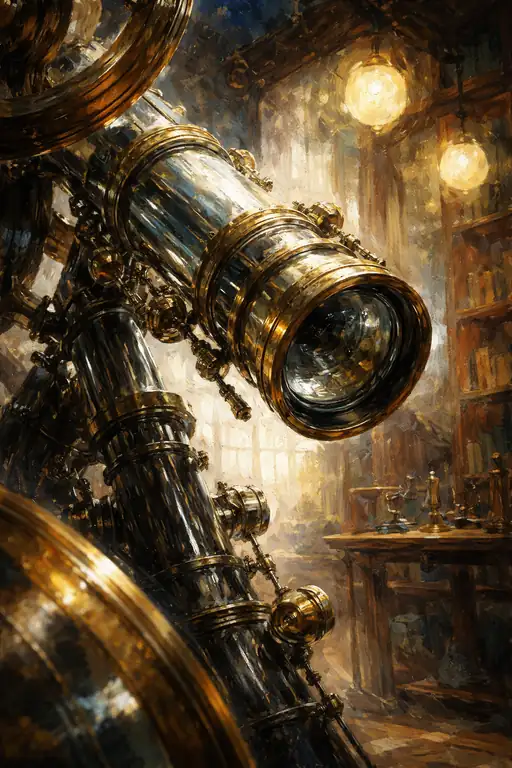 The Scholar's Cosmos
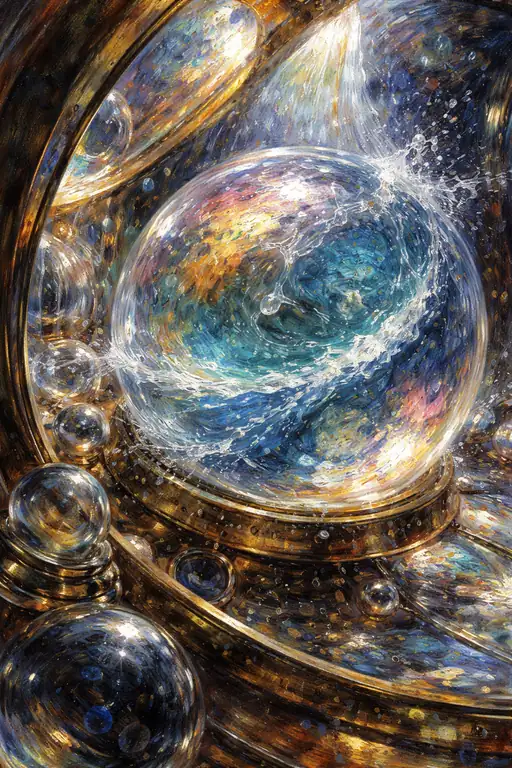 Trapped Cosmic Tide
 The Alchemist's Dream of Starlight
 The Architect of Starlight