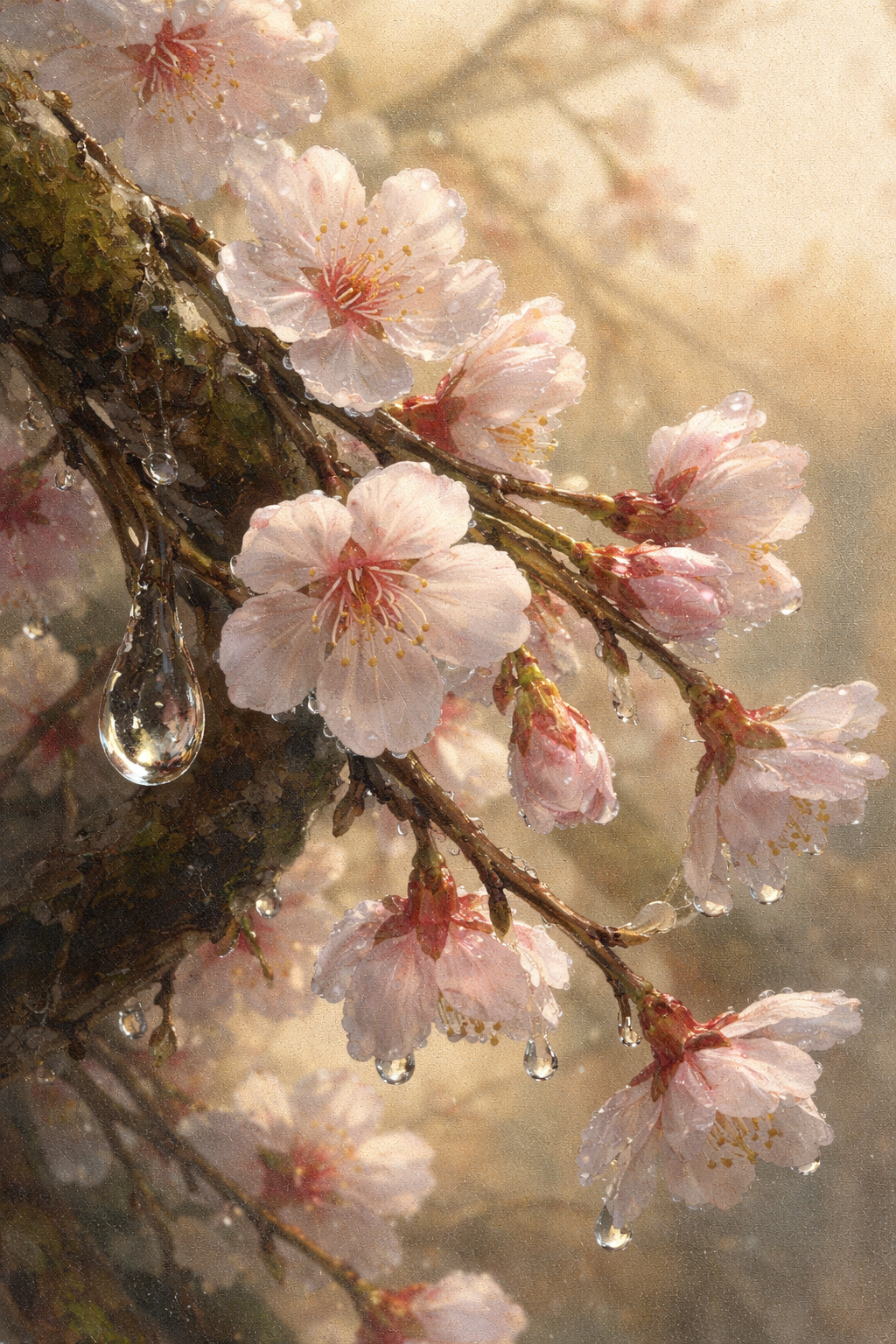
Tears of Sakura
Critique
1. Introduction This painting captures a poignant moment of cherry blossoms glistening with rain or dew, rendered with exquisite delicacy. The entire composition is bathed in a soft, ethereal glow, beautifully harmonizing the damp atmosphere with the fragile nature of the flowers. Rather than merely depicting the surface beauty of the flora, the work aims to convey the essential vitality of life infused with moisture. Through this canvas, the viewer can sense the subtle shifts of the transient seasons and the quiet yet undeniable energy inherent in nature. 2. Description Stretching from the center to the right, several pale pink cherry blossoms bloom along slender, moisture-laden branches. Countless tiny droplets cling to the surface of the petals, with a single, large tear-shaped drop suspended from the lower part of a central flower, seemingly on the verge of falling. This droplet encapsulates and reflects the surrounding light, shining like a precious gem. The background is a blurred, soft golden hue, suggesting a diffused warmth akin to sunlight filtering through trees. The dark brown branches exhibit a wet texture, with traces of thin green moss adding to the organic detail. 3. Analysis A key artistic feature is the contrast between the realistic rendering of the water droplets and the soft texture of the petals. The droplets are physically accurate, showing surface tension and light refraction, which grants the image a strong sense of three-dimensionality. Conversely, the petals appear as layers of translucent membranes, conveying lightness by allowing light to pass through them. In terms of color, the artist utilizes a limited palette of pink, gold, and brown, creating depth through subtle variations in value and saturation within these hues. 4. Interpretation and Evaluation The work can be seen as a modern reinterpretation of the traditional Japanese aesthetic of "Mono no aware," the pathos of things, using contemporary realist techniques. The technical skill is exceptional, particularly in the treatment of transparency and reflected light within the water. The composition, following the diagonal line of the branches, provides a rhythmic flow and a sense of spatial expansiveness. Originality is found in the way the addition of rain emphasizes a fresh beauty and the literal weight of life within a familiar subject. 5. Conclusion The serene charm of this piece arises from the harmony between meticulous attention to detail and a compassionate, all-encompassing light. While the intricate beauty of the water droplets initially captures the eye, the focus eventually shifts toward the sacredness of the life they nourish. This painting is a masterly portrayal of the sublime beauty found in ordinary moments of the natural world, delivered through a compelling and authoritative visual language.
Same Subcategory
Similar Artworks
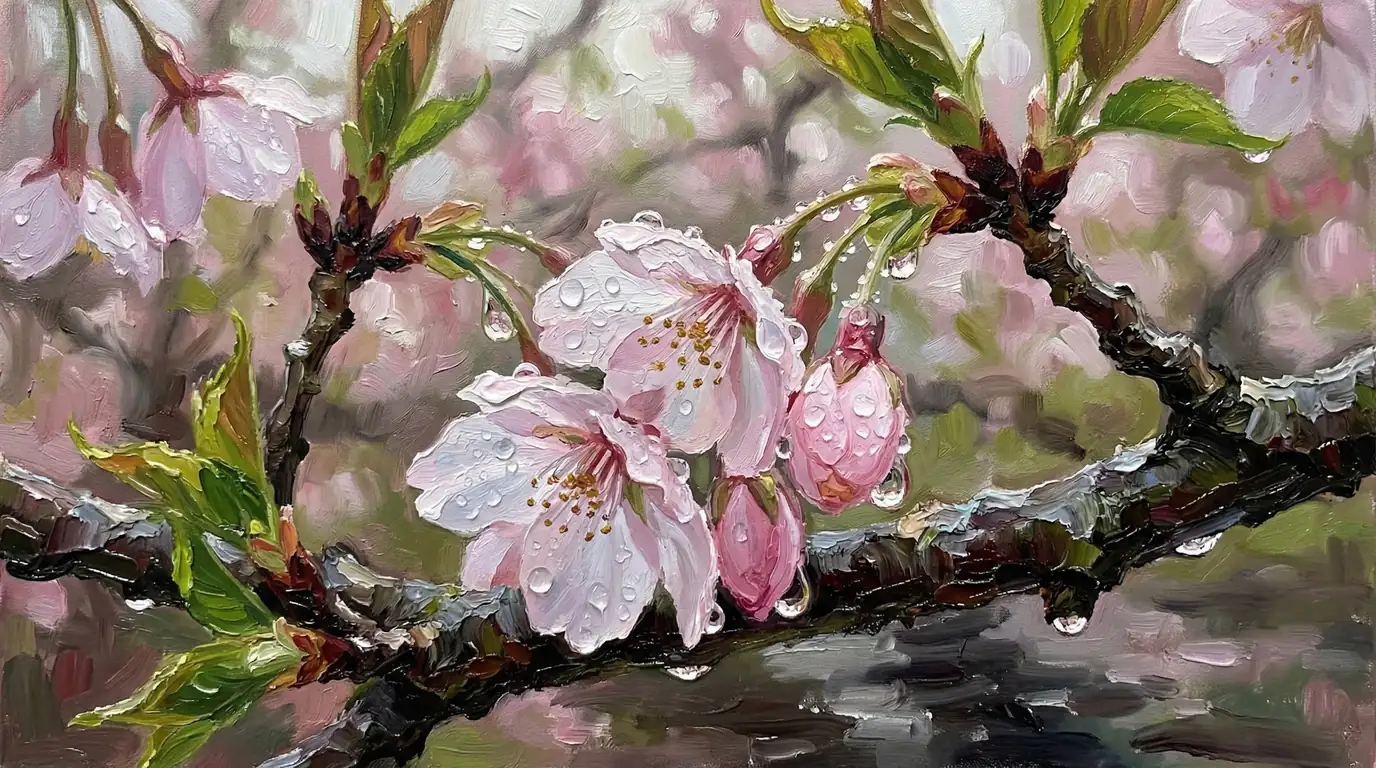 Breath of Spring, Glistening in Light
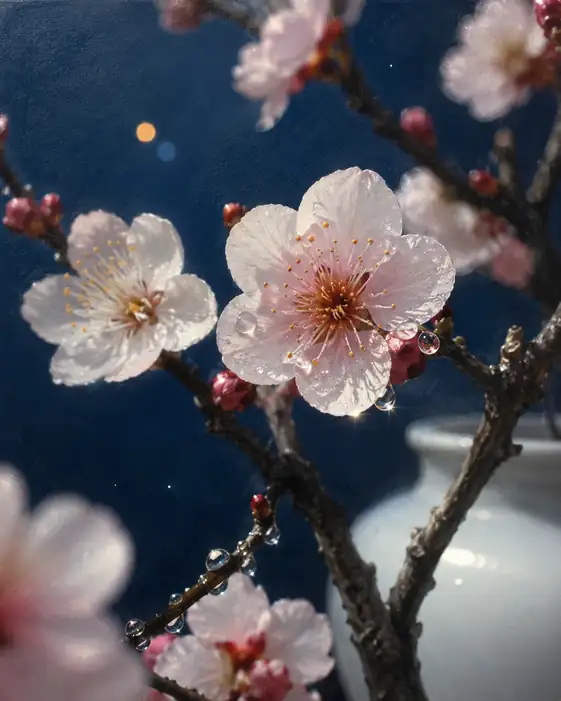 Dew-Kissed Plum Blossoms by White Porcelain
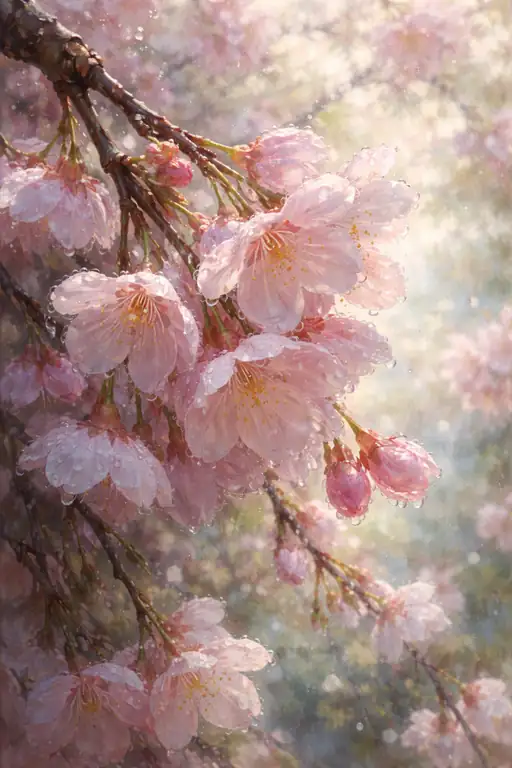 Crystalline Spring
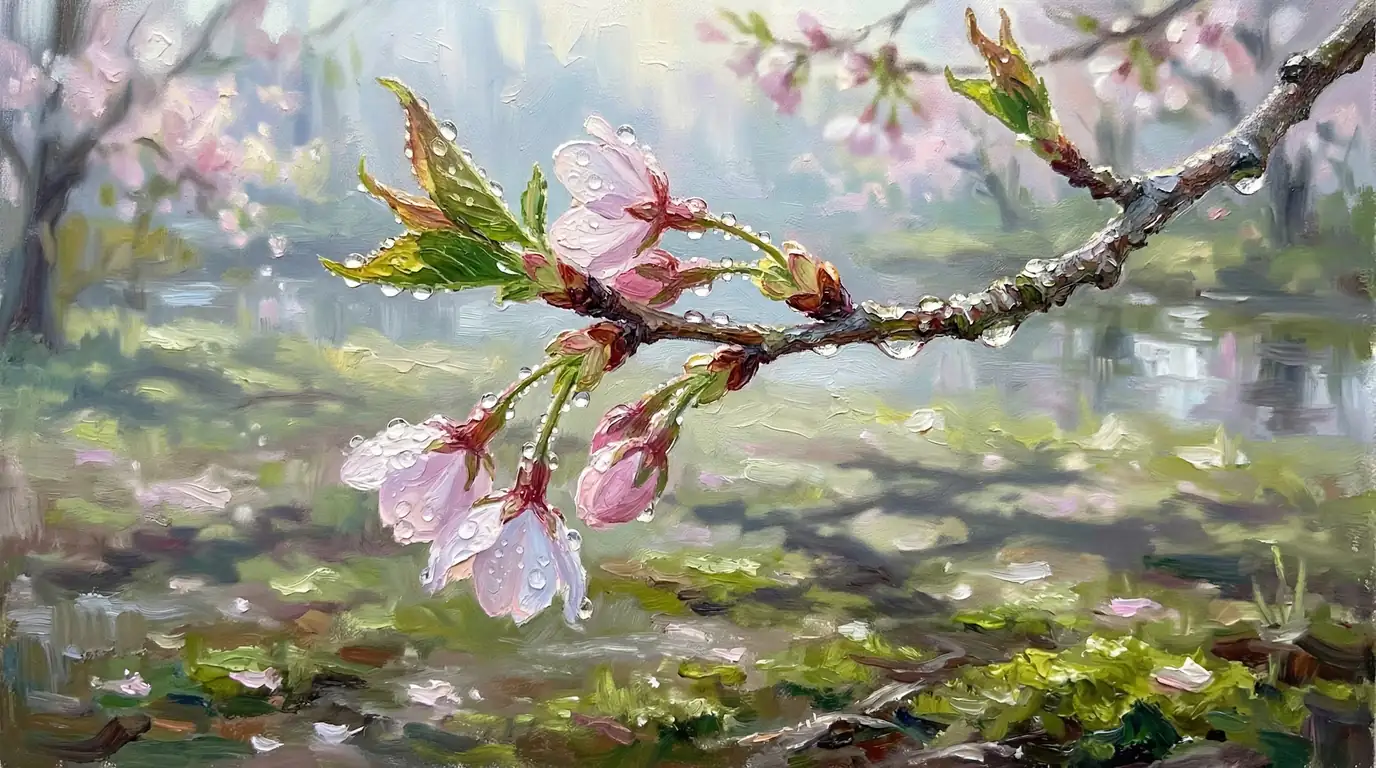 A Symphony of Falling Stars
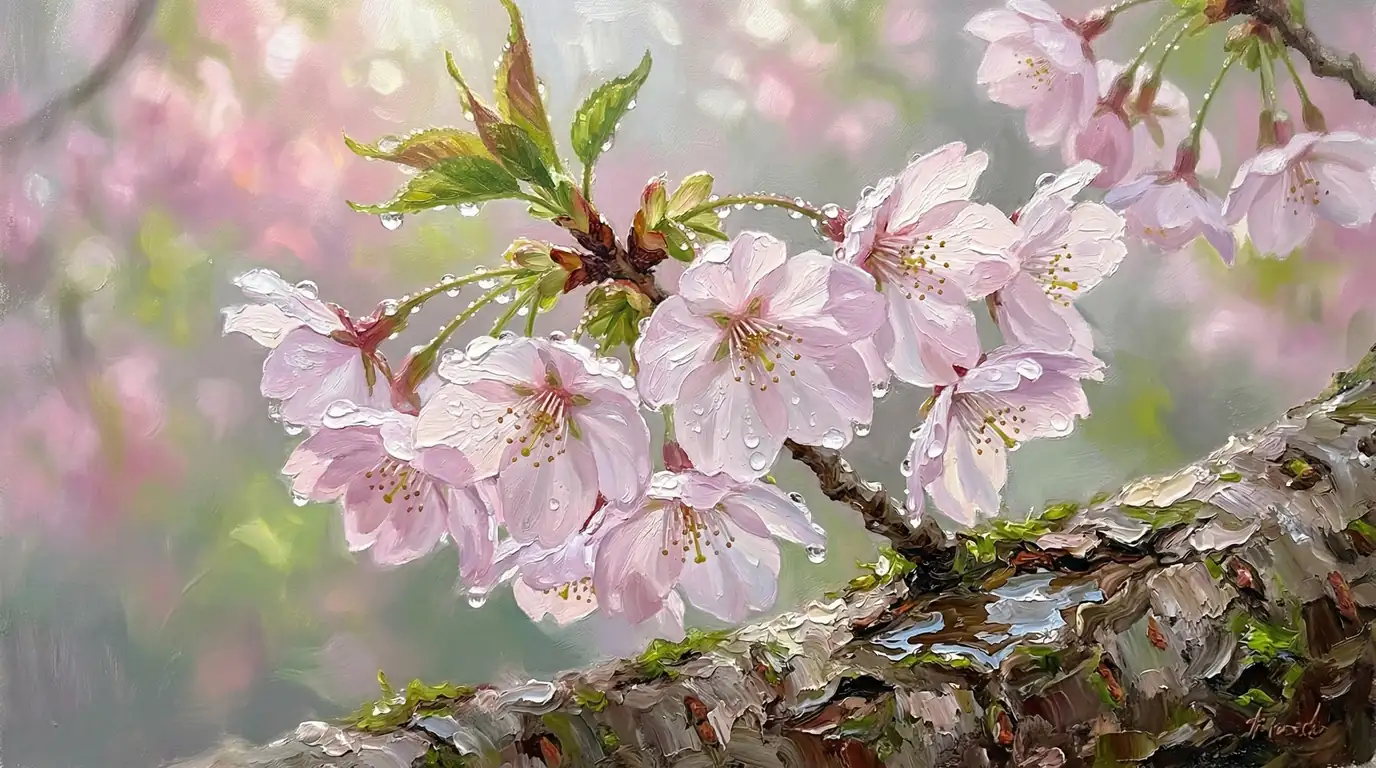 Whispers of the Crystal Dawn
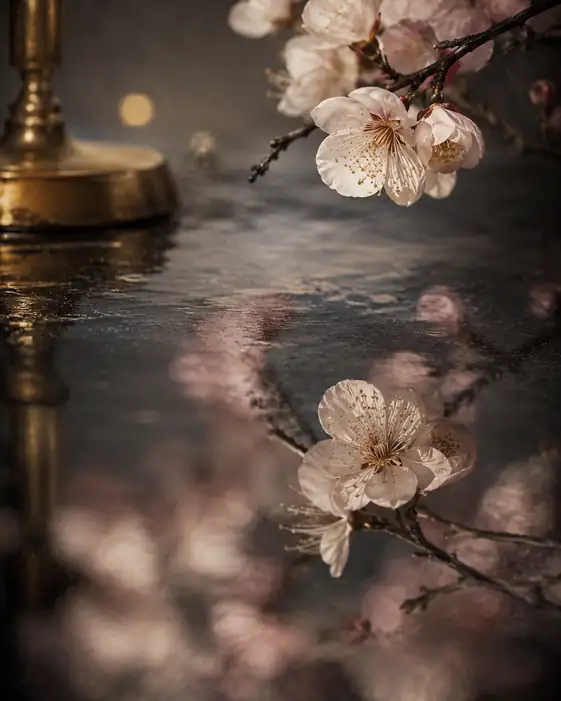 Plum Blossoms Reflected by Candlestick
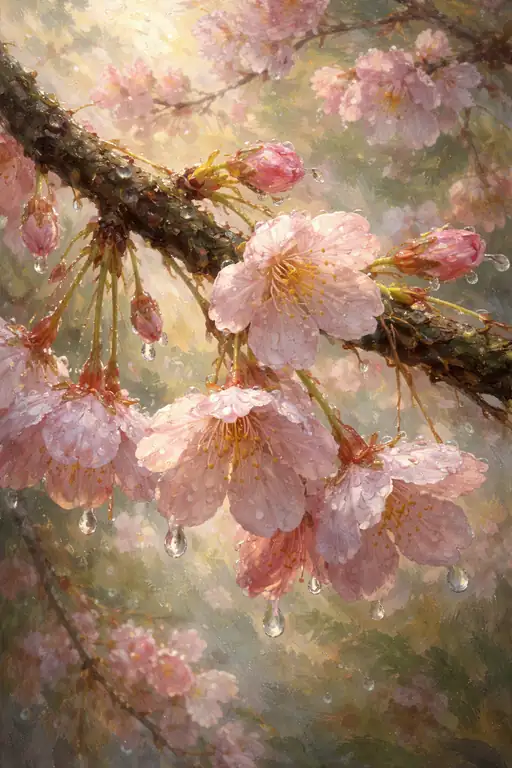 Tears of Spring on Pink Petals
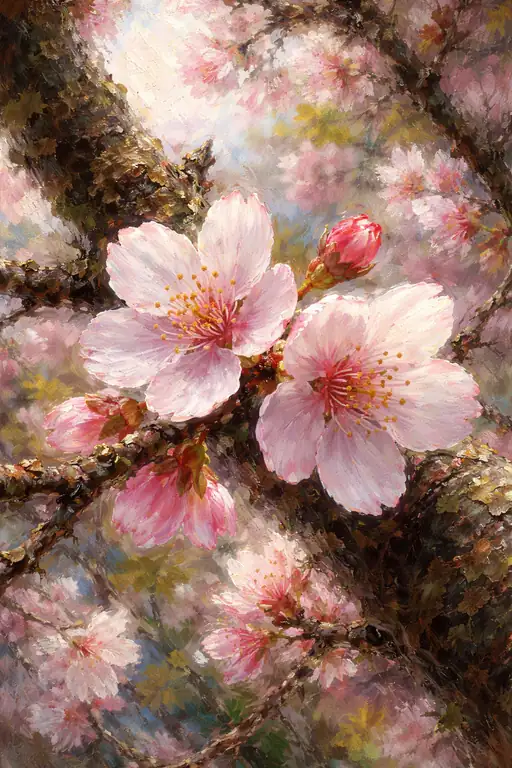 Luminous Petals of Awaken Spring
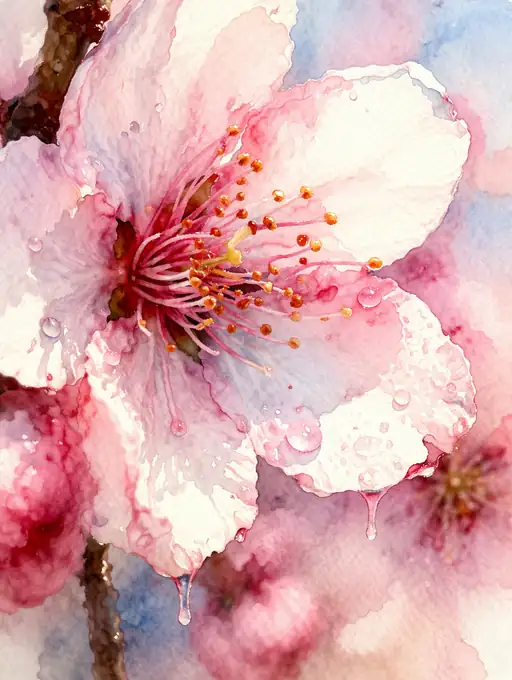 Tear of a Cherry Blossom
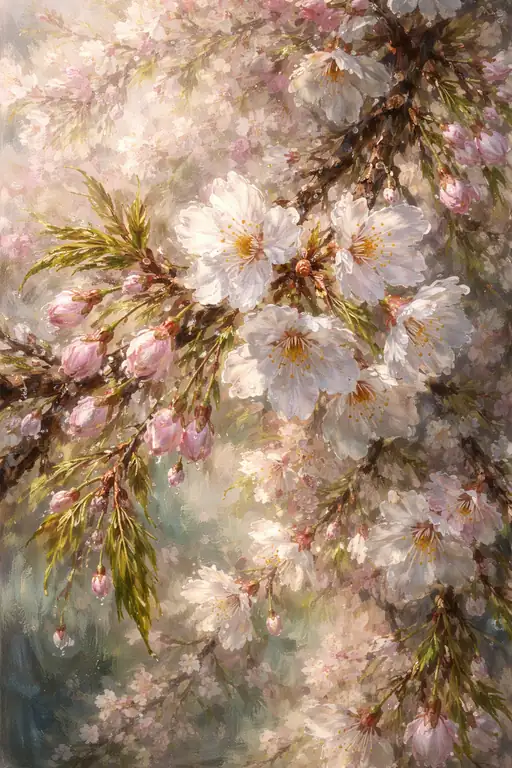 A Fleeting Whisper of Spring