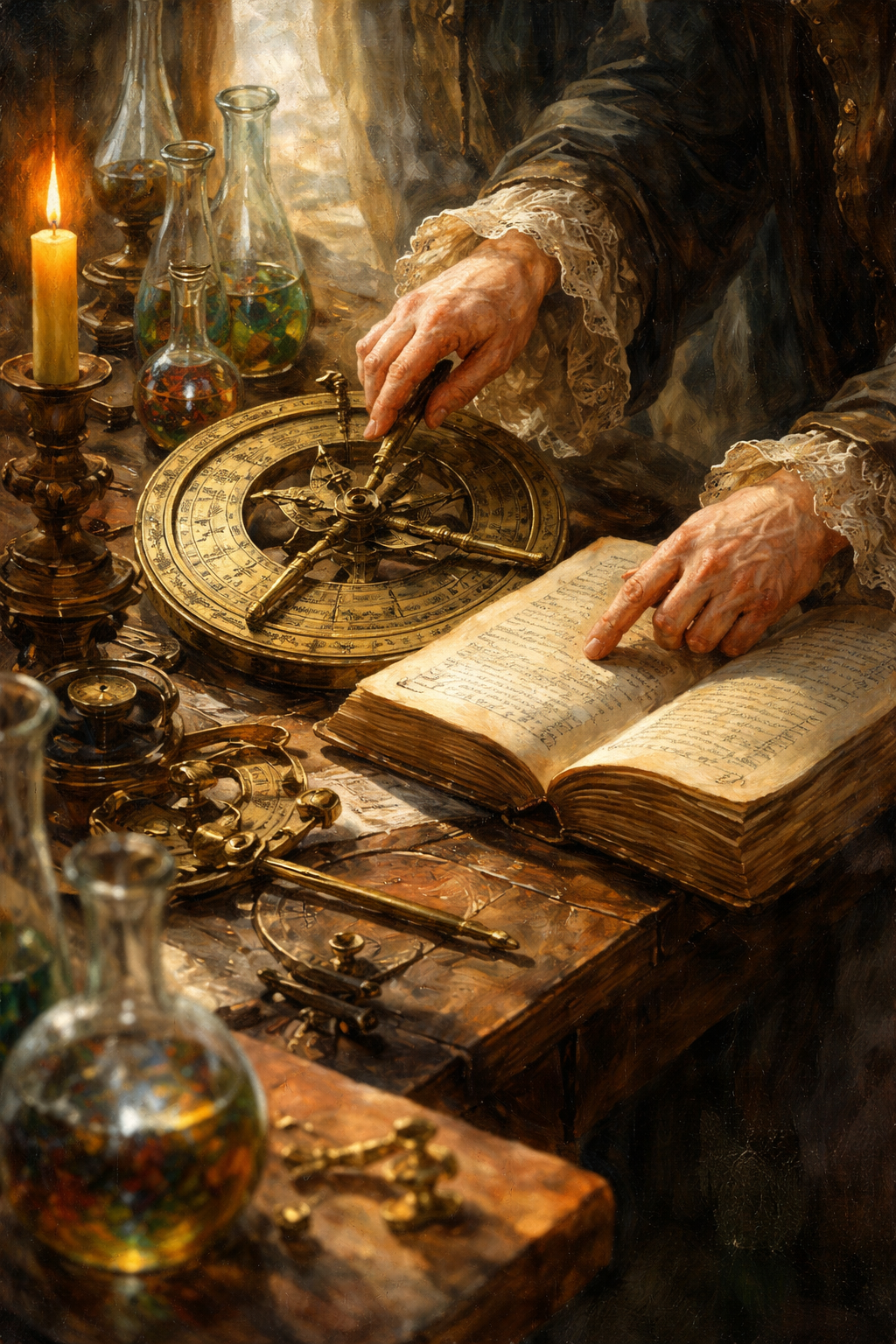
Light Among the Flasks
Critique
1. Introduction This painting presents a masterfully executed scene of intellectual labor, centered on the delicate interaction between human hands and scientific instruments. The composition focuses on a wooden table cluttered with various tools of discovery, illuminated by the gentle flicker of a single candle. It captures a moment of deep concentration, inviting the viewer into a space where knowledge and craftsmanship intersect. The work serves as a testament to the enduring human spirit of inquiry and the physical beauty of its artifacts. 2. Description Two weathered hands occupy the center of the frame, one adjusting a complex golden astrolabe while the other points to a passage in a densely written, open book. The manuscript appears aged, with its pages filled with meticulous notes and diagrams. To the left, a tall yellow candle stands in a bronze holder, casting a warm glow that highlights the textures of the objects nearby. Glass flasks and smaller metallic devices are scattered across the desk, while the subject’s ornate white lace cuffs provide a striking contrast against the dark, heavy fabrics of their attire. 3. Analysis The artist employs a sophisticated use of chiaroscuro to create depth and focus within the scene. The warm light from the candle serves as the primary source, defining the metallic gleam of the instruments and the organic texture of the human skin with remarkable precision. In terms of color, the palette is dominated by rich earth tones and golden hues, which establish a sense of historical weight and solemnity. The diagonal orientation of the light and the arrangement of the hands create a dynamic visual flow that guides the viewer's eye across the scholarly materials. 4. Interpretation and Evaluation The work symbolizes the pursuit of universal truth through the contemplation of physical objects and written records. The technical execution is exceptional, particularly in the rendering of light as it interacts with different surfaces like paper, metal, and lace. The composition is effectively balanced, emphasizing the tactile nature of research and the quiet dignity of the scholar. By focusing on the hands rather than the face, the painting elevates the act of study into a universal human experience, showcasing high artistic skill and a clear vision. 5. Conclusion Every meticulously rendered detail contributes to an atmosphere of profound silence and concentrated thought. While the intricate scientific apparatus initially captures the attention, the ultimate focus shifts toward the expressive power of the hands that bridge theory and practice. This painting successfully translates the abstract concept of learning into a compelling visual narrative that resonates with both classical and contemporary sensibilities.
Same Subcategory
 Elixir of Illumination
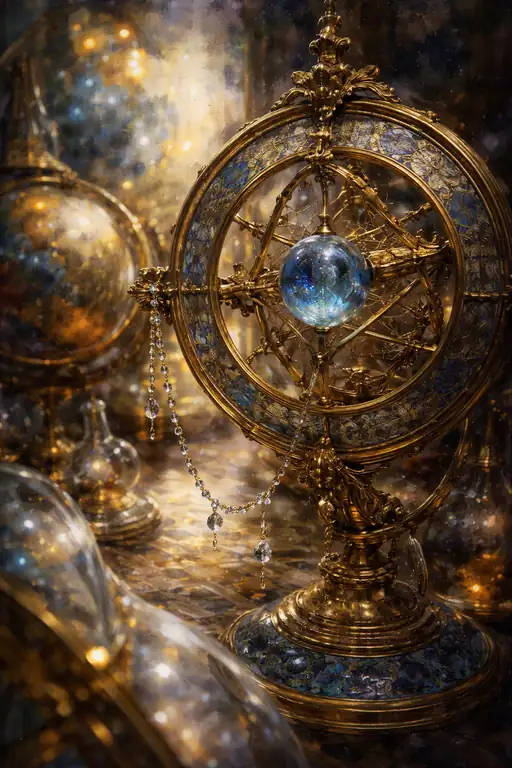 Symphony of Spheres
Similar Artworks
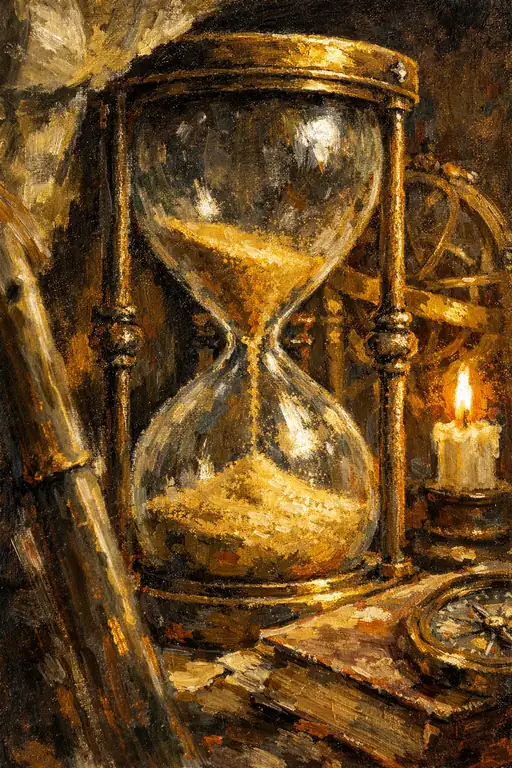 Echoes in the Falling Sand
 Seeking Truth in the Sphere of Shadows
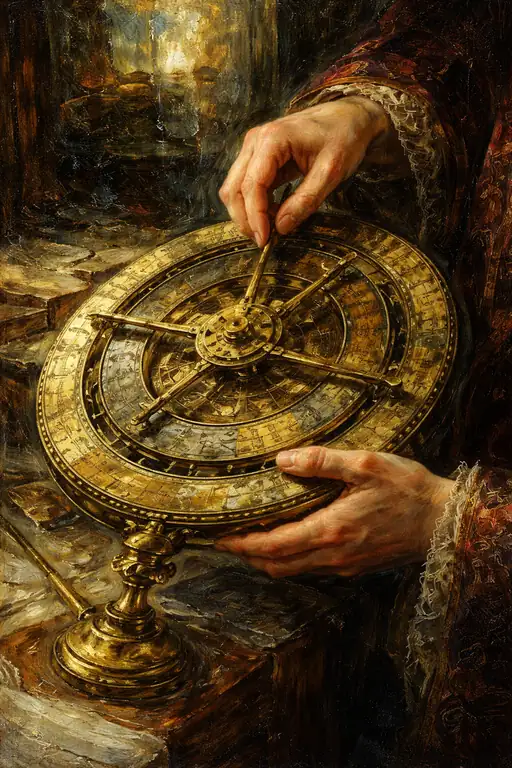 Echoes of the Starlit Ocean
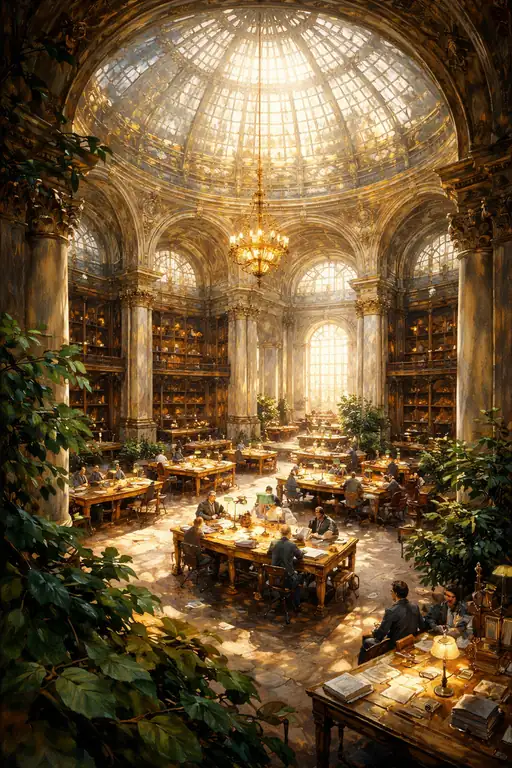 The Golden Glow of the Scholar's Sanctuary
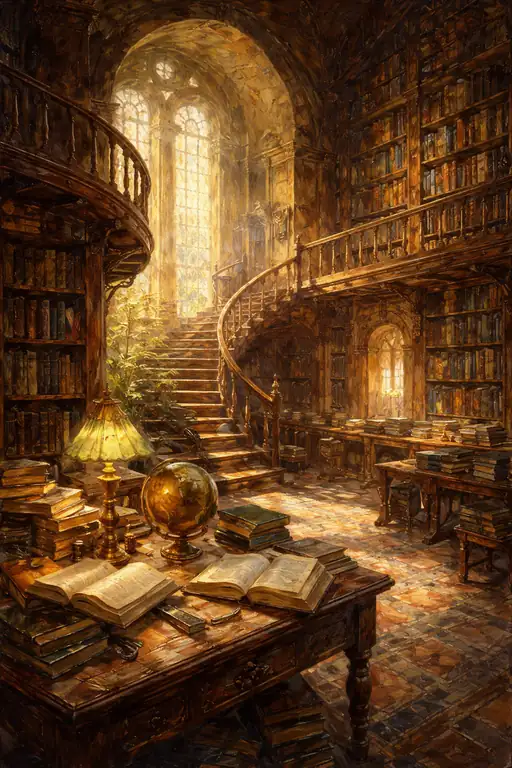 The Golden Spiral of Timeless Knowledge
 Cathedral of Silence and Light
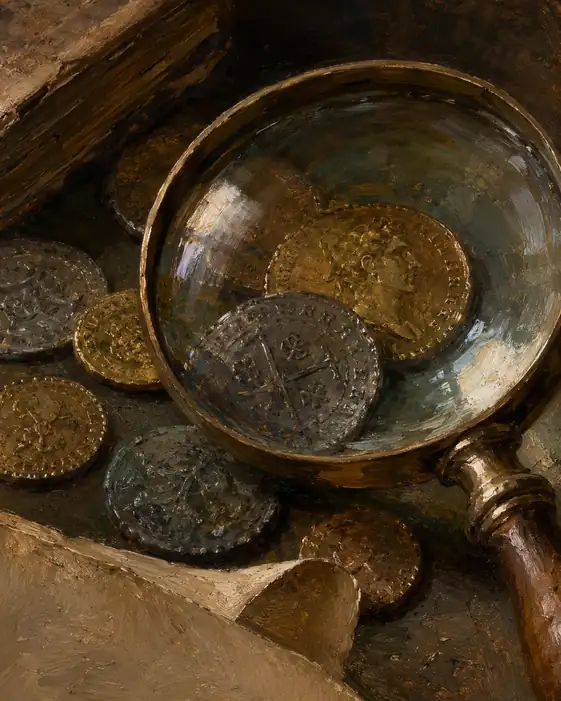 Through the Lens of Time
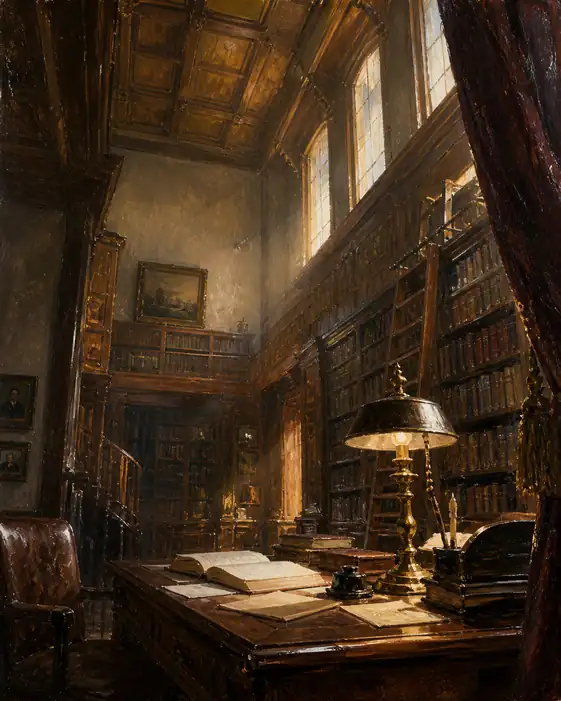 Where the Silent Ages Speak
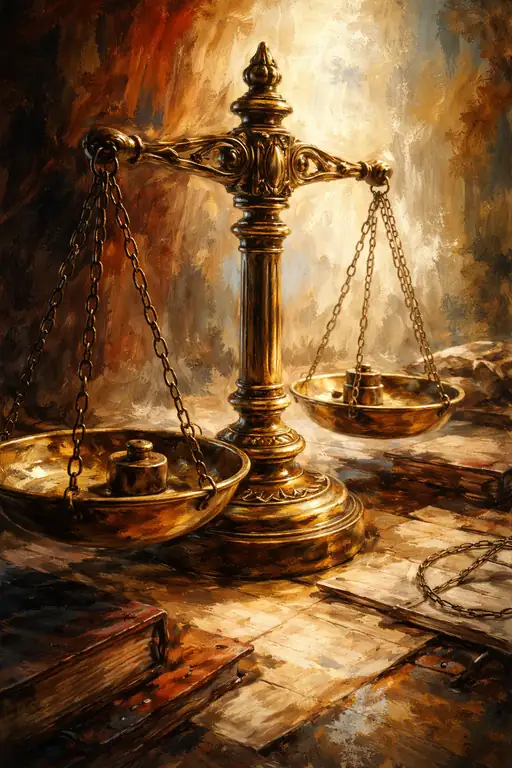 The Golden Weight of Truth
 Confessions by Candlelight