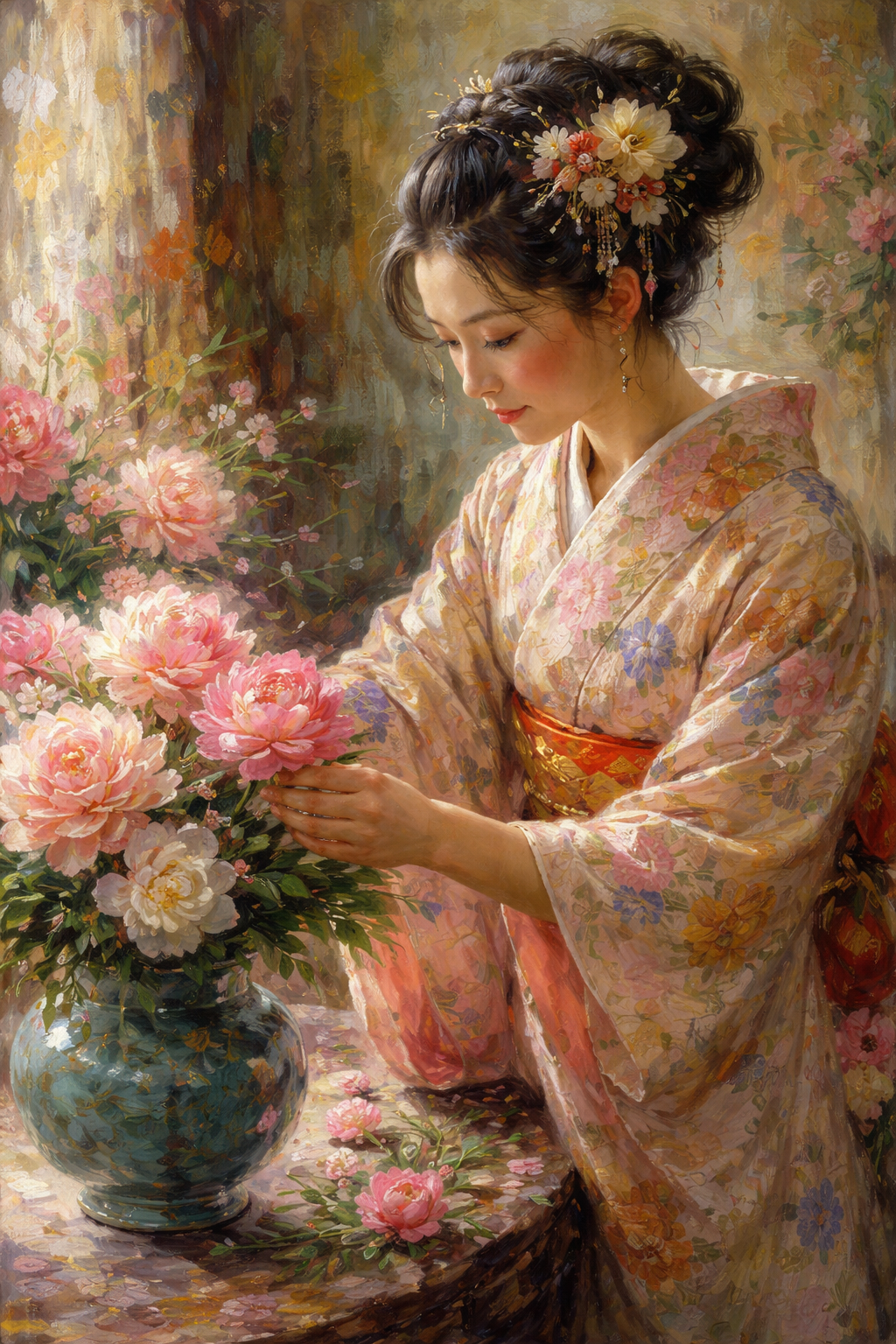
Turquoise Dream of Blooming Peonies
Critique
1. Introduction This painting presents a lush, vibrant scene of a woman engaged in the delicate task of flower arrangement. The work immediately stands out for its abundant use of floral motifs and its soft, painterly execution. It captures a moment of peak aesthetic refinement, where the beauty of nature and human craftsmanship are woven into a single, harmonious composition. 2. Description The central figure is a woman viewed from a three-quarter angle, wearing a light-colored kimono adorned with a profusion of multi-colored floral patterns. She leans over a turquoise-colored vase, carefully positioning large, blooming peonies in shades of pink and white. Her hair is elaborately styled and decorated with matching floral ornaments that echo the bouquet before her. 3. Analysis The artist uses a rich palette dominated by soft pinks, yellows, and the contrasting cool tone of the vase. The background is rendered with broad, impressionistic brushstrokes that suggest a sunlit interior without providing distracting detail. This technique focuses the viewer’s attention on the tactile realism of the peony petals and the intricate patterns of the subject’s attire. 4. Interpretation and Evaluation The work explores the concept of "hana-guruma" or floral abundance, symbolizing prosperity and the fleeting peak of beauty. The artist demonstrates a high level of skill in capturing the complex, layered structure of the peonies and the subtle shifts in light across the fabric. The composition successfully conveys a sense of festive elegance and the meditative nature of the arrangement process. 5. Conclusion While the initial impression is one of overwhelming floral splendor, the underlying structure provides a sense of balance and intentionality. The painting effectively captures the vitality and sensory richness of a traditional interior space. Ultimately, the work remains a compelling celebration of natural beauty and the enduring grace of cultural traditions.
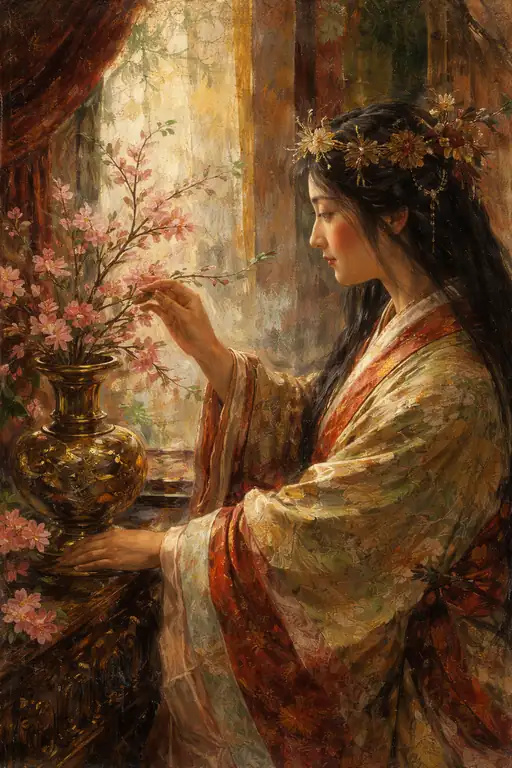 Spring Radiant in Her Gaze
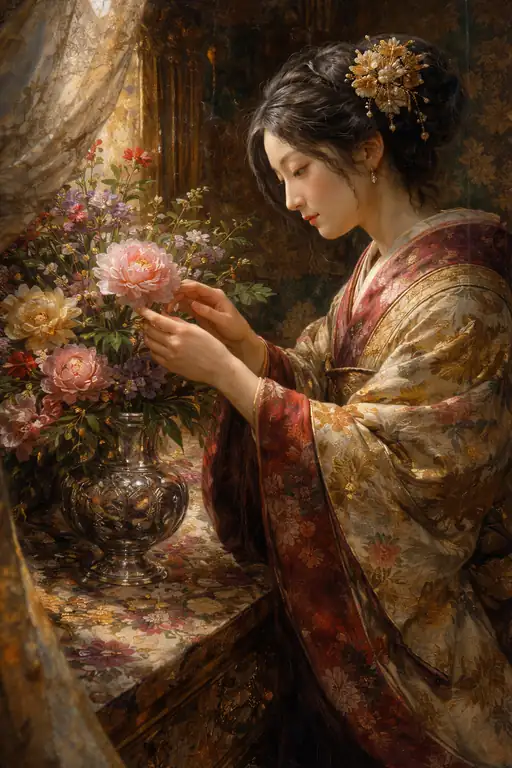 A Quiet Dance of Blossoms and Silk
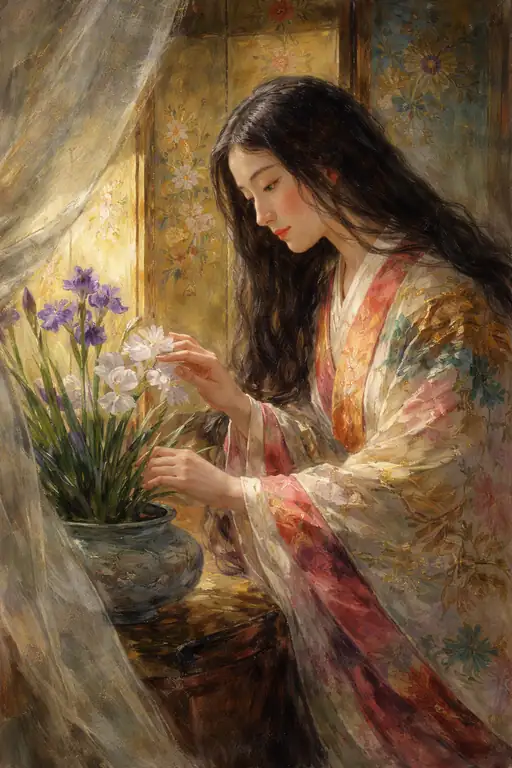 Irises Bathed in Window Light
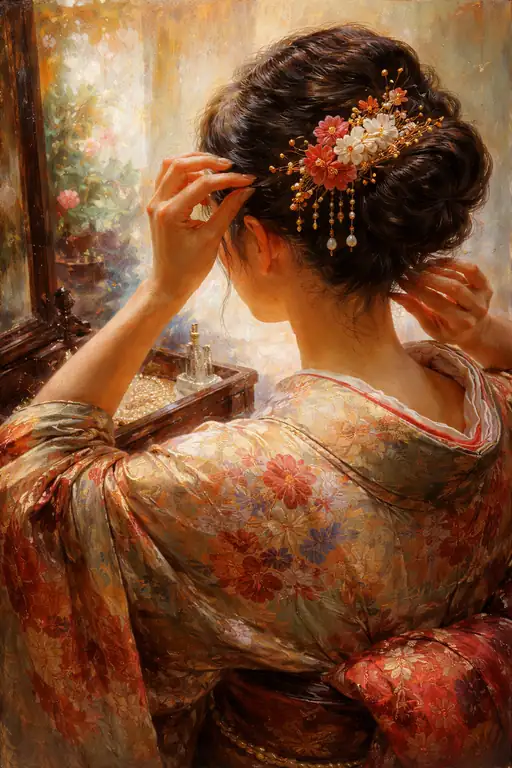 Reflections Woven in Pearls
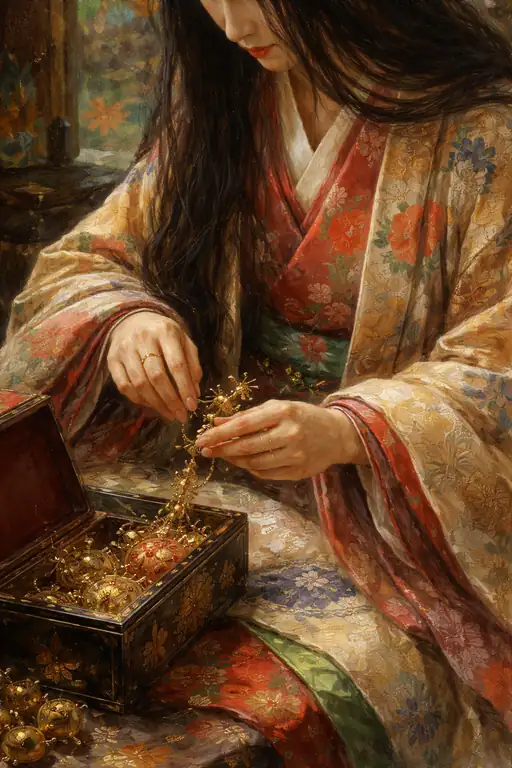 Treasures Touched by Time
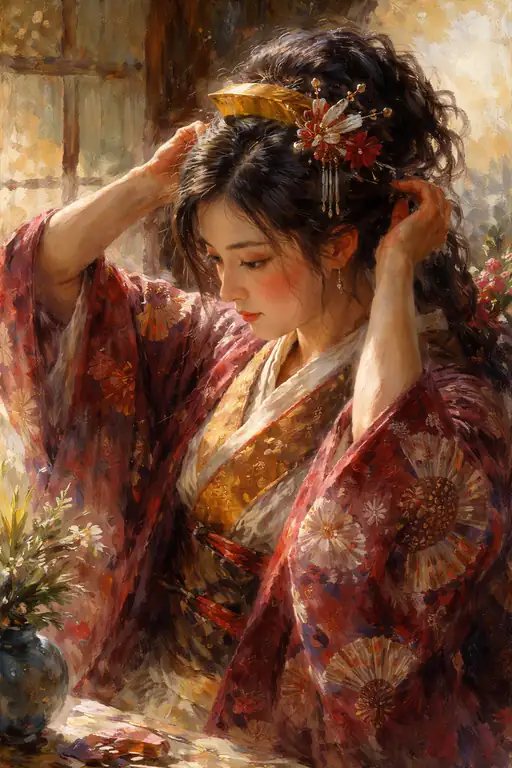 A Toss of Crimson and Gold
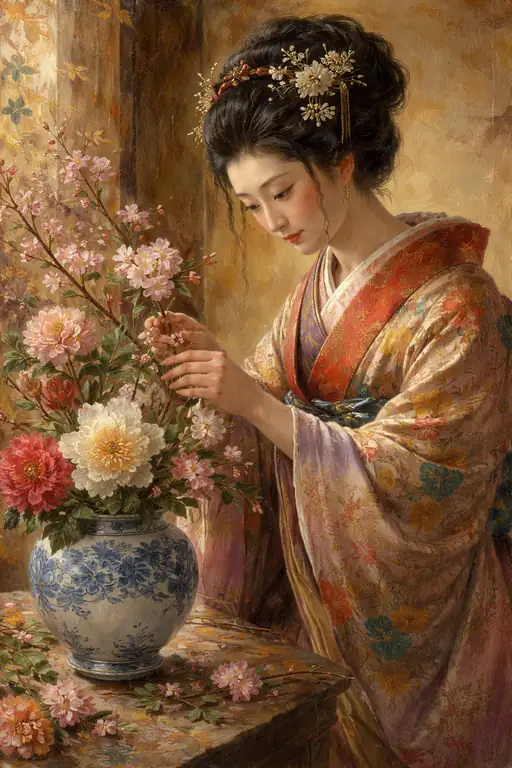 The Golden Silence of Ikebana
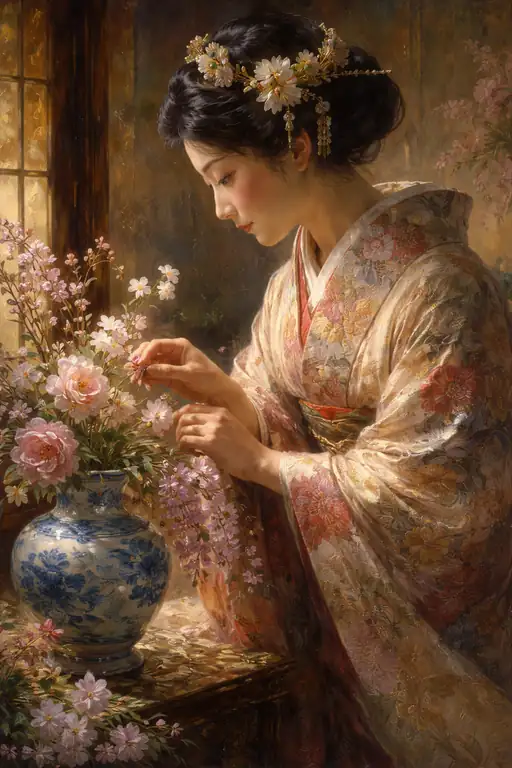 Graceful Arrangement in Soft Light
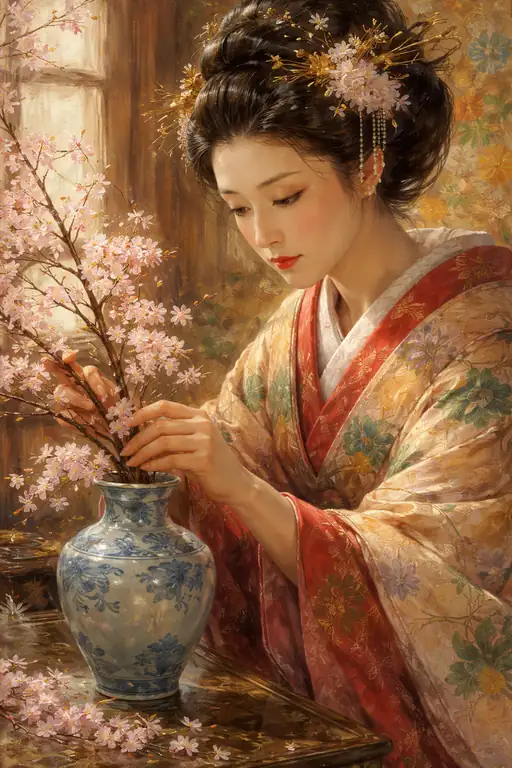 Whispers of Sakura in Porcelain
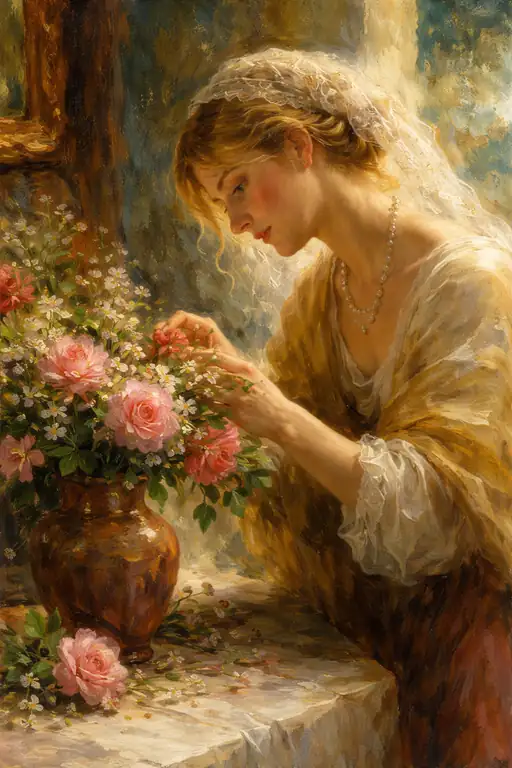 Grace Among the Petals