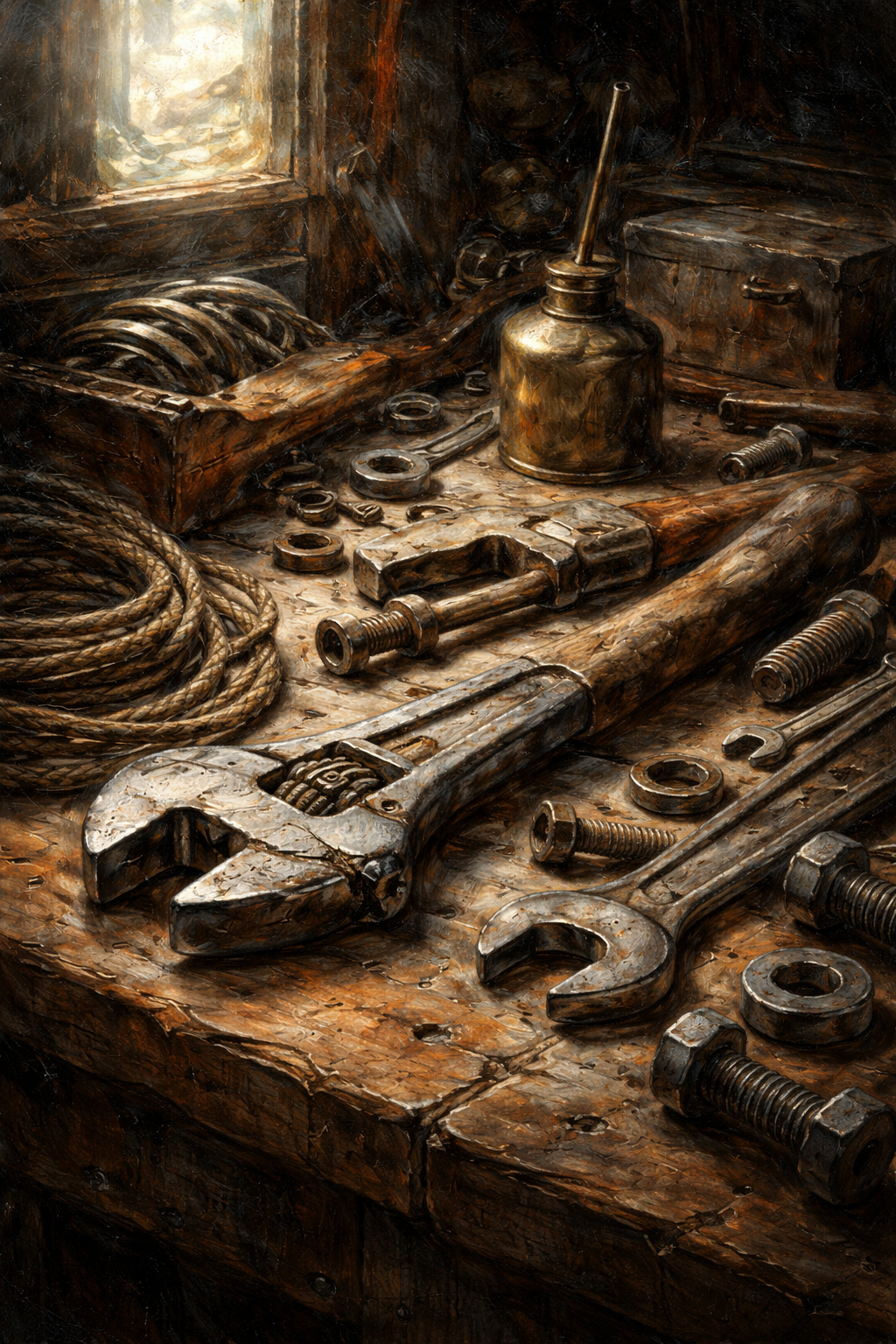
Echoes of Hard Work on the Worn Workbench
Critique
1. Introduction This oil painting presents a gritty and powerful still life of worn mechanical tools scattered across a wooden workbench. By focusing on objects associated with manual labor and industry, the artist elevates mundane utility to the level of aesthetic contemplation. The composition captures the weight and history of these tools, suggesting a narrative of hard work and problem-solving. It stands as a profound exploration of functional beauty and the dignity found in physical effort. 2. Description In the foreground, a large adjustable wrench lies diagonally across a heavily scarred wooden surface. It is surrounded by various spanners, bolts, nuts, and a coiled rope, all showing signs of extensive use and age. A metallic oil can with a long spout stands in the middle ground, its golden surface reflecting the dim light of the workshop. In the upper left, a small window provides a source of bright, hazy light that cuts through the shadows. The color palette is dominated by deep ochres, burnt sienna, and cool metallic grays. 3. Analysis Technically, the artist employs bold and deliberate brushwork to emphasize the rough textures of rusted metal and weathered wood. The heavy application of paint gives the objects a tactile quality, making the grease and grit almost palpable. The lighting from the window creates sharp contrasts and long shadows, defining the three-dimensional forms of the tools and adding a sense of drama to the scene. The crowded, diagonal arrangement of the items reflects the organized chaos of a working environment, creating a dynamic visual rhythm. 4. Interpretation and Evaluation The work can be interpreted as a celebration of human ingenuity and the enduring nature of material things. Each scratch and rust spot on the tools serves as a testament to past labors and the passage of time, imbuing the inanimate objects with a sense of character. By bathing these utilitarian items in a soft, ethereal light, the artist bestows a certain sanctity upon the workshop. The execution demonstrates a remarkable ability to find beauty in the overlooked, marking this as a highly successful and evocative evaluation of the industrial spirit. 5. Conclusion Initial engagement with the piece reveals a realistic depiction of a craftsman’s space, but deeper observation uncovers a meditative quality. The physical density of the paint echoes the solid reality of the tools, forcing the viewer to acknowledge their significance. Ultimately, the painting succeeds in translating the harshness of a workshop into a harmonious visual experience. It is a masterful portrayal that honors the essence of manual work, finding a quiet, enduring glory in the tools that build and repair our world.
Same Subcategory
 The Alchemist's Chromatic Pulse
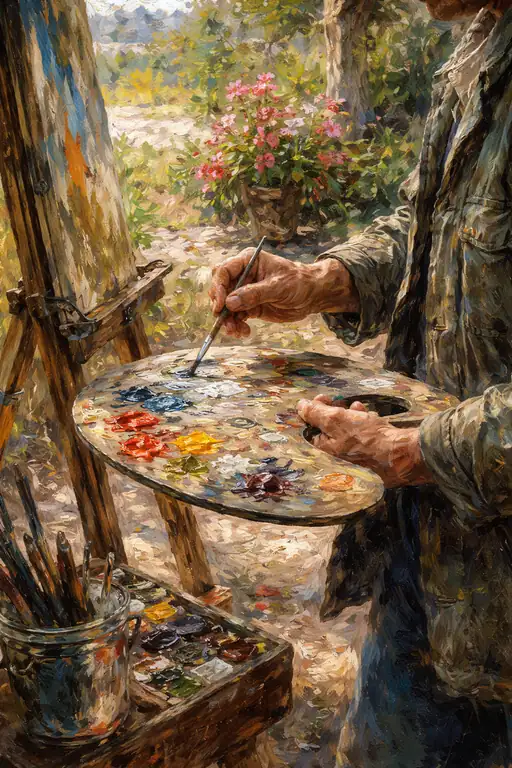 Symphony of Colors Beneath the Open Sky
Similar Artworks
 The Silent Heat of Creation
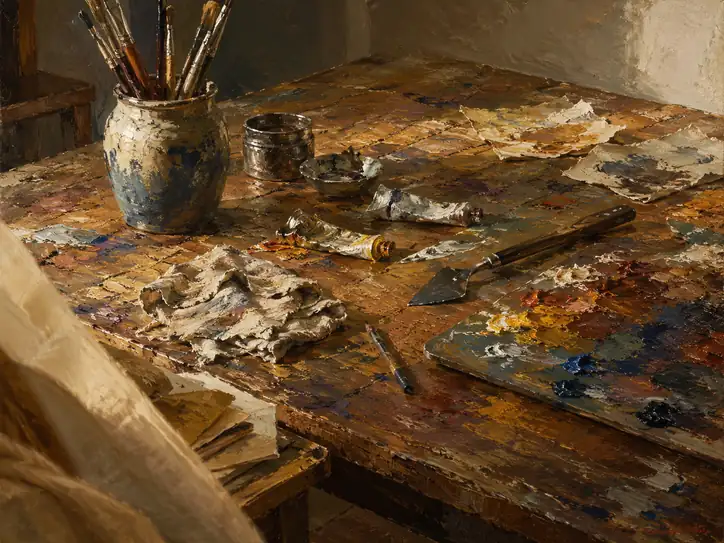 Echoes of the Creative Spirit
 The Restless Genesis of Creation
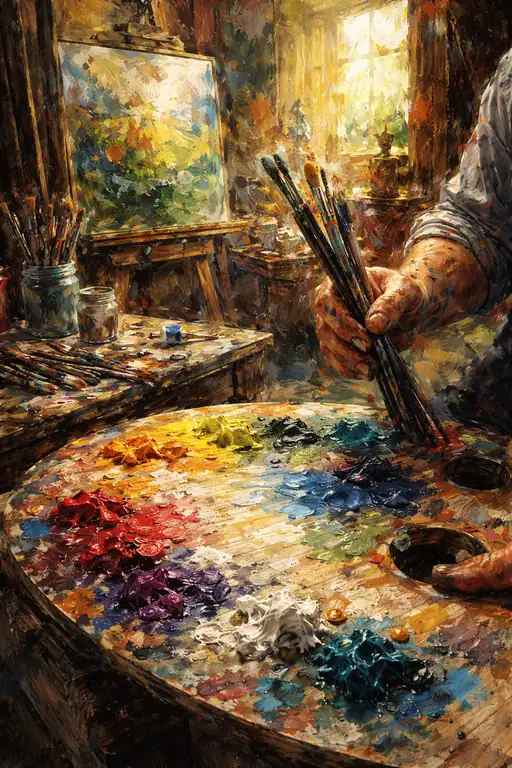 The Alchemist's Sanctuary: Where Color Becomes Life
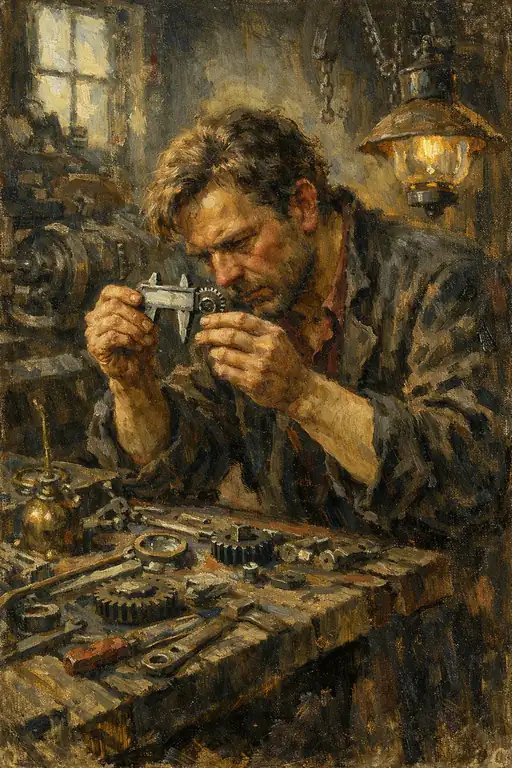 The Artisan's Gaze: Adjusting Gears in an Antique Workshop
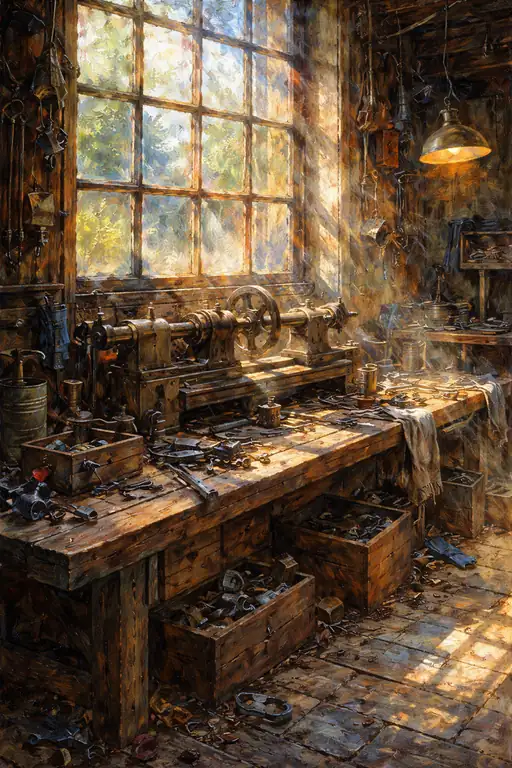 Sunbeams on the Silent Lathe
 Echoes of a Forgotten Journey
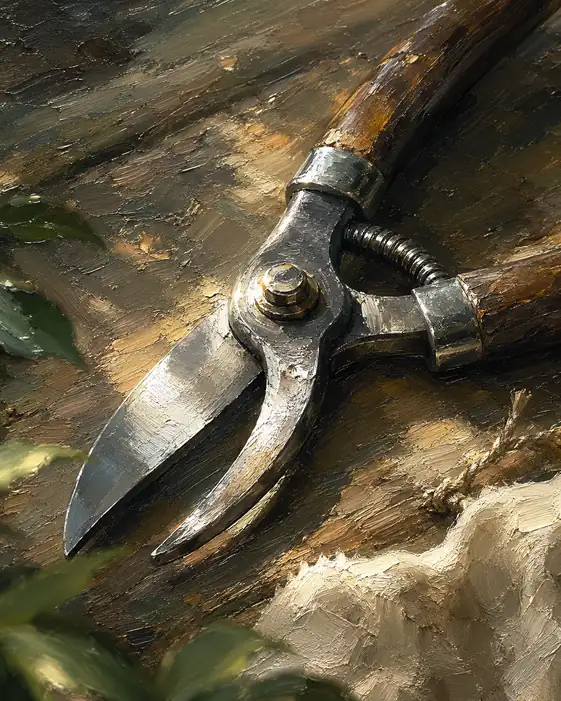 Legacy of the Soil
 The Silence of Sealed Memories
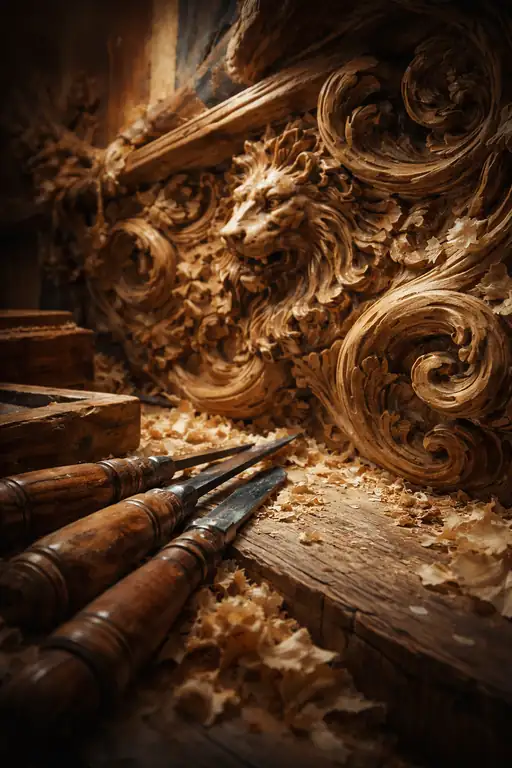 Breath of the Timber