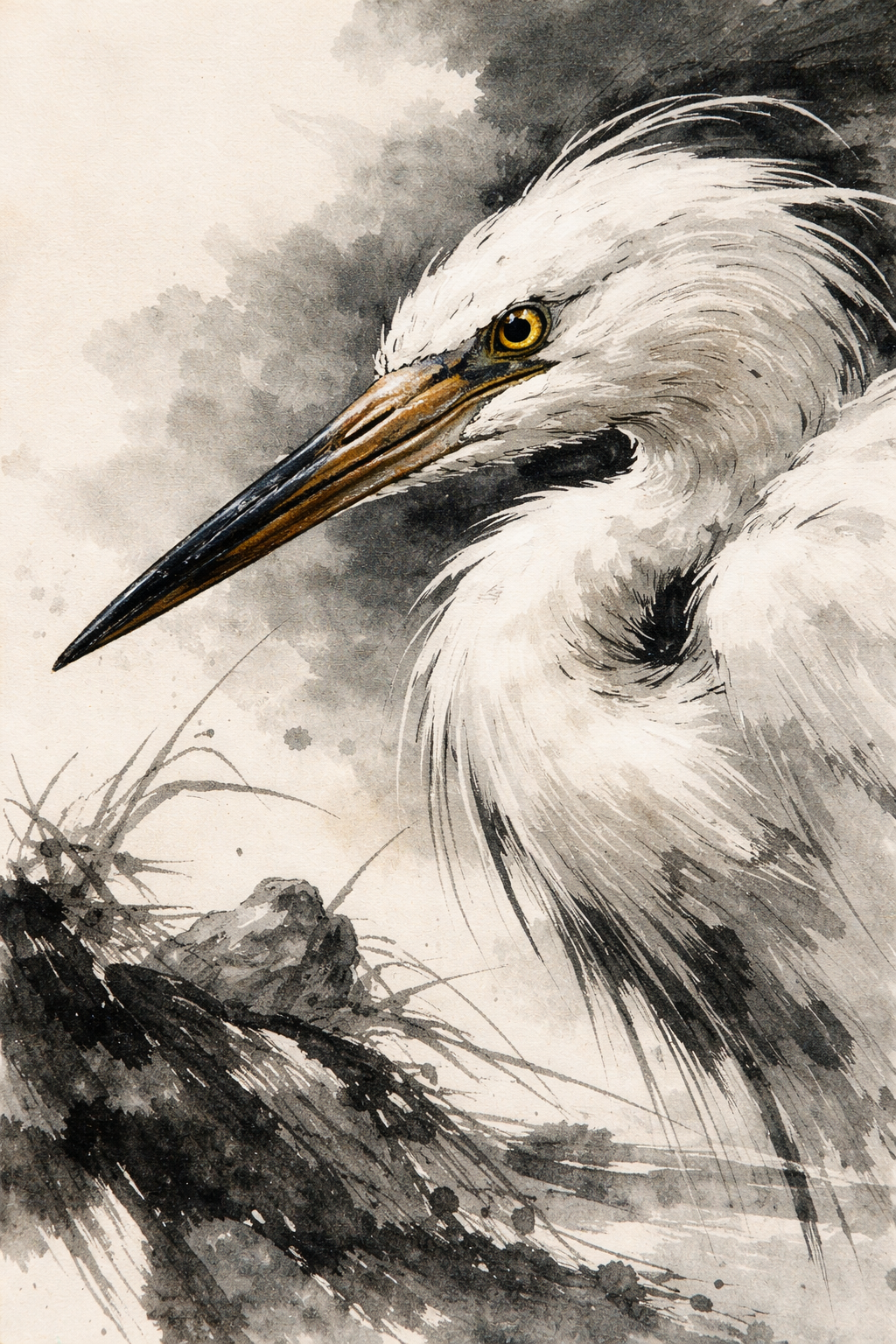
The Golden Gaze of the Egret
Critique
1. Introduction This painting, executed in watercolor and ink, presents a majestic egret characterized by its sharp beak and distinctive golden eye. The composition focuses on the upper body of the bird, which is positioned prominently across the right side of the frame against a backdrop suggestive of marshland. This work captures a moment of intense biological stillness and tension, highlighting the contrast between meticulously rendered details and a fluid, atmospheric background. 2. Description A long, pointed beak extends diagonally from the upper left, showing subtle textures and light reflections on its surface. At the base of the beak, the eye is rendered with a vibrant yellow iris and a deep black pupil, conveying a sense of keen awareness. The white plumage from the head to the neck is meticulously depicted with fine, individual strokes, while the darker background wash effectively silhouettes its delicate contours. In the lower left, rough ink strokes suggest rocks and reeds, balancing the overall composition. 3. Analysis The color palette is primarily monochromatic, using whites, grays, and blacks, with the golden eye serving as the sole chromatic accent to guide the viewer’s attention. Strong tonal contrast is utilized to create depth, where the pure white feathers stand out against the varied washes of gray and deep ink in the background. Geometrically, the straight line of the beak contrasts with the rhythmic, organic curves of the feathers. Splatters and bleeding techniques in the background add a sense of dynamic spontaneity to the work. 4. Interpretation and Evaluation The work successfully captures both the physiological beauty of the bird and a deeper sense of its instinctual alertness. The balance between the high level of detail in the feathers and the bold, abstract brushwork in the background demonstrates significant technical proficiency. By placing the subject slightly off-center, the composition suggests a continuation of space beyond the frame. This piece is highly evaluated for its original synthesis of traditional ink-wash aesthetics with modern representational precision. 5. Conclusion This painting effectively freezes a moment of natural silence through the coexistence of precise linear work and soft, bleeding washes. The accurate depiction based on careful observation speaks directly and powerfully to the essence of the subject. While the sharp beak initially captures the viewer's gaze, the focus eventually shifts to the profound layering of the delicate white plumage. It is an exceptional piece that portrays the nobility of life within a tranquil yet austere environment.
Same Subcategory
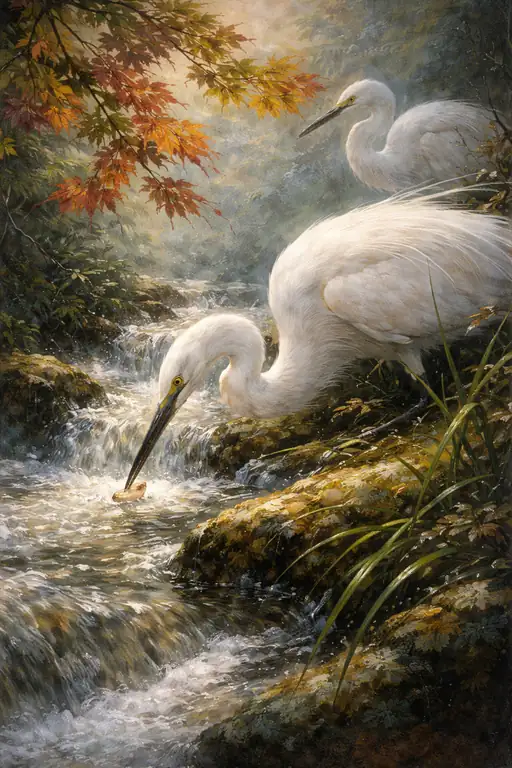 A Fleeting Strike in the Calm
Similar Artworks
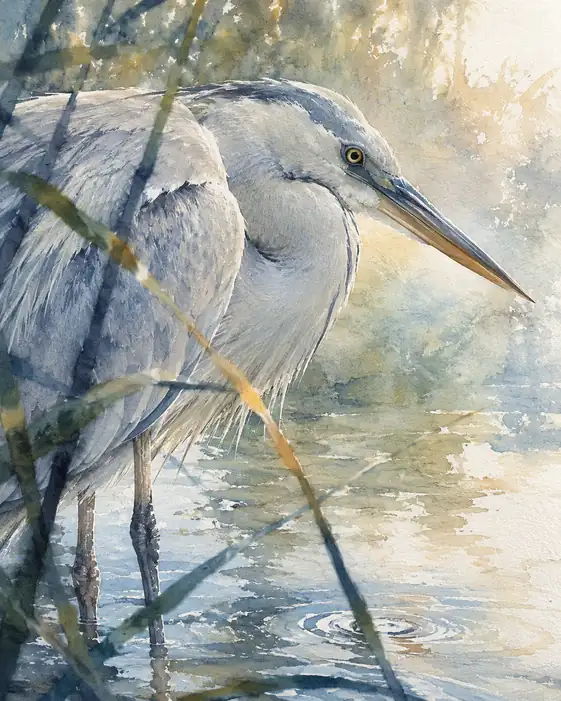 The Silent Watcher
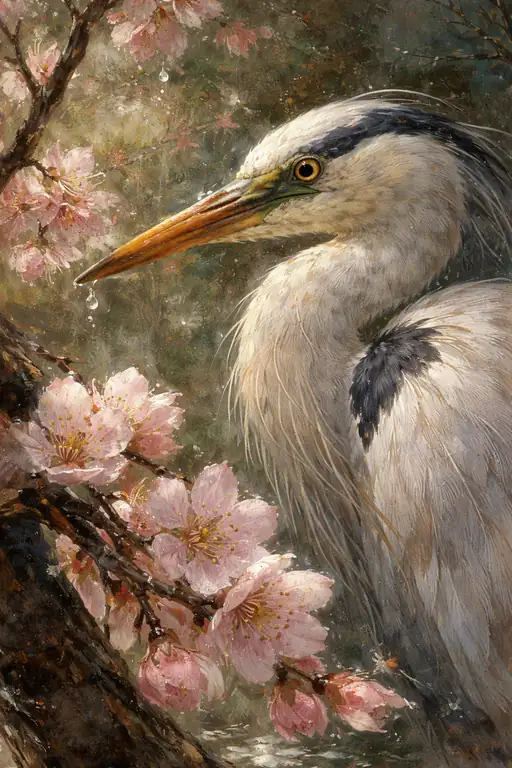 Silent Vigil Beneath the Falling Cherry Petals
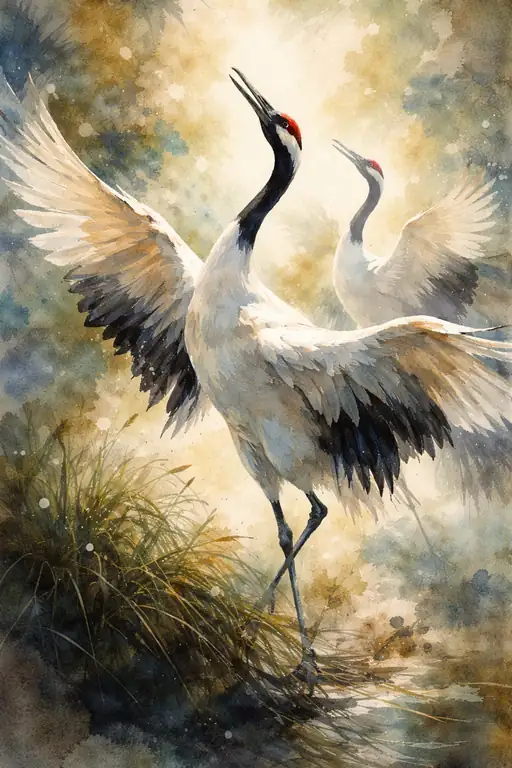 Dance of the Marsh
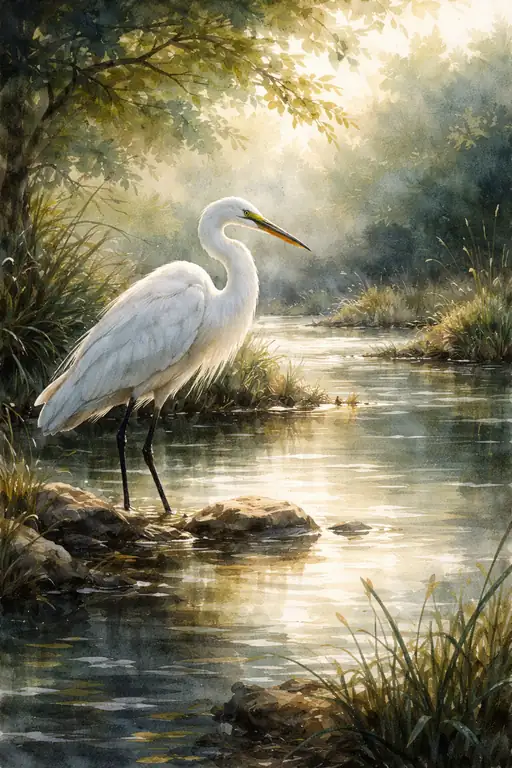 Solitude in the Whispering Shallows
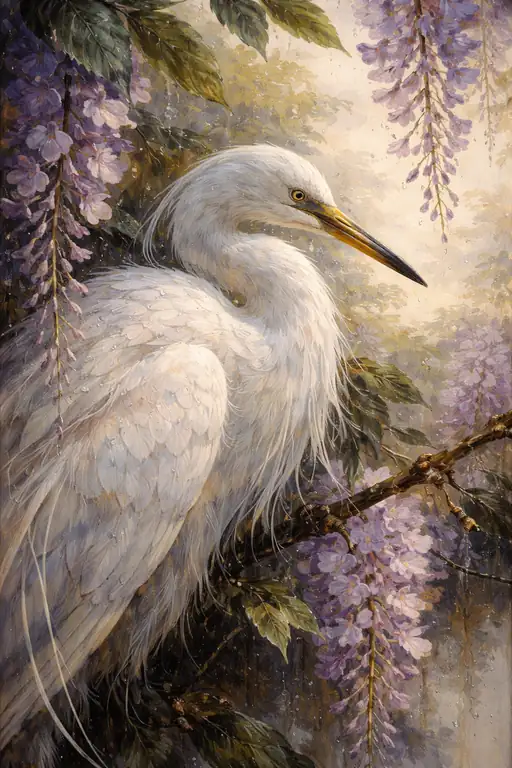 Whispers of the Lavender Wisteria
 Heron with Petal Wings at the Water's Edge
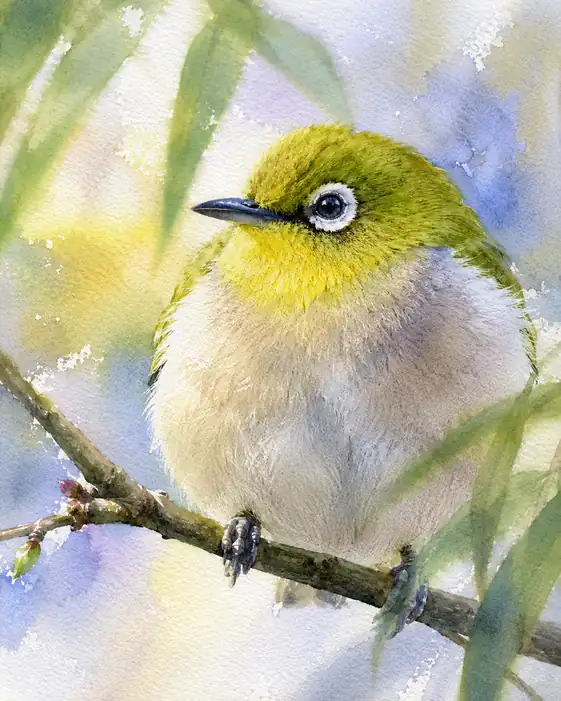 Spring's Quiet Breath
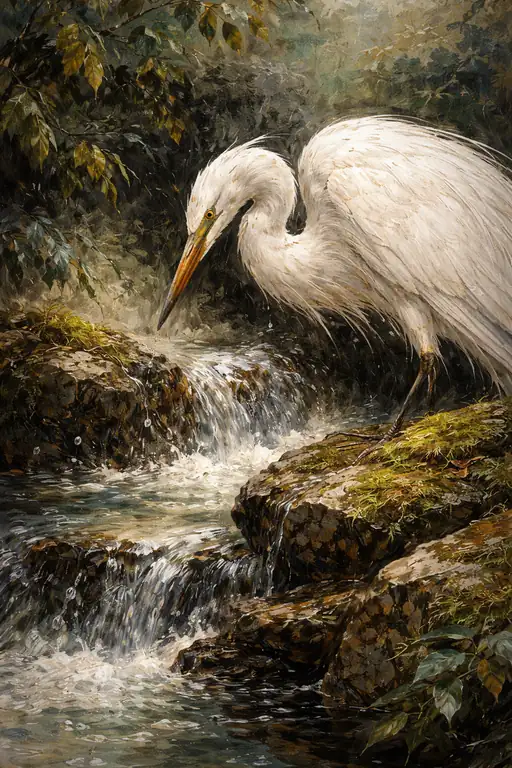 The Silent Watcher of the Cascade
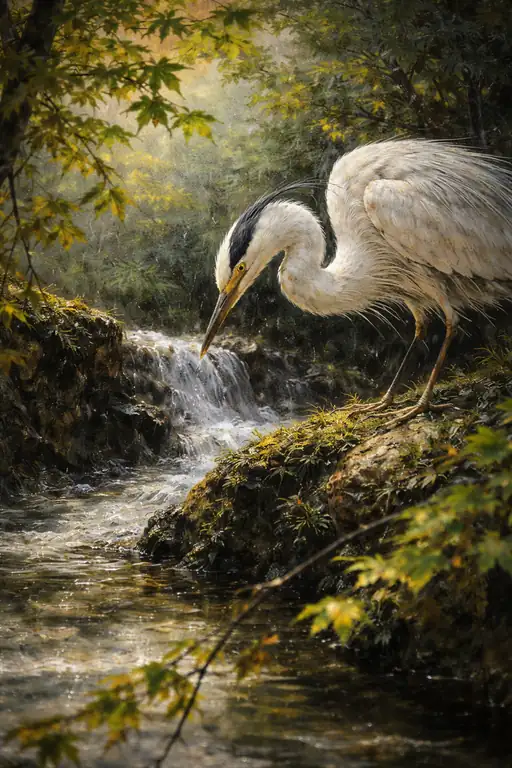 A Solitary Gaze Where the Water Meets the Gold
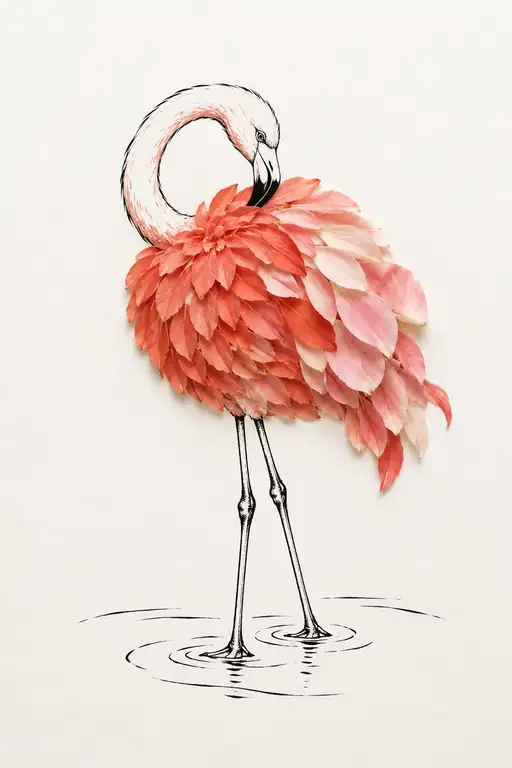 Turning Gently Inward