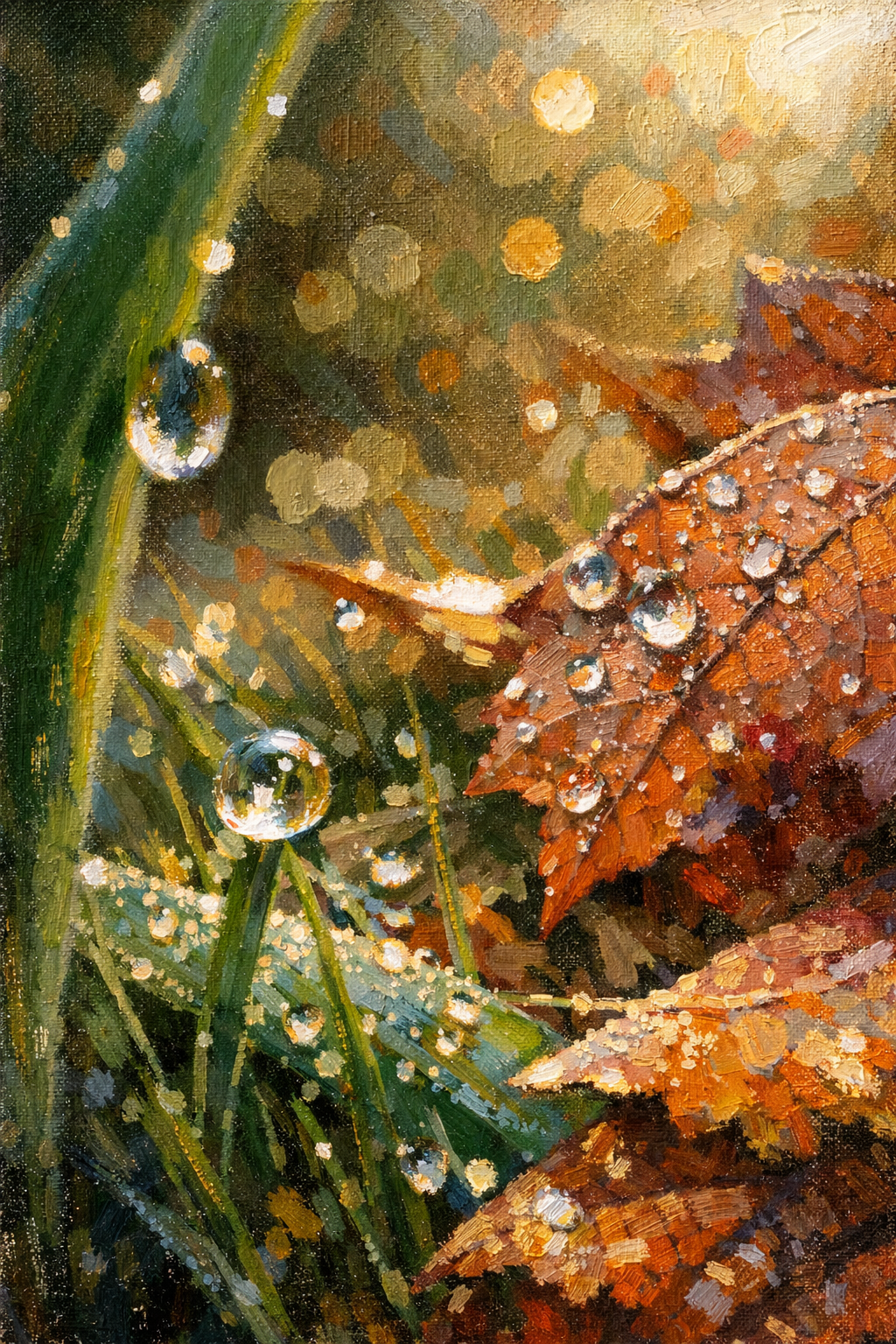
Whispers in the Dew
Critique
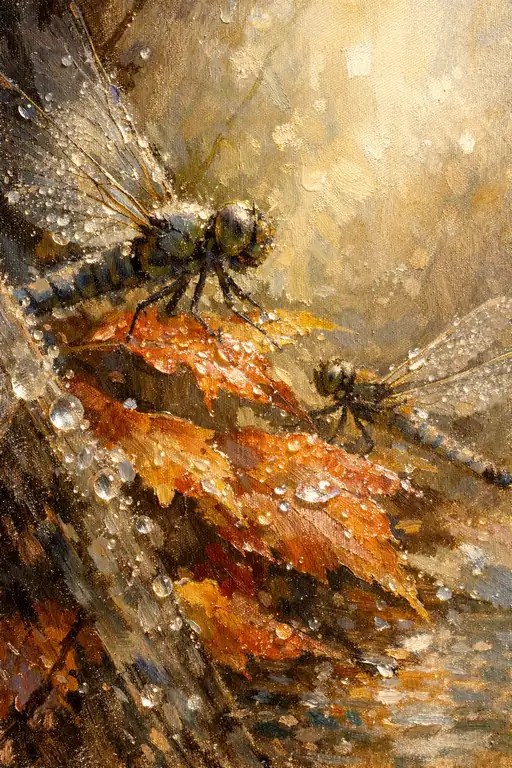
1. Introduction This oil painting presents an extreme close-up view of the natural world, focusing on the delicate interaction between autumn leaves, grass, and dewdrops. The work adopts a macro perspective that transforms a small patch of ground into a rich landscape of color and texture. By isolating these minute elements, the painting encourages the viewer to find monumental beauty in the transient and often overlooked details of the changing seasons. 2. Description The composition features several vibrant orange and brown autumn leaves resting among sharp blades of green grass. Numerous translucent dewdrops are scattered across the surfaces, clinging to the edges of the leaves and balancing on the tips of the grass. Each droplet acts as a tiny lens, reflecting the golden light that permeates the scene. The background is a soft, out-of-focus blur of warm yellows and oranges, creating a bokeh effect that enhances the sharpness of the foreground elements. 3. Analysis Technically, the painting is notable for its heavy use of impasto and the visible grain of the canvas, which adds a strong tactile dimension to the work. The artist uses thick, confident brushstrokes to build the forms of the leaves and grass, contrasting with the smooth, luminous quality of the water droplets. The lighting is masterfully handled, with bright highlights on the drops creating a sense of crystalline transparency. The color palette is a harmonious blend of earthy autumn tones and fresh greens, unified by the overarching golden light. 4. Interpretation and Evaluation The work can be interpreted as a meditation on the fragility and purity of nature. The dewdrops symbolize a fleeting moment of clarity amidst the decay of the autumn leaves, suggesting a cycle of renewal and persistent life. Evaluation-wise, the artist demonstrates exceptional control over light and shadow, particularly in how the droplets refract and reflect their surroundings. The ability to convey complex textures—from the rough, drying surface of a leaf to the fluid tension of water—shows a high level of technical mastery and observational skill. 5. Conclusion Initially seen as a simple study of nature, the painting reveals itself to be a powerful exploration of light and substance. It succeeds in elevating a humble subject to a level of poetic significance through its intense focus and rich materiality. The final effect is a renewed appreciation for the intricate beauty that exists beneath our feet.
Same Subcategory
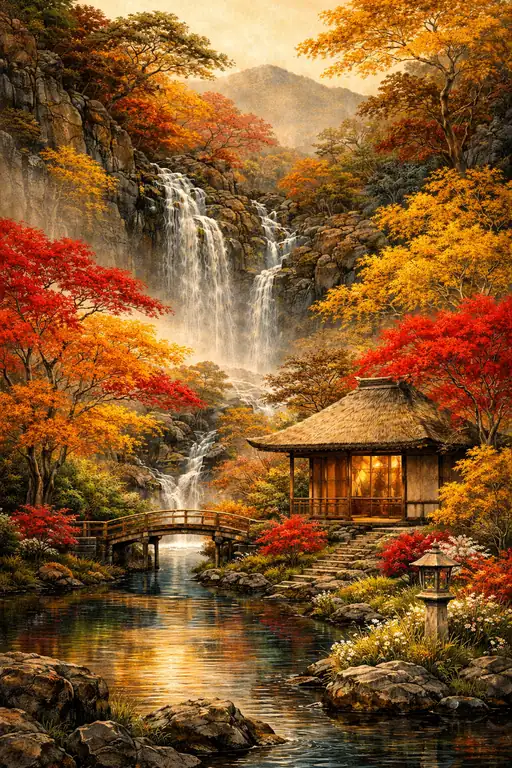 Crimson Waterfall and the Golden Bridge
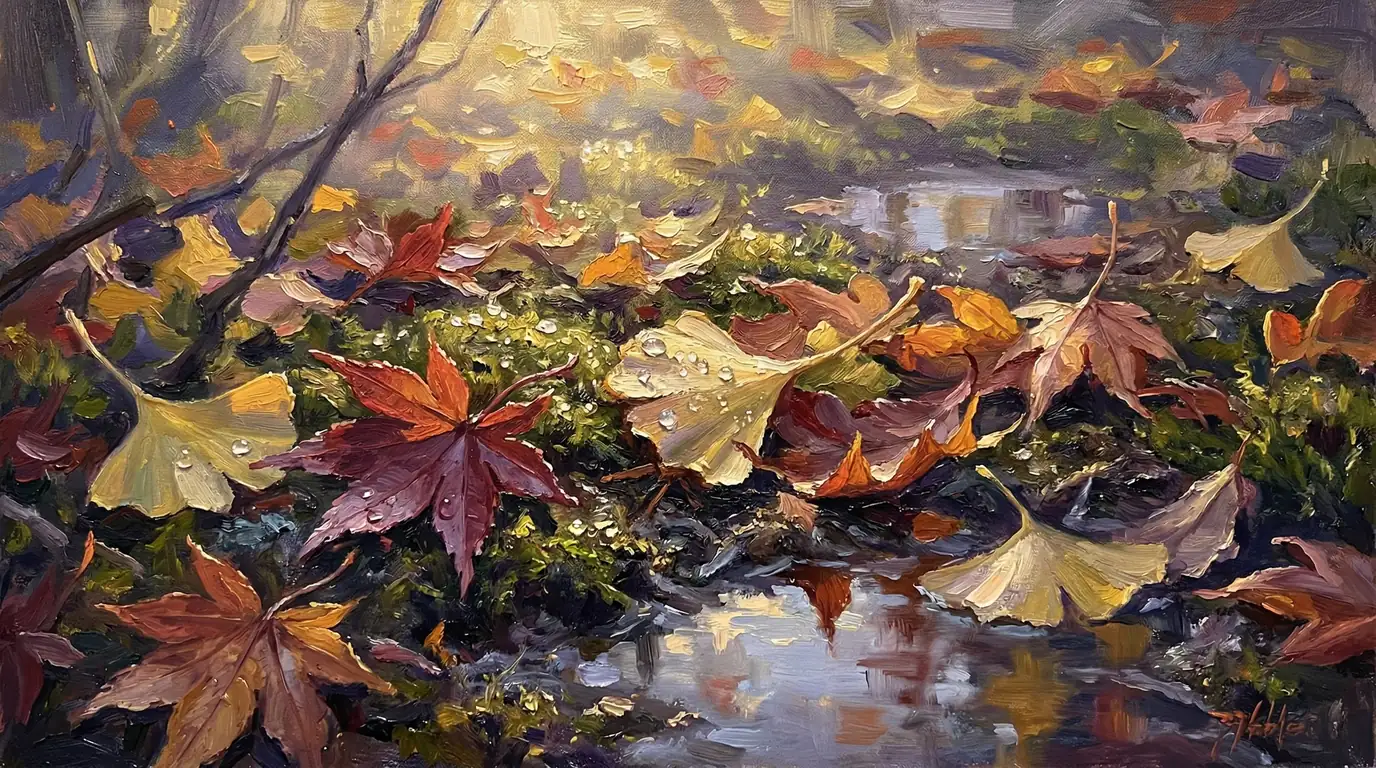 Golden Whispers on a Damp Canvas
Similar Artworks
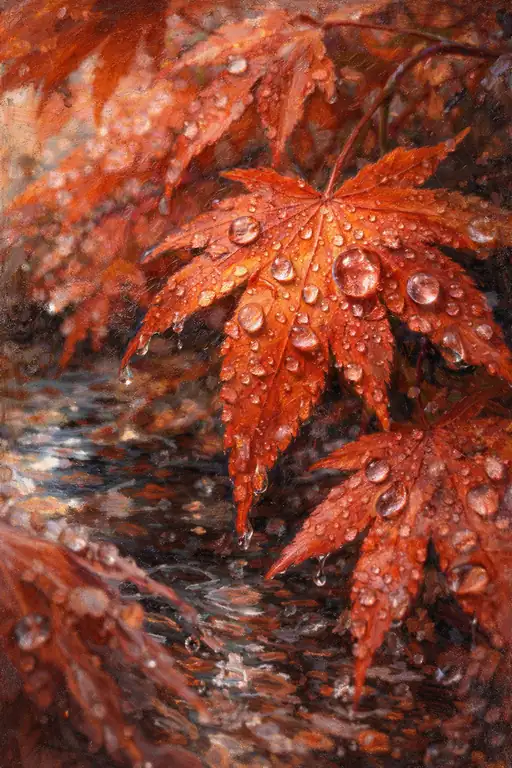 Glistening Embers of Fall
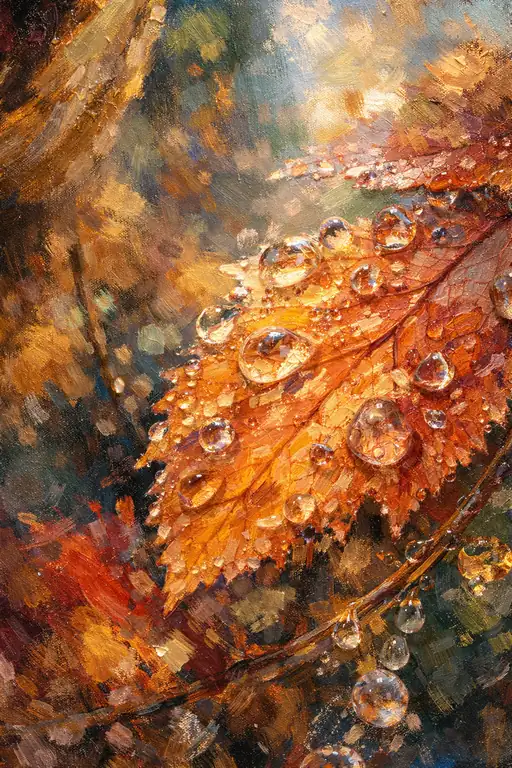 Jewels of the Fallen
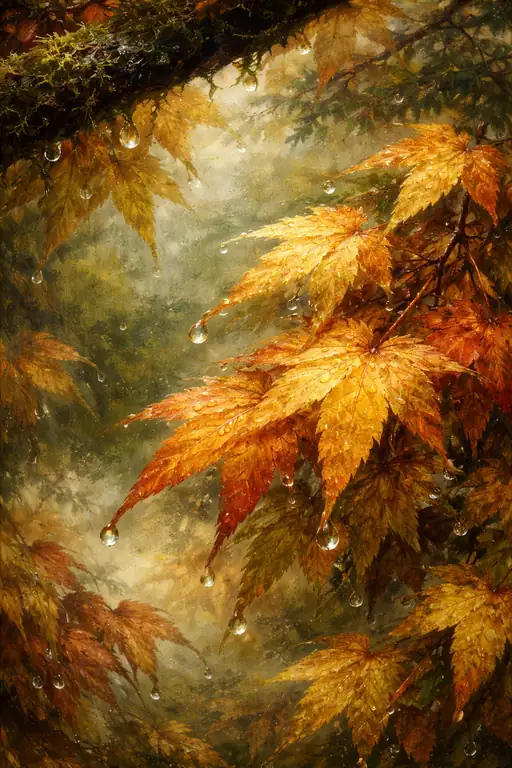 Autumn's Glistening Breath: A Tapestry of Rain and Gold
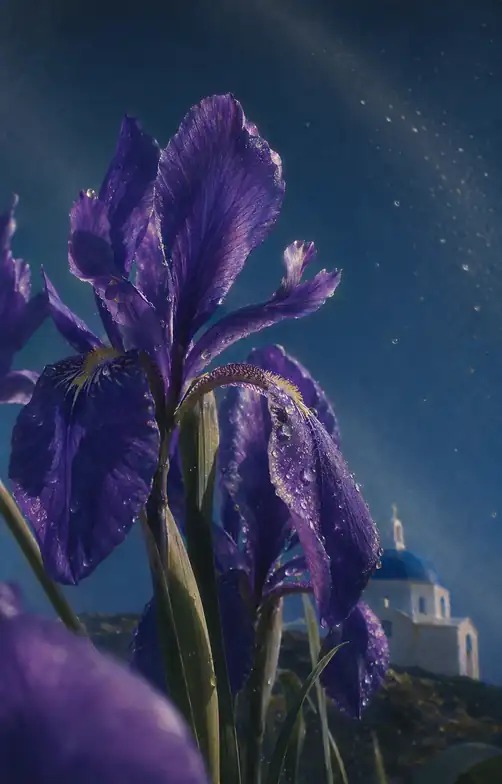 Iris and the Seaside Chapel
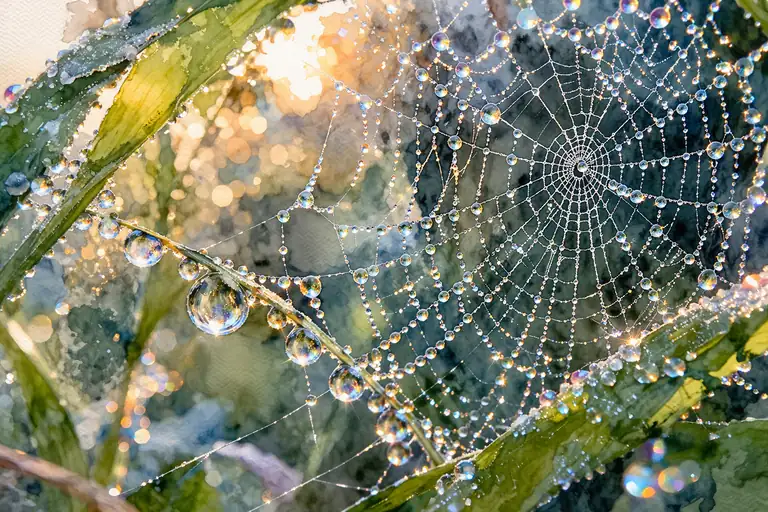 Nature's String of Pearls
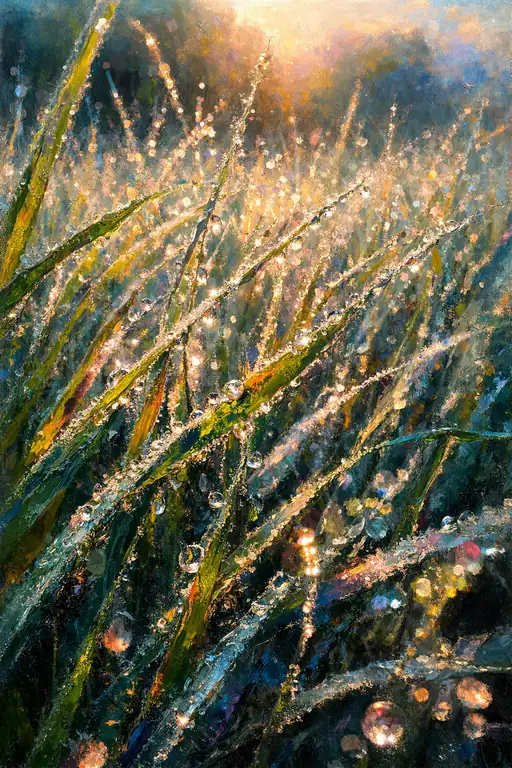 Golden Awakening: The Physicality of Light
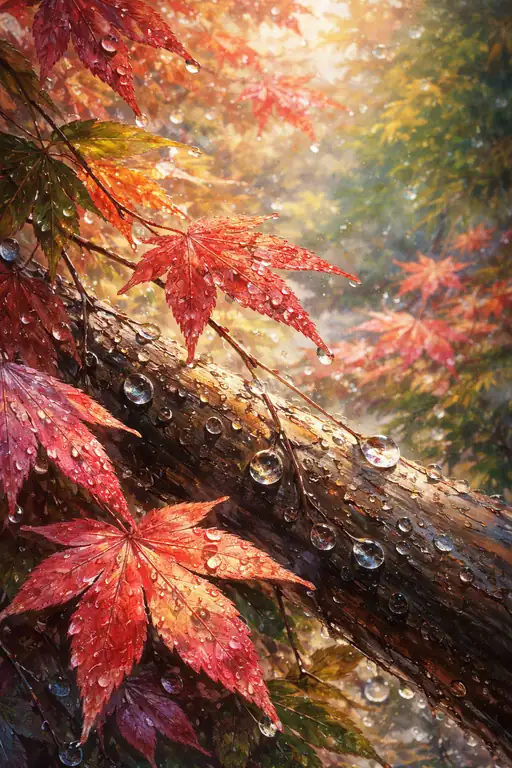 Whispers of the Autumn Dew
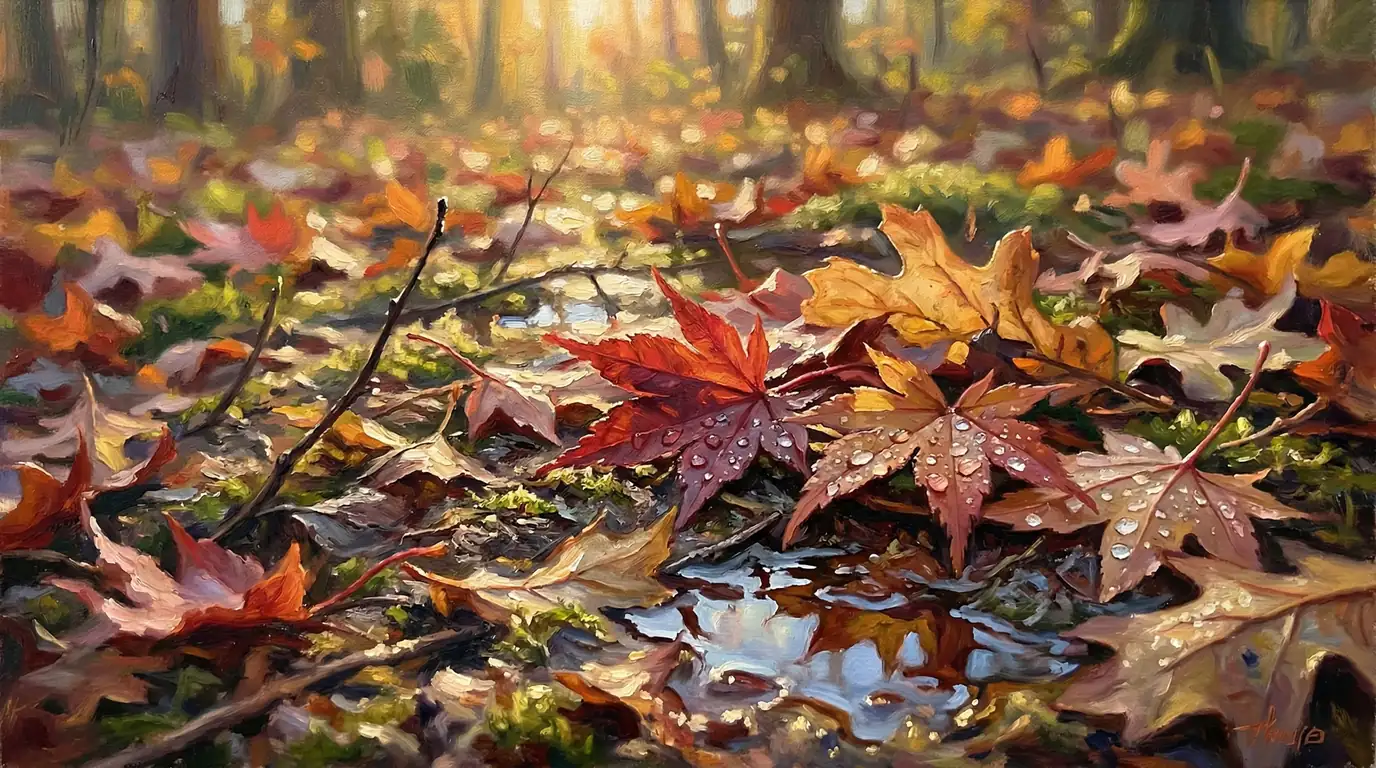 Tears of the Fallen Maple
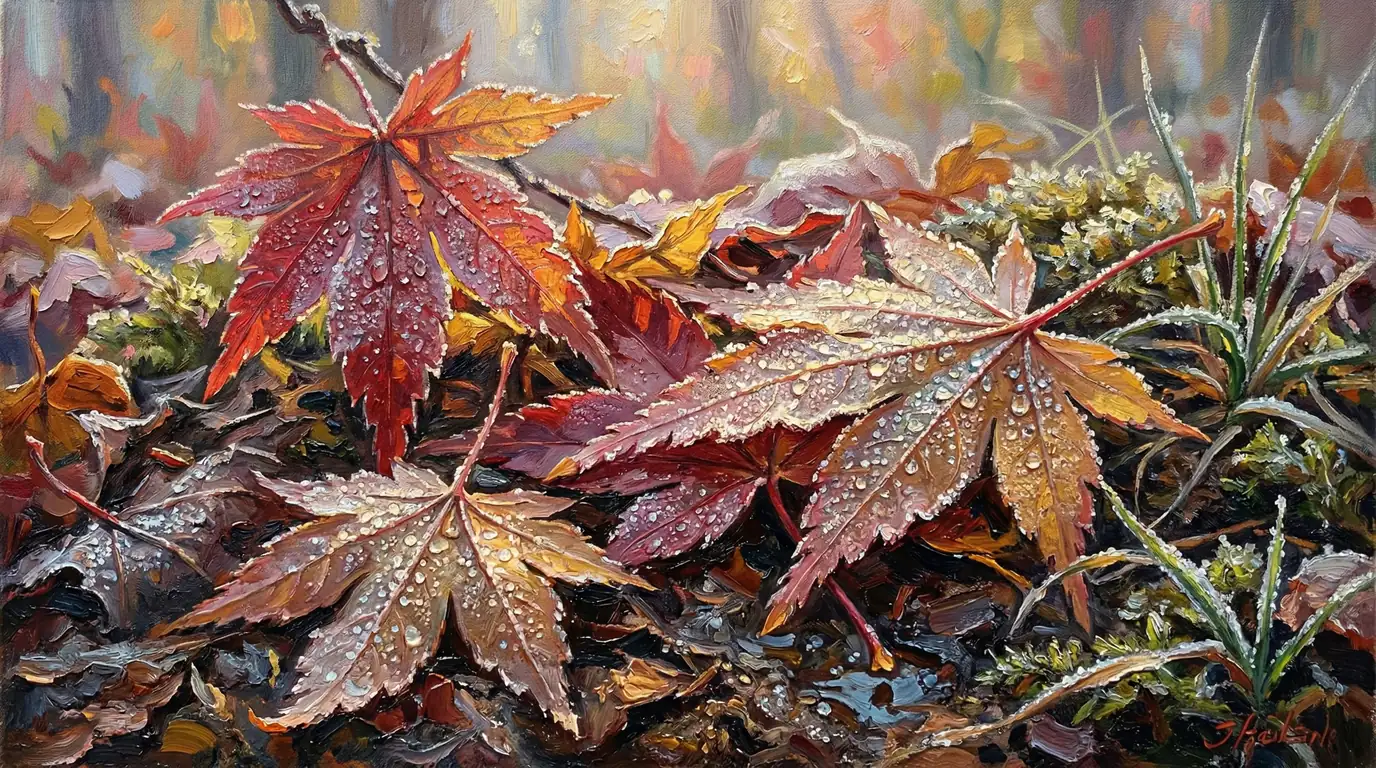 Tears of the Autumn Morning
 The Dew-Kissed Sentinels of Autumn