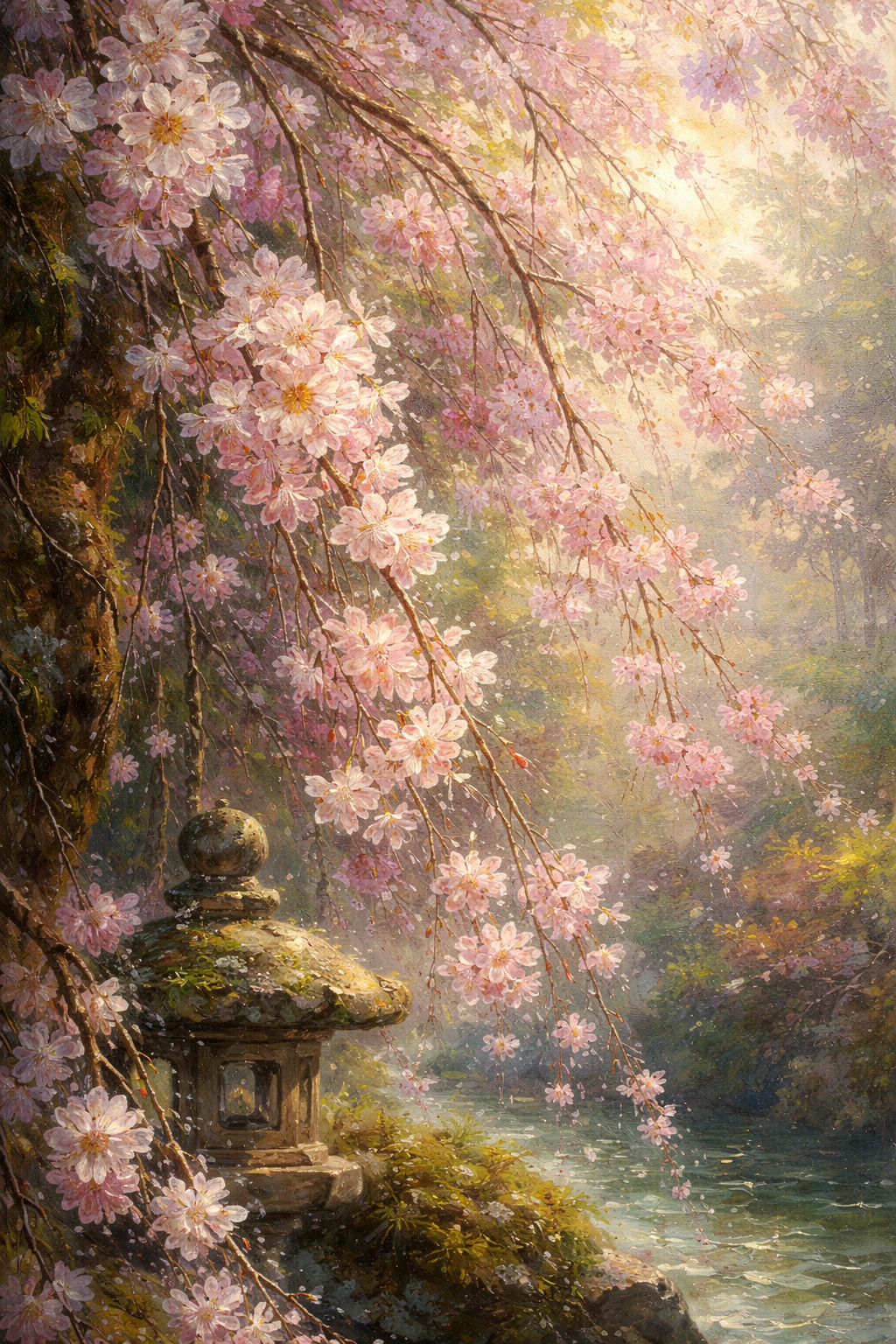
Cherry Blossom Rain Falling on the Lantern
Critique
1. Introduction This oil painting presents a serene spring landscape featuring a weeping cherry tree and a traditional stone lantern. The composition captures a moment of tranquil beauty where nature and human elements coexist in a harmonious garden setting. The soft, luminous lighting suggests the gentle atmosphere of a bright spring day, inviting the viewer into a peaceful meditative space. 2. Description The foreground is dominated by a weathered stone lantern on the left, its surface covered with patches of moss and delicate cherry blossoms. Cascading from the top and right are numerous branches of a weeping cherry tree, heavy with pale pink flowers that seem to glow against the light. Below, a small stream or river flows gently, its surface reflecting the surrounding greenery and the brightness of the sky. The background consists of a misty, sun-drenched forest, creating a sense of depth and atmospheric perspective. 3. Analysis Compositionally, the painting employs a diagonal arrangement, with the branches of the cherry tree leading the eye from the upper left to the lower right. This creates a dynamic yet balanced structure that frames the central view of the water. The artist uses a palette of soft pinks, warm greens, and earthy browns, unified by a golden light that permeates the entire scene. The brushwork is expressive and textured, particularly in the rendering of the blossoms and the stone surface, adding a tactile quality to the visual experience. 4. Interpretation and Evaluation The work can be interpreted as a celebration of the fleeting beauty of spring and the enduring presence of traditional Japanese aesthetics. The juxtaposition of the fragile flowers and the solid stone lantern symbolizes the contrast between the ephemeral and the permanent. The technical execution is exceptional, especially in the artist's ability to capture the translucency of the petals and the complex interplay of light and shadow. The overall effect is one of quiet contemplation and profound appreciation for the natural world. 5. Conclusion Initially perceived as a simple landscape, the painting reveals deeper layers of symbolic harmony upon closer inspection. It successfully captures the essence of a traditional garden through masterful use of light and texture. The piece serves as a poignant reminder of the seasonal cycles that define the landscape.
Same Subcategory
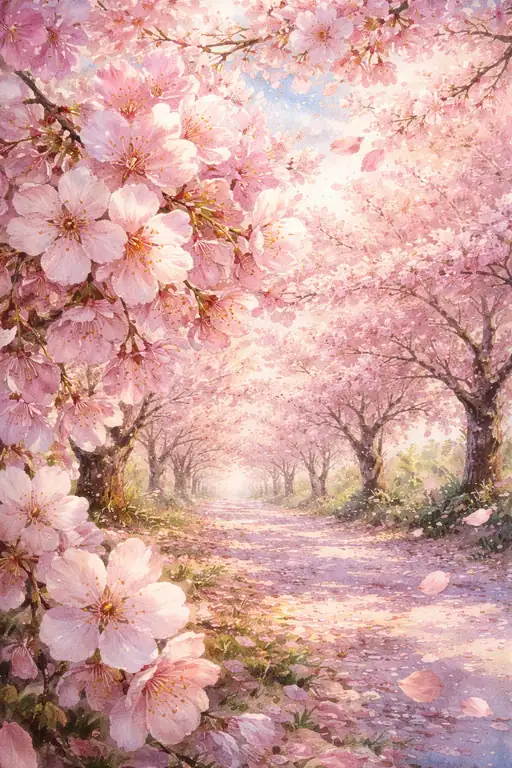 Path of the Dancing Petals
Similar Artworks
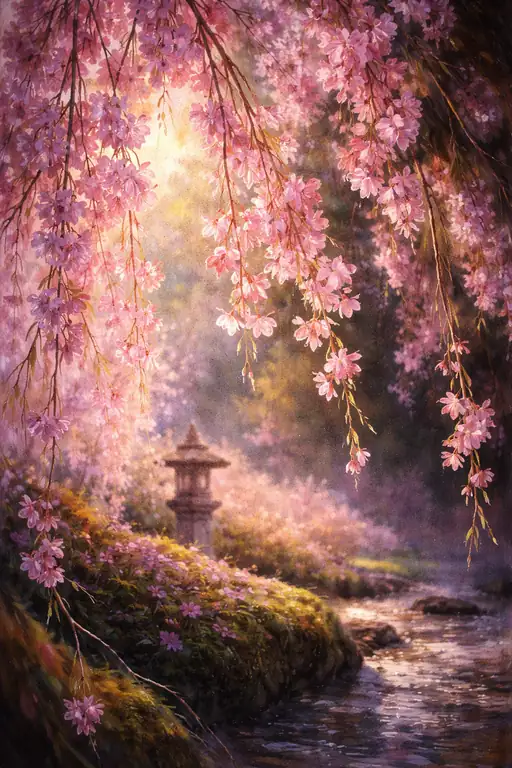 Spring's Ethereal Embrace
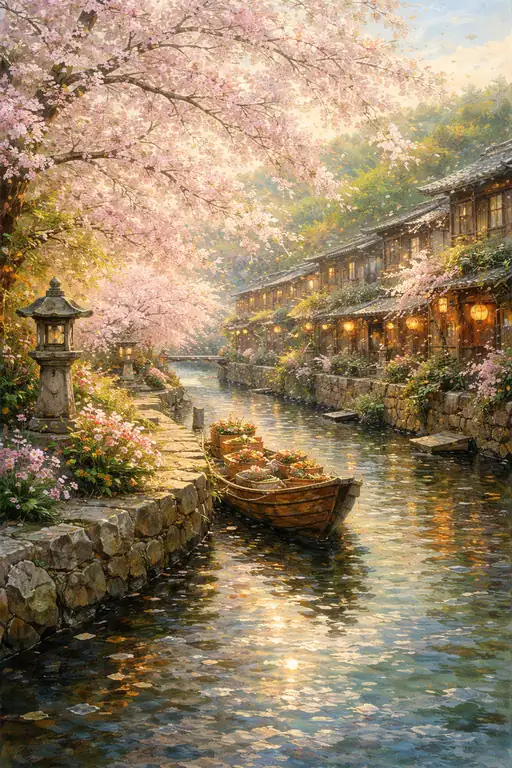 Reflections of a Peaceful Voyage
 Spring's Gilded Reflection
 Spring's Gentle Melody by the Stream
 Sunset Over the Serene Stream
 Morning Reflections Along the Cherry Path
 Spring Moon Path Beside the River
 Weeping Cherry Crowned in Golden Rays
 Whispers of the Weeping Spring
 Moonlight Blossom over the Quiet Village