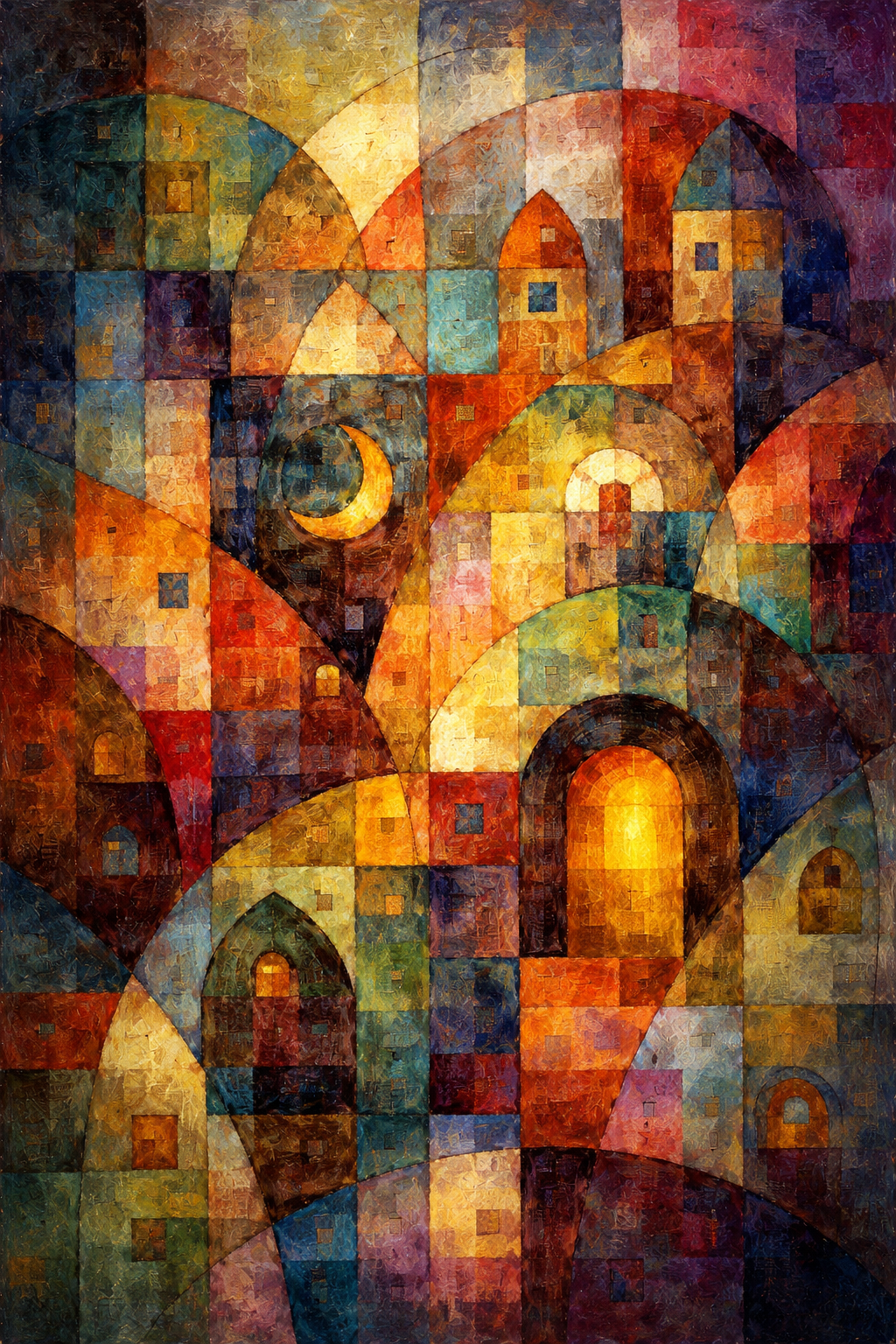
Labyrinth of the Crescent City
Critique
1. Introduction This work is a digital painting that reconstructs an urban landscape through a sophisticated geometric composition. While information regarding the creator is omitted, the piece itself reveals a refined sense of form and color design. The grid-like structure covering the canvas evokes the essence of Cubism or the works of Paul Klee, offering a visual experience distinct from traditional landscape painting. It stands as a compelling example of modern expression where representational fragments and abstract planes intersect. 2. Description The composition is built from numerous small squares, upon which circular arcs and pointed arches of various sizes are overlaid. Near the center lies a glowing orange arched entrance, while a crescent moon-like shape floats in the upper left. The color palette is dominated by warm tones, ranging from golden yellows to deep reds, with complementary blues and purples skillfully placed. Square openings reminiscent of windows are scattered across the canvas, layering to form the image of complex architectural clusters. 3. Analysis A key formal feature is the contrast between the rigid grid and fluid curves. This juxtaposition allows static order and dynamic rhythm to coexist within the frame. In terms of color, the gradation spreading from the bright yellow center provides a sense of depth and luminosity. The fine brushwork creates a texture similar to mosaic tiles, with each facet containing subtle color variations. This technique imparts a complex materiality to the surface, effectively guiding the viewer's eye across the entire work. 4. Interpretation and Evaluation The piece can be interpreted as an attempt to reduce the complexity of a city into pure forms and colors, extracting its essential spirit. Symbolic motifs like the crescent moon codify reality, appealing to the viewer's memory and imagination. The original composition and light-infused color design are highly commendable. In particular, the elevation of traditional mosaic techniques into a contemporary abstract language reflects the artist's superior skill and aesthetic sensibility. 5. Conclusion This work is a high-quality piece that integrates geometric rigor with rich coloration. What initially appears as a dense accumulation of patterns eventually reveals a serene nighttime scene of an urban environment. Through the abstraction of form, the inherent beauty and order of the city are rendered more vividly. Ultimately, the painting leaves the impression of a harmonious microcosm, providing the viewer with a profound sense of spiritual fulfillment.
Same Subcategory
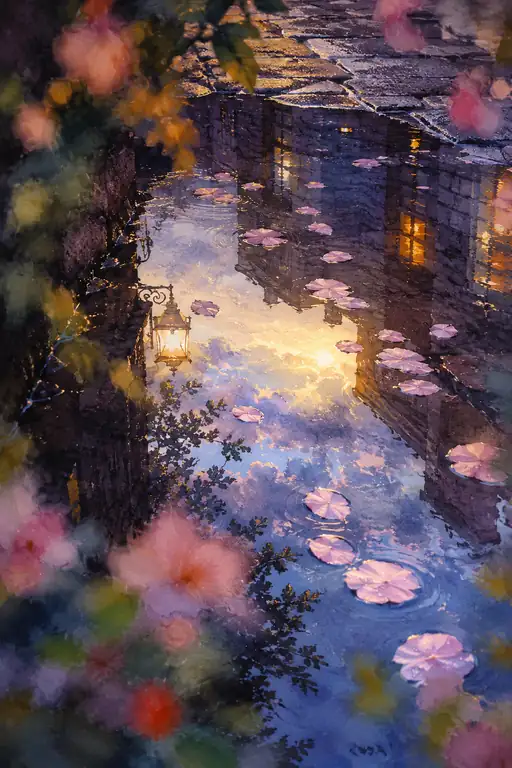 Floating Petals in the Sunset Sky
Similar Artworks
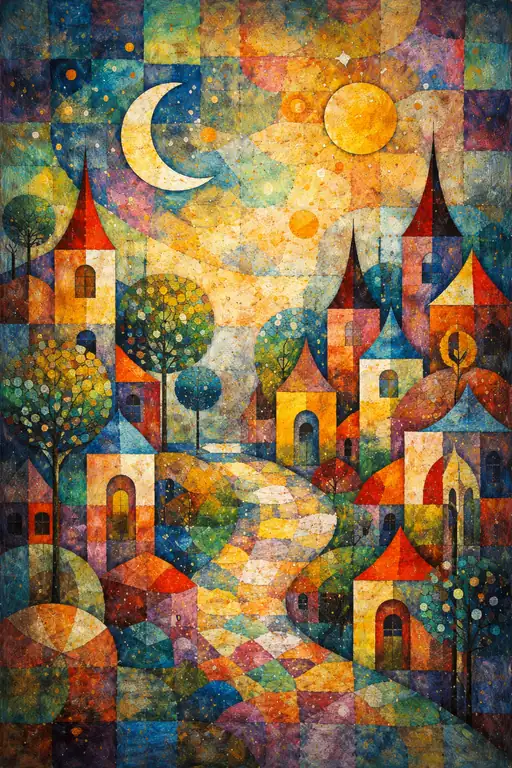 Embrace of the Frozen Bloom
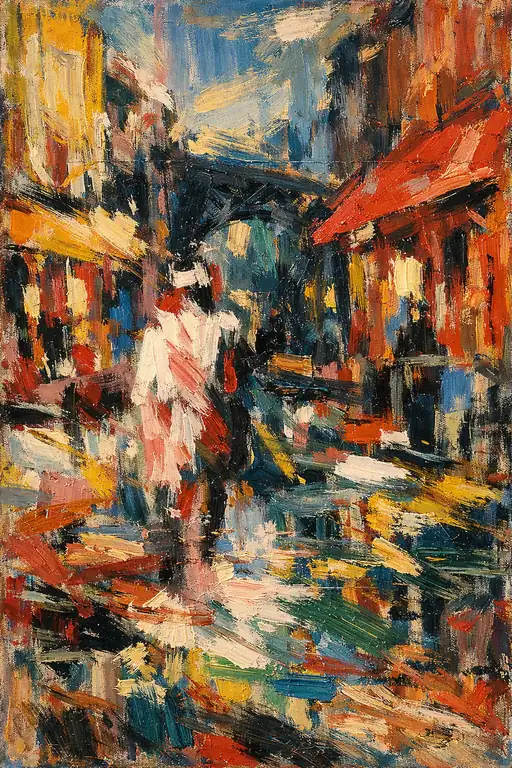 Echoes of the Neon Pavement
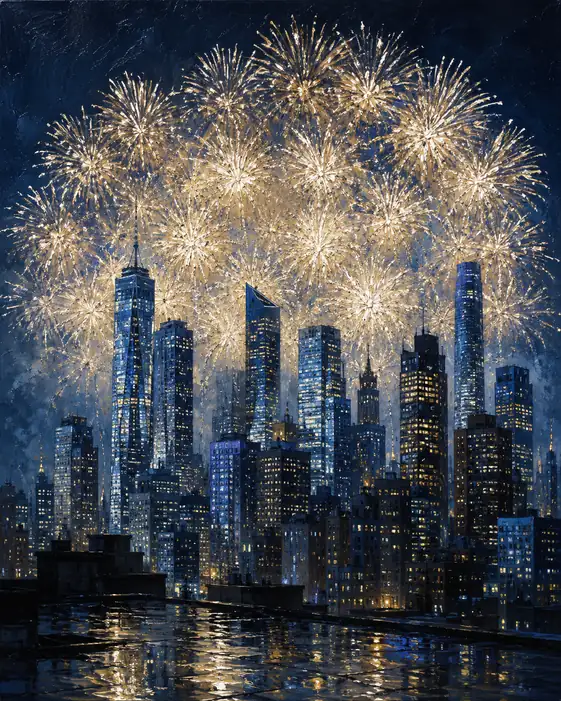 When the City Dreamed in Gold
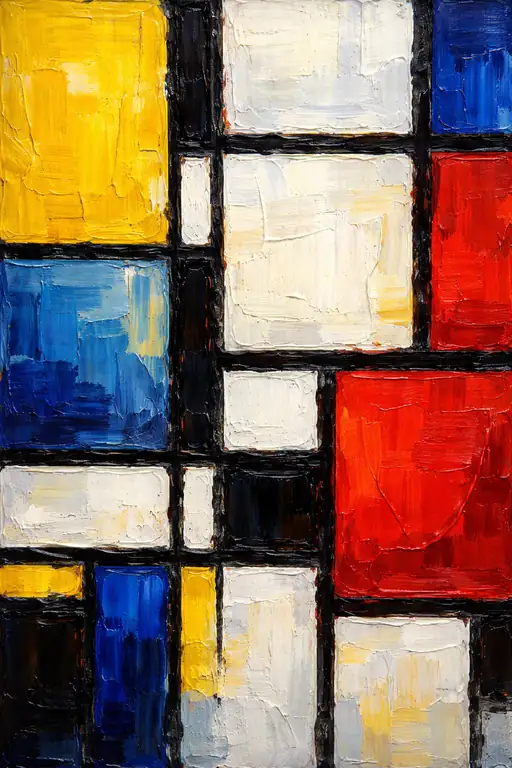 Order and Impulse
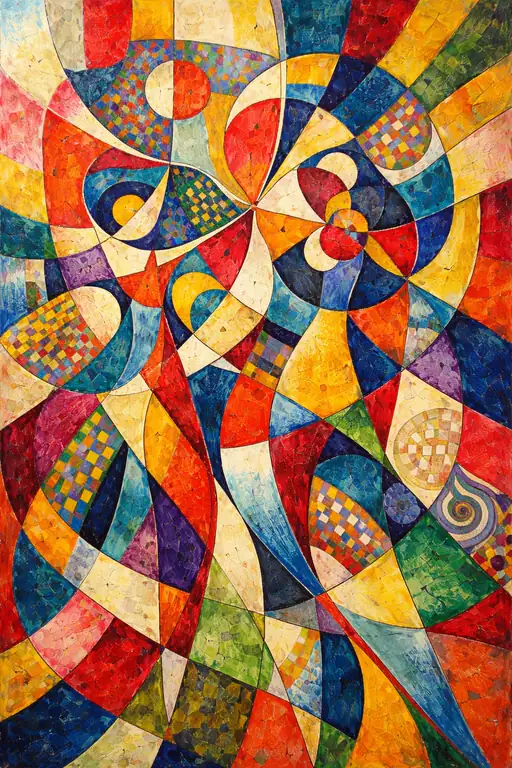 Rhapsody in Geometric Fire
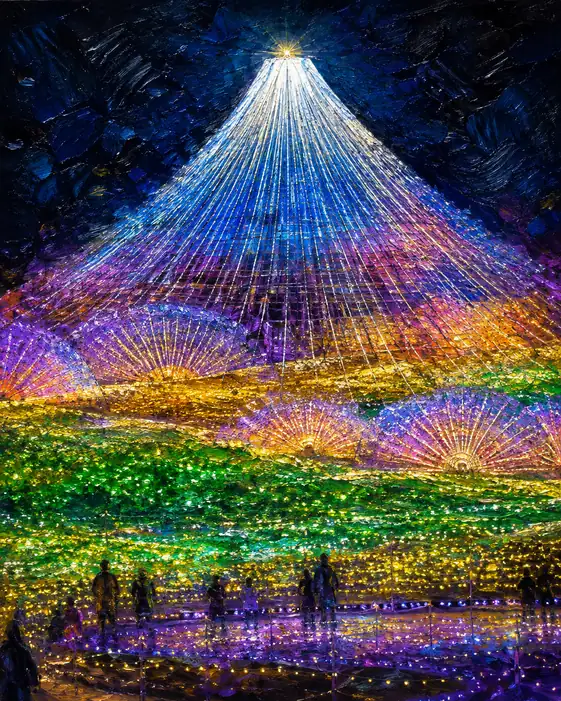 Prismatic Radiance on Winter Night
 Twilight Reflections in the Glass Prism
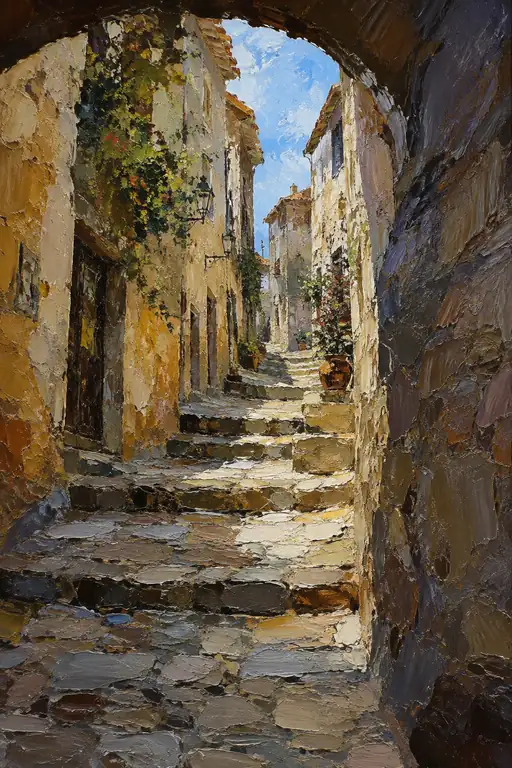 Sunlit Archway Draped in Blooms
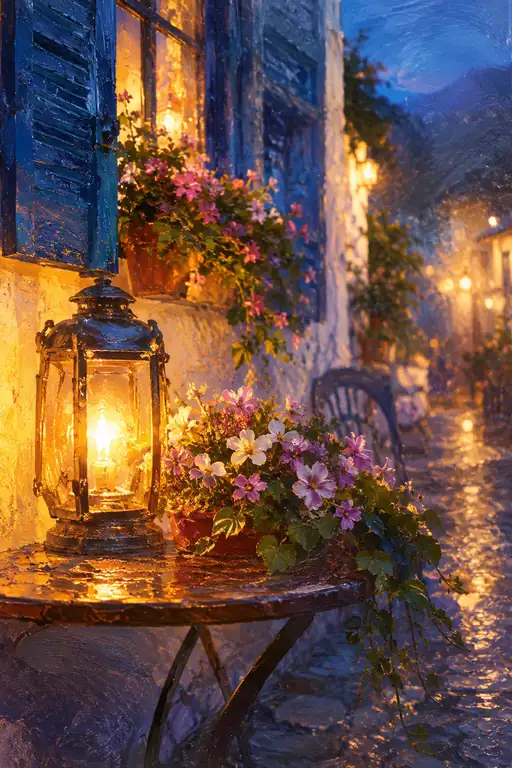 Evening Terrace Glow in the Old Quarter
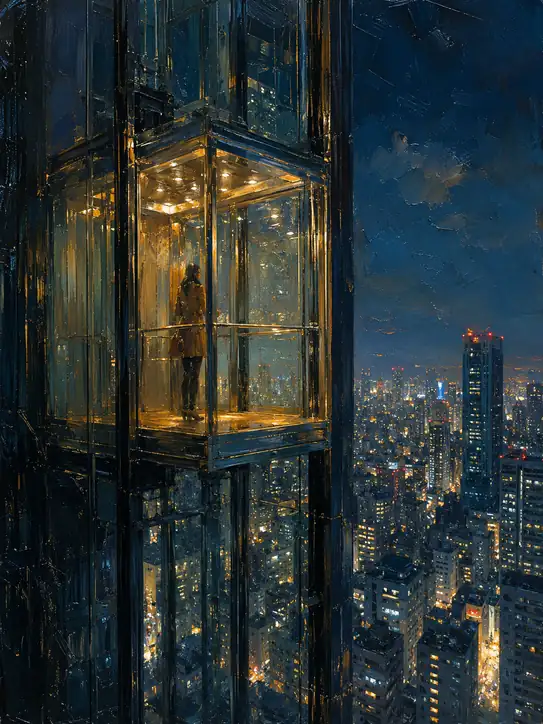 A Silent Journey Above the Night