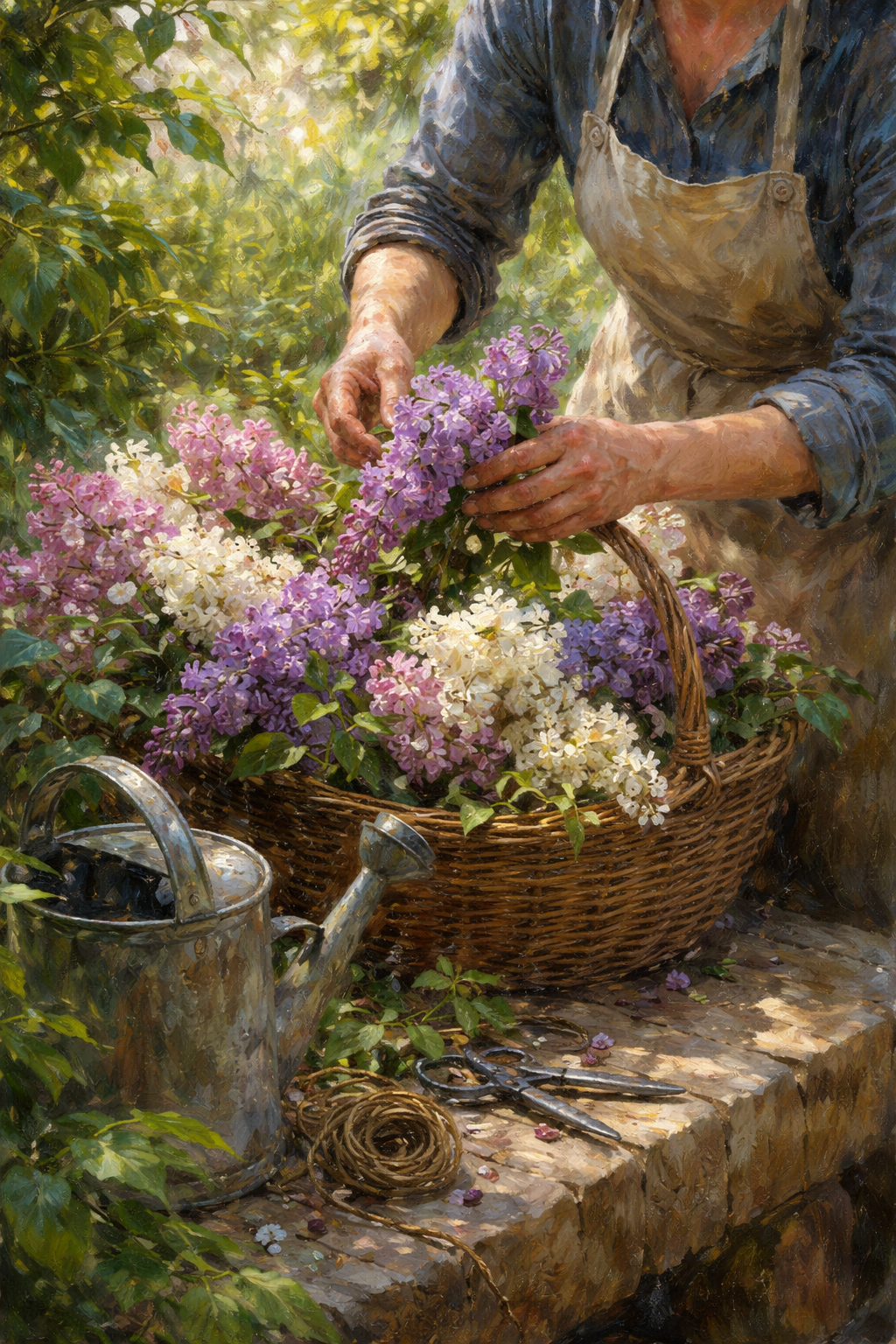
The Gardener's Quiet Solace
Critique
1. Introduction This oil-on-canvas painting captures a quiet, intimate moment of horticultural labor, focusing on the act of arranging freshly cut lilac branches. The composition centers on a large wicker basket brimming with vibrant flowers, positioned on a weathered stone ledge under dappled sunlight. Through its rich texture and dynamic light, the artwork elevates a simple domestic task into a profound study of nature and human engagement. 2. Description In the foreground, a large, woven basket is filled with dense clusters of purple and white lilacs, their delicate petals rendered with thick, impasto strokes. Beside the basket sits a tarnished metal watering can, reflecting the surrounding greenery, along with a pair of iron shears and a coil of rustic twine. The upper portion of the frame features the weathered hands of a gardener wearing a stained apron, carefully tucking a purple blossom into the arrangement. The background is a soft blur of sunlit foliage, suggesting a lush garden setting. 3. Analysis The artist employs a vivid, impressionistic technique, using loose and visible brushstrokes that imbue the scene with a sense of movement and vitality. Light is the primary structural element, cascading from the upper left to create sharp highlights on the watering can and the gardener’s hands while casting soft shadows within the basket. The color palette is dominated by the cool lavenders and whites of the flowers, which are balanced by the warm, earthy browns of the twine and the stone. 4. Interpretation and Evaluation The work serves as a celebration of the tactile and sensory experiences associated with gardening and the changing seasons. The focus on the hands rather than the face emphasizes the dignity of manual labor and the direct connection between the creator and the natural world. Technically, the artist demonstrates exceptional skill in capturing the varied textures of metal, stone, fabric, and delicate floral tissue. The triangular composition provides a sense of stability that mirrors the calm nature of the subject. 5. Conclusion Ultimately, the painting invites the viewer to appreciate the fleeting beauty of the natural world and the quiet satisfaction found in its care. The interplay of light and texture transforms a mundane scene into a radiant expression of life and growth. This observation reinforces the initial impression of the work as a masterful homage to the simple, enduring rhythms of the garden.
Same Subcategory
Similar Artworks
 Symphony of the Sunlit Studio
 The Canvas of Light and Soul
 Dancing Colors of the Creator's Soul
 A Quiet Conversation with the Sun
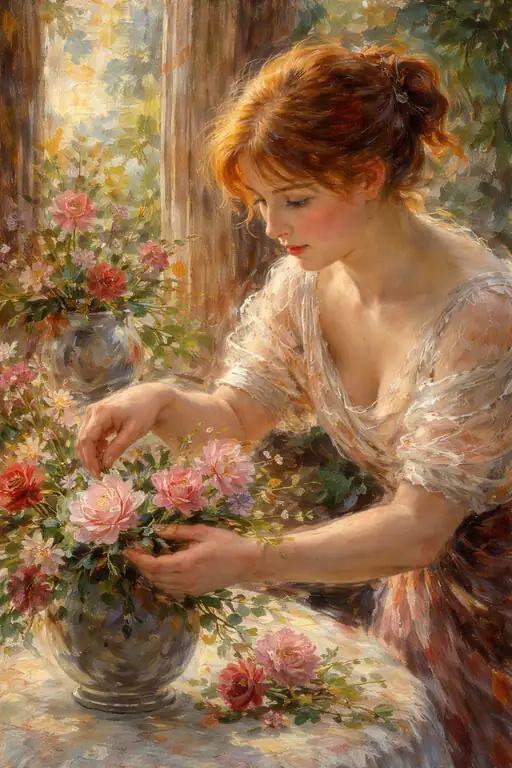 Whispers of the Crimson Petals
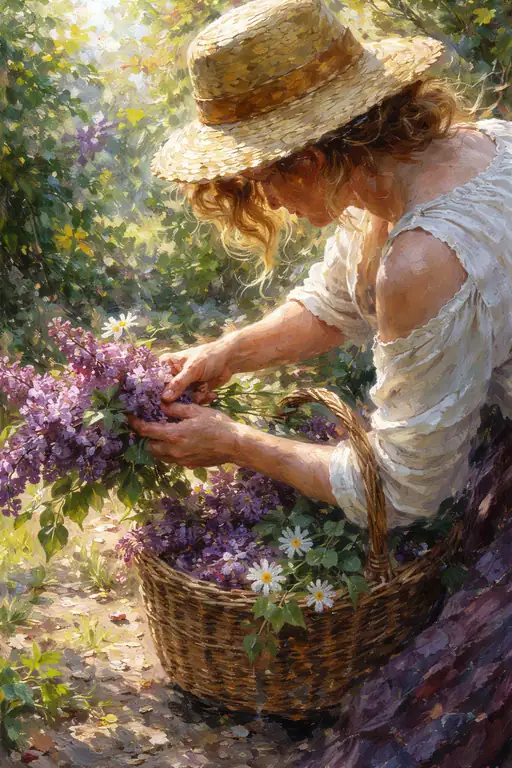 The Breath of Summer's First Bloom
 Bearing the Golden Weight of Life
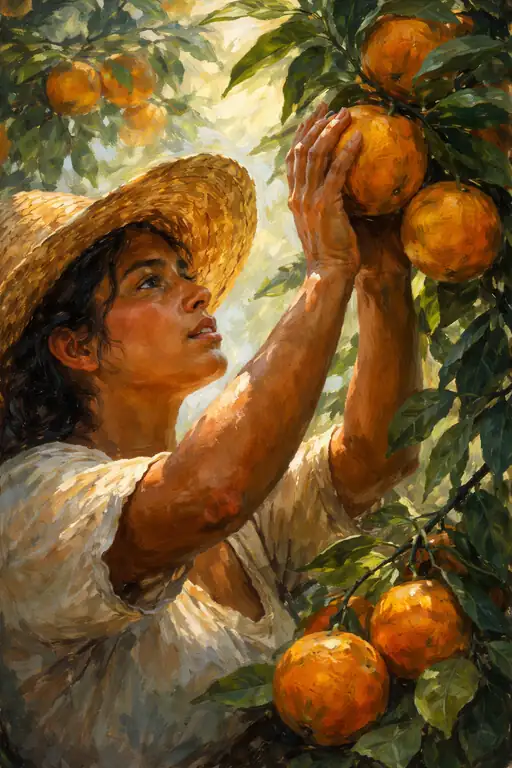 Embracing the Sweetness of the Sunlit Orchard
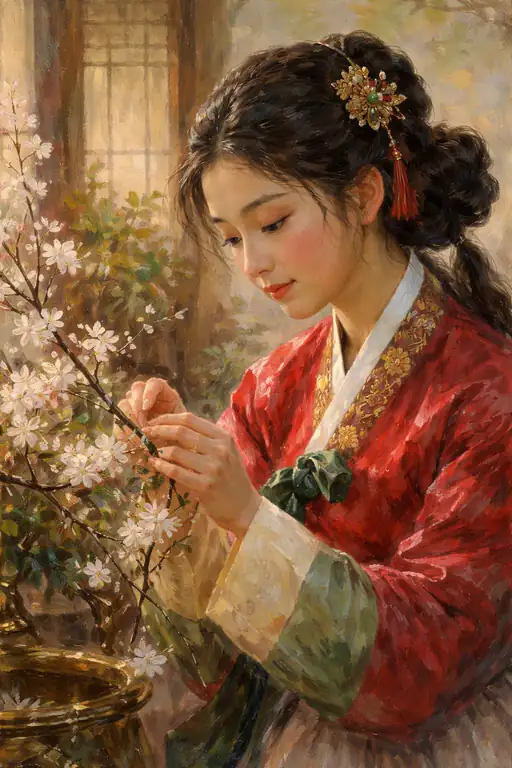 Spring's Gentle Touch
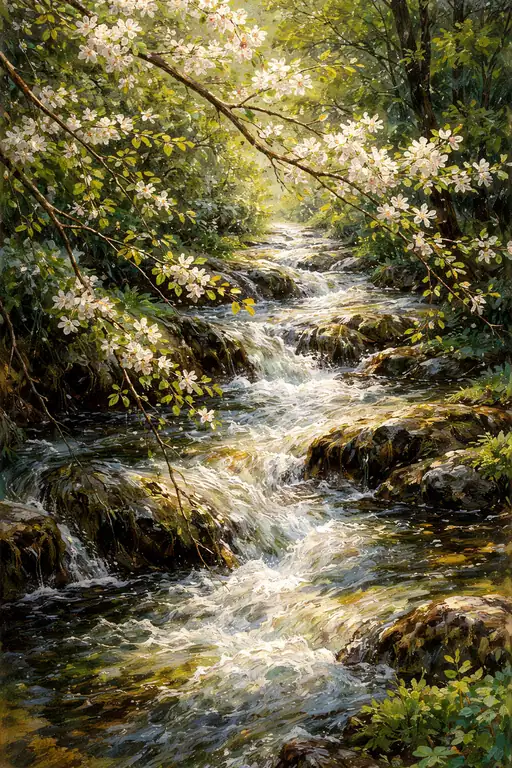 Dance of the Forest Stream