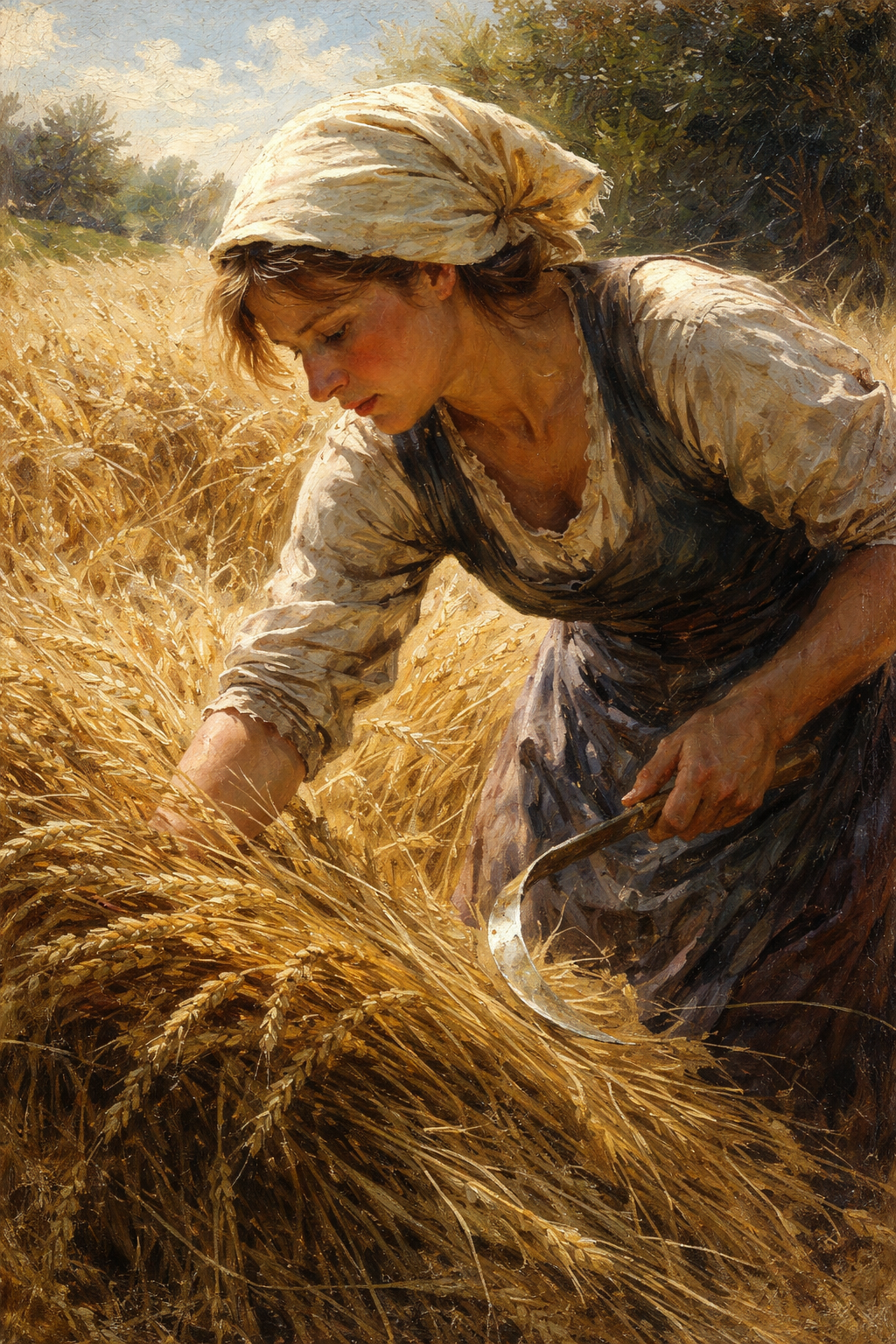
The Golden Dignity of the Harvest Sweat
Critique
1. Introduction This naturalist painting depicts a young peasant woman engaged in the arduous task of harvesting wheat under a bright summer sun. The composition focuses on the dignity of manual labor, capturing a moment of quiet concentration and physical exertion. Through its warm, golden color palette and meticulous attention to detail, the work explores the profound connection between the individual and the land. It serves as a respectful study of rural life, emphasizing the rhythmic cycle of agriculture and the essential nature of the harvest. 2. Description The central figure is a woman leaning over a dense patch of golden wheat, her body angled in a posture of focused work. She wears a rustic, light-colored headscarf and a coarse blouse, with a dark blue apron or overdress tied at her waist. In her right hand, she holds a curved, metallic sickle, its blade reflecting the sunlight, while her left hand gathers a large bundle of stalks. The background consists of an expansive, sun-drenched wheat field that stretches toward a line of distant trees under a pale blue, cloud-flecked sky. 3. Analysis The artist utilizes a warm and harmonious color palette, dominated by varying shades of gold, amber, and deep blue, which effectively conveys the heat of a harvest day. The lighting is bright and direct, casting soft shadows that define the woman's form and the textures of the wheat. Brushwork is particularly detailed in the rendering of the individual grains and the fabric of the woman's clothing, creating a strong sense of tactile reality. The downward diagonal of the woman's posture is balanced by the horizontal expanse of the field, anchoring the figure within her environment. 4. Interpretation and Evaluation The painting can be interpreted as a tribute to the resilience and quiet strength of the rural working class. The technical execution is exceptional, particularly in the way the artist captures the play of light on the golden stalks and the woman's sun-flushed skin. Furthermore, the artist’s choice to portray the subject in a moment of solitary labor adds a layer of solemnity and grace to the scene. While the theme is a classic one in 19th-century European art, the clarity and emotional sincerity of this specific rendering provide it with a timeless appeal. 5. Conclusion A close examination reveals that the strength of this work lies in its ability to elevate a common scene of agricultural labor into a moment of profound significance. The interplay between the radiant environment and the woman's focused presence provides a compelling narrative of human sustenance and seasonal change. This painting successfully communicates the beauty found in the performance of essential, age-old duties. Ultimately, it stands as a powerful testament to the enduring relationship between humanity and the natural world, leaving a lasting impression of serene and purposeful industry.
Same Subcategory
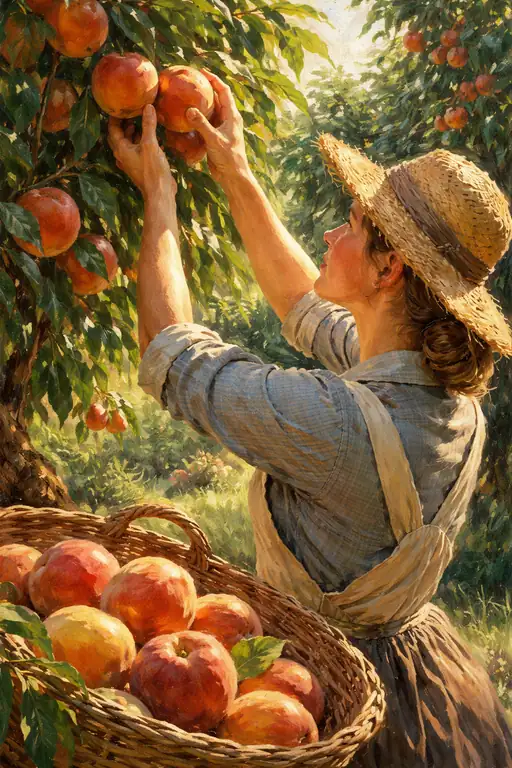 Ember Eyes Seeking the Horizon
Similar Artworks
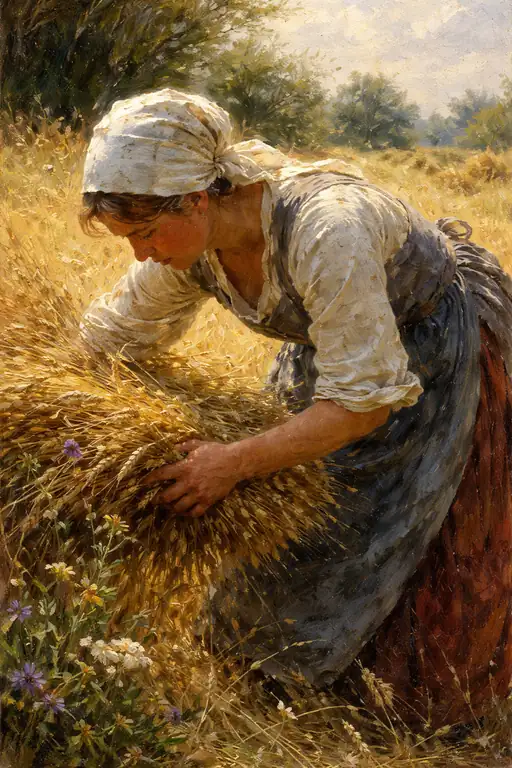 The Golden Sweat of Summer
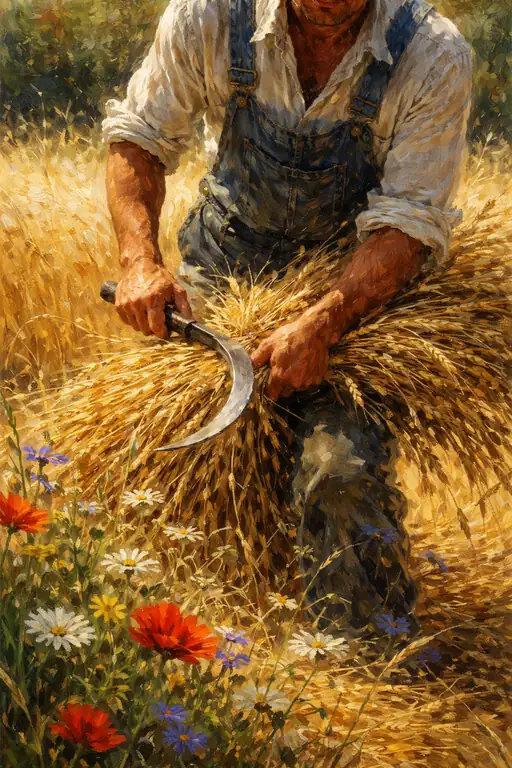 Golden Hymn of the Earth
 The Harvest of Hope: A Song for the Fertile Land
 The Earth's Golden Blessing
 A Golden Harvest Under the Watchful Towers
 The Golden Whisper of Autumn
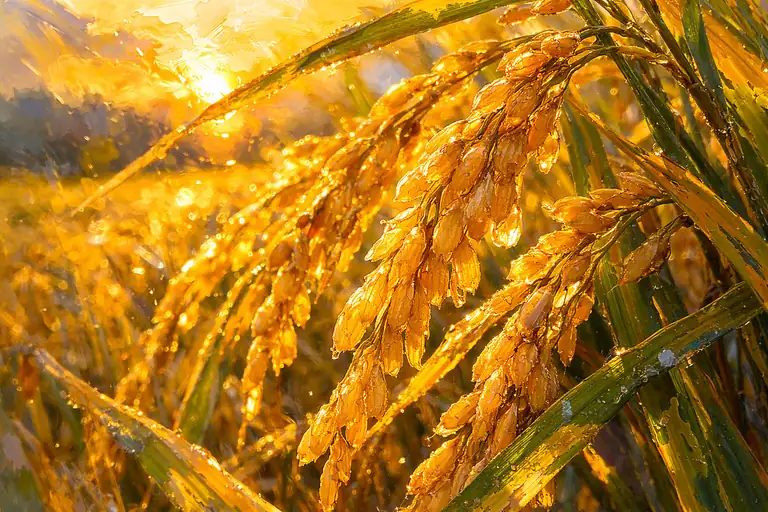 Shimmering Fields of Gold
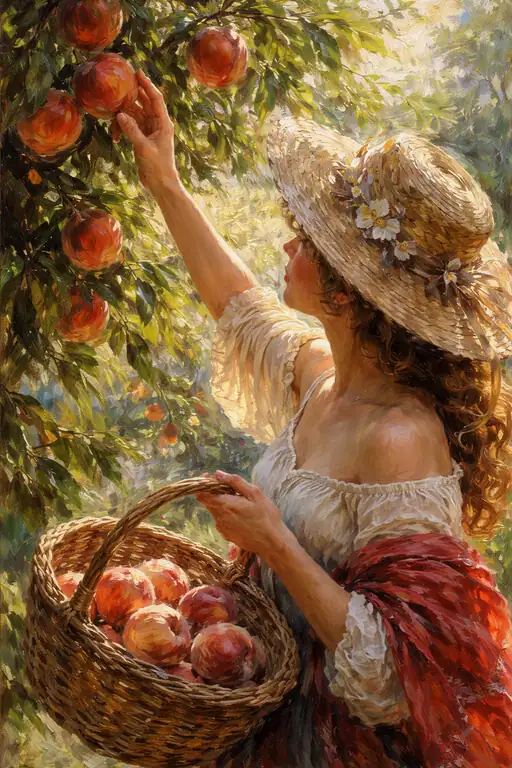 Bathed in Golden Warmth
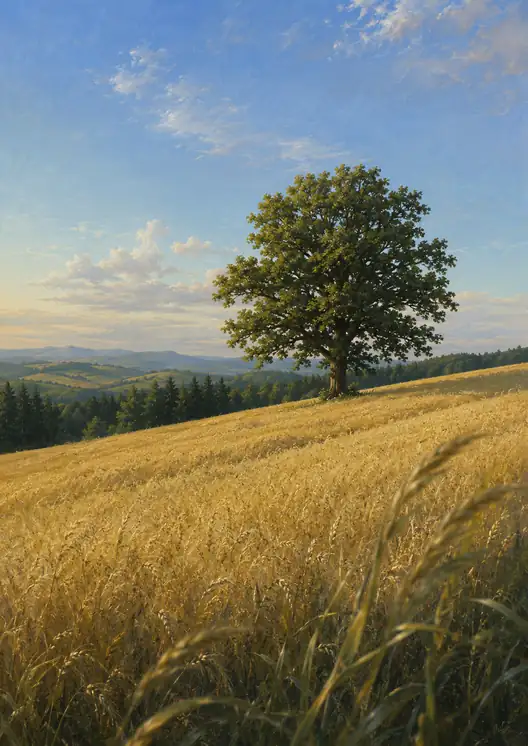 The Silent Master of the Golden Hill
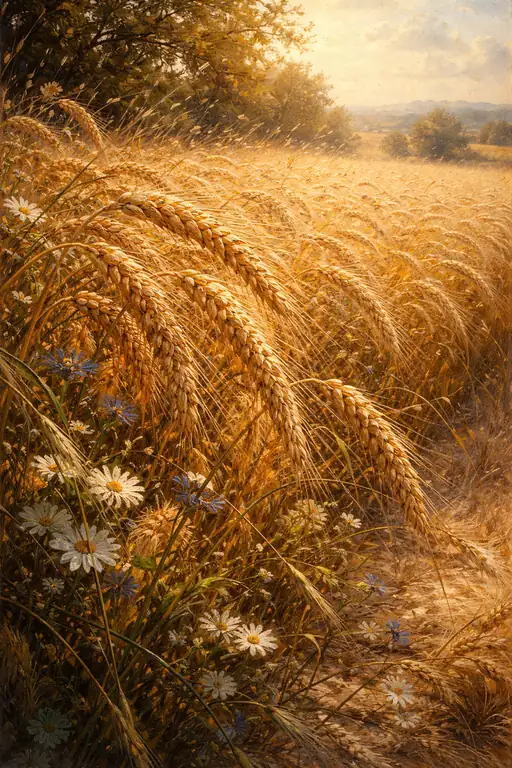 Amber Harvest