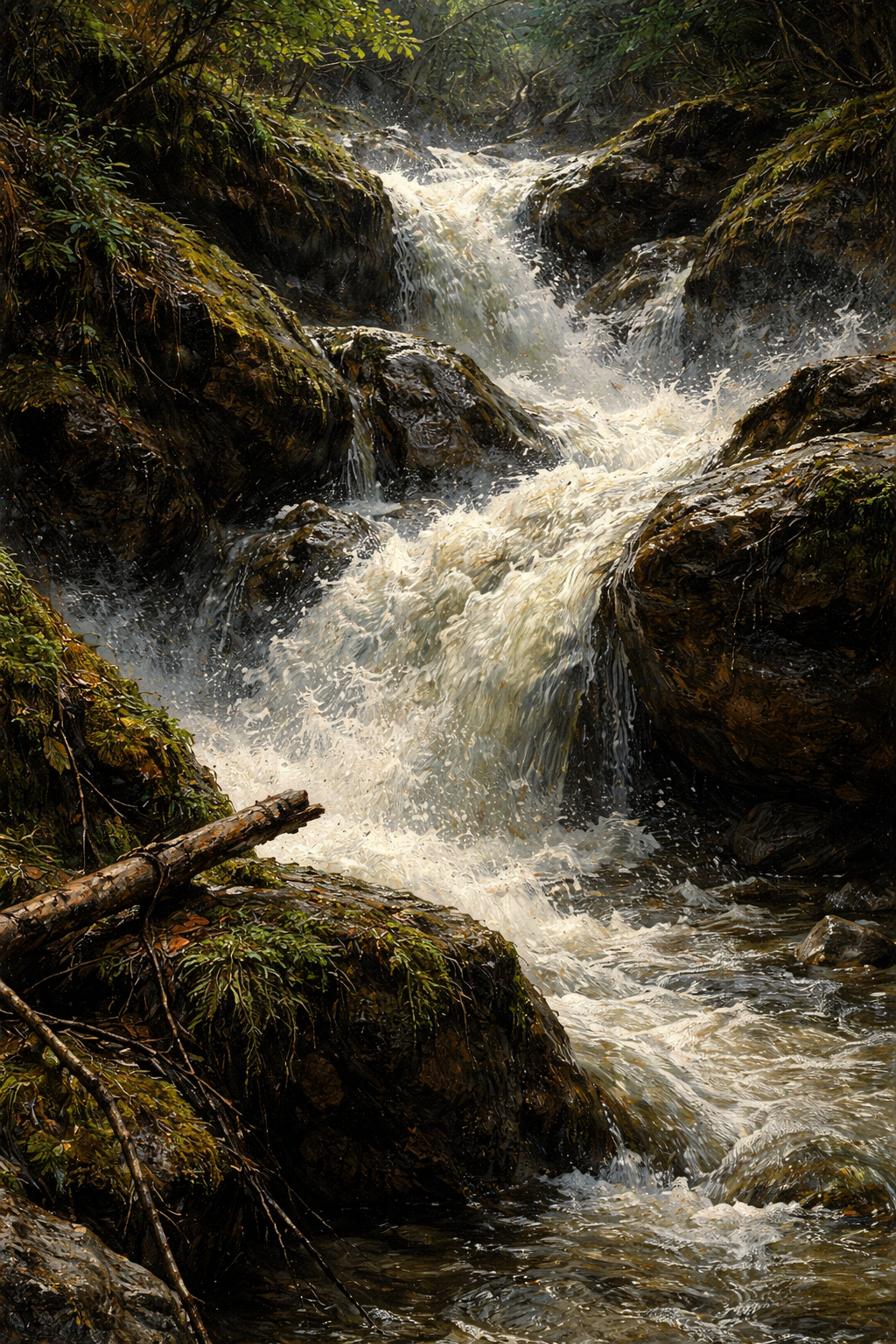
The Eternal Roar of the Forest Cascade
Critique
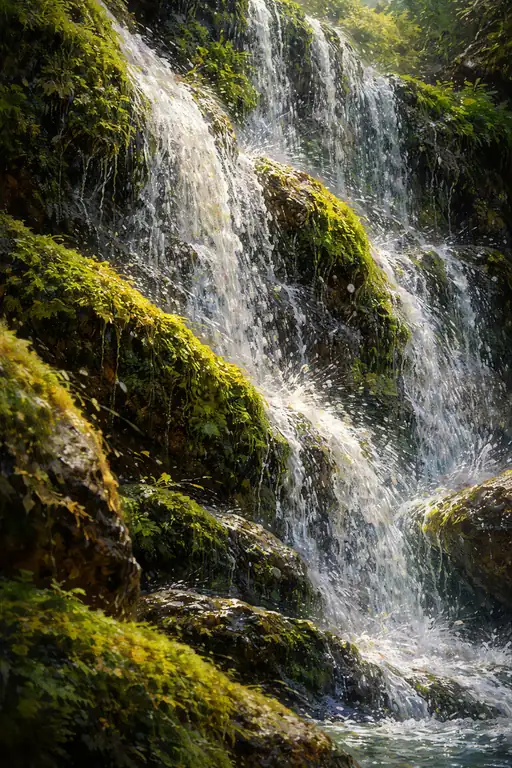
1. Introduction This landscape painting presents a vivid and powerful depiction of a mountain stream cascading over a series of rugged rock formations. The composition captures the relentless energy and movement of water through a vertical perspective that emphasizes the descent of the torrent. Utilizing a highly realistic style, the work explores the intricate interplay between the fluid dynamics of the stream and the static permanence of the surrounding landscape. It serves as an invitation to witness the raw, unceasing vitality of the natural world in its most energetic and untamed state. 2. Description The central focus of the image is a rushing stream of white, churning water that flows diagonally from the upper center down toward the lower right. The water breaks into numerous small falls and rapids as it hits large, dark boulders encrusted with deep green moss and damp earth. In the lower left foreground, a weathered, fallen log lies partially submerged, its rough bark providing a sharp textural contrast to the frothing water. Above the falls, the background is filled with dense, lush green foliage that filters a soft, diffused light into the shadowy gorge below. 3. Analysis The artist demonstrates a mastery of tonal contrast, using the stark white of the foam and spray to create a rhythmic sense of motion against the dark, heavy masses of the rocks. Texture is rendered with exceptional detail; the slick, wet surfaces of the stones and the delicate, individual leaves of the moss are articulated with precision. The vertical orientation of the composition enhances the feeling of gravity’s pull on the water. Light appears to be coming from an overhead source, catching the crests of the waves and highlighting the translucent qualities of the thinner currents. 4. Interpretation and Evaluation The painting can be interpreted as a study of environmental equilibrium, where the destructive force of the water is balanced by the resilience of the ancient rock and forest. The technical execution in capturing the "frozen" moment of the water's spray and the varying densities of the rapids is particularly successful. Furthermore, the artist’s ability to evoke the auditory sense of rushing water through purely visual means is a testament to the work’s effectiveness. While the subject is a classic motif in landscape art, the modern clarity and intensity of the rendering provide a fresh perspective. 5. Conclusion A close examination reveals that the strength of this work lies in its ability to transcend a mere photographic record of a scene to convey the spirit of the mountain environment. The interplay between the chaotic movement of the stream and the quiet stillness of the mossy rocks creates a compelling narrative of natural cycles. This painting effectively communicates the power and beauty of the hydrological cycle in its most dramatic form. Ultimately, it stands as a profound tribute to the enduring energy of nature, leaving a lasting impression of the intricate and powerful forces that shape the Earth’s surface.
Same Subcategory
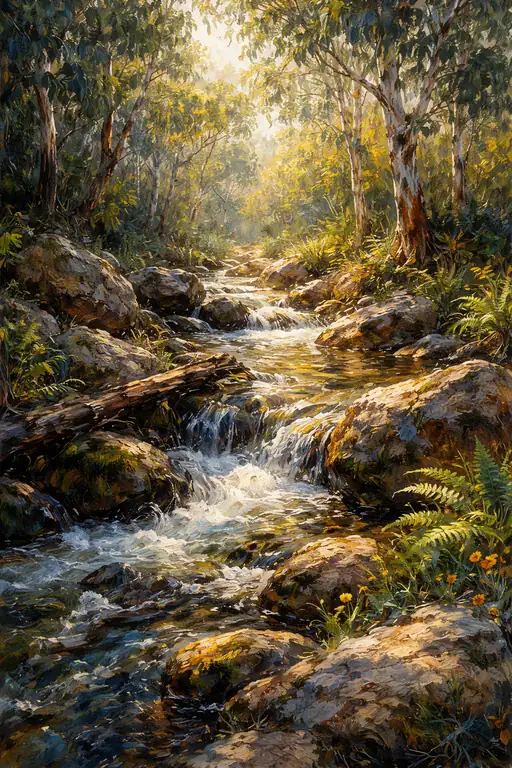 Tapestry of the Forest Stream
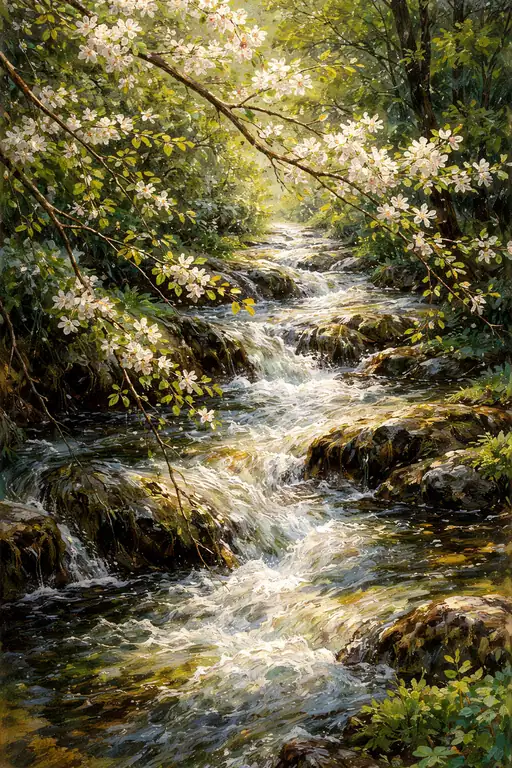 Dance of the Forest Stream
Similar Artworks
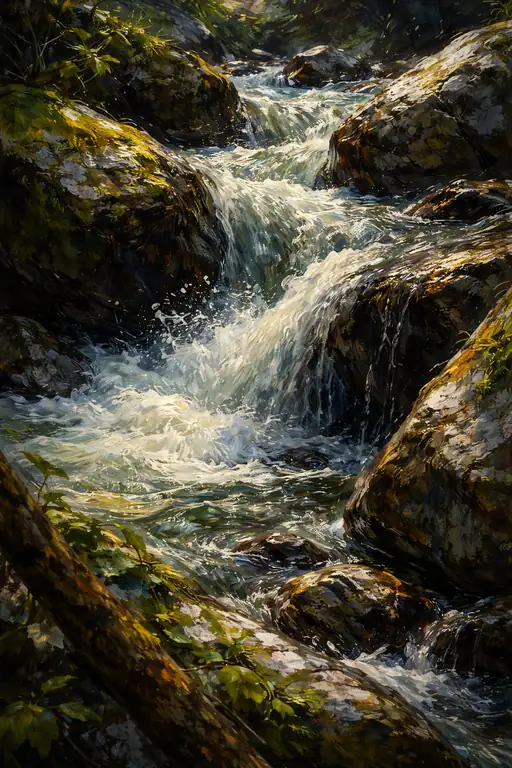 Whispers of the Eternal Cascade
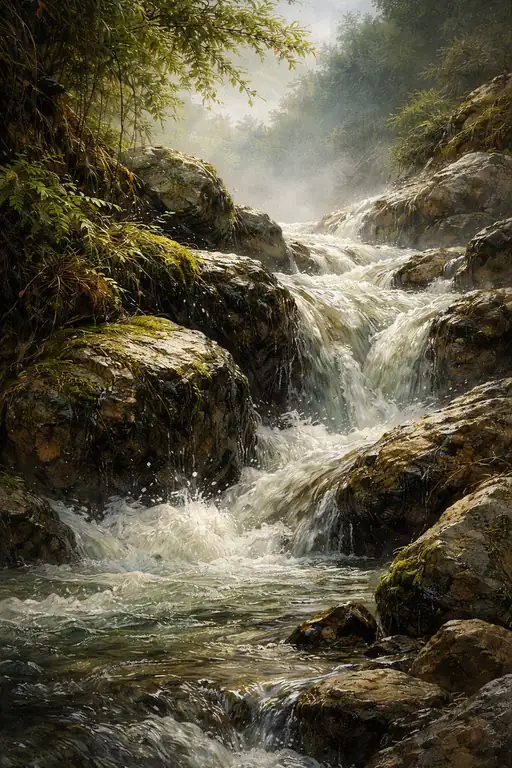 The Timeless Spirit of the Rushing Stream
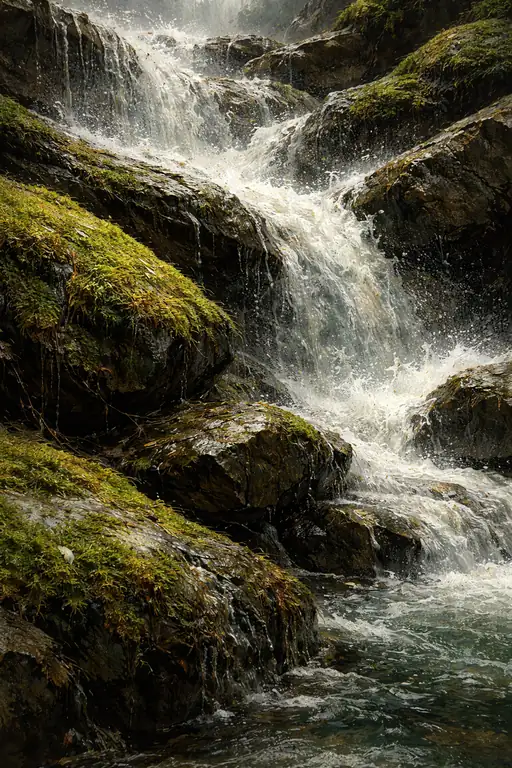 Embrace of the Emerald Cascade
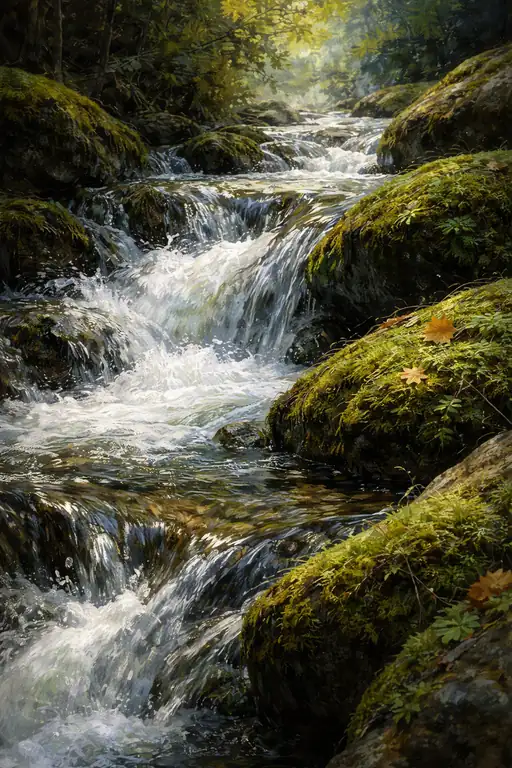 Serenade of the Sun-Dappled Woods
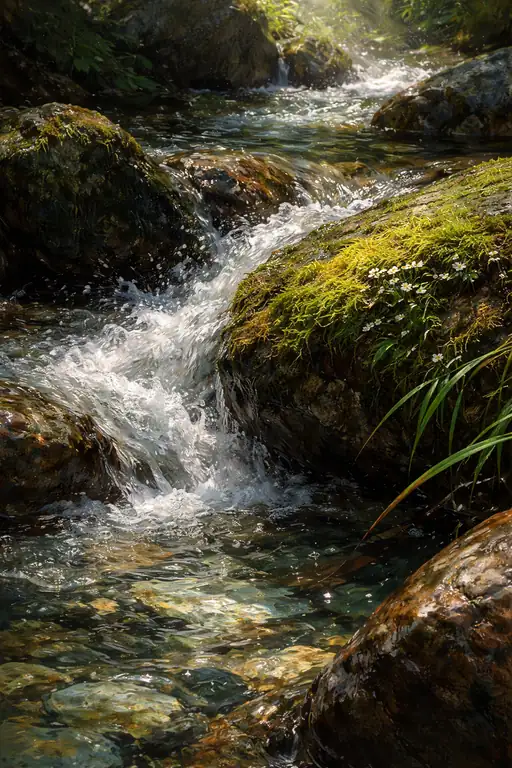 The Last Light of the Crimson Sun
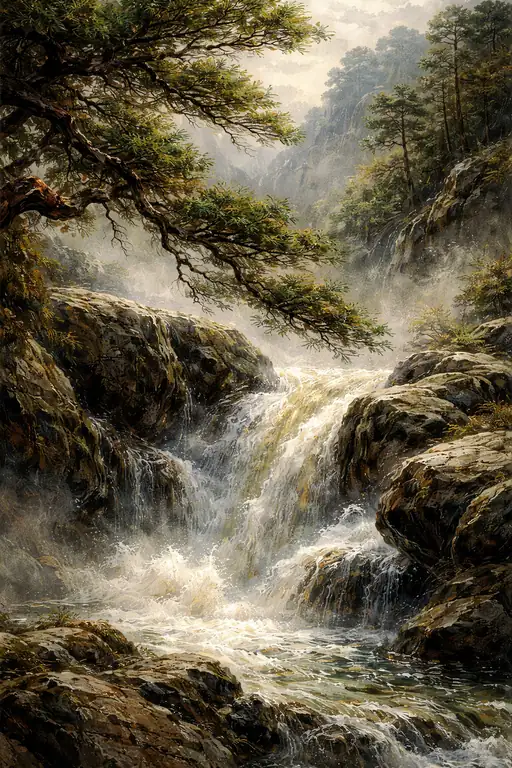 Heartbeat of the Untamed Gorge
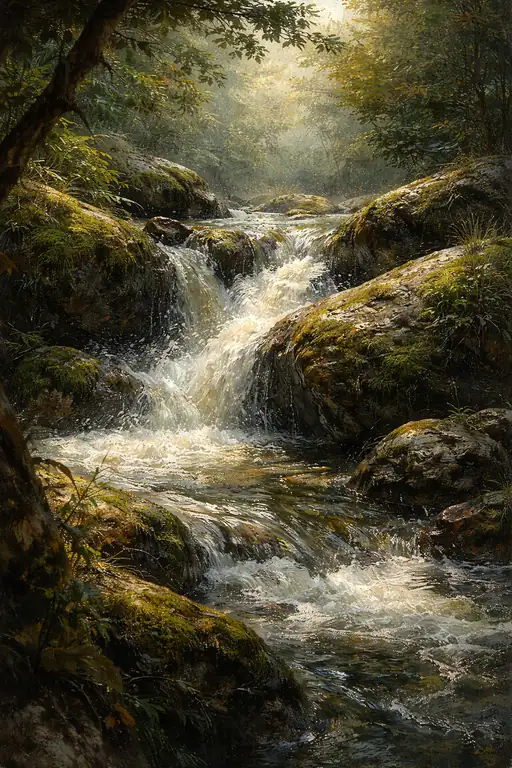 The Radiant Heart of the Deepwood
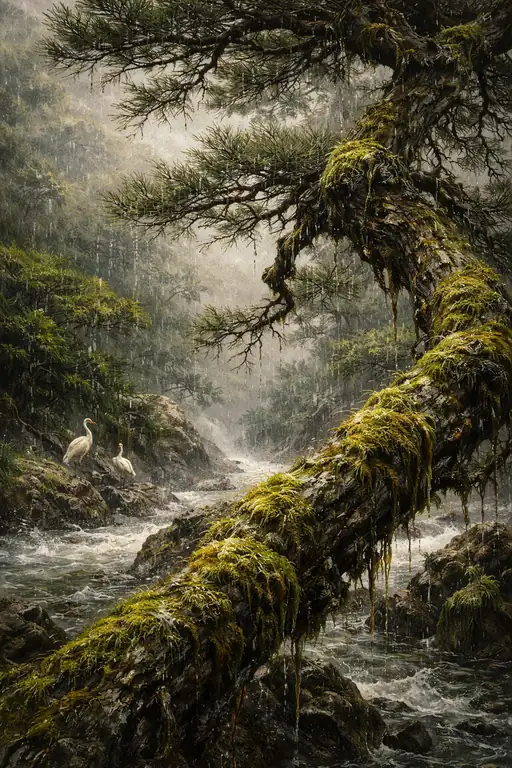 Tears of the Ancient Pine
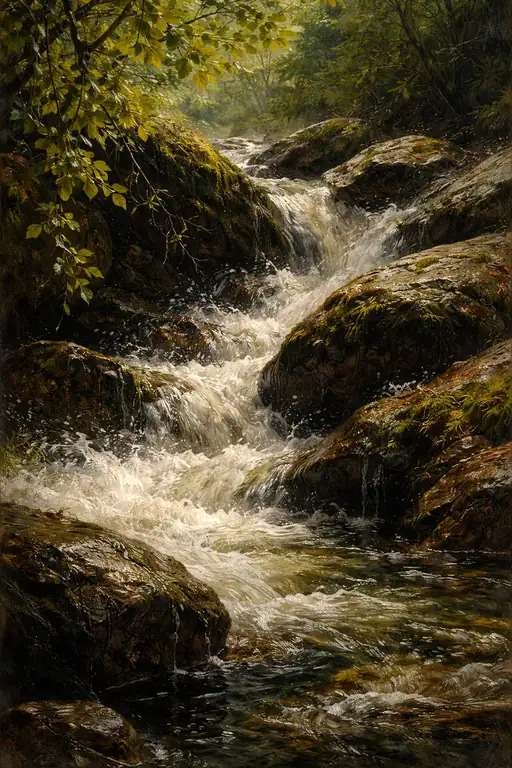 Song of the Moss: The Serene Flow of the Woodland Brook
 The Emerald Pulse of the Forest