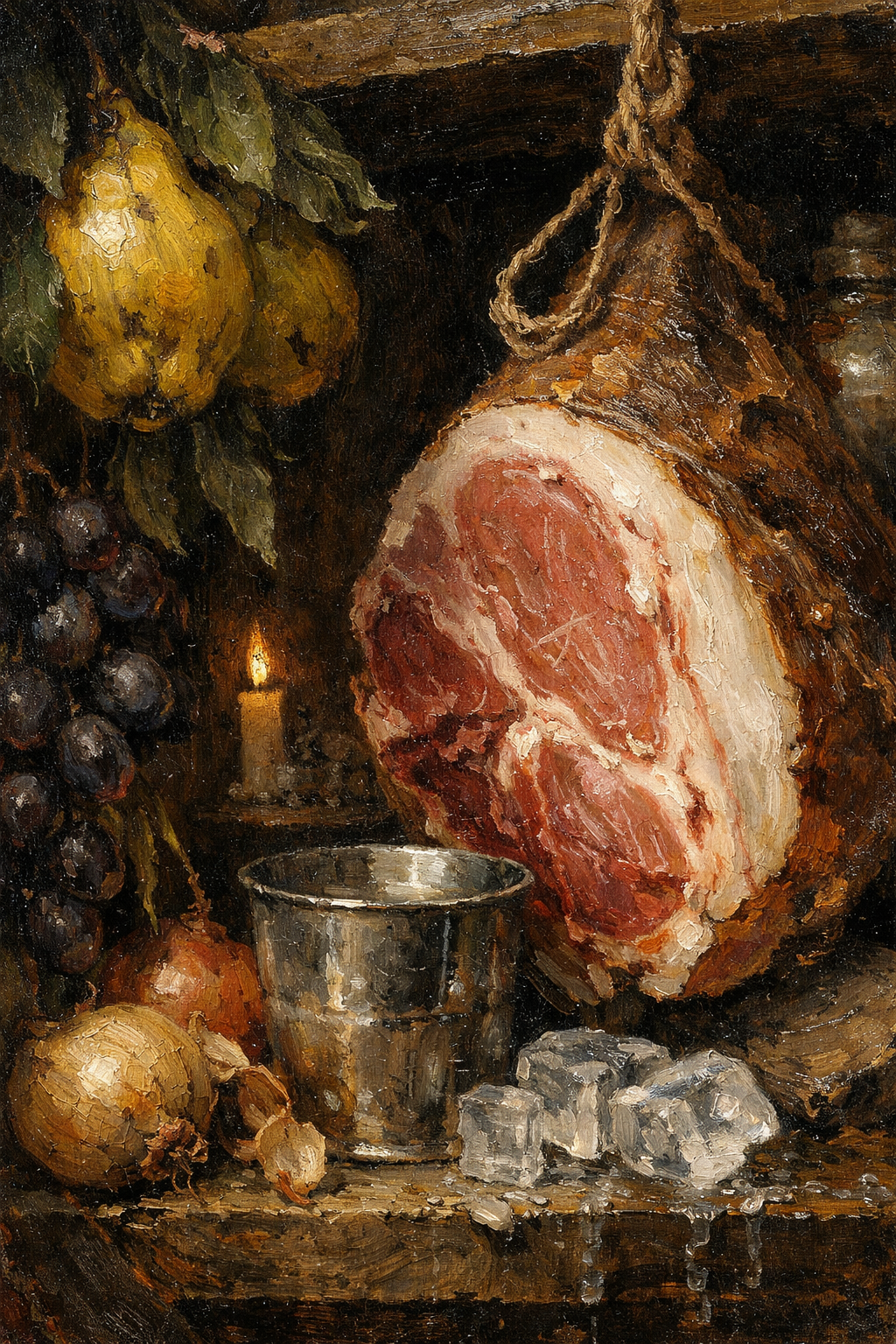
Shadows Dance on the Feast
Critique
1. Introduction This still-life painting features a large piece of cured meat suspended by a rope, accompanied by fruit and various objects, executed with expressive brushwork. The motifs emerge from a dark background, dramatically illuminated by the light of a single candle. Viewers are struck by the powerful presence of the subjects and the tension created by the interplay of light and shadow. The work captures a classical atmosphere while establishing a unique voice through its bold technique. 2. Description A massive cut of meat hangs centrally, its cross-section revealing vibrant red flesh and white marbling. To the left, yellow pears hang above dark grapes, a partially peeled onion, and a metallic cup. In the foreground, several translucent ice cubes rest on the table, with melting water beginning to spread. In the background shadows, a thin candle burns steadily, its small flame casting a warm glow over the surrounding items. 3. Analysis The composition maintains a stable balance between the vertical weight of the meat and the horizontal arrangement of objects. A defining feature is the thick impasto technique, where the texture of the meat fibers and the brilliance of the ice are rendered with tactile intensity. Color-wise, the reds and yellows stand out vividly against the dark brown backdrop, creating a lively contrast. The use of chiaroscuro emphasizes the depth of the space and instills a sense of quietude. 4. Interpretation and Evaluation The meat and fruit can be interpreted as symbols of the cycle of life, representing both preservation and decay. The artist’s technique is highly original, merging traditional "bodegテウn" themes with a vigorous application of paint. The ability to distinguish between various textures, such as the dull luster of metal and the coldness of ice under one light source, is commendable. Including temporal elements like melting ice adds a layer of depth to the static scene. 5. Conclusion Examining this work reveals both the primal energy of materials and the spiritual silence brought by light. Each bold brushstroke speaks volumes about the artist’s keen observation and passion for the subject. The initial visual impact matures into a reflection on the essence of matter. This powerful and harmonious expression demonstrates the continued potential for discovery within the classical genre of still-life painting.
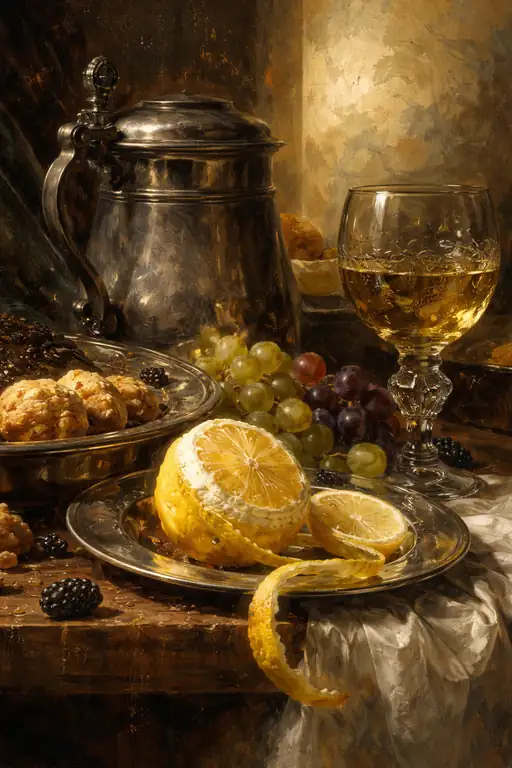 Echoes of a Lavish Banquet
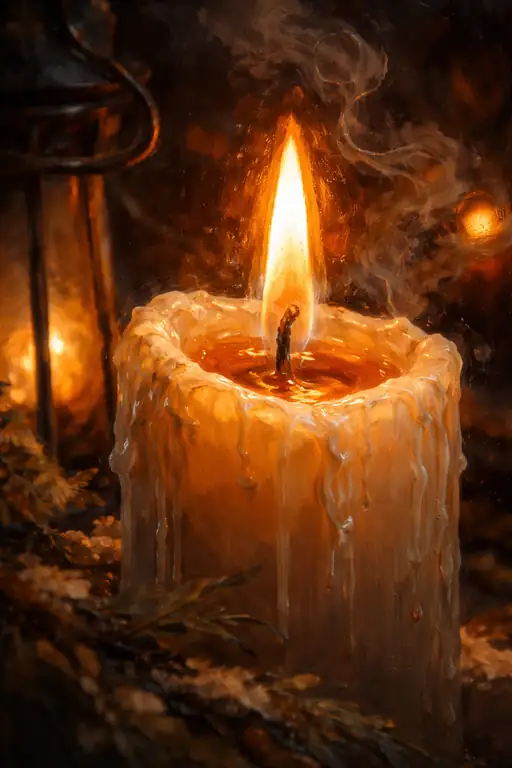 Silent Vigil in the Waxen Dark
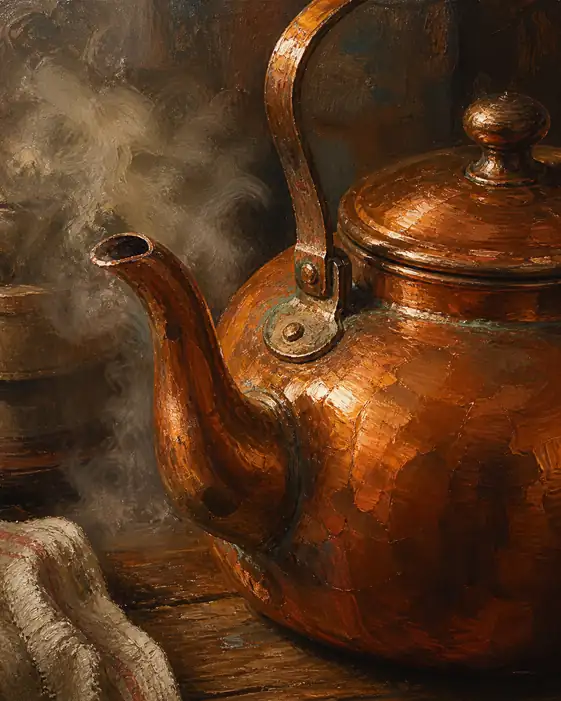 Whispers of the Hammered Copper
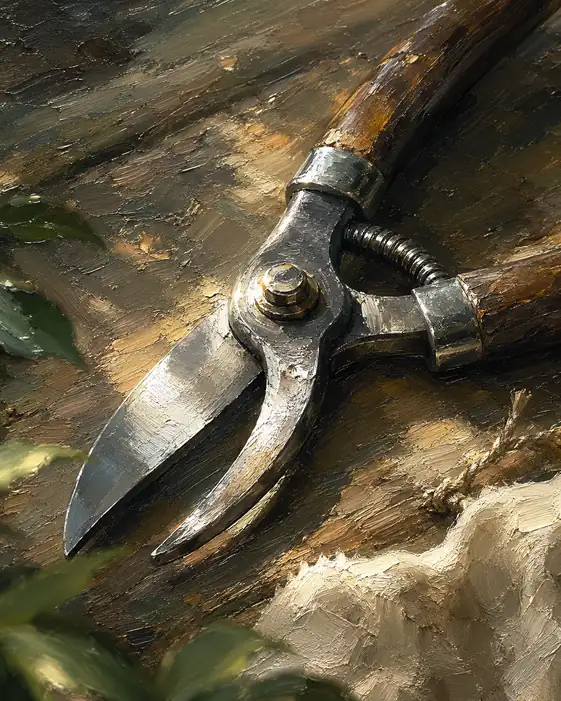 Legacy of the Soil
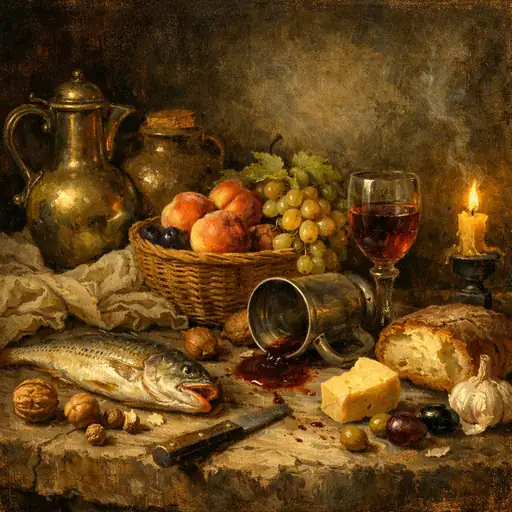 Fish, Fruit, and Spilled Wine
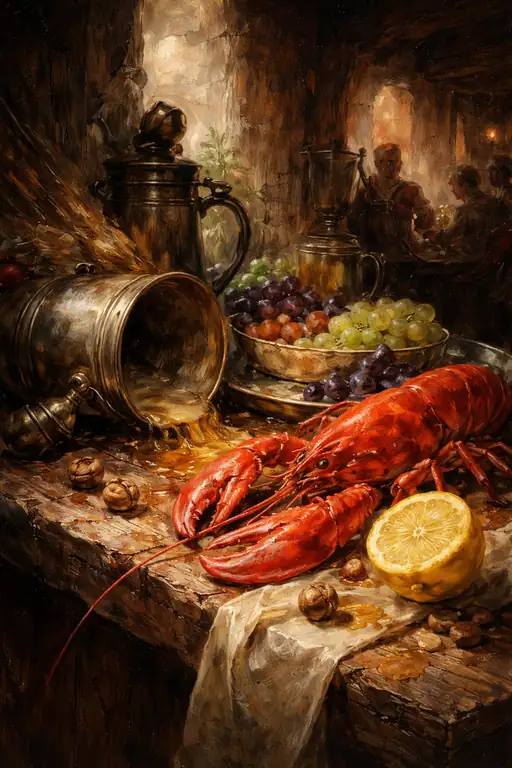 Feast of the Golden Nectar
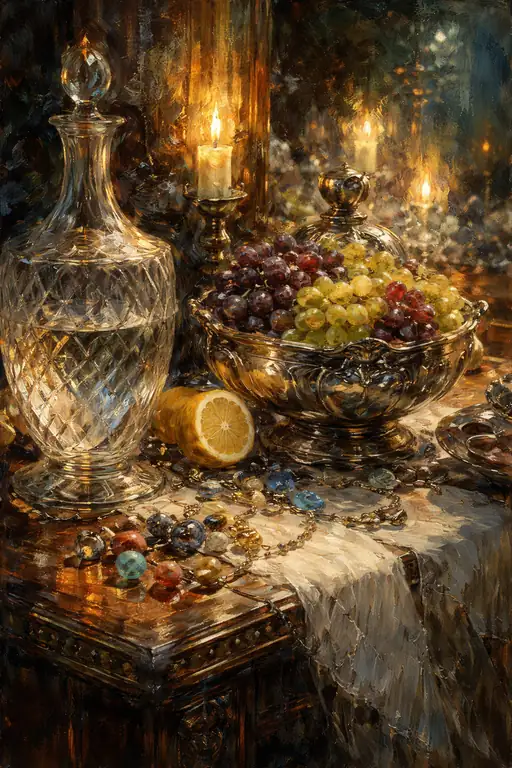 Whispers of Golden Light
 Echoes of the Diamond
 Echoes of a Forgotten Journey
 Echoes of a Forgotten Trail