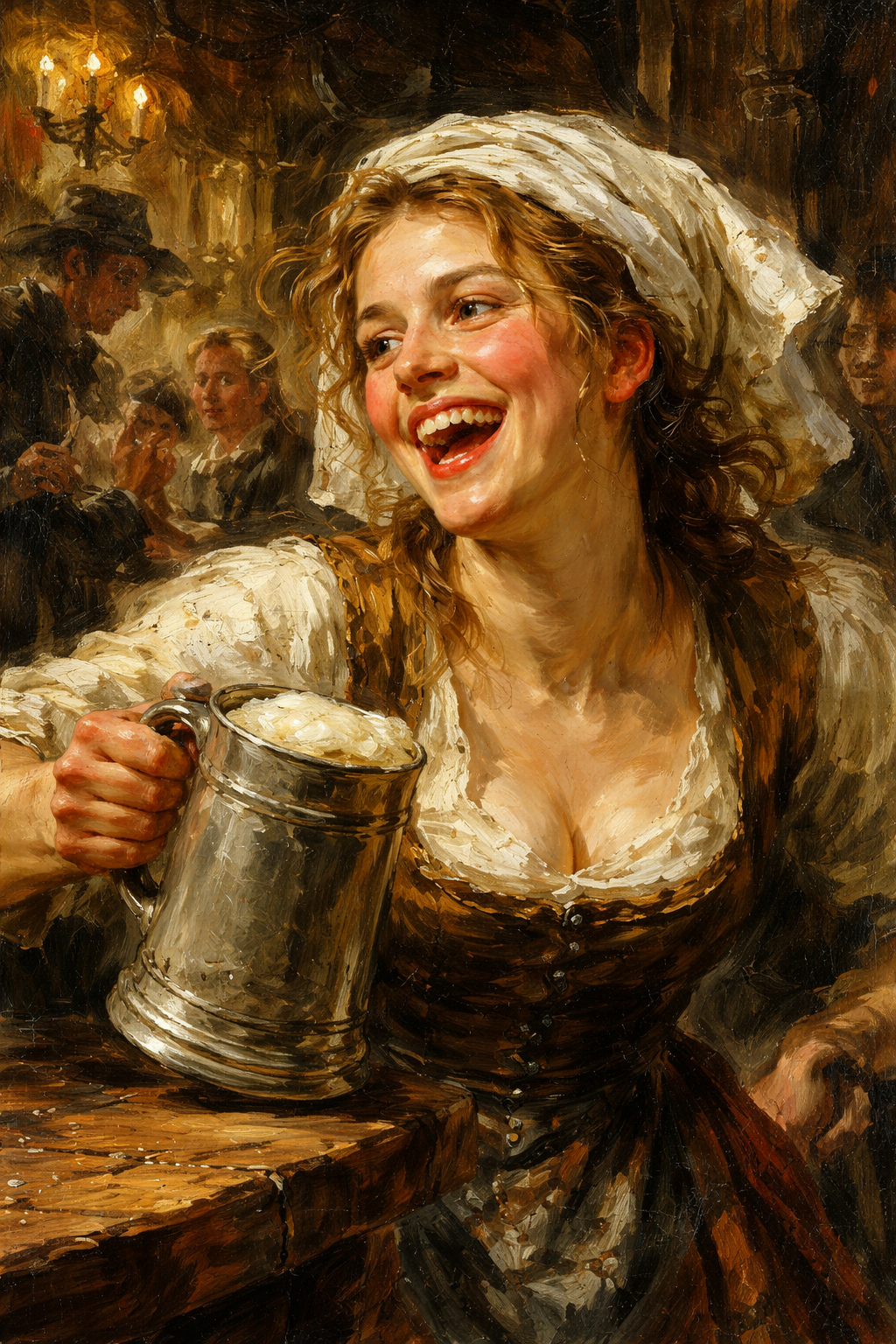
The Heartbeat of the Tavern
Critique
1. Introduction This oil painting presents a vibrant and spirited genre scene set within a bustling tavern, focusing on a laughing barmaid holding a large metallic tankard. The work captures a moment of spontaneous joy and communal life, utilizing dynamic brushwork to convey the energy of the environment. By placing the expressive figure of the woman at the center of the composition, the artist invites the viewer into the warm, convivial atmosphere of a traditional public house. 2. Description The central figure is a young woman with a radiant smile, her head tilted back in laughter. She is dressed in a white chemise and a dark brown bodice, with a simple white headscarf covering her hair. In her right hand, she firmly grips a heavy pewter tankard overflowing with frothy white foam, placed prominently on a rustic wooden table. The background is populated by blurred figures of other patrons engaged in conversation, all bathed in the warm, flickering glow of candlelight from an overhead chandelier. The color palette is dominated by rich earth tones, creams, and deep reds. 3. Analysis Technically, the painting is defined by its energetic impasto and fluid brushstrokes, which give the scene a sense of immediate motion. The treatment of the metal tankard and the beer foam is particularly effective, with thick dabs of white paint creating a tactile sense of volume and texture. The warm, directional lighting creates strong highlights on the woman's face and shoulders, emphasizing her lively expression and the three-dimensional form of her figure. A subtle diagonal line established by the woman’s arm and the table provides a stable yet dynamic structure to the bustling scene. 4. Interpretation and Evaluation The work succeeds in communicating the raw vitality and unpretentious joy of common life. The barmaid’s genuine laughter serves as a universal symbol of human connection and festive spirit, moving beyond a simple portrait to a broader celebration of communal resilience. In terms of evaluation, the artist demonstrates a high degree of proficiency in capturing fleeting emotional states and complex lighting conditions. The strength of the piece lies in its ability to balance the rough, painterly execution with a refined understanding of human character and atmospheric depth. 5. Conclusion In conclusion, the painting is a powerful and heartening study of joy in a domestic setting. The initial impression of a noisy tavern scene gives way to an appreciation for the artist’s skill in immortalizing a single, infectious moment of happiness. Through the masterly use of light and texture, the work transcends its subject matter to become a celebration of life itself. It remains an evocative example of genre painting that resonates with the viewer’s own experiences of laughter and companionship.
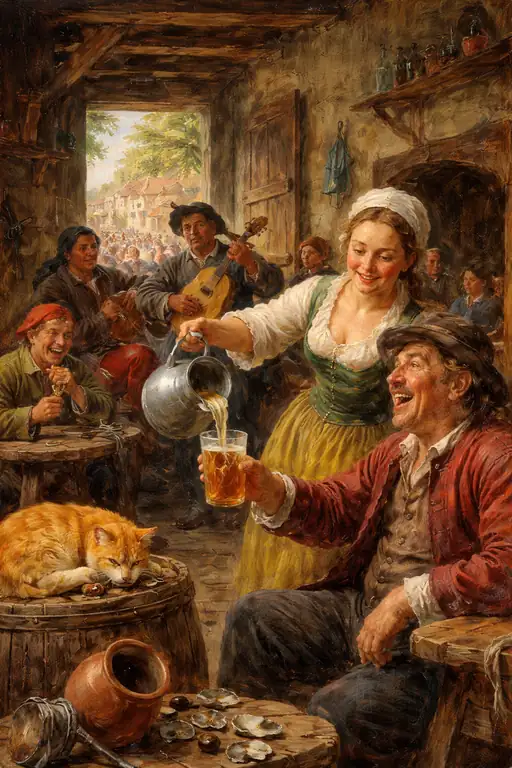 Laughter Spilled in Golden Amber
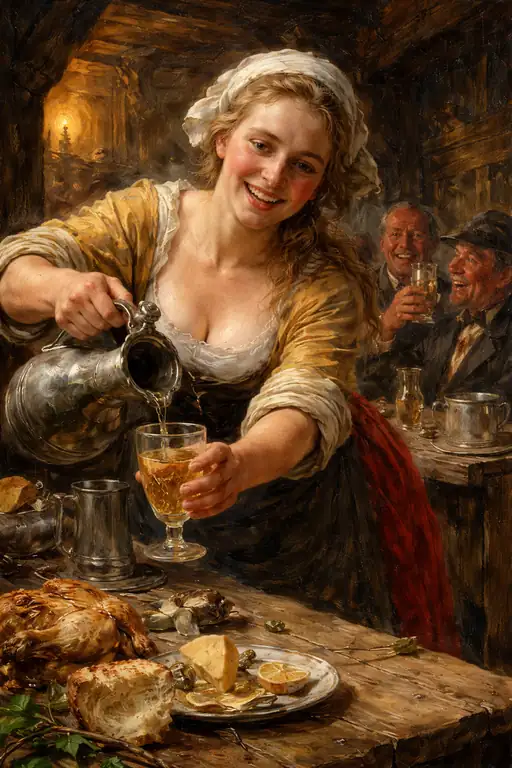 Pouring Warmth into the Night
 Laughter Filling the Tavern
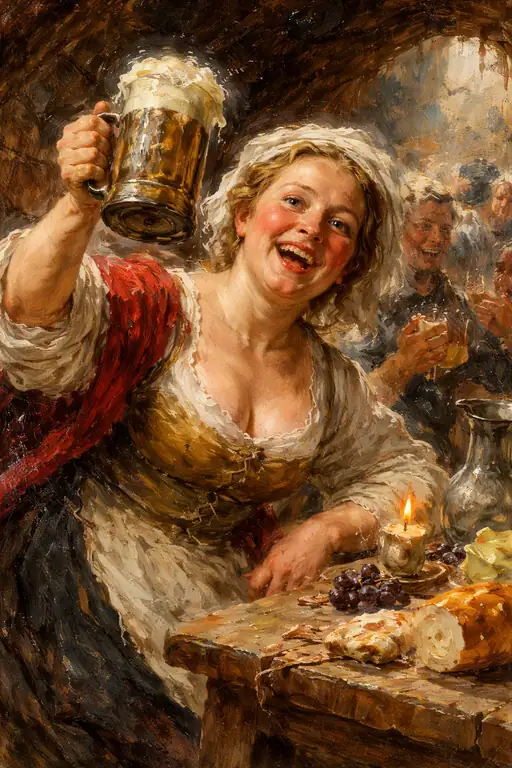 Cheers to Joyful Moments
 The Warmth of Shared Laughter
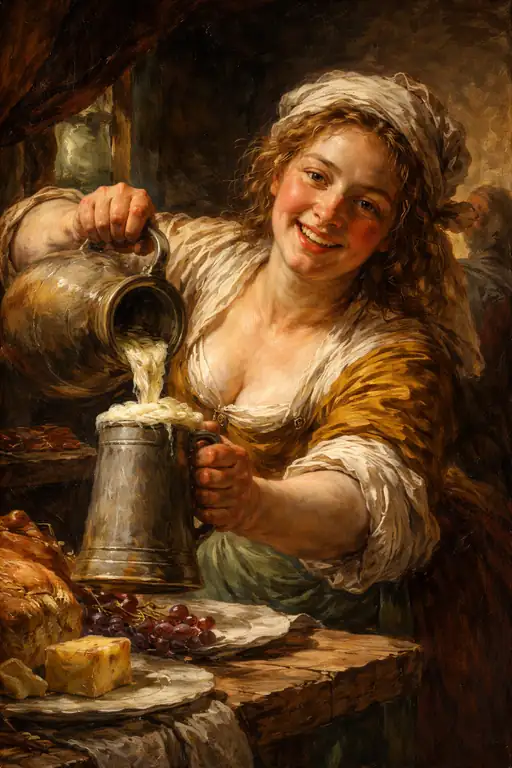 A Cheerful Pour
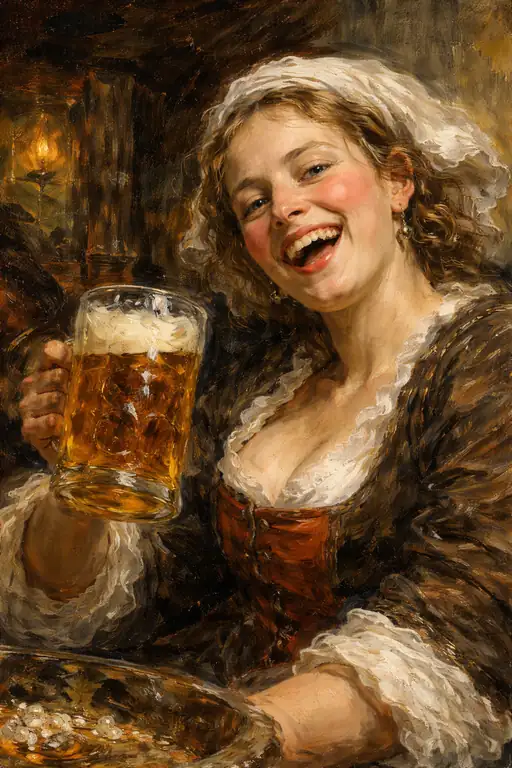 A Toast to Fleeting Joys
 Laughter Echoes in the Amber Light
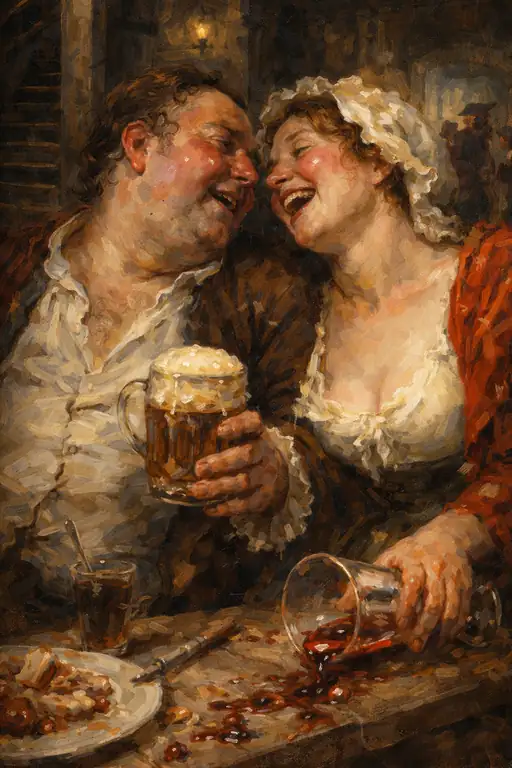 Laughter Resounding in the Rustic Tavern
 Amber Reverie