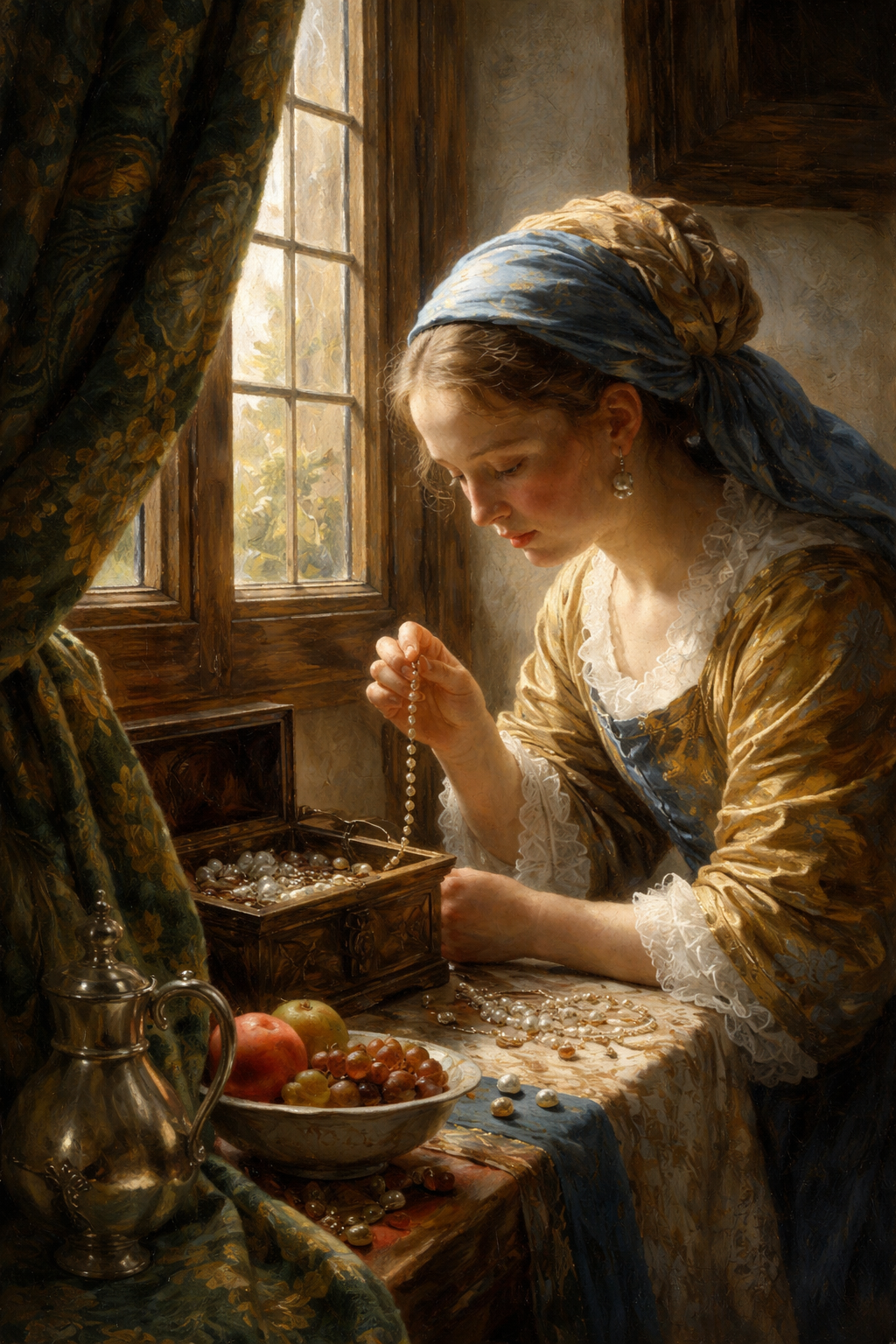
Reflections in a Quiet Room
Critique
1. Introduction This oil painting is a masterful genre scene that depicts a young woman in a quiet interior, contemplating the contents of a jewelry box by a window. The work heavily references the stylistic conventions of 17th-century Dutch masters, particularly in its use of domestic light and the careful arrangement of still life elements. By capturing a private, fleeting moment of reflection, the artist creates an atmosphere of profound tranquility and invites the viewer to appreciate the beauty found in everyday life. 2. Description The composition features a woman wearing a blue headscarf and a rich golden-yellow dress adorned with white lace, standing beside a tall window. She holds a delicate pearl necklace, her gaze fixed intently on the jewelry box that sits on a table covered with an intricate cloth. In the foreground, several still life objects are meticulously rendered, including a polished silver pitcher, a bowl filled with grapes and apples, and loose pearls scattered on the surface. Soft, natural light streams through the windowpanes, illuminating her face and the varied textures of the objects around her. 3. Analysis Technically, the painting is defined by its exceptional handling of chiaroscuro, where the side-lighting creates a soft transition between light and shadow. The color palette centers on a harmonious contrast between the vibrant ultramarine of the headscarf and the warm, luminous yellow of the dress, a classic combination that draws the eye toward the subject. The artist’s attention to detail is evident in the rendering of the reflective surfaces of the silver pitcher and the iridescent sheen of the pearls. The composition follows a subtle diagonal line from the window down to the fruit bowl, establishing a balanced and stable visual structure. 4. Interpretation and Evaluation The work succeeds in conveying a sense of domestic peace and the contemplative nature of its subject. The pearls and jewelry box might suggest themes of vanity or the transience of material wealth, yet the overall mood remains one of quiet dignity rather than moralizing judgment. In terms of evaluation, the painting demonstrates a sophisticated mastery of light and texture, effectively simulating the look and feel of historical oil painting techniques. The strength of the piece lies in its ability to evoke a specific historical aesthetic while maintaining a high level of technical precision and emotional resonance. 5. Conclusion In conclusion, the painting is an evocative tribute to the tradition of European interior painting. The initial impression of a simple domestic scene gives way to a deeper appreciation for the artist’s skill in balancing light, color, and composition. By focusing on a moment of quiet introspection, the work transcends its subject matter to become a study in atmosphere and refined beauty. It remains a compelling example of how historical styles can be revitalized to speak to modern sensibilities through the lens of timeless themes.
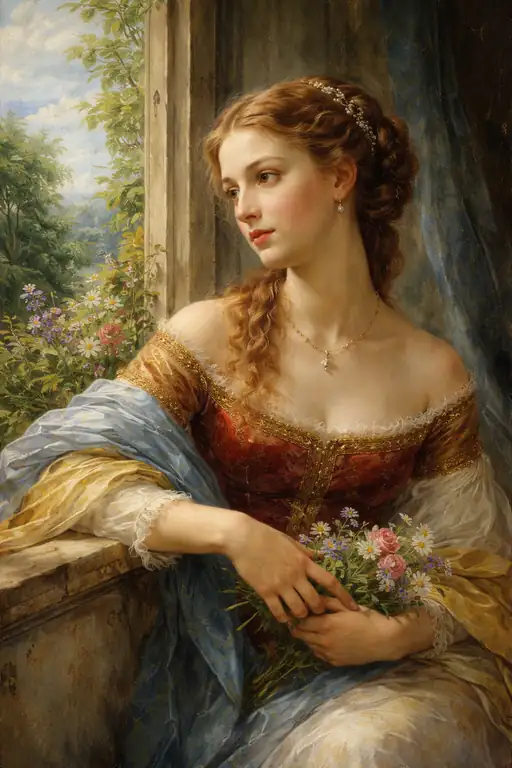 Reverie by the Window
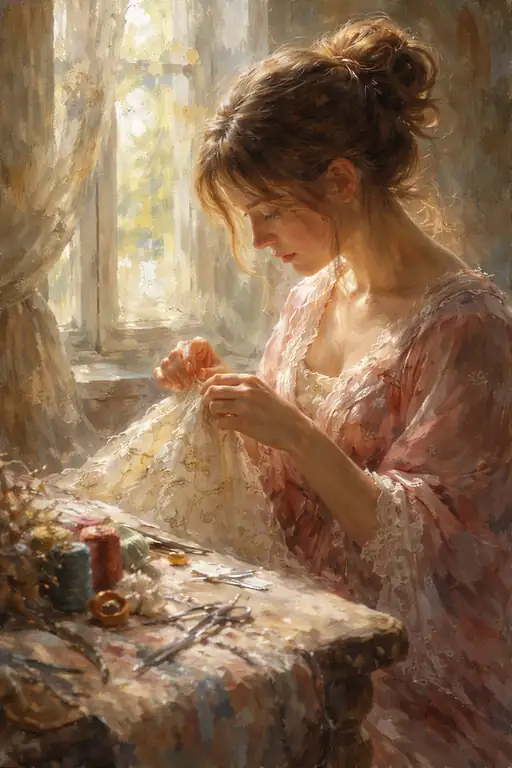 Threads of Solitude in Golden Sunlight
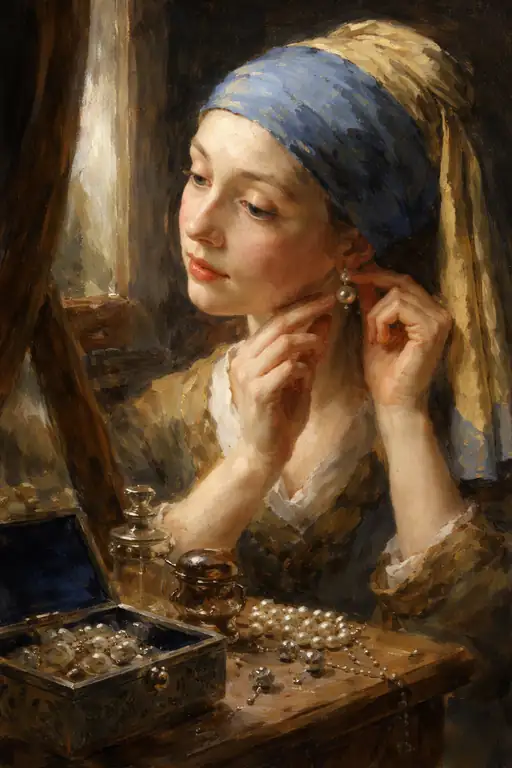 Reflection of Inner Beauty
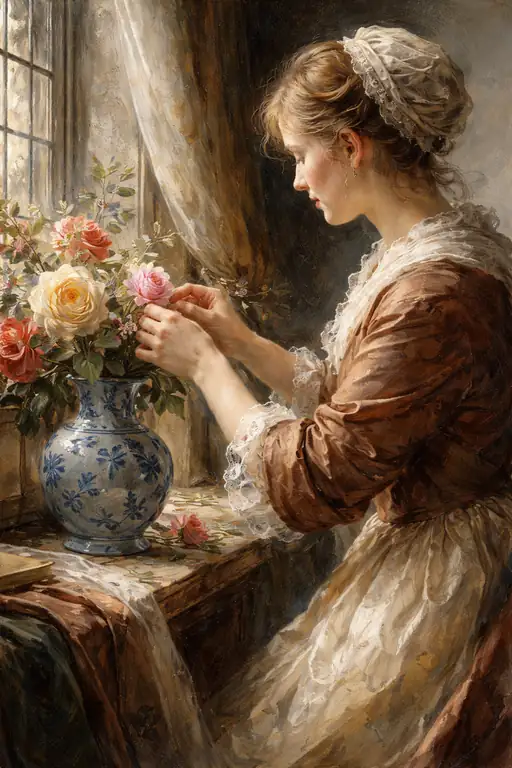 Breathing with the Roses
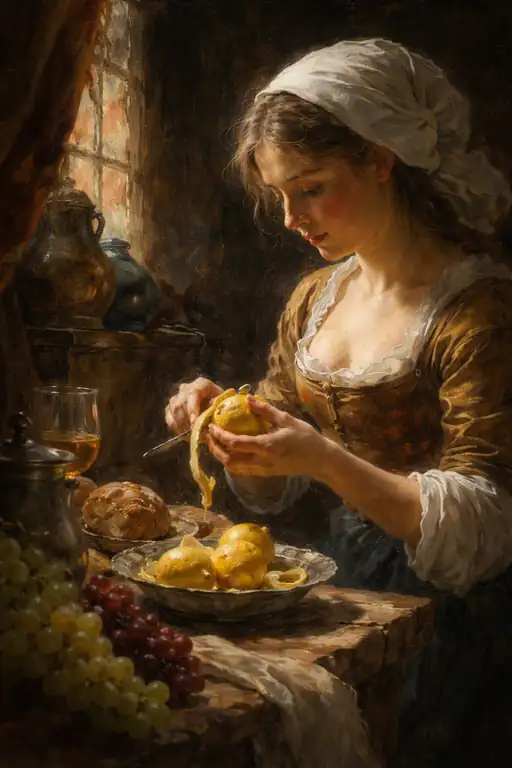 The Gold of the Quiet Hour
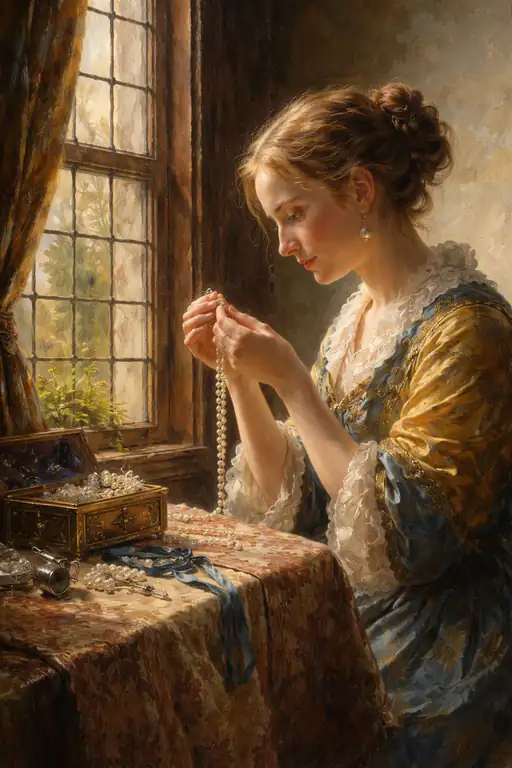 A Quiet Moment of Grace
 Twilight Solitude and the Silent Letter
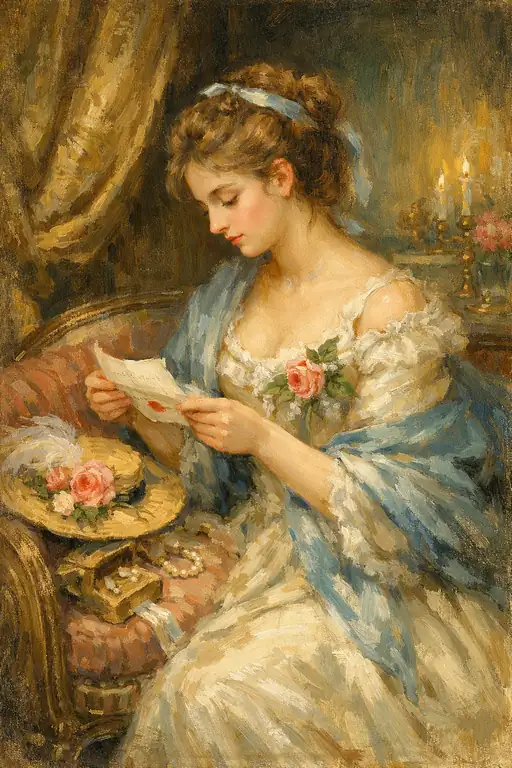 Silent Words
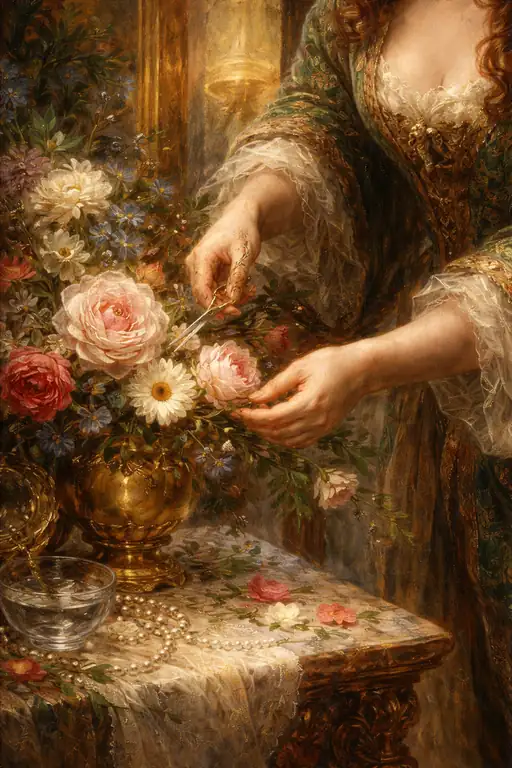 Opulence in the Parlor
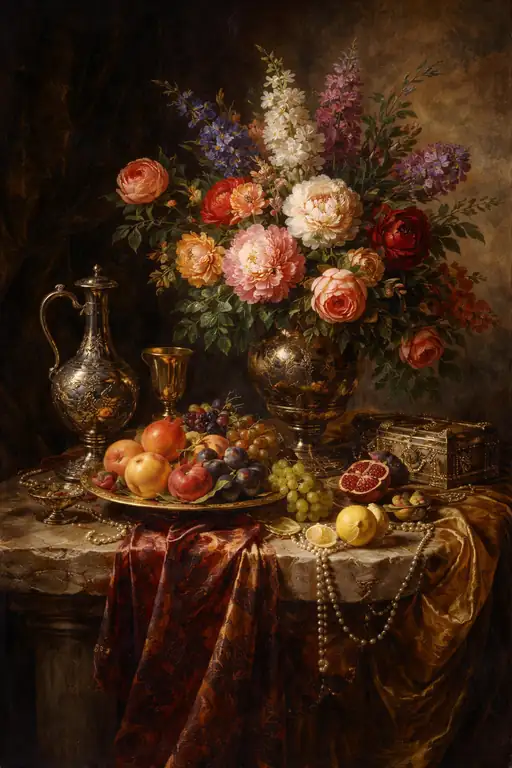 Flowers, Fruits, and Precious Objects
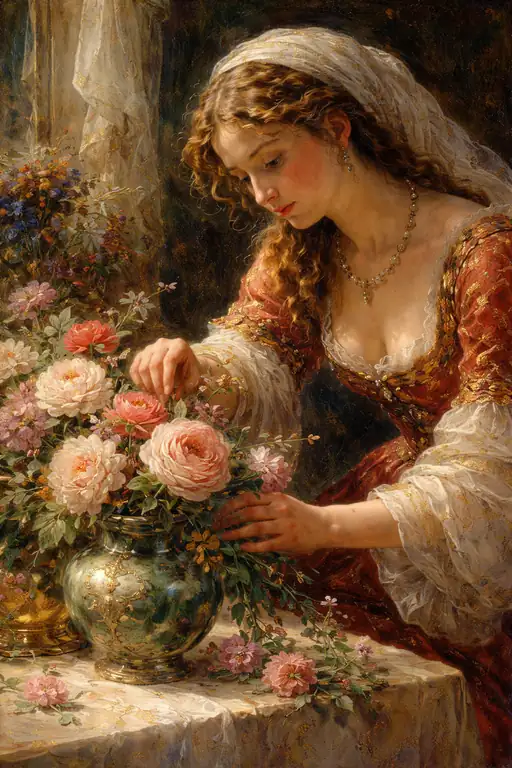 A Quiet Moment with Roses
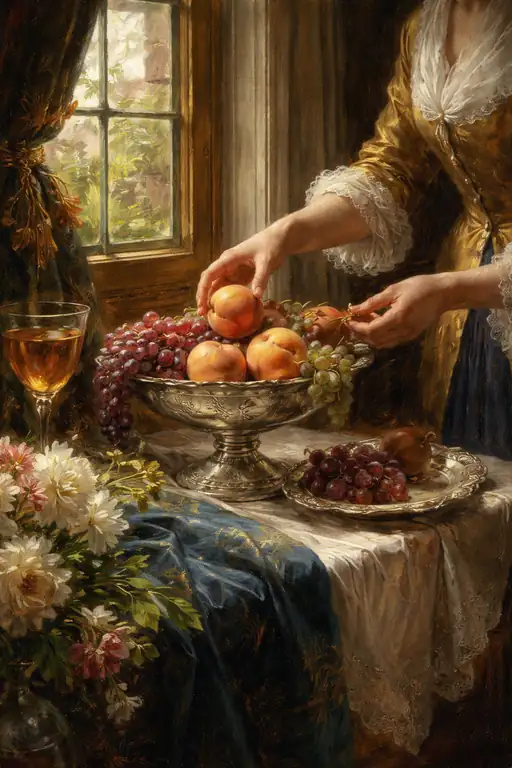 Golden Afternoon Preparations