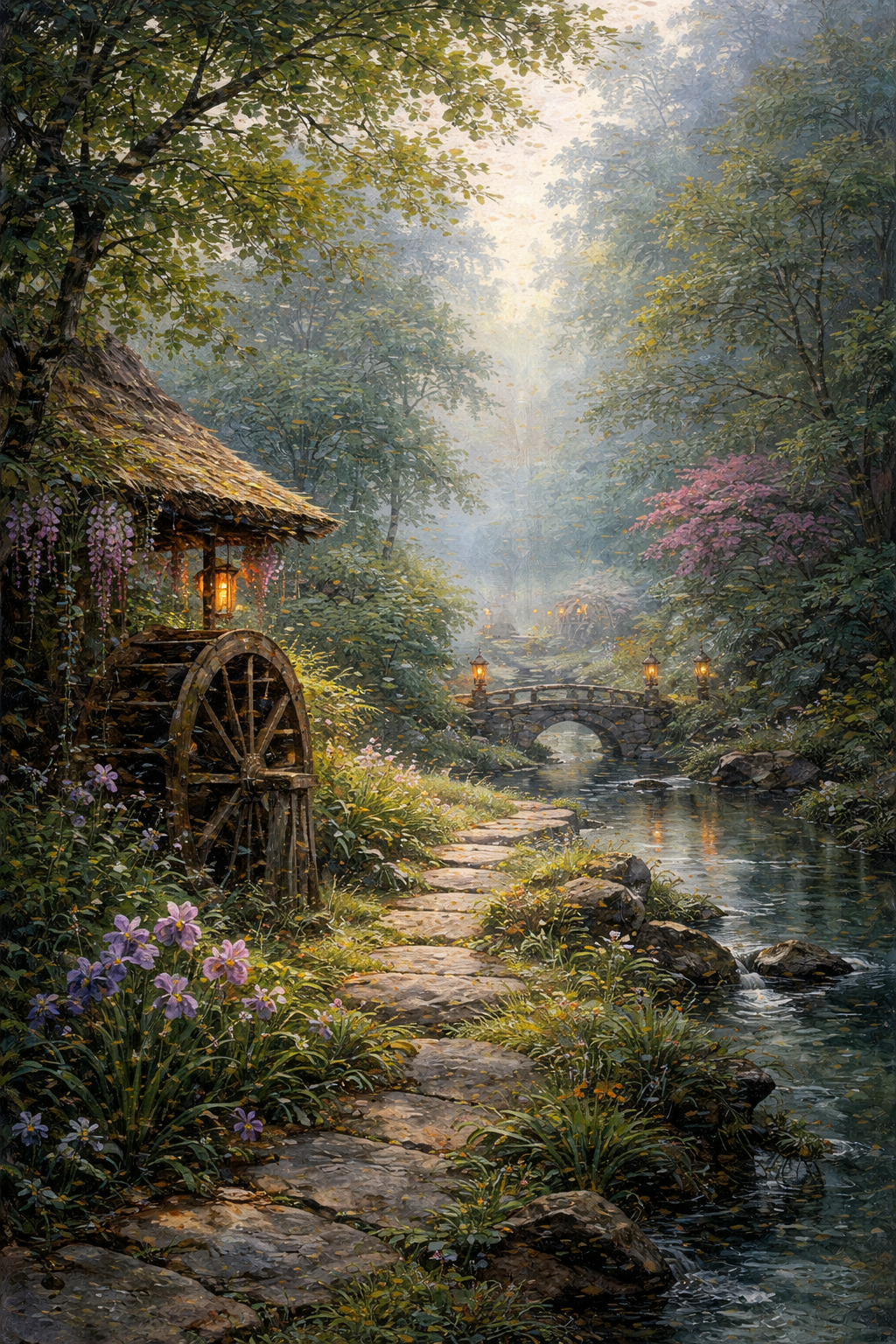
Whispers of the Waterwheel
Critique
1. Introduction This painting presents a serene forest landscape featuring a traditional thatched-roof hut and a prominent waterwheel beside a gentle stream. The scene is enveloped in a soft, misty light that filters through dense foliage, creating an atmosphere of quiet solitude and natural harmony. This work invites the viewer to step into a nostalgic, idyllic world where human architecture and the wilderness coexist in perfect balance. 2. Description The composition is dominated by a large wooden waterwheel on the left, attached to a rustic hut with a heavy thatched roof. A winding path made of irregular flat stones leads from the foreground toward a small arched stone bridge in the mid-ground. Lush vegetation, including vibrant purple irises and various wildflowers, grows along the water's edge. In the background, tall trees fade into a hazy, golden atmosphere, with small lanterns providing subtle points of warmth. 3. Analysis The artist utilizes a vertical orientation to emphasize the height of the forest canopy and the depth of the receding path. The color palette is rich in earthy greens, browns, and soft golds, contrasted by the cool blues of the water and the delicate purples of the flowers. Light is used effectively as a focal point in the upper center, drawing the eye through the misty atmosphere toward the bridge. The textures of the thatch, stone, and splashing water are rendered with fine, impressionistic brushwork. 4. Interpretation and Evaluation This work reflects a deep appreciation for the tranquility of nature and the rhythmic beauty of water-driven machinery. The presence of lanterns suggests a lived-in quality, adding a sense of safety and warmth to the potentially overwhelming forest environment. Technically, the artist demonstrates a mastery of light and atmospheric perspective, successfully capturing the humidity and soft glow of a woodland morning. The composition is well-balanced, guiding the viewer’s gaze through a narrative of discovery along the stone path. 5. Conclusion The initial impression of a simple pastoral scene evolves into a profound appreciation for the intricate interplay between light and shadow within the forest. This painting successfully evokes a sense of peace and timelessness through its meticulous detail and atmospheric depth. The synthesis of natural elements and human-made structures results in a cohesive and emotionally resonant landscape. One can conclude that the work effectively captures a fleeting moment of atmospheric beauty within a secluded natural sanctuary.
Same Subcategory
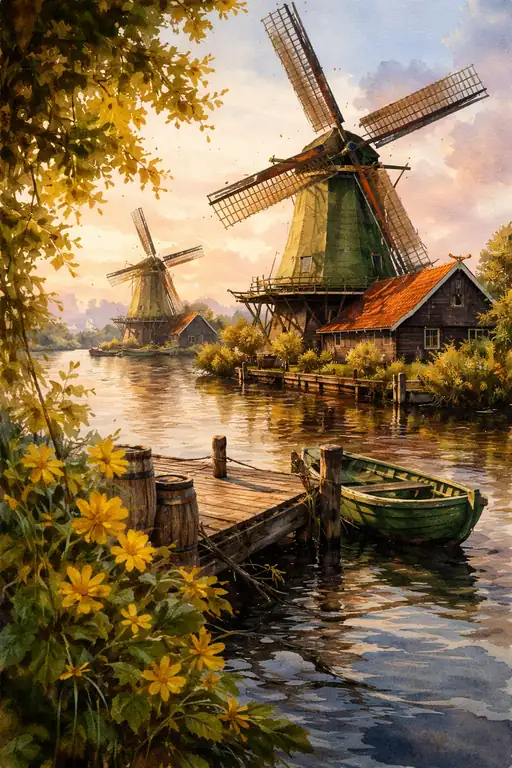 Golden Hour Retreat
Similar Artworks
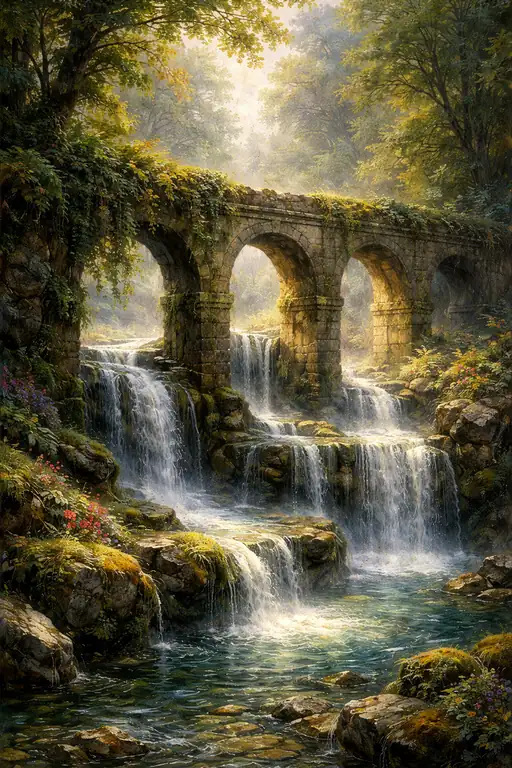 Harmony of Forgotten Ages
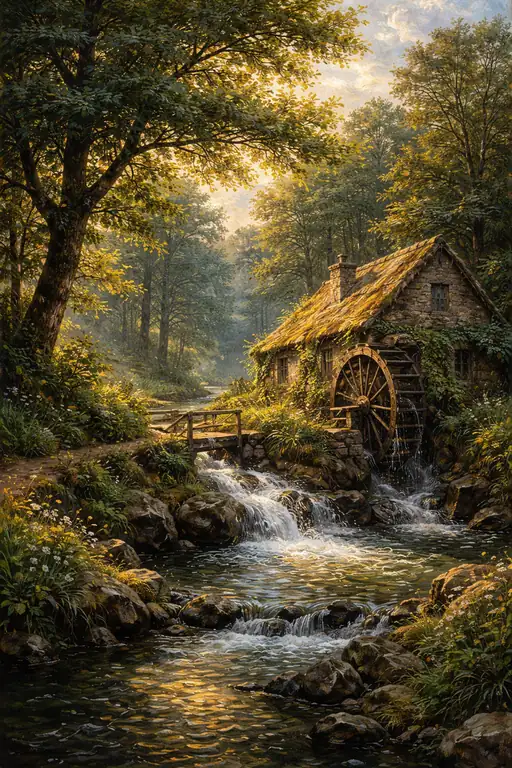 Sanctuary of the Sunbeams
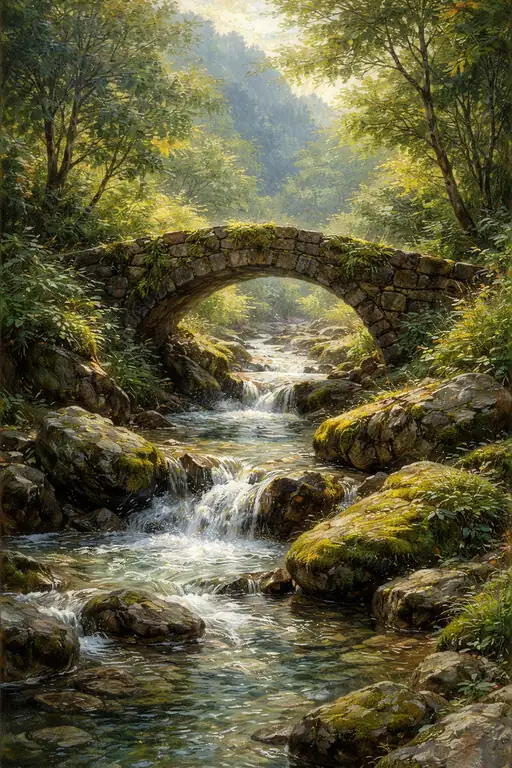 Timeless Passage Over the Whispering Stream
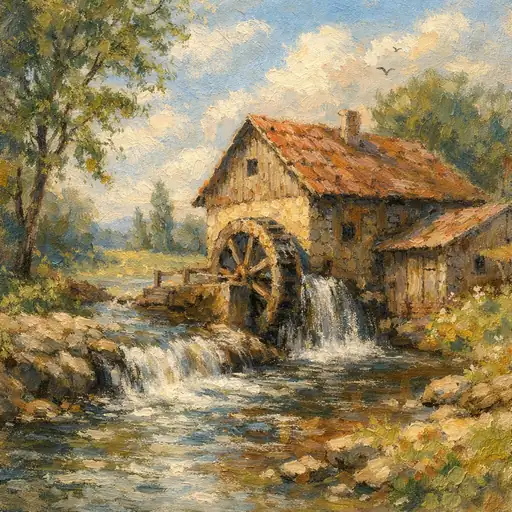 Rustic Watermill and Stream on a Sunny Day
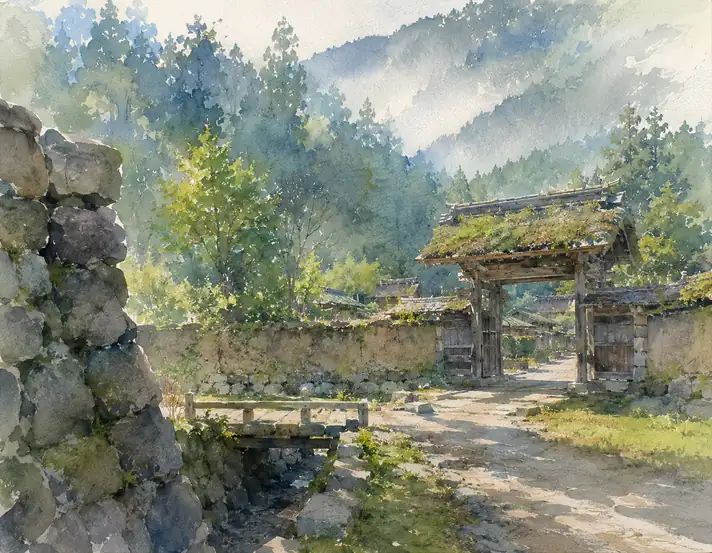 The Silent Gate Where Time Lingers
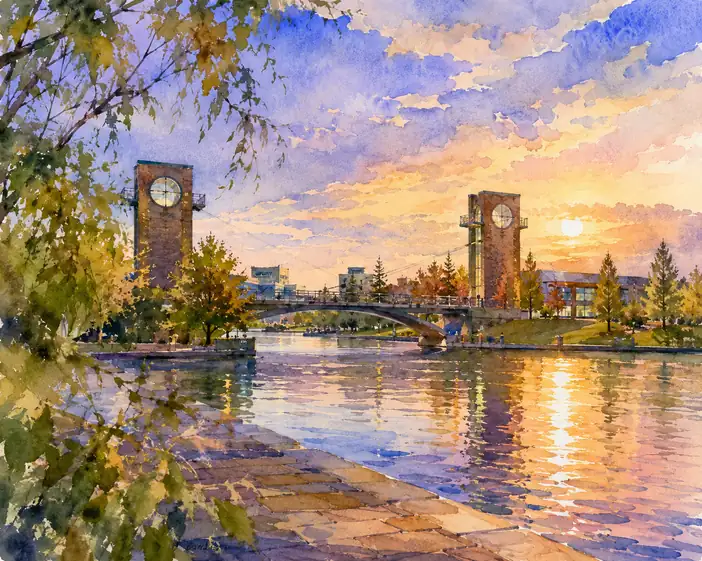 Serenade of the Setting Sun
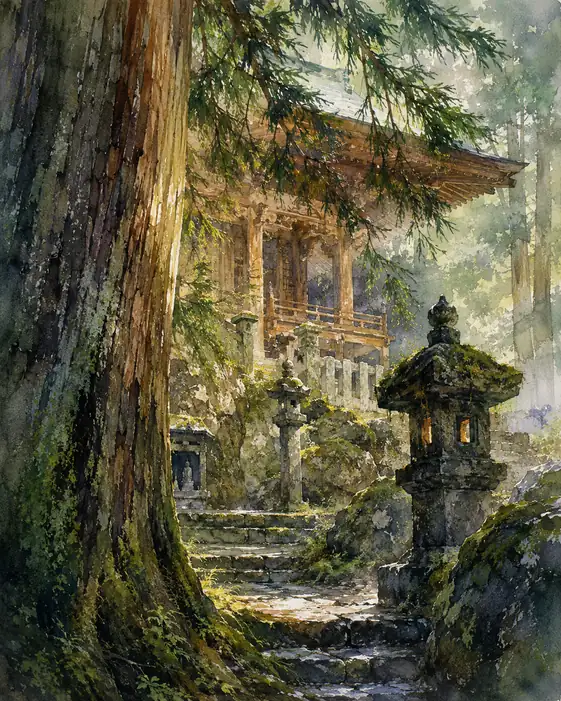 Sanctuary of the Ancient Cedars
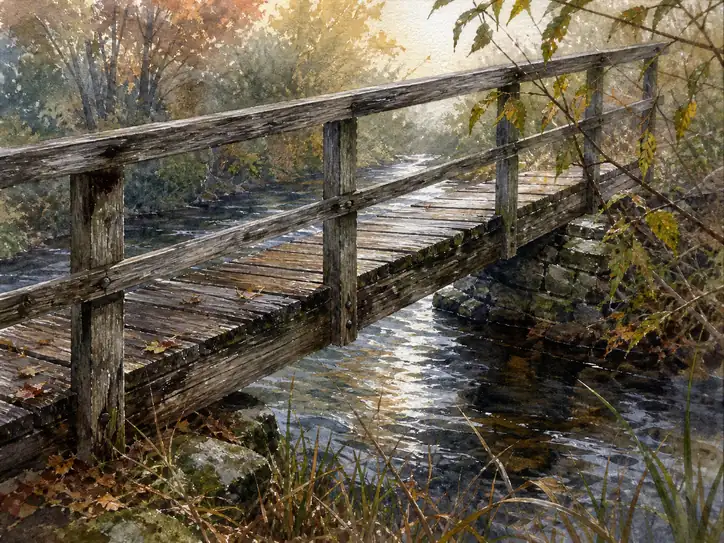 Bridge to the Heart of Autumn
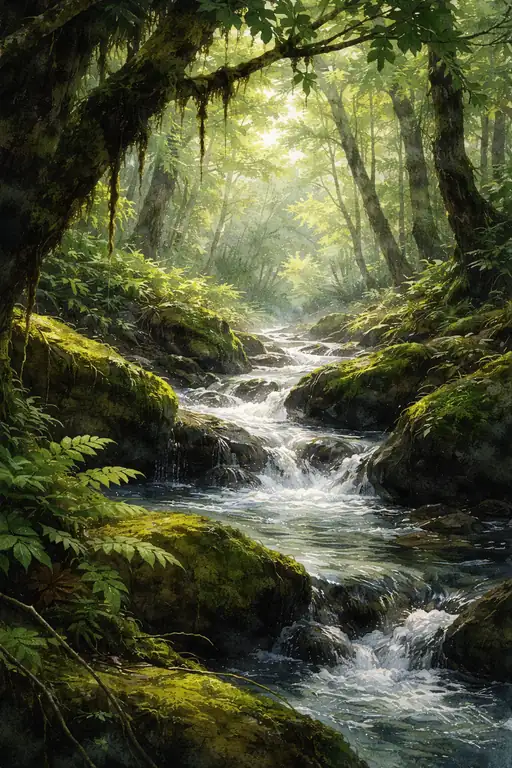 Song of the Secret Brook
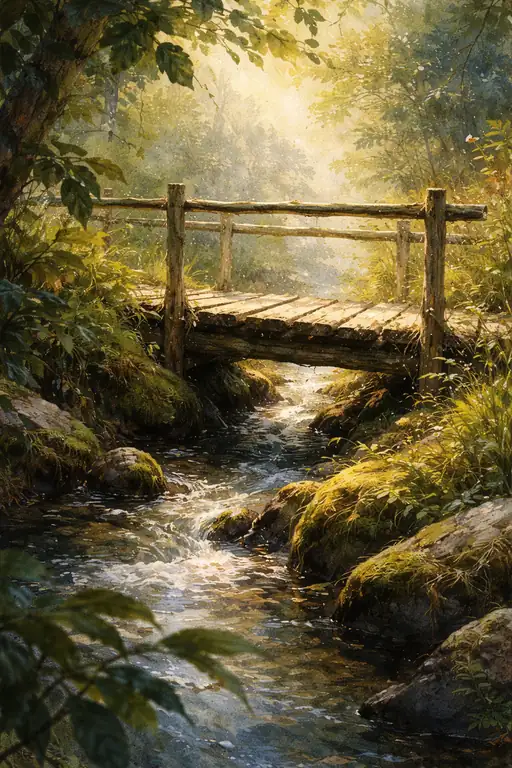 Bridge to the Sunlit Sanctuary