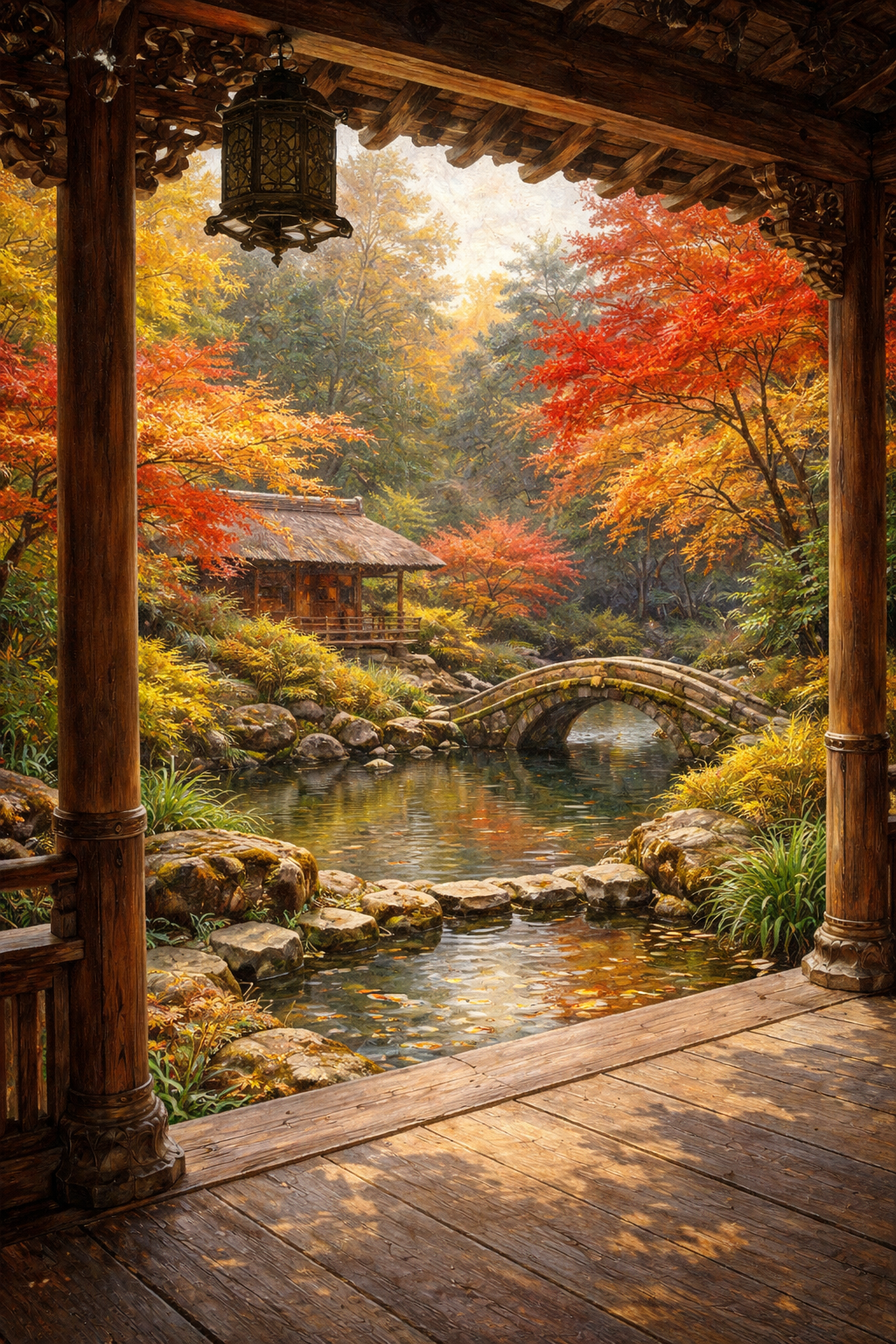
Crimson Reflections
Critique
1. Introduction This evocative painting captures the essence of a traditional Japanese garden at the peak of autumn, viewed from the interior of a wooden structure. The foreground features heavy timber pillars and a roof edge, framing the scenery as if looking through a window at a living landscape. The work masterfully depicts the overwhelming beauty of the changing seasons, blending a serene atmosphere with meticulous attention to detail. 2. Description In the middle ground, a gracefully arched stone bridge spans a quiet pond, whose surface is scattered with fallen leaves of various colors. To the left, a traditional thatched-roof cottage is nestled among vibrant maple trees that glow in shades of brilliant red, orange, and yellow. The wooden veranda in the foreground is dappled with light and shadow, adding a sense of physical presence and depth to the overall composition. 3. Analysis The composition employs a classic "frame-within-a-frame" technique, using the architectural elements to direct the viewer's focus toward the central bridge and foliage. Color-wise, the warm autumn tones contrast beautifully with the cool, dark reflections in the pond and the deep browns of the woodwork, creating a rich and balanced palette. The depiction of light is particularly noteworthy, with sunlight filtering through the canopy to illuminate the textures of the stones and water with great delicacy. 4. Interpretation and Evaluation This artwork can be interpreted as a modern realistic expression of "Wabi-sabi," reflecting a deep appreciation for the transient beauty of nature. By juxtaposing the ephemeral autumn leaves with the enduring presence of the stone bridge and traditional architecture, the piece suggests a profound meditation on time and change. The artist’s exceptional observational skills and technical precision invite the observer to experience the sensory qualities of the scene, establishing high artistic merit. 5. Conclusion While initially struck by the fiery brilliance of the maples, one eventually finds deeper meaning in the quiet shadows and the stillness of the water. The harmony between natural splendor and structural silence is perfectly maintained, leaving no element out of place. Ultimately, the painting serves as a poignant celebration of Japanese aesthetics, offering a meditative space that restores a sense of inner peace to the modern viewer.
Same Subcategory
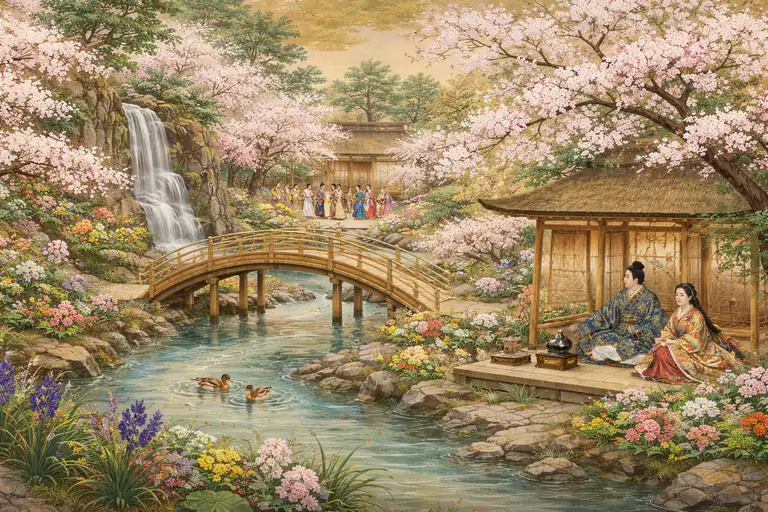 Spring's Gentle Embrace
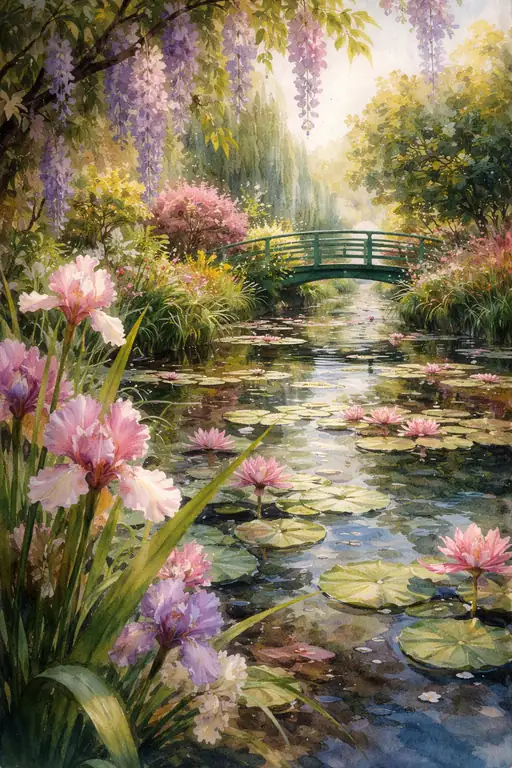 Serenity at the Lily Pond
Similar Artworks
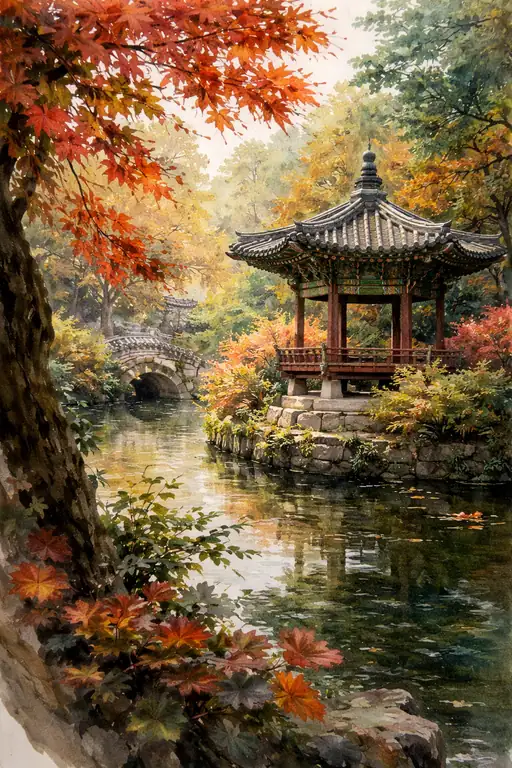 Crimson Leaves Reflected in Autumn's Mirror
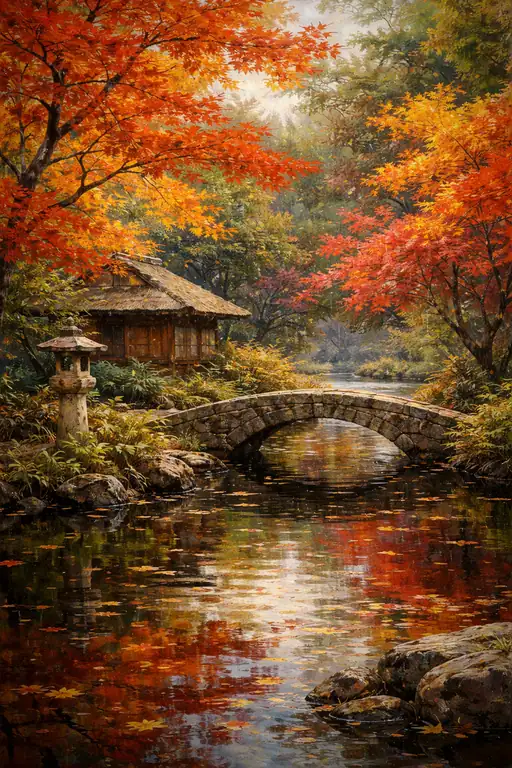 Serenity Reflected in the Fiery Autumn Waters
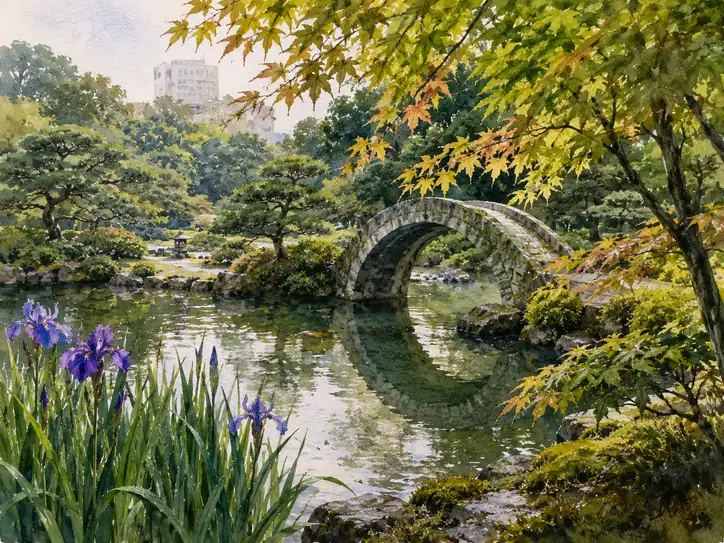 Where the Heart Finds Its Circle
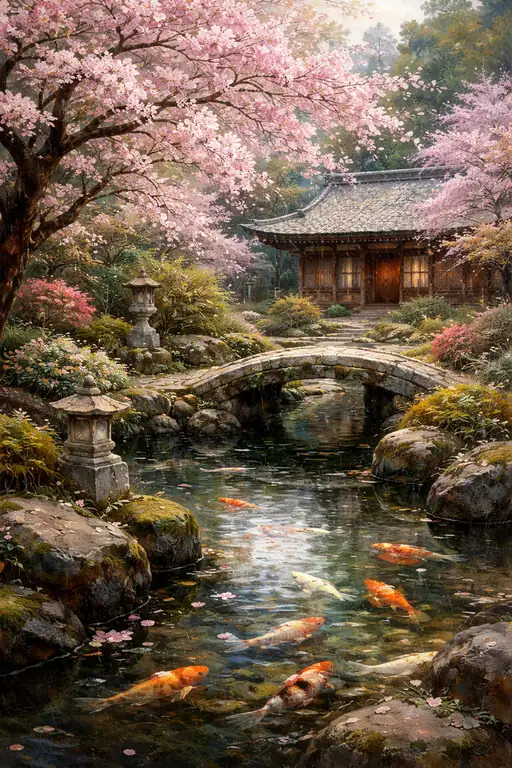 Reflections in the Koi Pond
 Autumn twilight, the Pagoda’s Silent Prayer
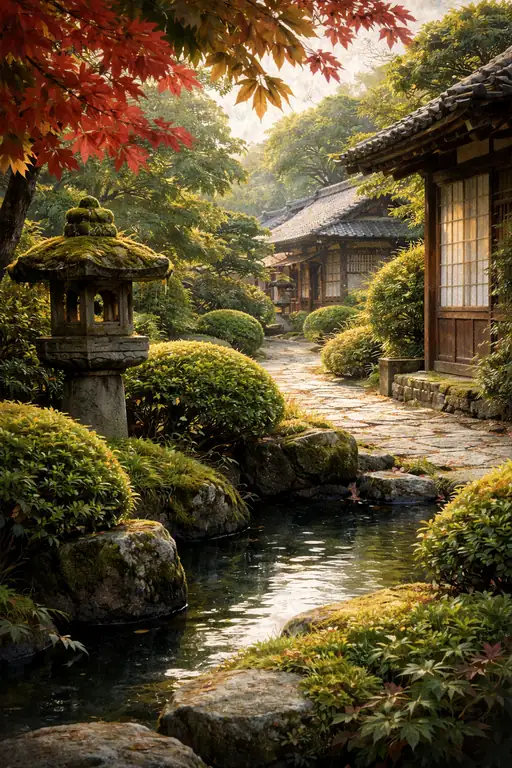 Autumn's Quietude: Reflections of a Timeless Garden
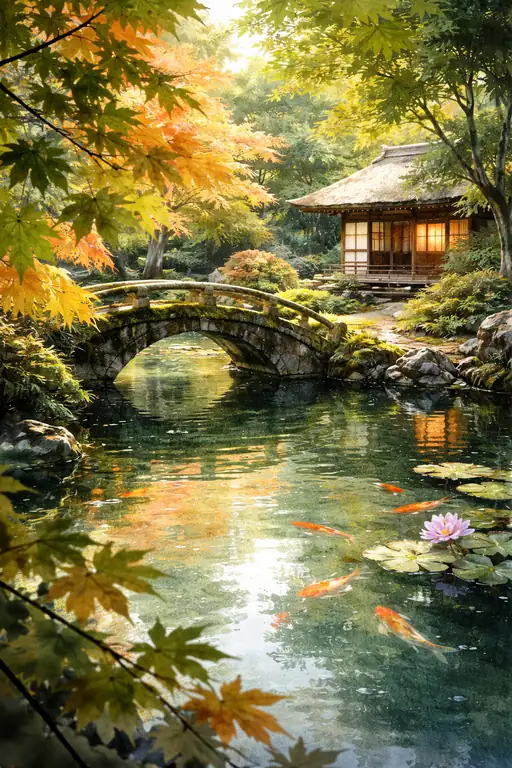 The Autumn Sanctuary of Koi
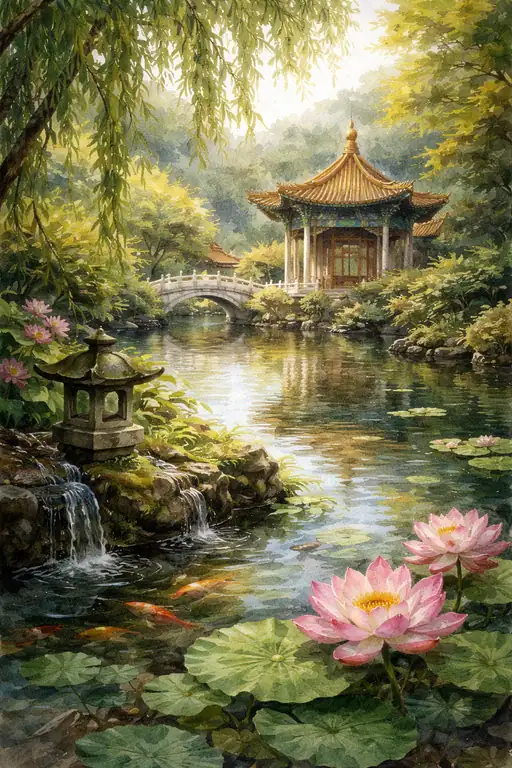 Serenity of the Gilded Pavilion
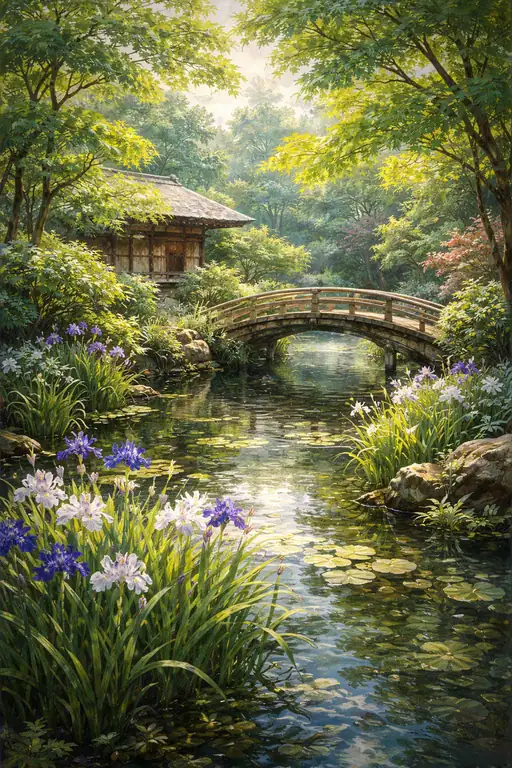 Morning Reflection on the Wooden Arch
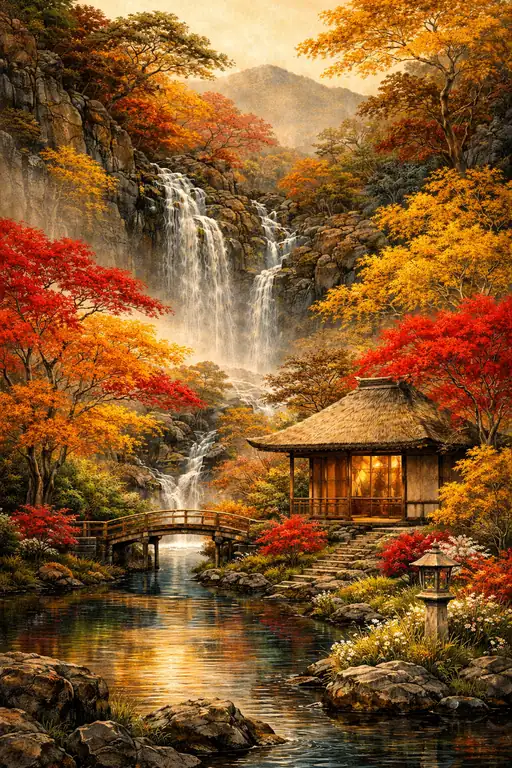 Crimson Waterfall and the Golden Bridge