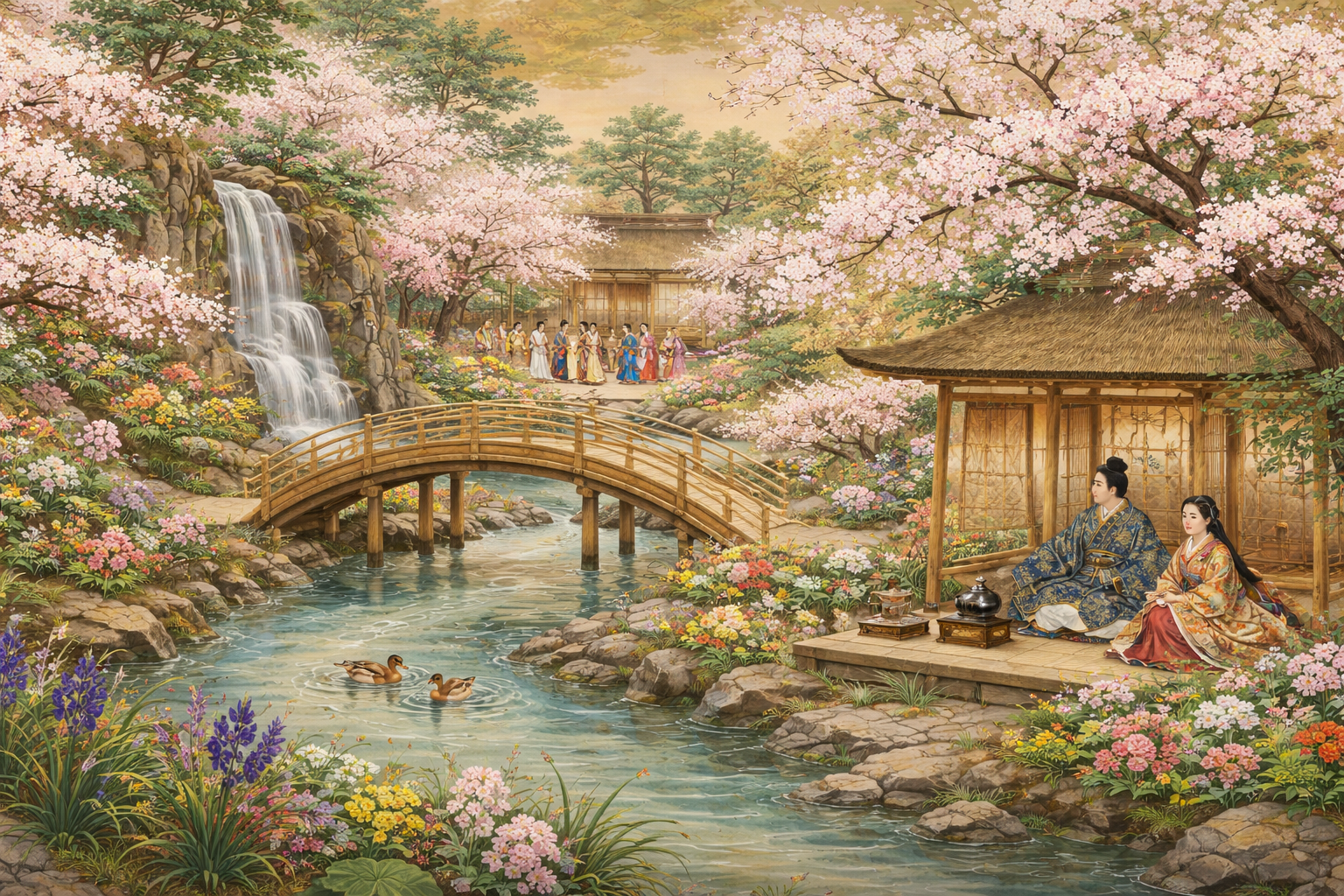
Spring's Gentle Embrace
Critique
1. Introduction This artwork is a meticulously detailed painting of a traditional Japanese garden in full bloom, capturing a serene spring scene. The composition features iconic elements of Japanese landscaping, such as a waterfall, a wooden bridge, and cherry blossoms, all bathed in soft sunlight. It invites the viewer into an idealized world where natural beauty and human architecture coexist in perfect harmony. 2. Description On the left side, a clear waterfall cascades down rocky cliffs into a stream that flows under a graceful, arched wooden bridge. Two ducks float peacefully on the water's surface, while the banks are adorned with a vibrant array of seasonal flowers in purple, yellow, and white. In the background, a thatched-roof pavilion stands amidst the cherry trees, surrounded by people dressed in elegant, colorful kimonos. 3. Analysis The piece demonstrates a masterful use of perspective and diagonal composition to create a profound sense of depth and space. The color palette is dominated by the delicate pink of the cherry blossoms, harmonized with the earthy tones of the architecture and the cool blues of the water. The artist’s attention to detail is exceptional, visible in the textured rocks, the translucent water, and the intricate patterns of the traditional garments. 4. Interpretation and Evaluation This painting can be interpreted as a modern revitalization of the classic "Kacho-fugetsu" theme, representing the profound connection between nature and human culture. By blending traditional motifs with realistic lighting and spatial arrangements, the work transcends mere landscape depiction to offer a vision of a peaceful utopia. The technical precision combined with the atmospheric quality establishes the work as a significant contribution to contemporary aesthetic expression. 5. Conclusion Initially captivated by the splendor of the cherry blossoms, one gradually discovers the complex layering and thoughtful organization behind every element. The quiet passion within the brushwork seems to freeze a fleeting moment of natural transition into an eternal presence. Ultimately, the painting serves as a powerful reminder of the importance of harmony and provides a sanctuary of tranquility for the modern observer.
Same Subcategory
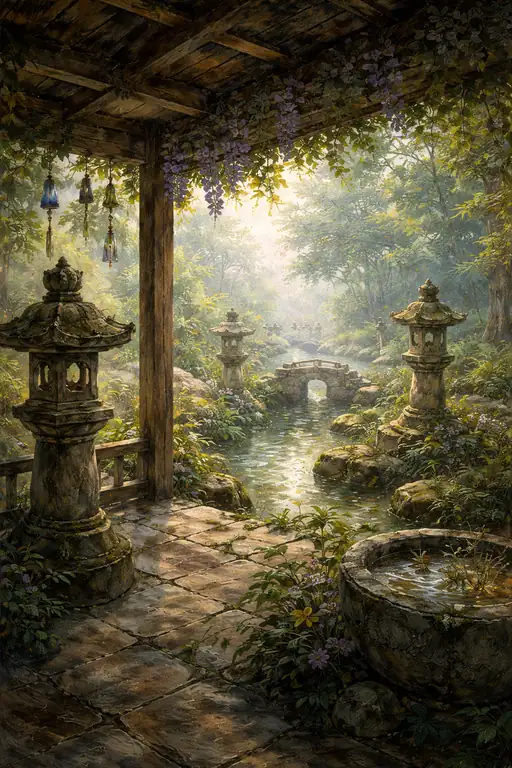 Solace in the Summer Verdure
Similar Artworks
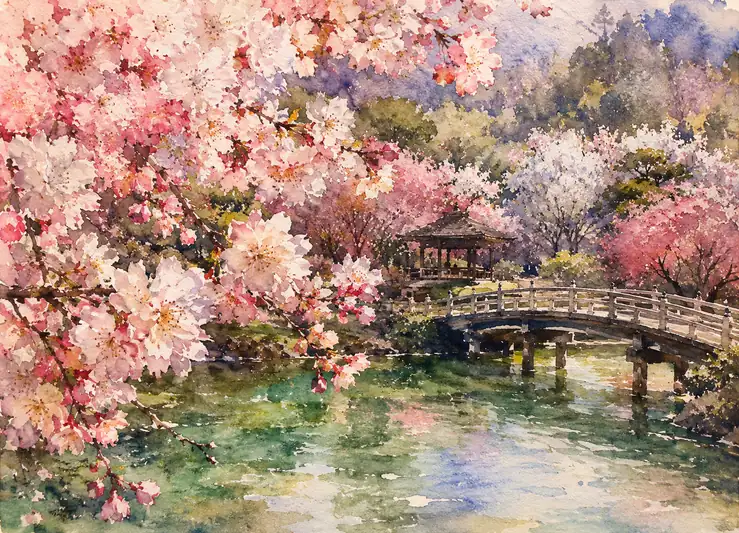 The Waltz of Sakura and Stone
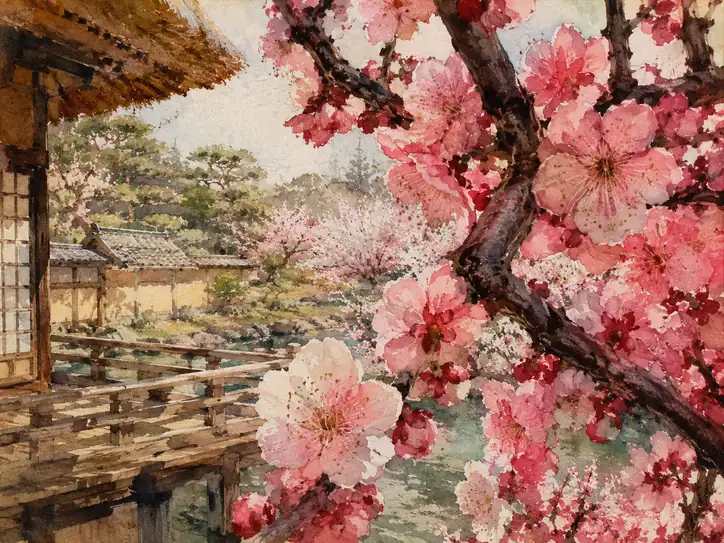 Where the Spring Wind Pauses
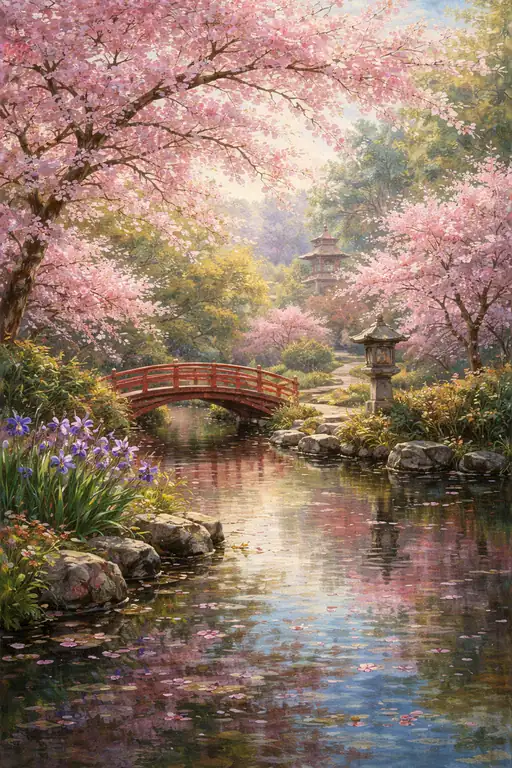 Tranquility in the Zen Garden
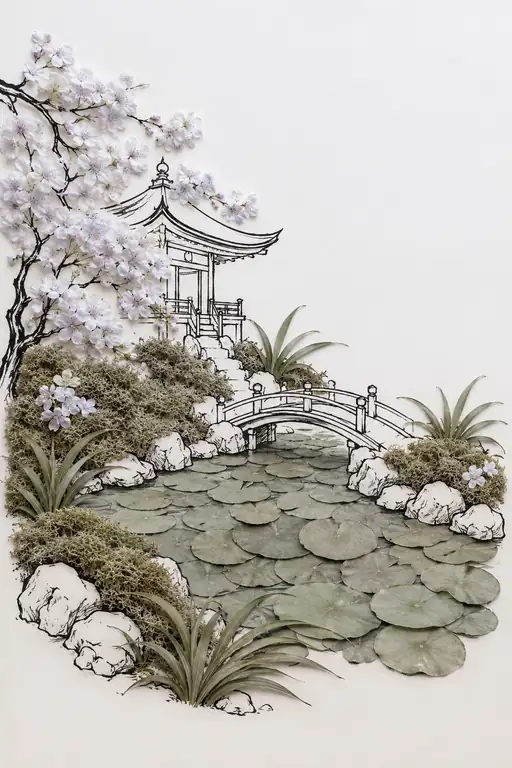 Spring Solitude at the Curved Bridge
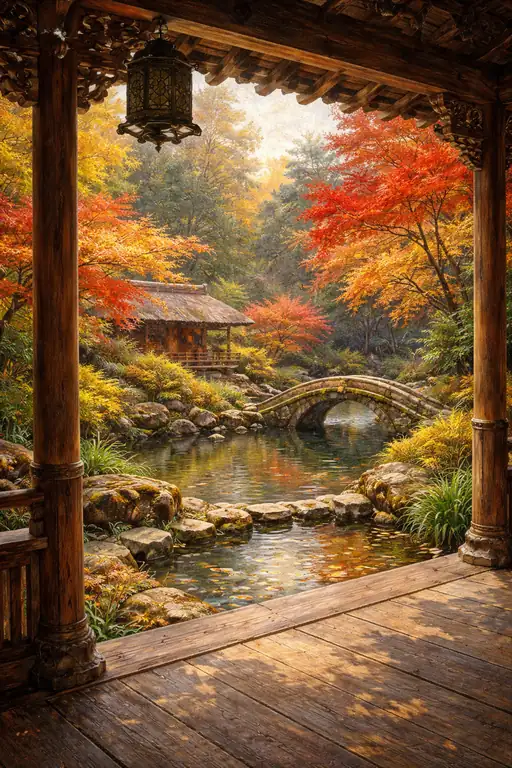 Crimson Reflections
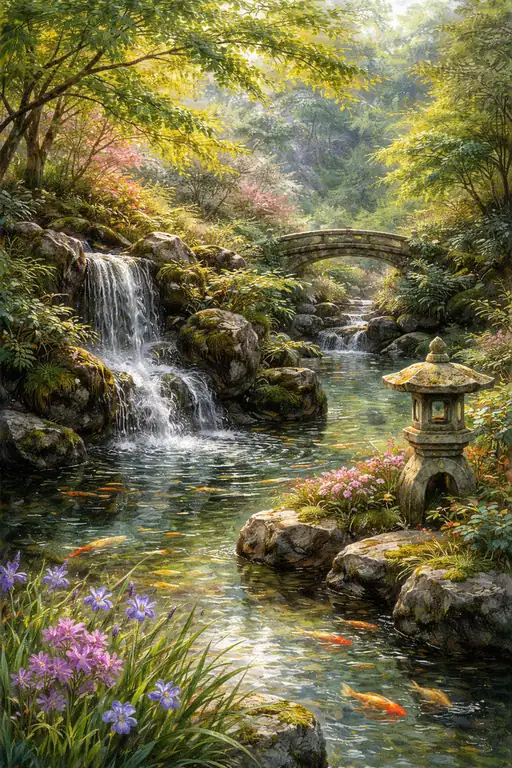 Serenity in the Flow
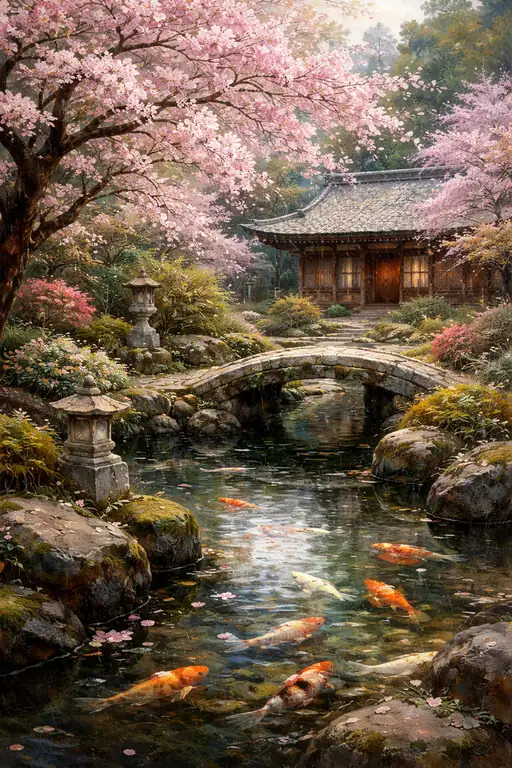 Reflections in the Koi Pond
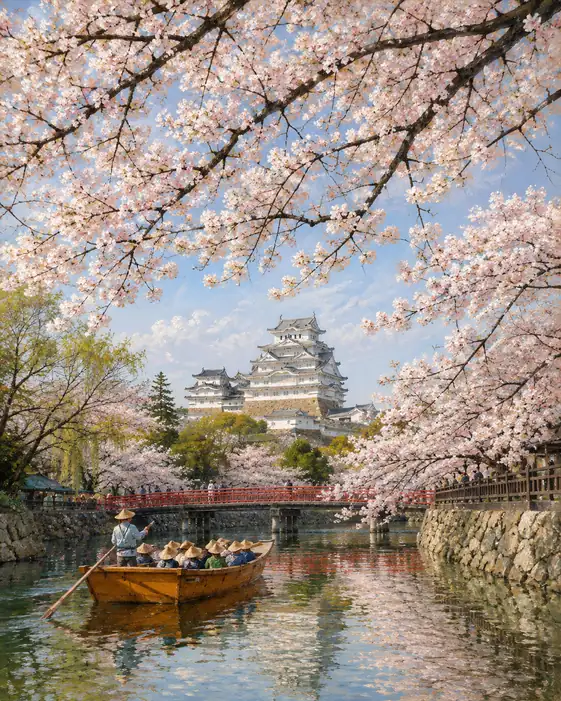 Passage Beneath Sakura Canopy
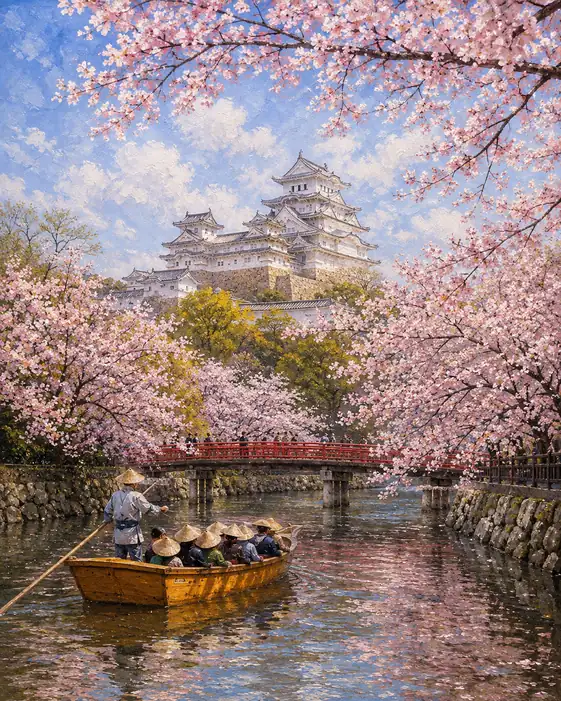 Rowing Through Spring Toward White Heron Castle
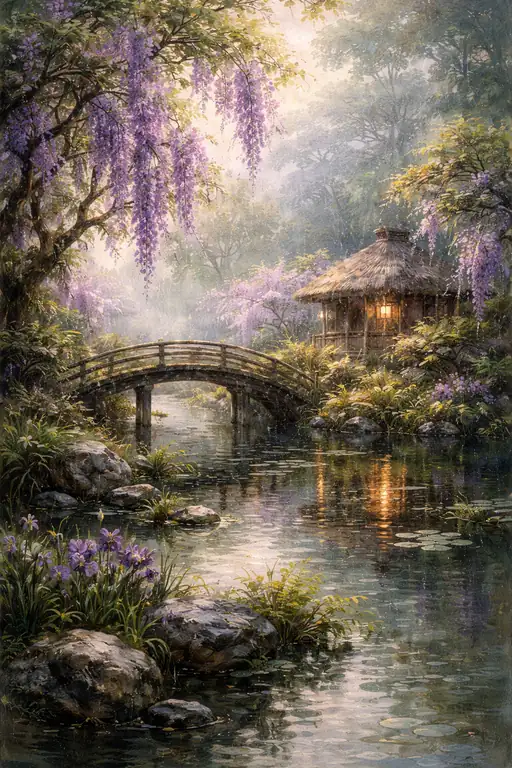 Sanctuary of the Dreaming Wisteria