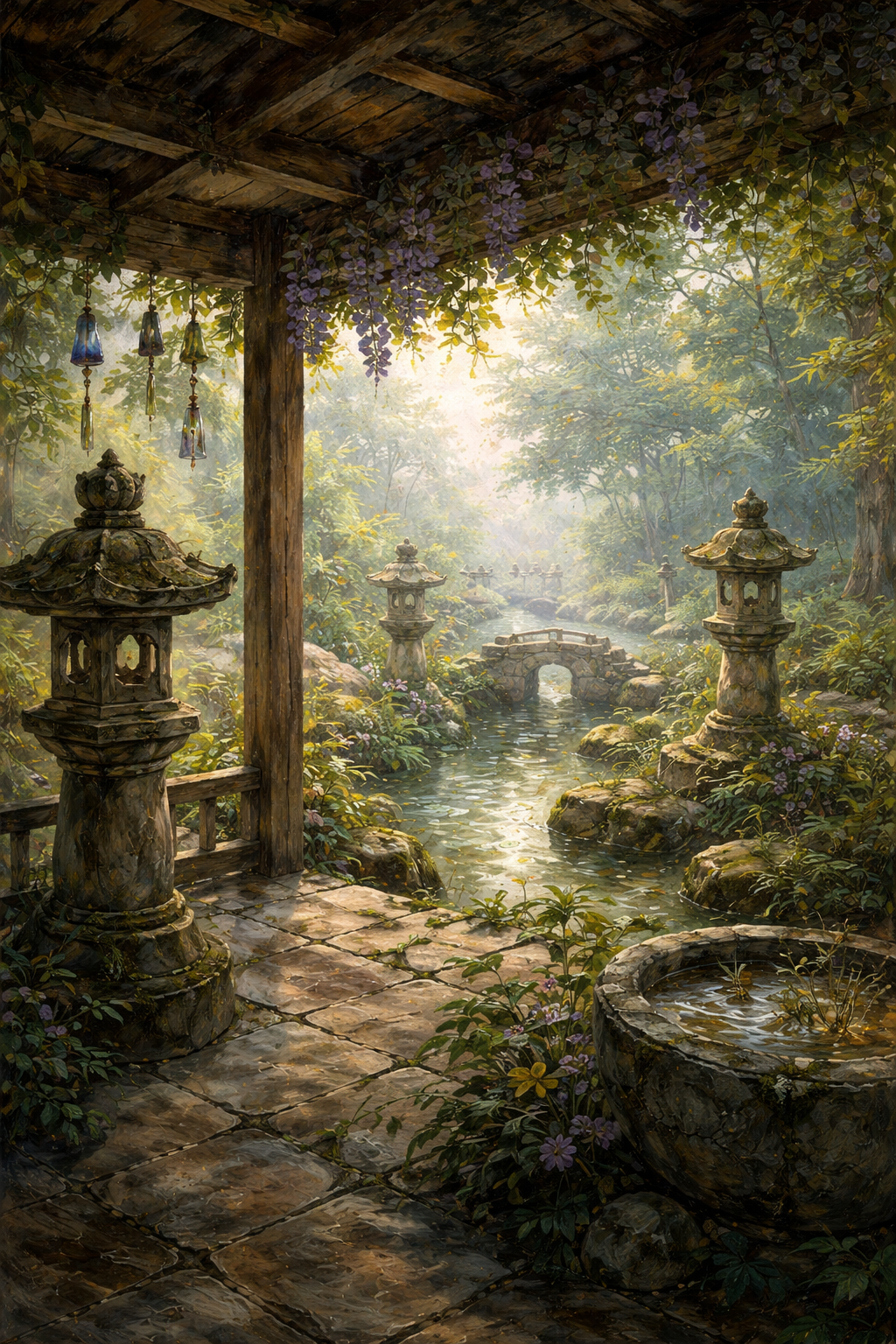
Solace in the Summer Verdure
Critique
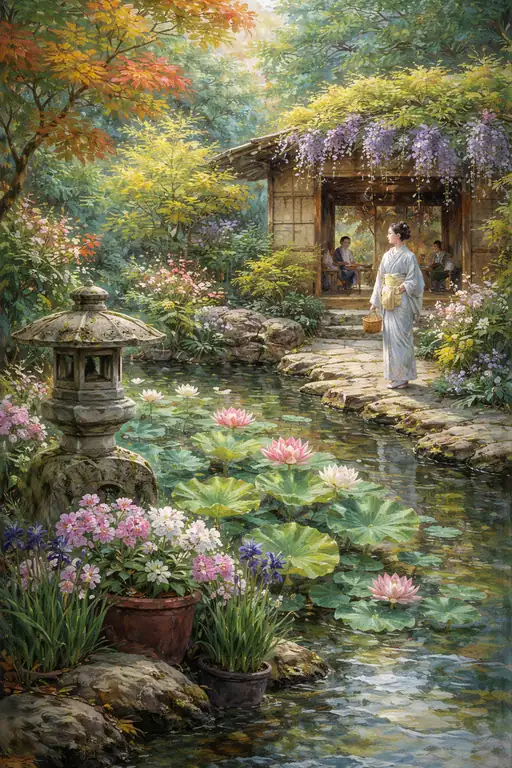
1. Introduction This oil painting depicts a Japanese garden viewed from a wooden veranda, surrounded by lush greenery. Traditional elements like stone lanterns, a water basin, and a bridge harmonize with the sun-drenched forest, creating a space of tranquility. The calm atmosphere detaches the viewer from everyday noise, inviting them into a moment of deep peace. 2. Description The foreground features a stone-paved veranda with a heavy stone lantern and a water basin, with purple wisteria hanging from the eaves. The middle ground contains a stream crossed by a small arched bridge, with additional lanterns on the opposite bank. The background consists of a broadleaf forest glowing in the sunlight, with beams filtering through the leaves to highlight the water and stone. 3. Analysis The color scheme is exceptionally skillful, using diverse green gradations to depict the garden's depth and vitality. Meticulous brushwork representing damp moss and aged stone gives the scene a solid sense of reality. The composition uses the foreground pillars and lanterns as a frame, naturally guiding the eye toward the bridge and the bright forest beyond, emphasizing spatial continuity. 4. Interpretation and Evaluation The work embodies the spiritual universe of the "garden," where nature and artifacts unite to show a high order of harmony. The contrast between seasonal wisteria and immutable stone structures expresses the beauty of passing time and eternal silence. With outstanding descriptive power and delicate lighting techniques, the artist originaly expresses Japanese sentiment through oil medium. 5. Conclusion Initially, the heart is cleansed by the garden scenery, but observation of the details reveals the spiritual depth contained within. This scene, a culmination of cultural refinement and the pursuit of universal beauty, embodies an ideal of harmony that resonates across different eras. It is a masterpiece of balance and serenity.
Same Subcategory
 Whispers of Cherry Petals
 Spring's Gentle Embrace
Similar Artworks
 The Wisteria's Whisper Over Sacred Waters
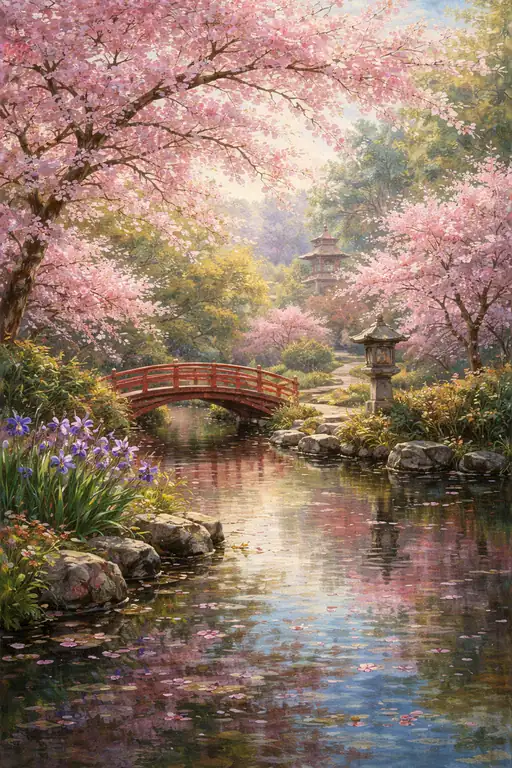 Tranquility in the Zen Garden
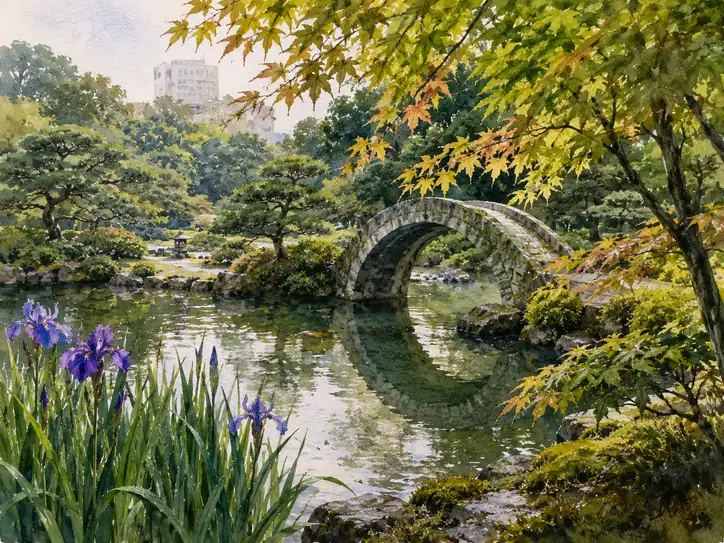 Where the Heart Finds Its Circle
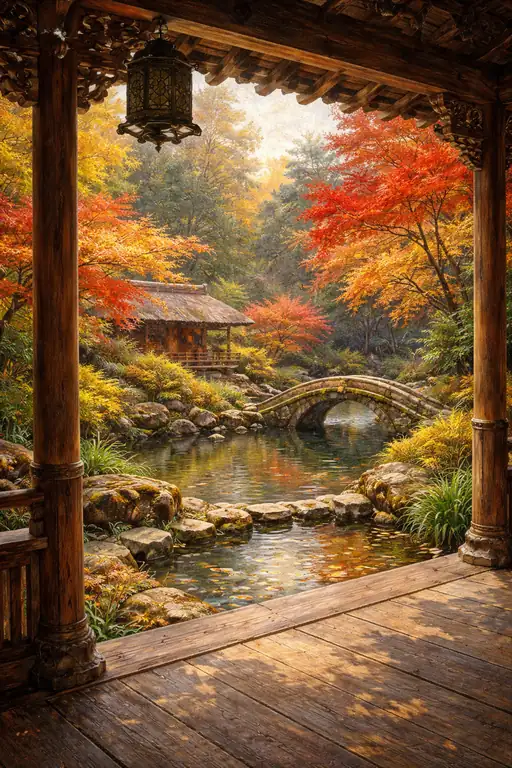 Crimson Reflections
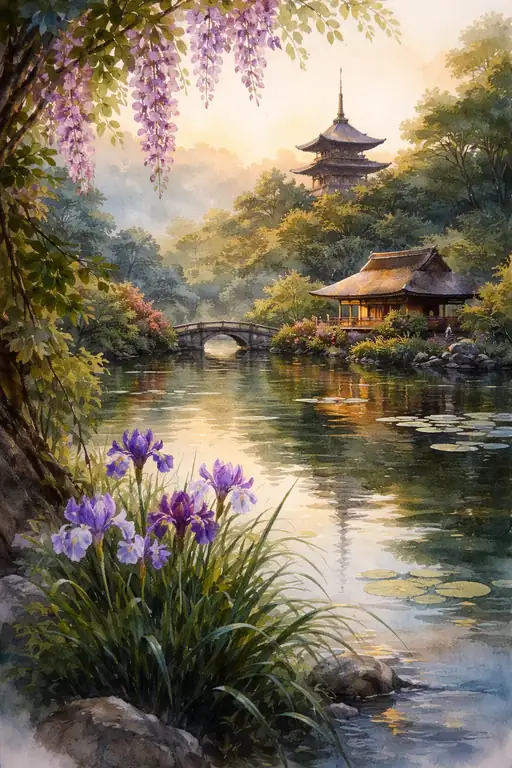 Sunset Harmony in the Temple Garden
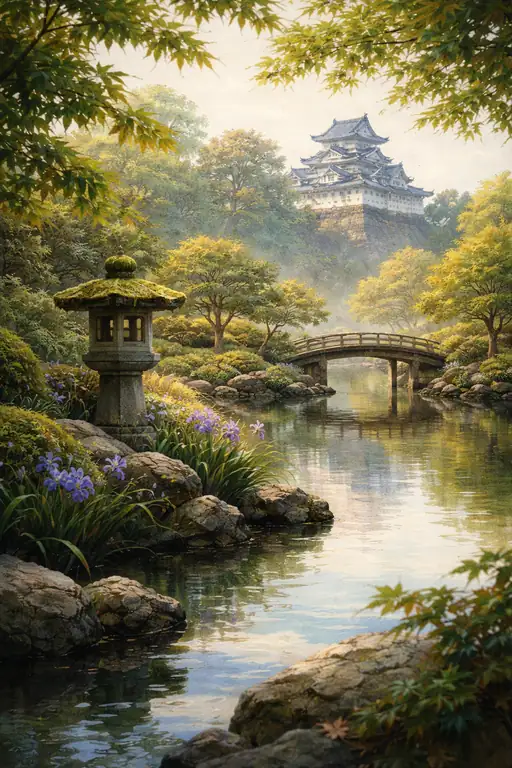 Echoes of the White Heron
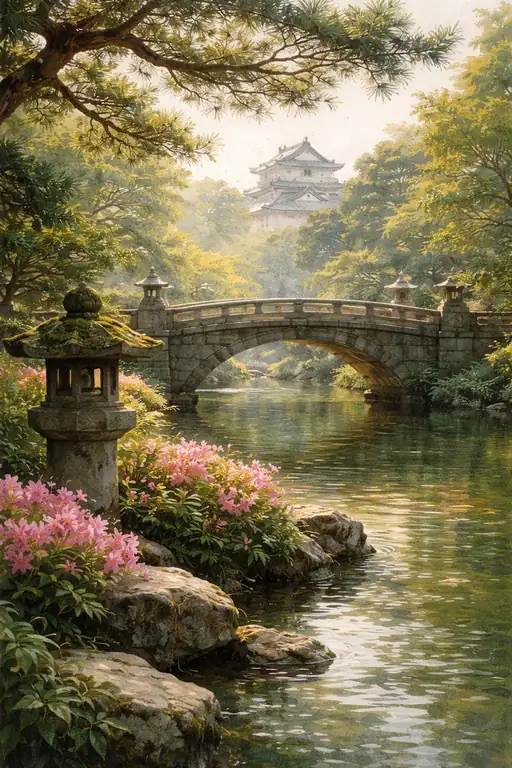 Tranquil Heart of the Ancient Garden
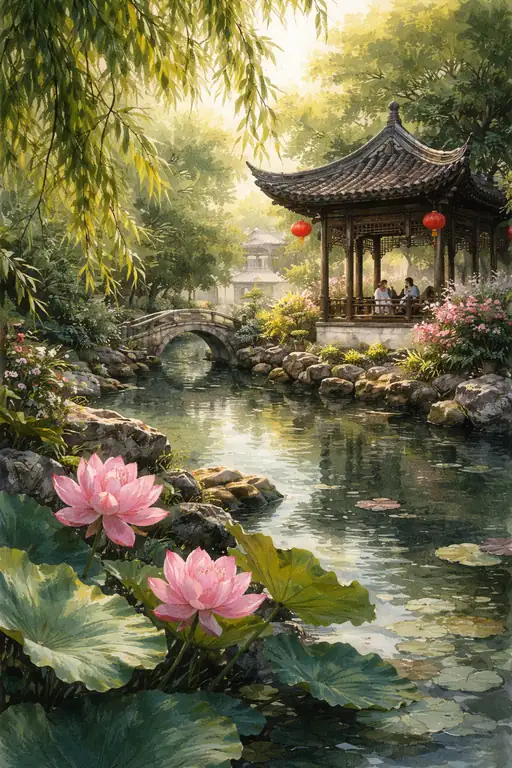 Tranquility in Bloom: The Lotus Pavilion
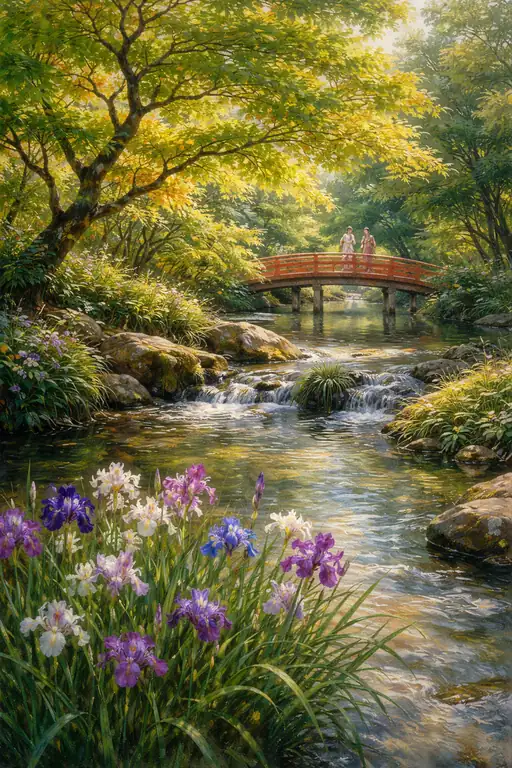 Dance of the Irises by the Crimson Bridge
 Kaleidoscope of the Forgotten Realm