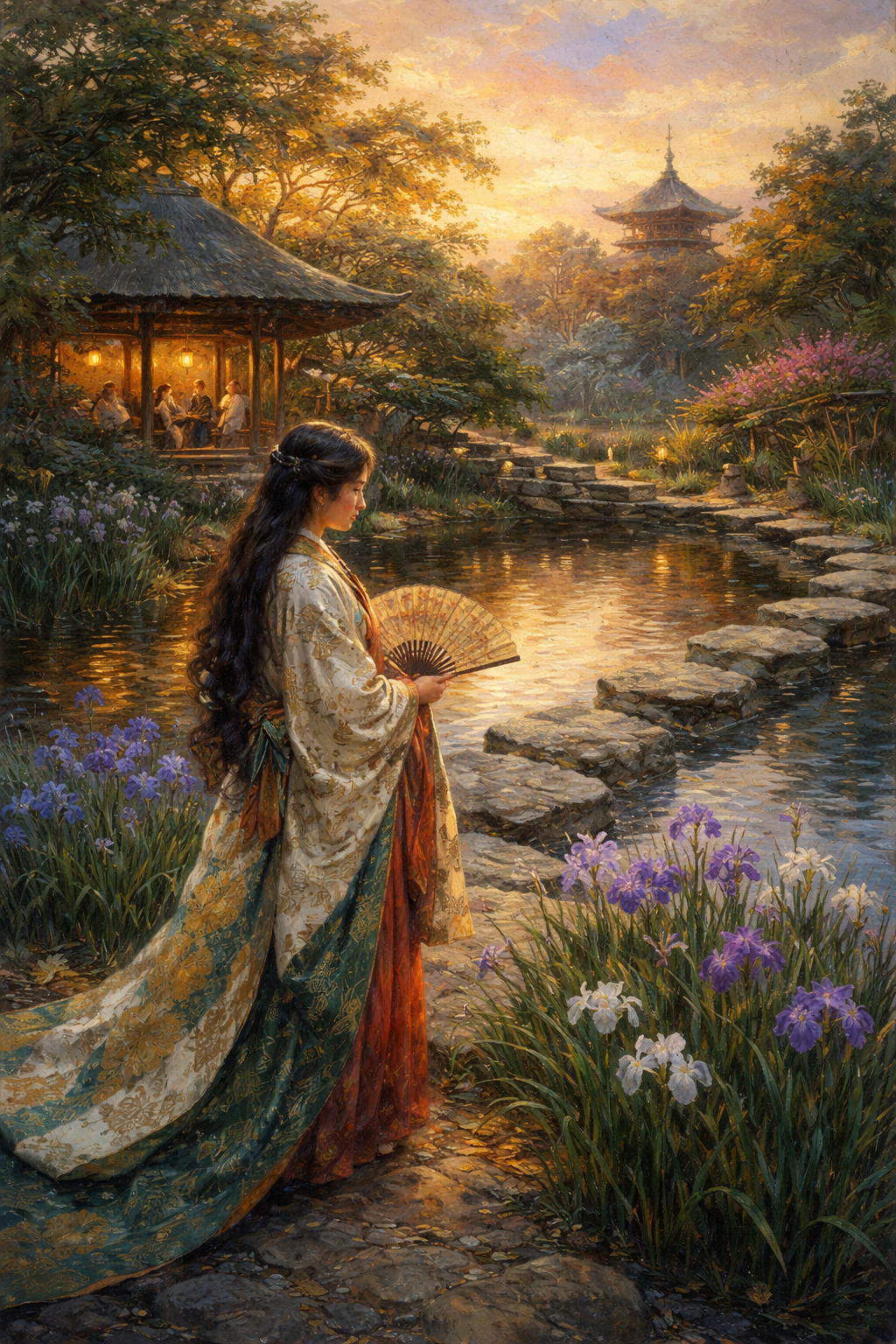
Eternal Spring Reflected
Critique
1. Introduction This figurative landscape depicts a noblewoman standing in a beautiful garden at dusk. The golden light and blooming flowers masterfully create an elegant worldview reminiscent of classical aesthetics. This profoundly poetic work harmonizes natural beauty with feminine grace, and this critique will examine its spatial composition and the formal effects of its lighting. 2. Description In the middle ground, a woman with long black hair holding a fan stands in profile by a rippling pond. Stone stepping stones extend across the water, surrounded by vivid purple and white irises. A pavilion with glowing lanterns stands to the left, while a pagoda appears as a silhouette against the sunset sky in the distance. 3. Analysis The composition creates diagonal movement from the foreground figure to the rightward stones, providing depth. Dusk's orange tones, green foliage, and purple irises form an exquisite complementary relationship. Golden light reflecting on the pond and the intricate patterns of the woman's robe create a synergistic effect, highlighting the artist's meticulous brushwork and textural rendering. 4. Interpretation and Evaluation This artwork embodies traditional aesthetics that cherish fleeting seasons and time. Symbols like irises and the pagoda imbue the scene with an elegant narrative quality found in classical literature. The artist's ability to capture light transitions and integrate the figure into the landscape demonstrates high artistic merit, reinterpreting traditional themes with fresh, modern sensitivity. 5. Conclusion This piece is an excellent work providing deep nostalgia and peace through its visual beauty. Meticulously rendered elements construct a complete, mirrored, and idealized landscape. While the golden light and the woman's beauty are initially striking, the garden's silence and the weight of passing time become more profoundly felt. It is a masterpiece with universal and enduring beauty.
Same Subcategory
 Words Unspoken Across the Scroll
 The Golden Threads of Introspection
Similar Artworks
 Sunset Harmony in the Temple Garden
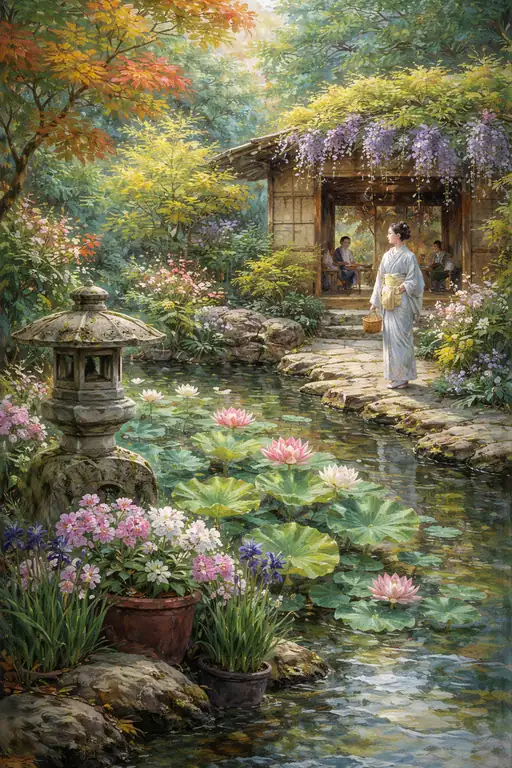 Kaleidoscope of the Forgotten Realm
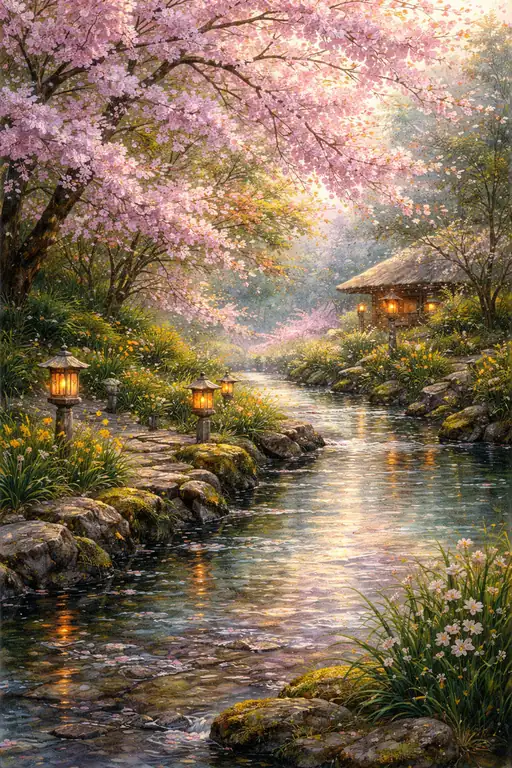 Sunset Over the Serene Stream
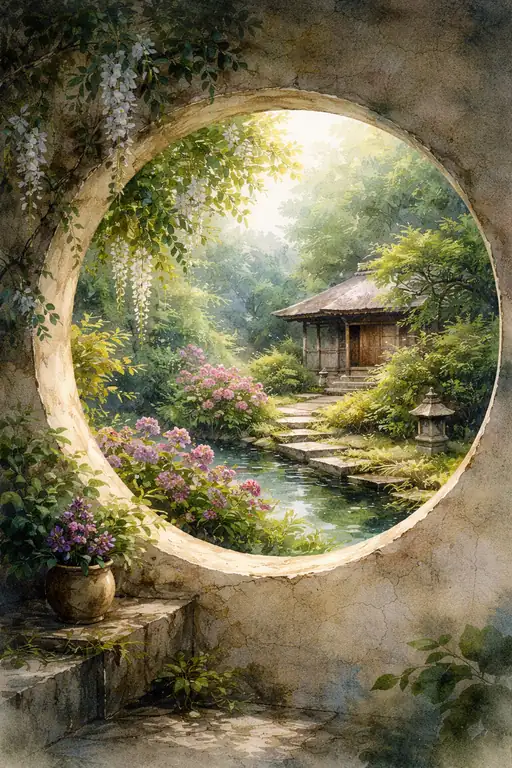 The Moon Window’s Quiet Embrace of the Sleeping Garden
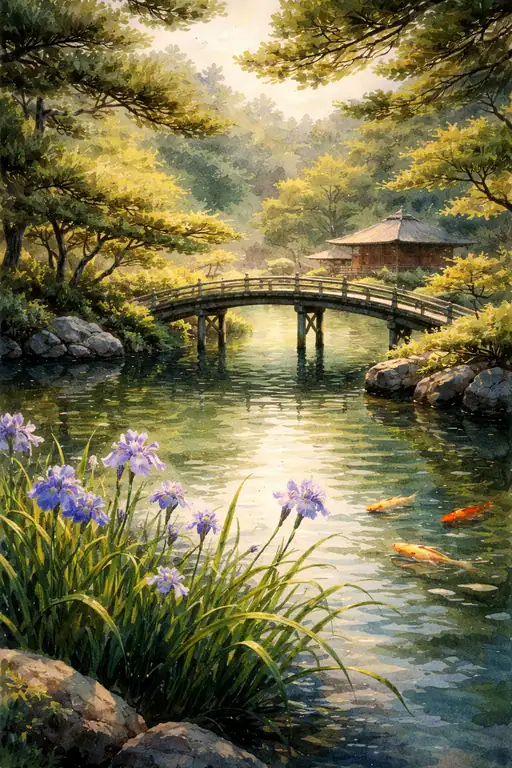 Whispers of the Golden Pond
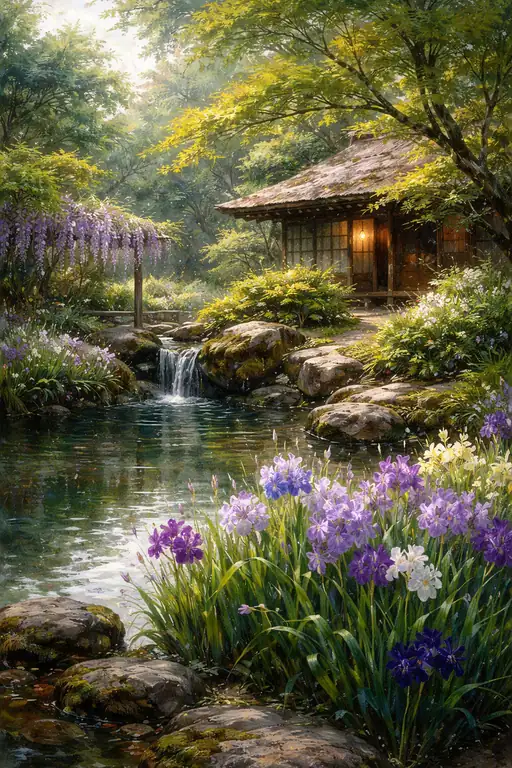 Twilight Wisteria and the Glowing Hut
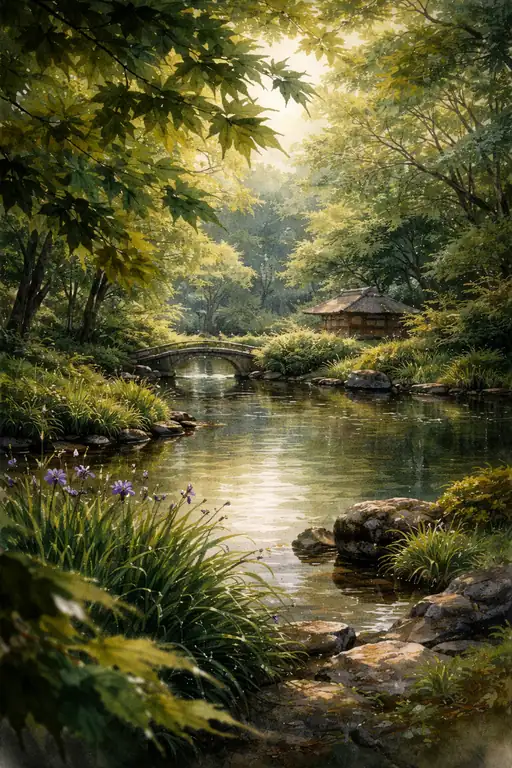 A Secluded Symphony of Iris and Stone
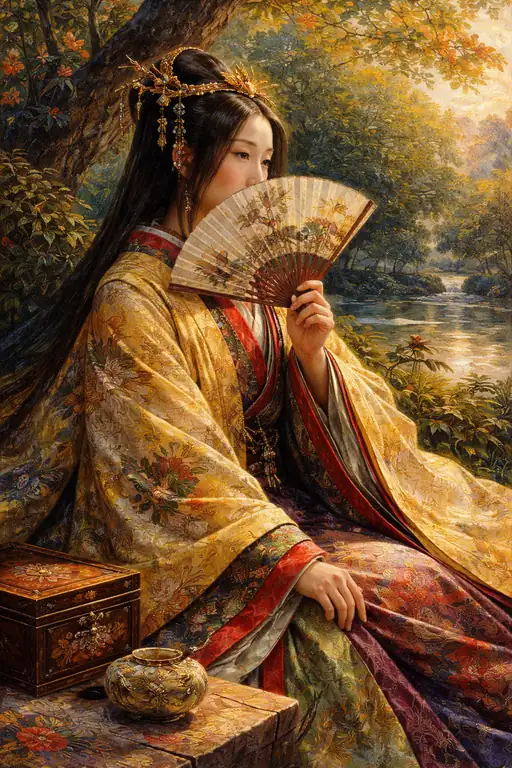 Twilight Reflection on Golden Silk
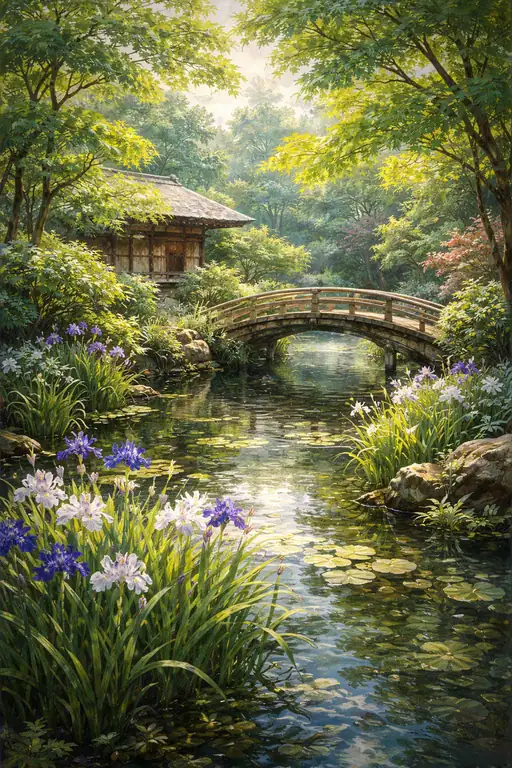 Morning Reflection on the Wooden Arch
 Echoes of a Crimson Melody in the Whispering Woods