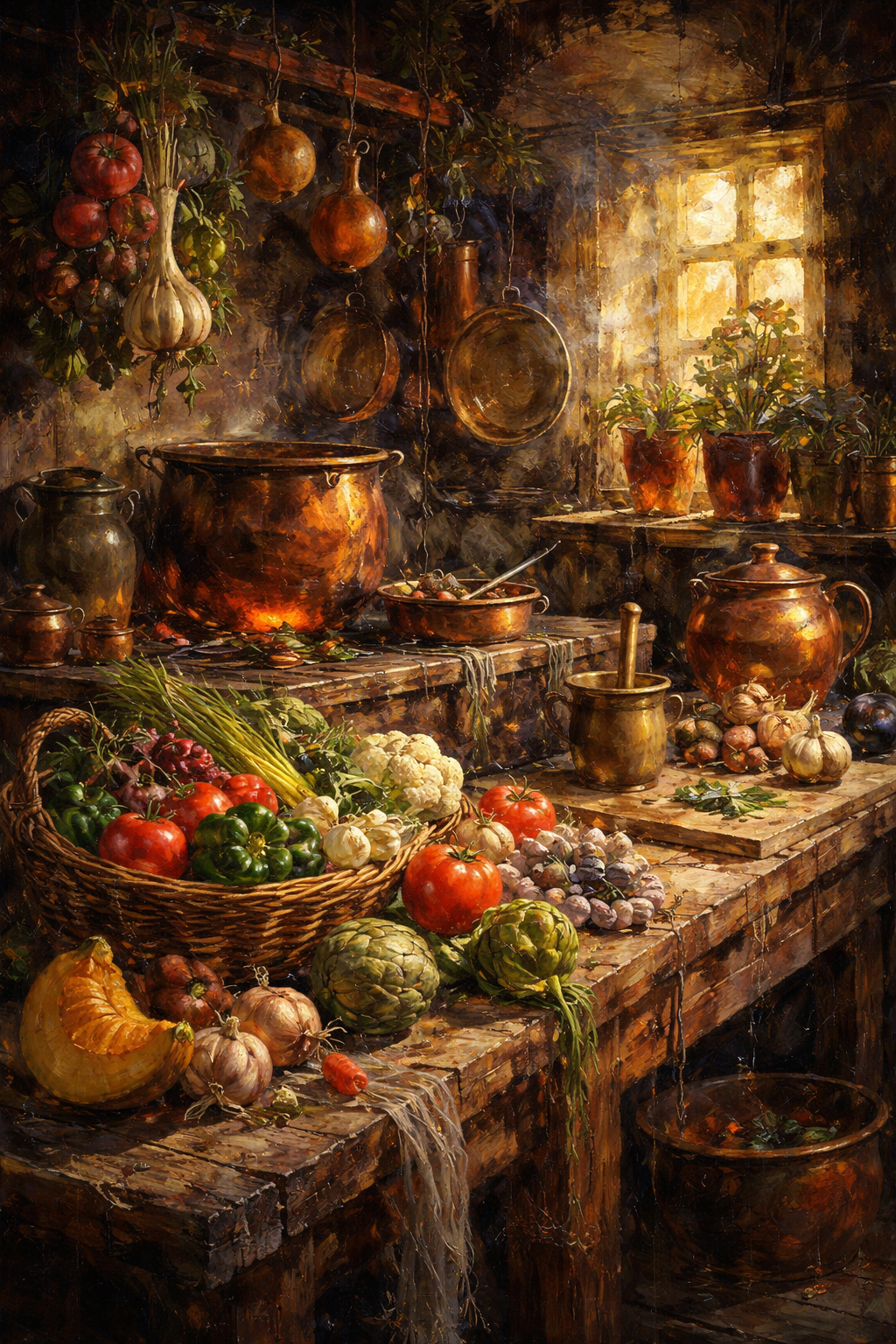
Warmth of the Rustic Hearth
Critique
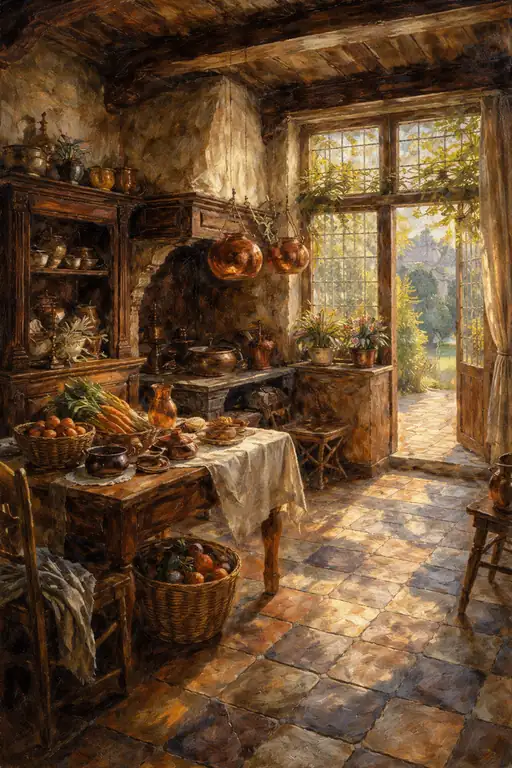
1. Introduction This painting is a masterful interior still life that depicts a rustic, bustling kitchen, evoking the rich traditions of the 17th-century European kitchen scenes known as bodegones. The work focuses on the abundant display of fresh produce and heavy copper cookware, all bathed in a warm, atmospheric light. The artist utilizes a realistic yet deeply textured style to celebrate the beauty found in domestic utility and the raw materials of sustenance. By combining a sense of historical depth with a palpable tactile quality, the piece creates an immersive experience that highlights the sensory richness of a traditional culinary environment. 2. Description The composition is dominated by a sturdy wooden table in the foreground, piled high with a variety of vegetables including bright red tomatoes, green peppers, artichokes, and onions. A large wicker basket overflows with leafy greens, while a cut slice of golden pumpkin rests on the left. In the background, several large, polished copper pots and pans are visible, some hanging from the walls and others resting on stone surfaces. To the right, a small window allows a stream of warm, hazy sunlight to filter into the darkened room, illuminating the steam that rises from one of the vessels and highlighting the metallic sheen of the cookware. 3. Analysis The artist's use of light is the most defining technical feature, creating a dramatic chiaroscuro that emphasizes the three-dimensional forms of both the vegetables and the metal objects. This lighting not only provides a focal point but also enhances the varied textures, from the smooth, reflective surface of the copper to the rough skin of the artichokes and the dry, papery layers of the garlic. The brushwork is vigorous and in some areas shows a heavy impasto, which adds to the rustic and earthy feel of the scene. The color palette is a harmonious blend of warm browns and ochres, contrasted by the vibrant primary colors of the fresh produce. 4. Interpretation and Evaluation This work can be interpreted as a celebration of the earth's bounty and the warmth of the domestic hearth, where the act of preparation is as much an art form as the final meal. The meticulous attention to detail and the skillful rendering of light and shadow demonstrate a profound respect for the subject matter, elevating humble ingredients to the level of monumental subjects. Technically, the artist excels in capturing the specific quality of reflected light on curved metallic surfaces, a challenging feat in still life painting. The composition, though dense and filled with objects, is carefully organized to lead the viewer's eye through the various layers of the kitchen. 5. Conclusion What initially appears as a cluttered kitchen scene unfolds into a sophisticated exploration of light, texture, and the inherent beauty of everyday life. The artist's ability to create such a powerful atmosphere through the interplay of shadow and misty sunlight is a testament to their technical mastery and artistic sensitivity. This painting succeeds in conveying the vital energy of a space dedicated to nourishment and tradition, leaving the viewer with a deep appreciation for the aesthetic potential of the domestic interior. It stands as a timeless tribute to the enduring appeal of the rustic still life genre.
Same Subcategory
Similar Artworks
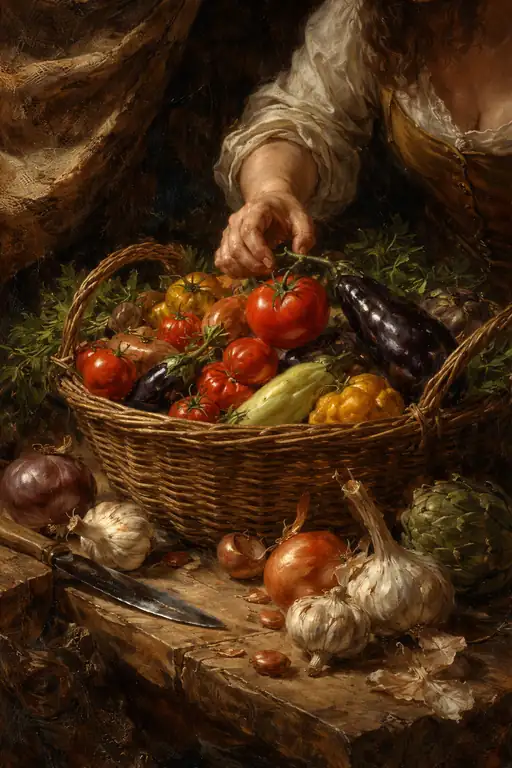 Bounty of the Rustic Wicker
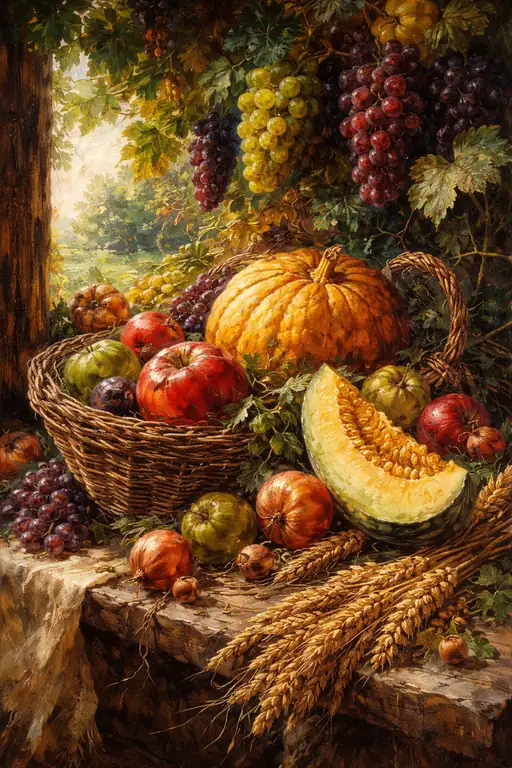 Whispers of the Golden Harvest
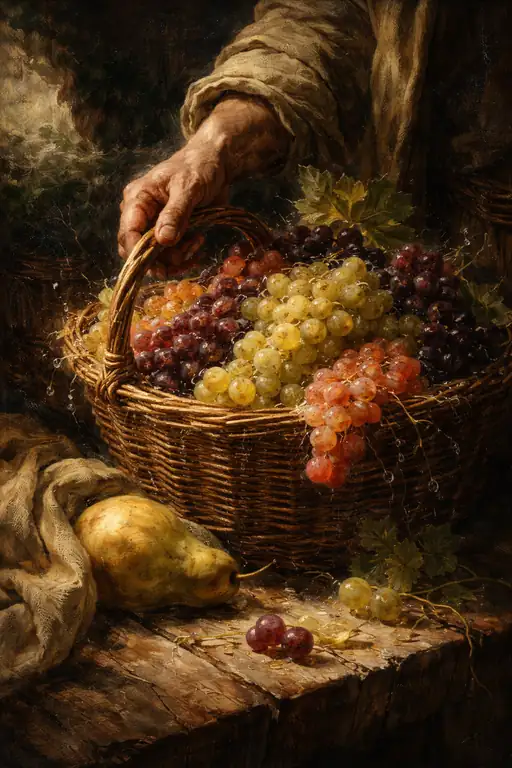 Grasp of the Harvester: The Abundant Yield
 Echoes of a Forgotten Bounty
 Citrus Gold upon the Wooden Spoon
 Crushed Emeralds in the Stone Mortar
 Bounty of the Autumn Sun
 The Hearth's Bountiful Grace
 Emerald Cluster in the Terrace Light
 Amber Spoon in Morning Sunlight