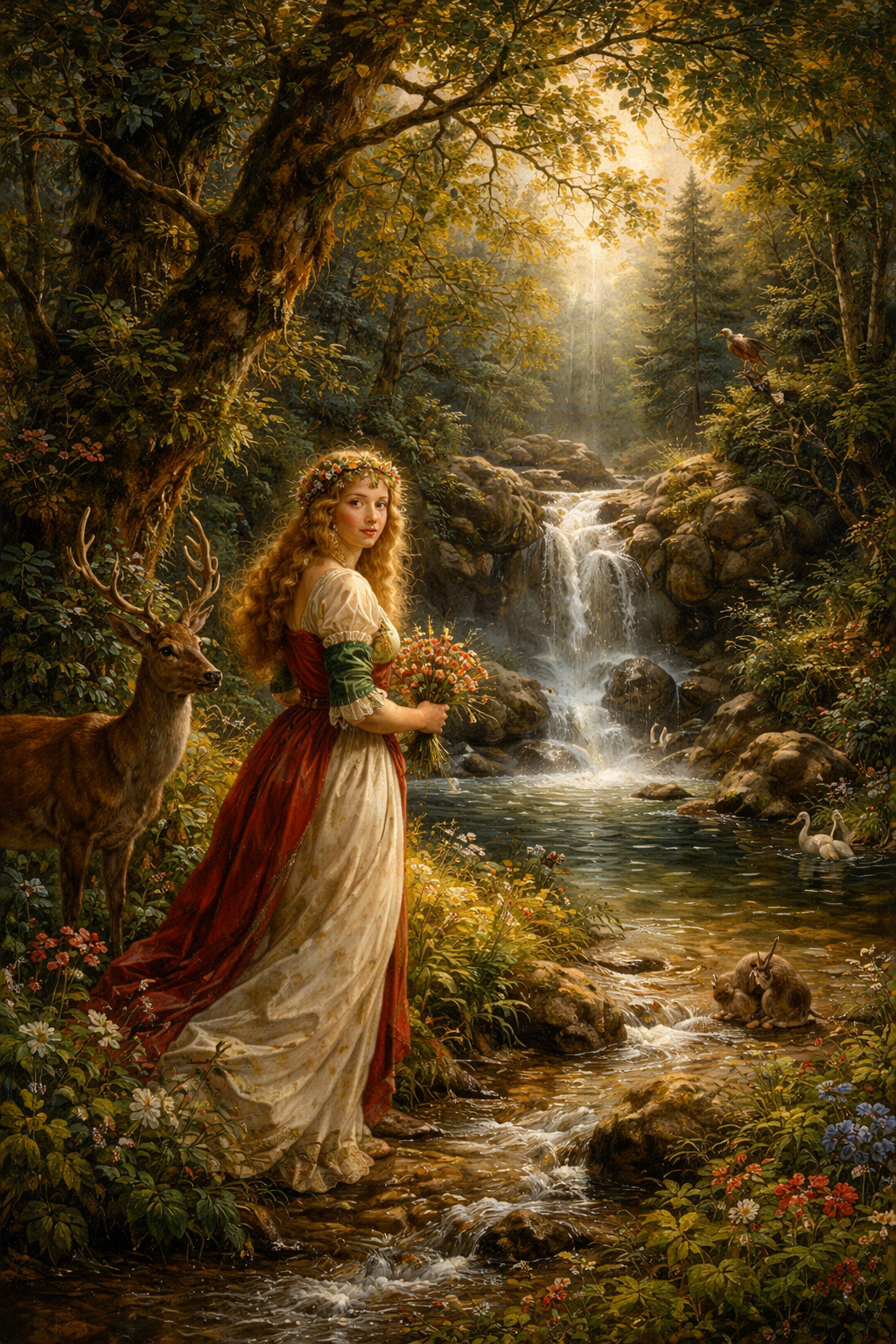
Grace of the Silent Forest
Critique
1. Introduction This enchanting oil painting depicts a mystical scene where a young woman, reminiscent of a nature spirit or goddess, resides in harmony with various forest animals. Set beside a crystalline waterfall deep within a sun-drenched woodland, the artwork captures a moment of transcendental peace. The meticulous attention to detail and the ethereal quality of light evoke the romantic idealism found in Pre-Raphaelite masterpieces. 2. Description In the center, a woman with flowing auburn hair and a floral crown stands gracefully, holding a bouquet of wildflowers and wearing a traditional cream and crimson dress. To her left, a noble stag with impressive antlers stands guard, while the right foreground features small rabbits on the riverbank and swans gliding in the pool. A picturesque waterfall cascades over rugged rocks in the middle ground, beneath a canopy of ancient trees through which brilliant sunbeams filter, illuminating the misty air with golden rays. 3. Analysis The composition is balanced around the central figure of the woman, with the surrounding animals and natural elements creating a sense of unified enclosure. The color palette is vibrant and warm, characterized by the rich reds of the gown, the lush greens of the forest, and the radiant yellow of the divine light. The artist displays extraordinary technical skill in rendering textures, from the softness of the animals' fur to the translucent quality of the falling water and the intricate patterns of the wildflowers. 4. Interpretation and Evaluation The painting serves as an allegory for the profound connection between humanity and the natural world, representing a sanctuary where all creatures exist without fear. The woman’s serene expression and the animals' calm presence suggest a world governed by compassion and beauty rather than conflict. The original handling of light, which feels both natural and supernatural, elevates the work into a realm of poetic symbolism. Its structural integrity and emotional depth mark it as a significant achievement in contemporary romantic realism. 5. Conclusion With its celebration of natural splendor and spiritual quietude, the painting offers a powerful visual retreat into an idealized past. While the initial focus is on the striking beauty of the central character, further observation reveals that the true subject is the harmonious vibration of life itself under the forest canopy. This masterful portrayal of a pastoral utopia remains a timeless testament to the enduring power of artistic imagination and technical excellence.
Same Subcategory
 Guardian of the Glowing Egg
Similar Artworks
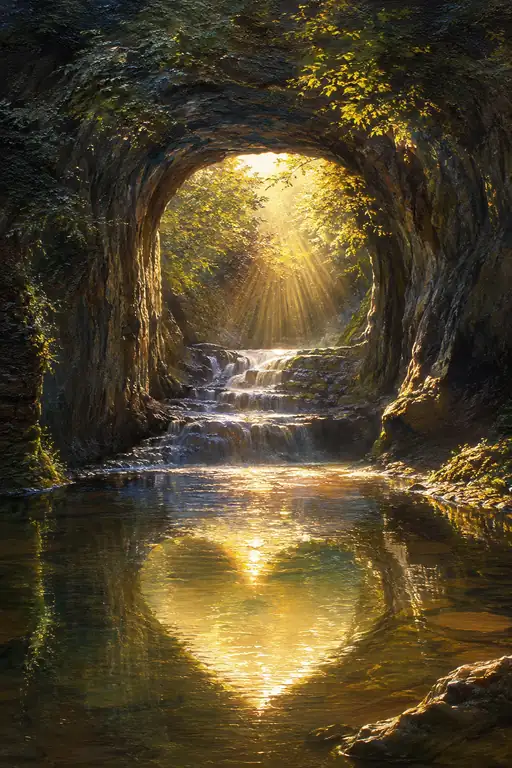 The Heart of the Mystical Forest
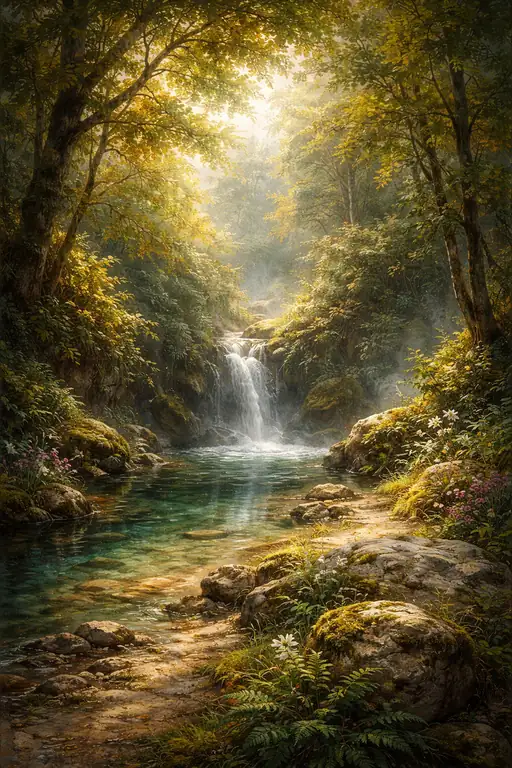 Breath of the Verdant Valley
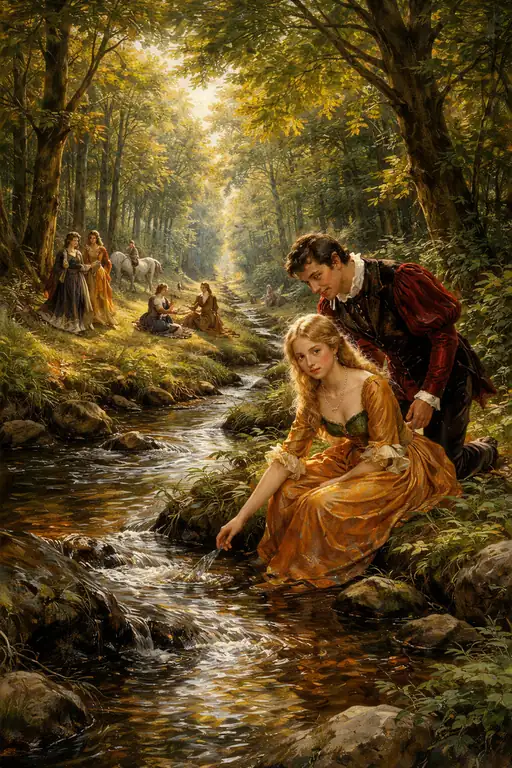 A Promise Kept in Sunlight
 Symphony of the Crystal Rapids
 Prism in the Woodland Current
 Breath of the Sunlit Mist
 Tears of the Sunlit Cascade
 Timeless Flow Through Ancient Stones
 Lullaby of the Iridescent Stream
 Whispers of the White Forest