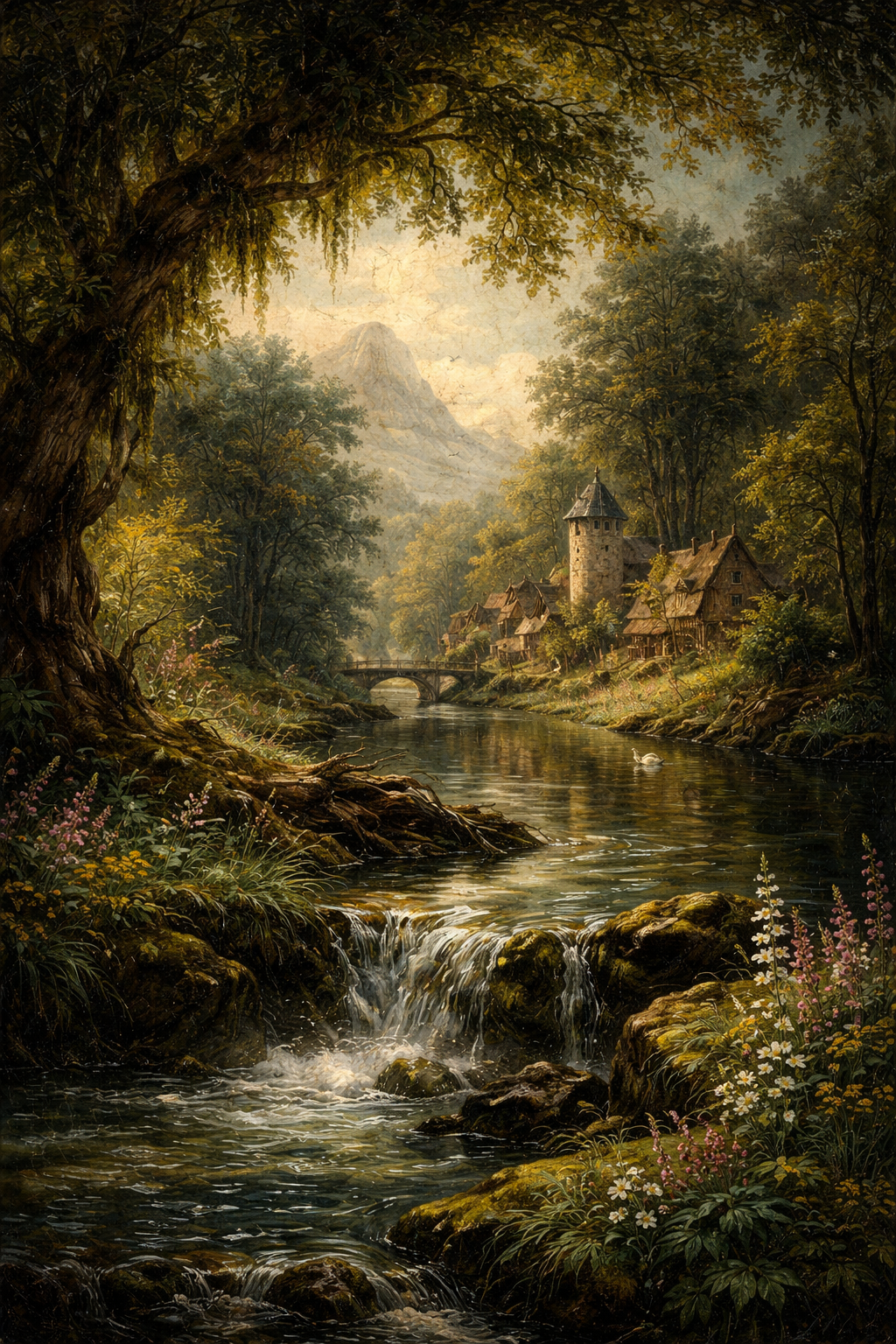
The Village that Time Forgot
Critique
1. Introduction This classic landscape painting presents an idyllic scene where grand nature and human habitation exist in perfect harmony. The composition leads the viewer from a small, cascading waterfall in the foreground, past a tranquil village with a distinctive stone tower, to a majestic, mist-shrouded mountain in the distance. Its meticulous brushwork and soft, golden lighting evoke the serene atmosphere typical of nineteenth-century romantic landscapes. 2. Description On the left, an ancient, gnarled tree frames the scene, its branches overhanging a rocky bank adorned with vibrant wildflowers. In the foreground, water rushes over mossy stones, creating a lively stream that transitions into a calm river where a solitary swan glides peacefully. The middle ground features a charming cluster of timber-framed houses and a prominent cylindrical tower, connected to the other side by a stone bridge. A luminous mountain peak dominates the background, rising through the haze to touch the sky. 3. Analysis The color palette is a sophisticated blend of deep greens, earthy browns, and golden highlights, utilizing atmospheric perspective to create immense depth. The artist demonstrates exceptional technical skill in rendering the contrasting textures of rough tree bark, delicate floral petals, and the fluid surface of the water. The balance between the shadowed elements on the left and the light-filled expanse on the right creates a compelling visual narrative that directs focus toward the peaceful village life at the heart of the work. 4. Interpretation and Evaluation The artwork embodies the concept of a pastoral paradise, illustrating a world where man-made structures are integrated seamlessly into the natural environment. This portrayal suggests a profound respect for the landscape and a yearning for a simpler, more balanced existence. The execution is remarkable for its original use of light to unify disparate elements, showing a high level of creative mastery. Its strong composition and evocative atmosphere successfully capture a poetic sense of place. 5. Conclusion Through its detailed imagery and harmonious structure, the painting offers a profound emotional journey for the observer. While the initial impression is one of vast scale, closer inspection reveals the intricate beauty of the smaller life forms that animate the scene. This masterpiece of idealized nature remains a powerful testament to the enduring beauty of the natural world when captured with such refined artistic sensitivity.
Same Subcategory
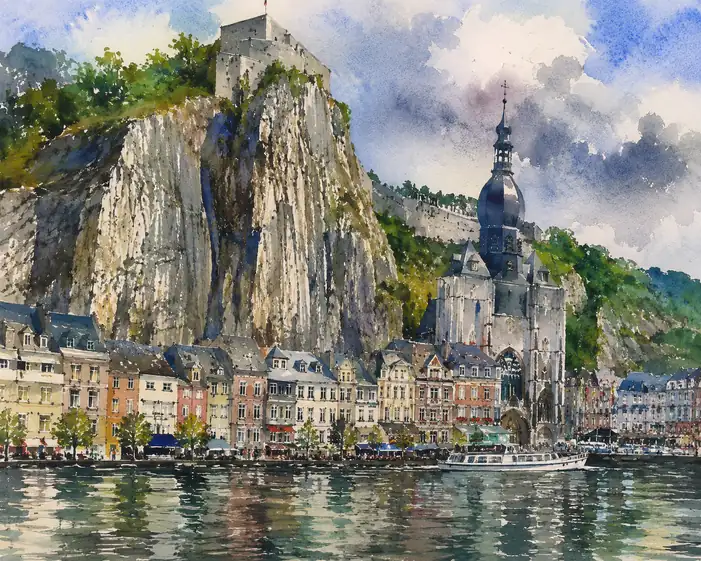 Where the Citadel Whispers to the River
Similar Artworks
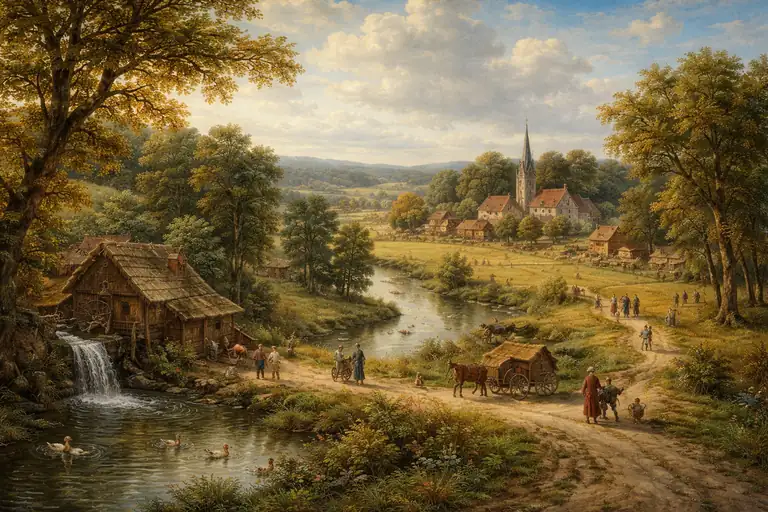 Chronicles of the Idyllic Path
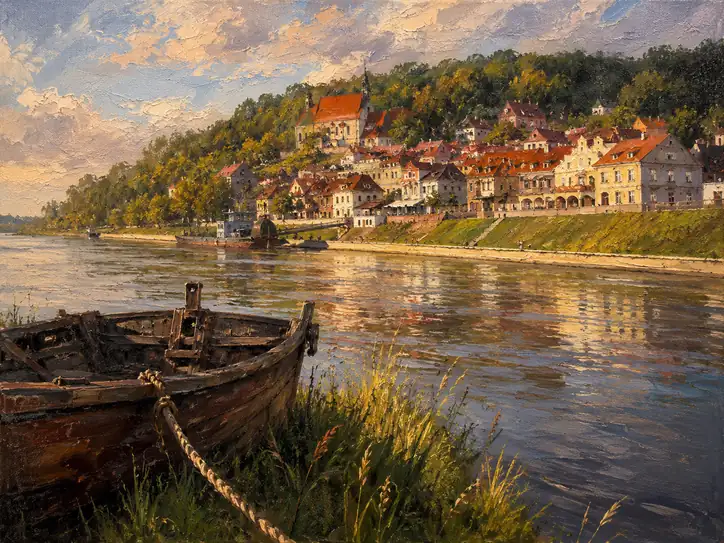 The Quiet Anchor of the River's Flow
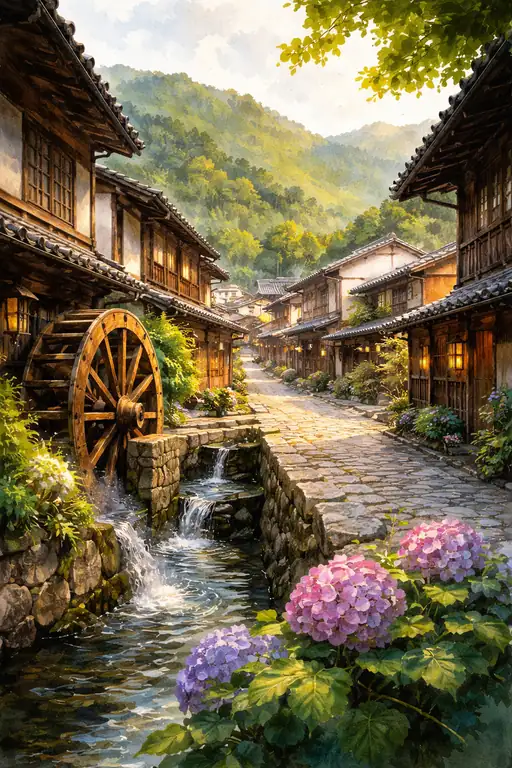 Hydrangeas by the Village Waterwheel
 Sanctuary of the Eternal Peak
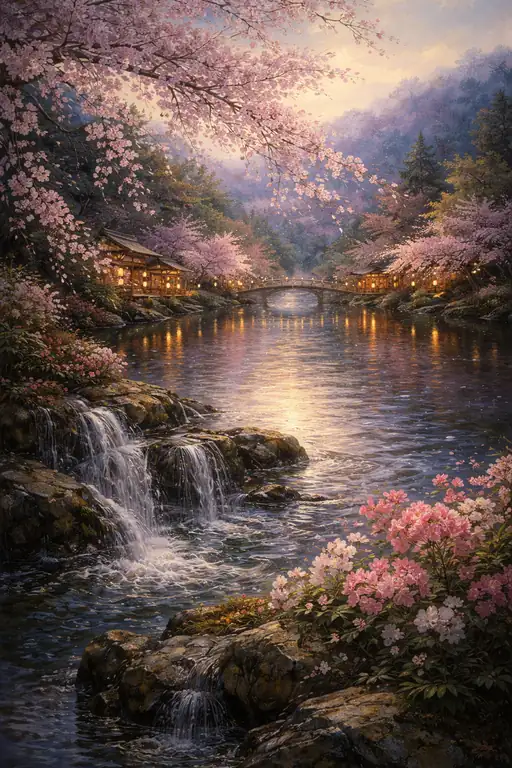 Whispers of the Sakura Moon
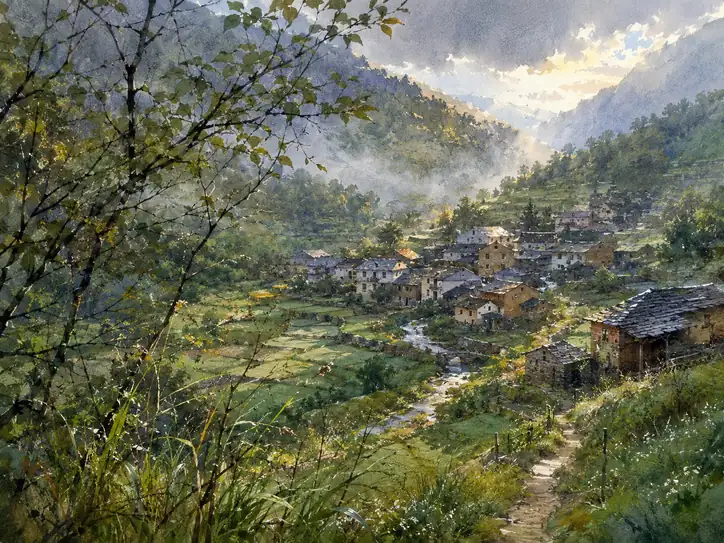 Where the Mist Whispers
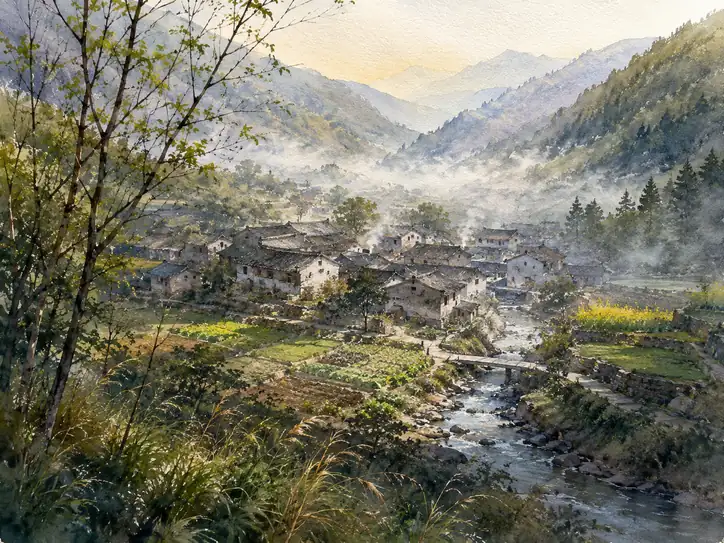 Morning Mist in the Cradle of Mountains
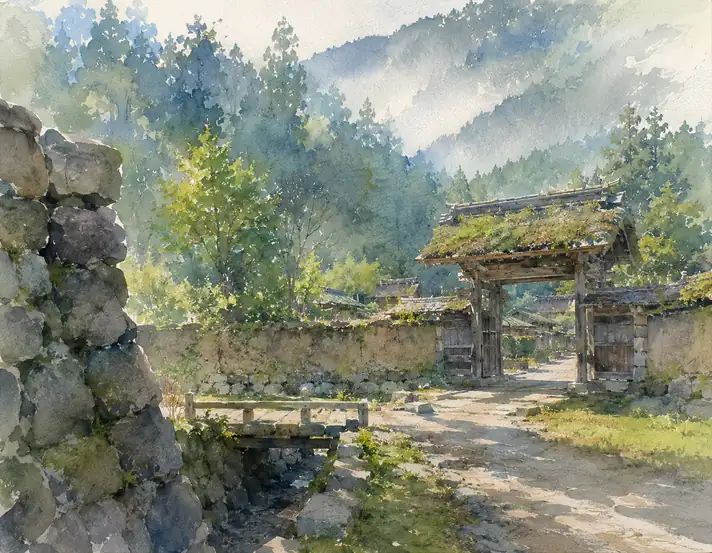 The Silent Gate Where Time Lingers
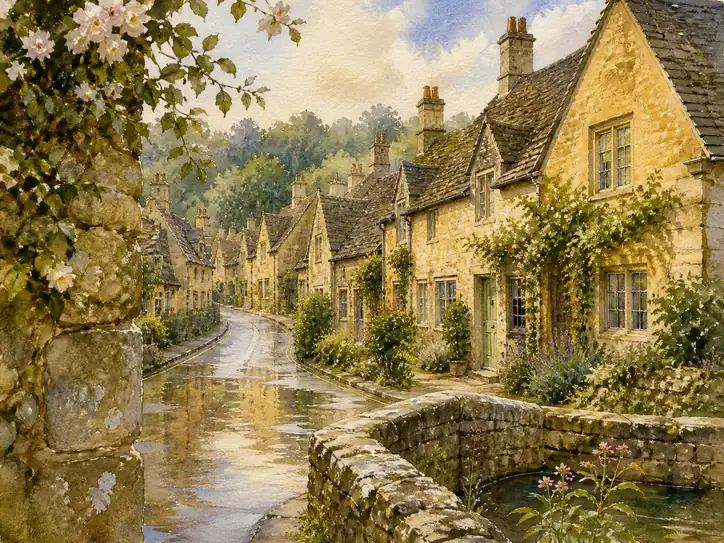 Where the Rain Whispers Peace
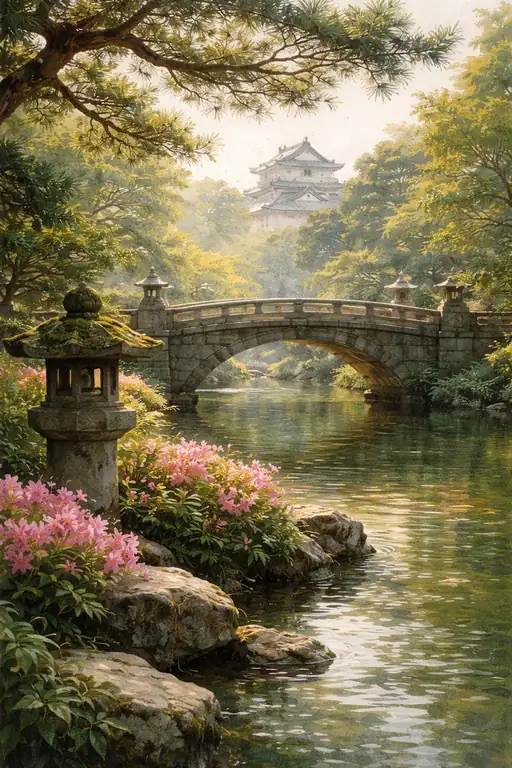 Tranquil Heart of the Ancient Garden