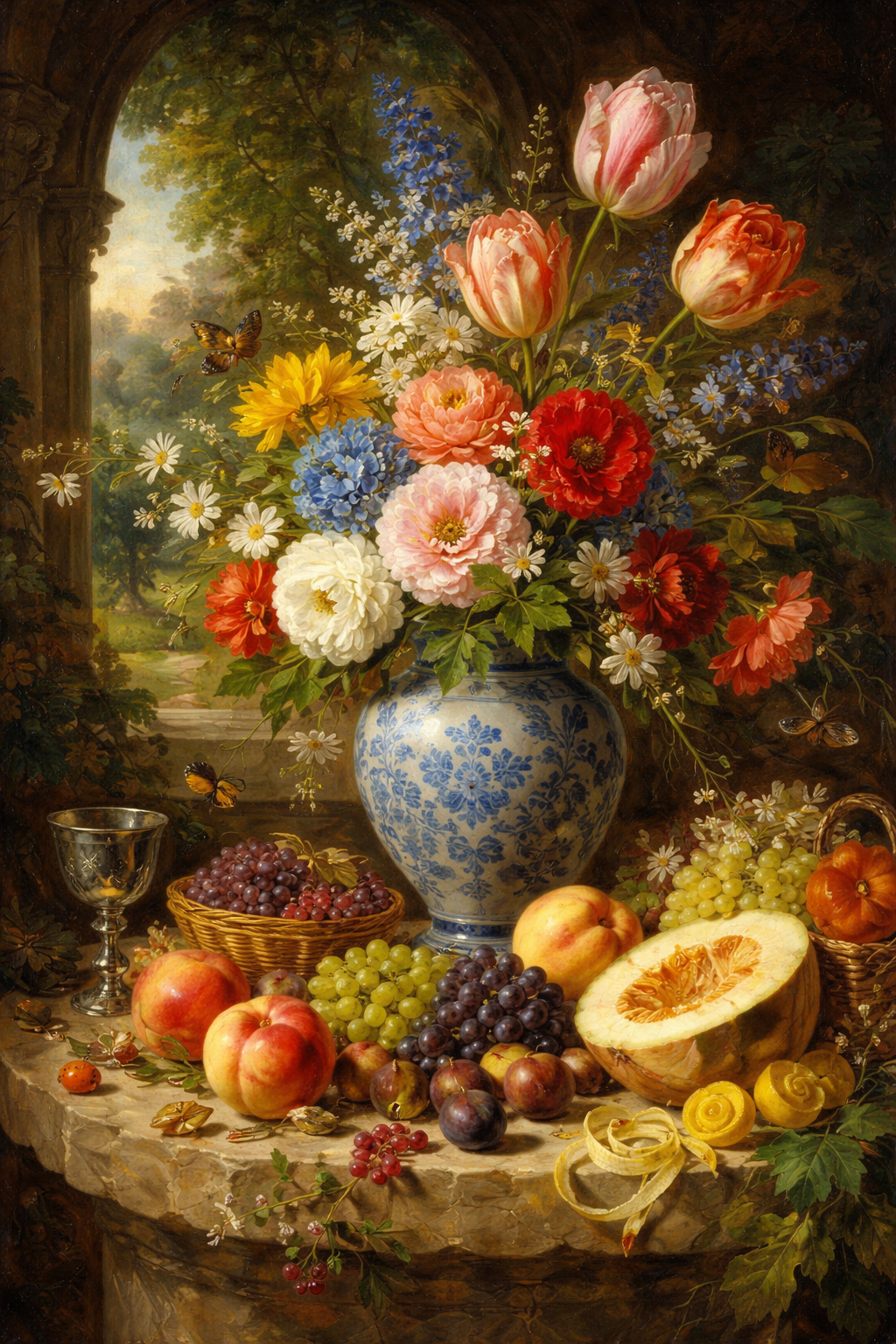
Abundance at the Window's Edge
Critique
1. Introduction This oil painting is a magnificent example of a floral and fruit still life, deeply rooted in the opulent traditions of the Dutch Golden Age. The artist presents a dense and vibrant arrangement that celebrates the diversity and abundance of nature's bounty. By placing the central bouquet and fruit within the context of a stone architectural setting, the work bridges the gap between domestic refinement and the untamed beauty of the natural world, immediately captivating the viewer with its richness. 2. Description The focal point is a large, blue-and-white patterned ceramic vase overflowing with a variety of flowers, including tulips, peonies, and daisies in shades of red, pink, and yellow. Arranged around the base of the vase on a stone ledge are numerous fruits: peaches, green and purple grapes, a halved melon, plums, and currants. Several butterflies flutter among the blossoms, while a silver goblet stands to the left. In the background, an arched stone window reveals a soft, sunlit forest landscape. 3. Analysis The composition is remarkably full and balanced, utilizing a vertical structure that leads the eye from the scattered fruit in the foreground to the towering tulips at the top. The artist employs a warm, natural light source that enters from the left, highlighting the distinct textures of each element, such as the fuzz of the peaches and the smooth glaze of the vase. The color palette is exuberant, yet carefully managed to ensure that the vibrant floral tones do not overwhelm the more earthy hues of the fruit. 4. Interpretation and Evaluation This work can be seen as a celebration of the cycle of life and the fleeting nature of beauty, a common theme in classical still life. The butterflies, in particular, symbolize the transience of life amidst the peak of ripeness and bloom. Technically, the artist demonstrates exceptional skill in rendering varied surfaces and the delicate interplay of light and shadow. The inclusion of the landscape background adds a layer of depth and context, suggesting that the beauty found indoors is but a reflection of the larger natural world. 5. Conclusion In conclusion, the painting is a technically brilliant and visually arresting achievement that honors historical still life conventions with modern precision. The initial impression of overwhelming abundance gradually yields to an appreciation for the meticulous detail and harmonious arrangement of each component. It stands as a profound tribute to the intricate beauty of the natural world, offering the viewer a timeless and uplifting visual experience that resonates with themes of growth and vitality.
Same Subcategory
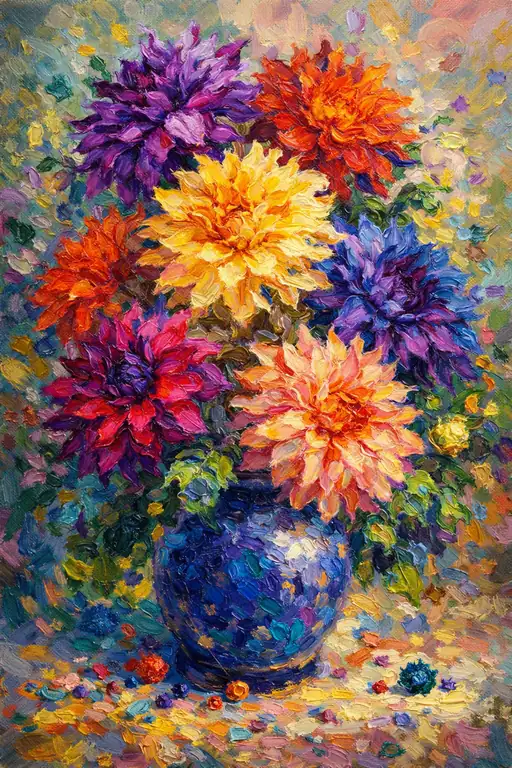 Crimson Lifeblood
Similar Artworks
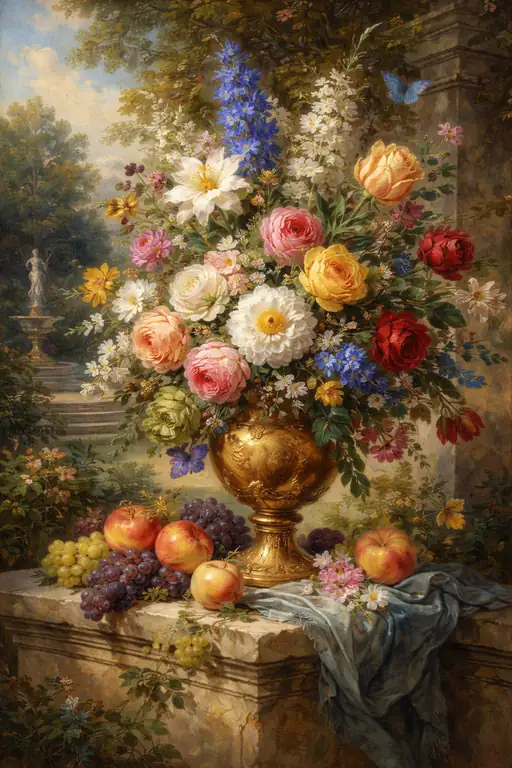 A Lavish Ode to the Summer Blooms
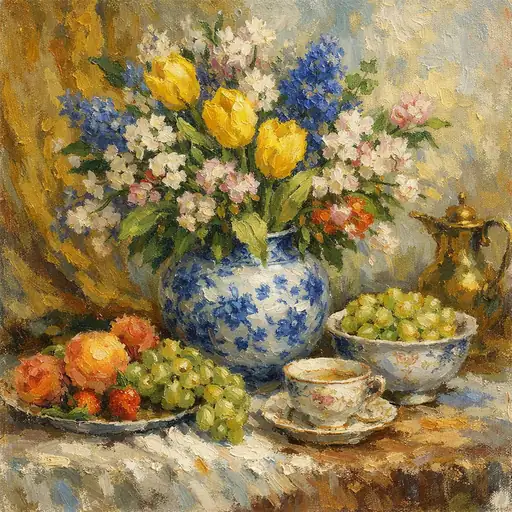 Rhapsody of Spring
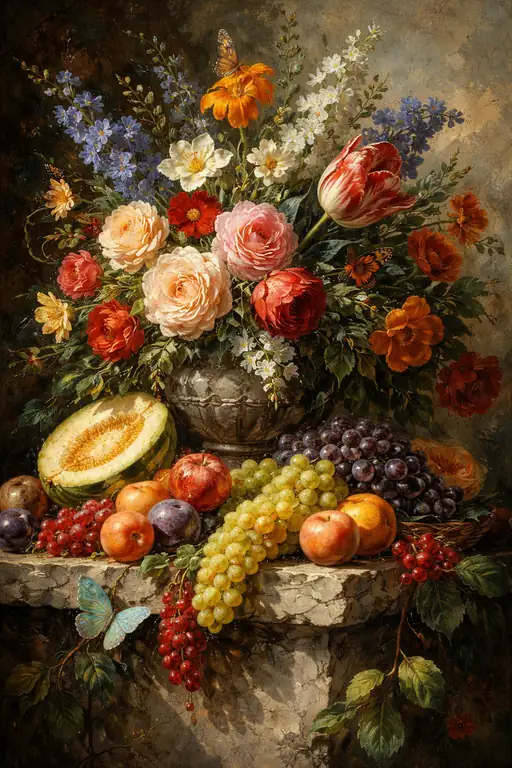 Symphony of the Bountiful Harvest
 Sunlit Overture of the Garden
 Sunlit Symphony of Summer Blooms
 Eternal Bloom in Sunlight
 Symphony of the Crimson Bloom
 Wild Heart's Crimson Bloom
 A Breath of Ethereal Pink Softly Settling in the Mist
 Golden Light Bathing the Floral Life