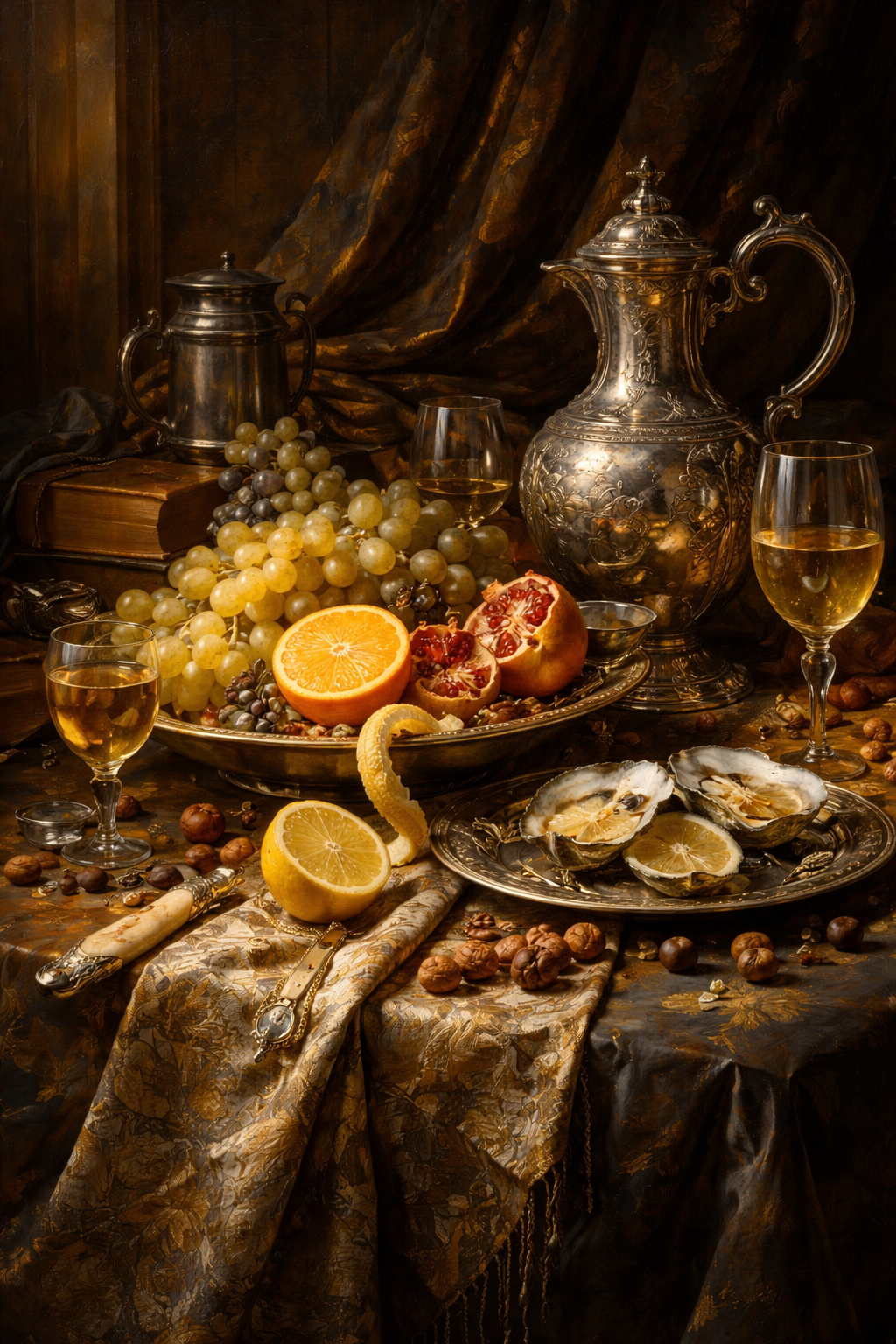
Vanitas in Silver and Crimson
Critique
1. Introduction This oil painting is an exquisite example of a classic still life, heavily influenced by the 17th-century Dutch tradition of pronkstilleven. The work presents a lavish arrangement of luxurious items, fruits, and seafood, meticulously organized to showcase both variety and technical skill. It immediately captures the viewer's attention with its dramatic lighting and rich textures, inviting a deeper contemplation of its composition and the symbolic weight of the objects portrayed. 2. Description The scene features an ornate silver pitcher and several wine glasses filled with amber-colored liquid. A central bowl overflows with pale grapes, halved oranges, and pomegranates, while a silver platter in the foreground holds freshly opened oysters accompanied by lemon slices. Walnuts and other small nuts are scattered across a heavily draped, patterned cloth. In the background, dark, heavy drapery and a stack of leather-bound books add to the formal and academic atmosphere of the setting. 3. Analysis The artist employs a sophisticated chiaroscuro technique, with a strong light source from the left that creates sharp highlights on the silver and glass surfaces. This lighting also casts deep, dramatic shadows that provide the composition with significant depth and volume. The arrangement of objects follows a pyramidal structure, leading the eye upward from the oysters in the foreground to the tall silver pitcher. The contrast between the cold metallic surfaces and the organic textures of the fruit is particularly striking. 4. Interpretation and Evaluation The painting can be interpreted as a meditation on abundance and the ephemeral nature of sensory pleasures. The inclusion of oysters and fine wine suggests a life of luxury, yet the scattered nuts and the somber background hint at the passage of time and the inevitability of decay. Technically, the rendering of reflections on the pitcher and the translucency of the wine glasses is of an exceptionally high standard. The work successfully balances complexity and harmony, demonstrating a profound understanding of classical still life principles. 5. Conclusion In conclusion, this still life is a masterful achievement that honors historical precedents while maintaining a clear and focused artistic vision. The initial impression of opulence is gradually replaced by an appreciation for the artist's meticulous attention to detail and control over the medium. It stands as a powerful demonstration of how inanimate objects can be arranged to tell a story of wealth, culture, and the fleeting beauty of the physical world.
Same Subcategory
Similar Artworks
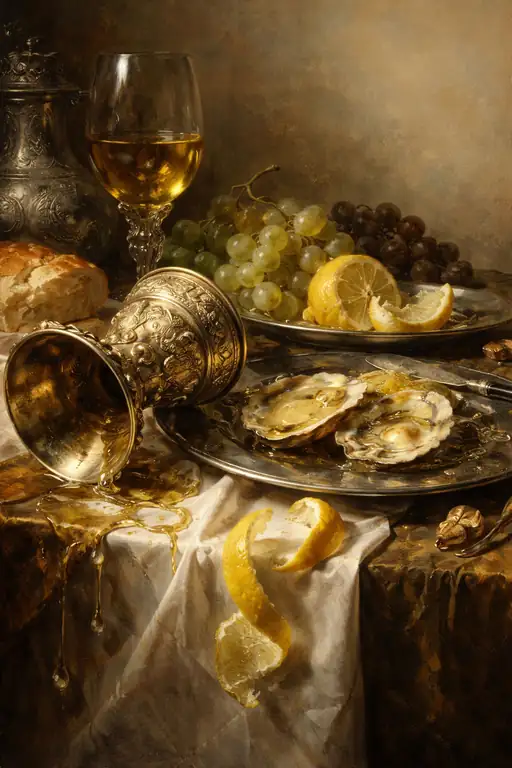 The Fallen Goblet of Vanity
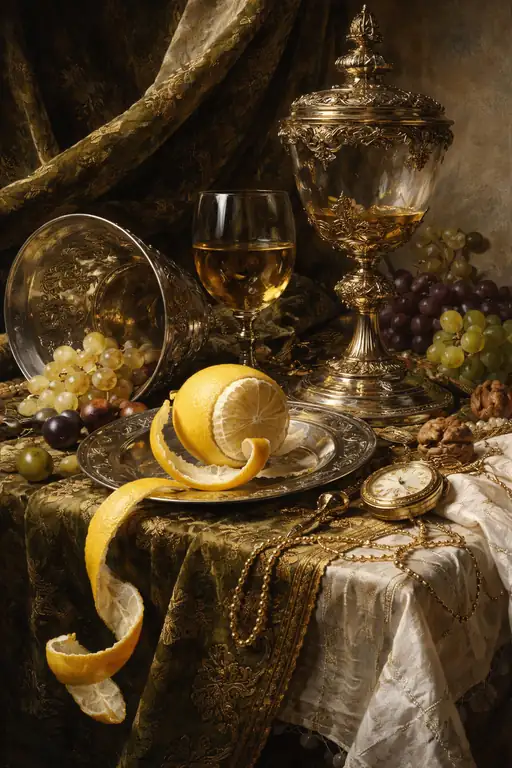 Echoes of the Golden Age: The Fleeting Citrus
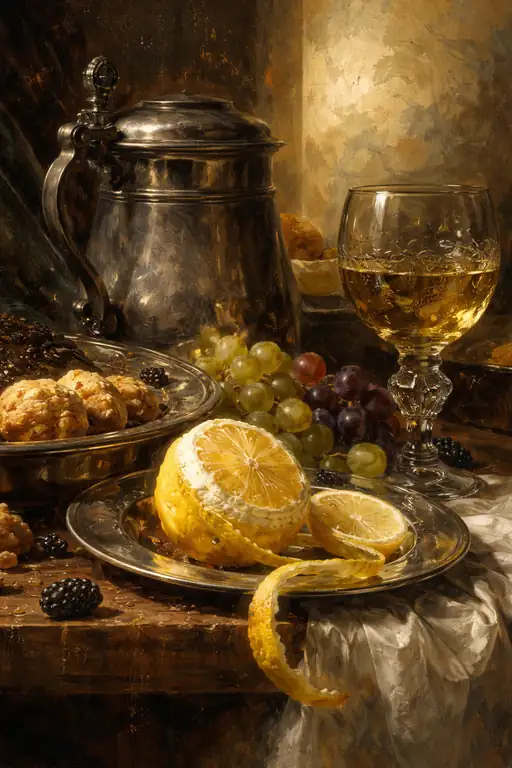 Echoes of a Lavish Banquet
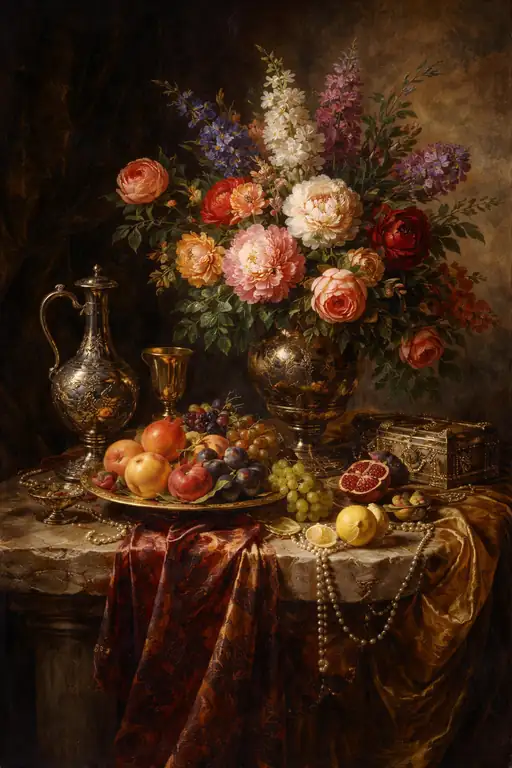 Flowers, Fruits, and Precious Objects
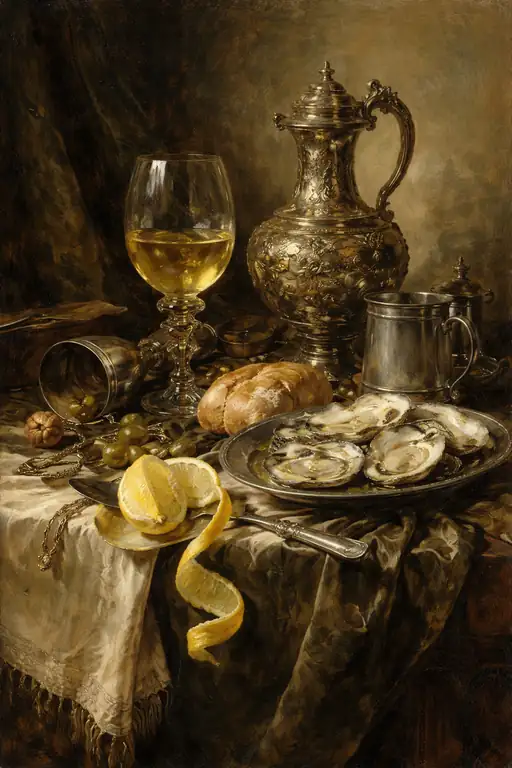 The Fleeting Feast
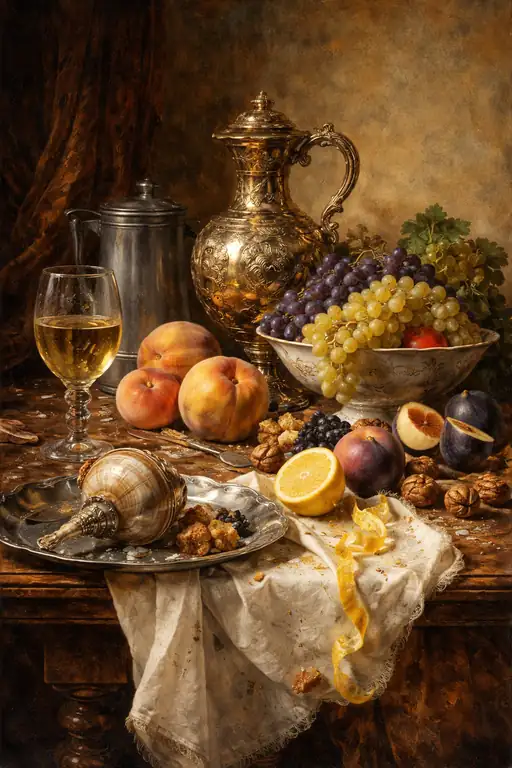 Classical Still Life with a Golden Ewer, Fruit, and Wine
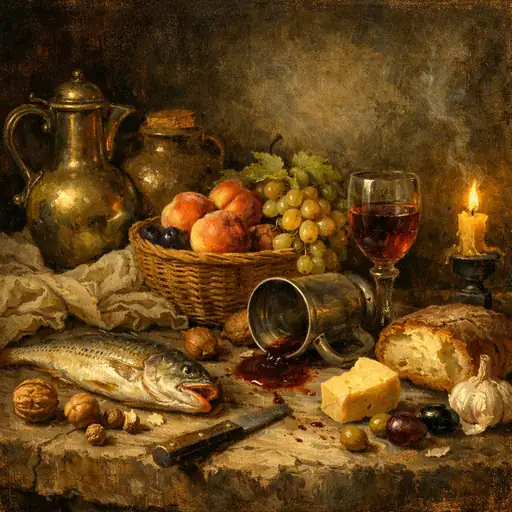 Fish, Fruit, and Spilled Wine
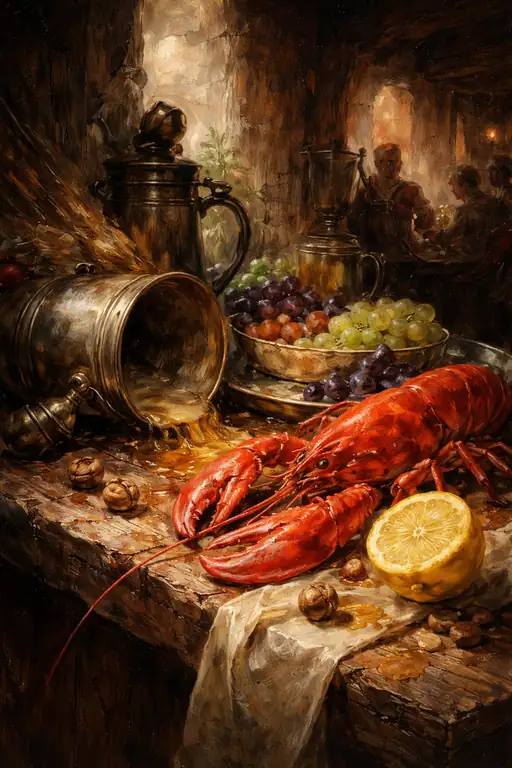 Feast of the Golden Nectar
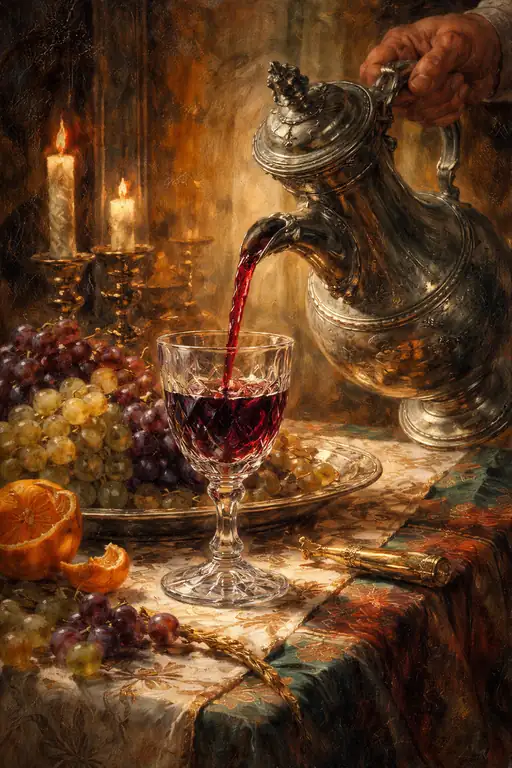 Elegance Flowing: A Quiet Luxury of Wine and Silver
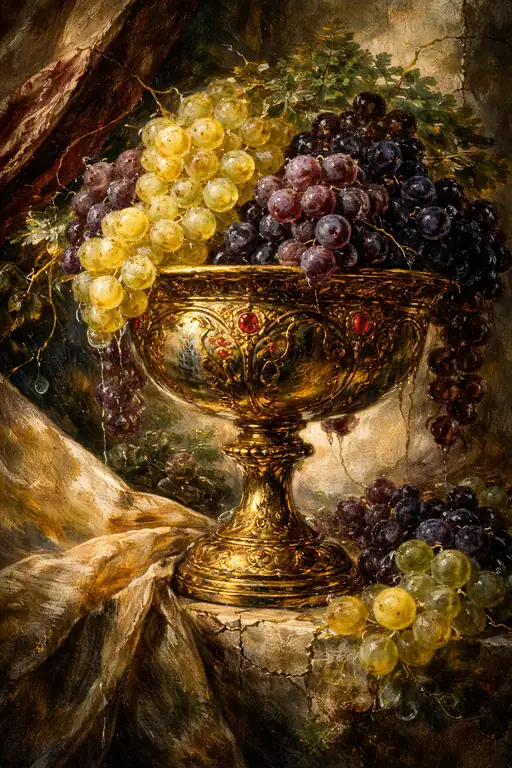 The Golden Tears of Bacchus