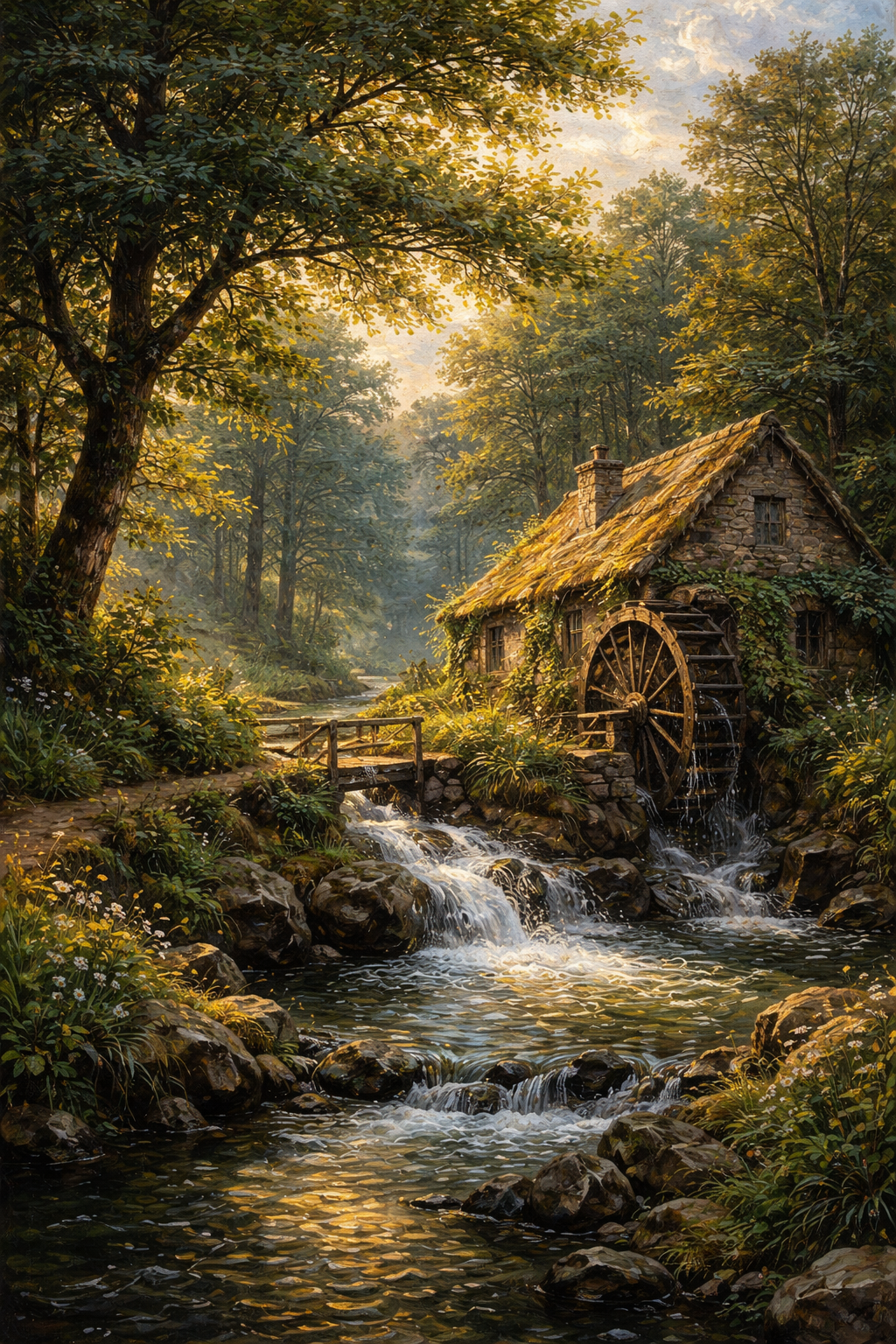
Sanctuary of the Sunbeams
Critique
1. Introduction This landscape painting depicts a secluded watermill nestled deep within a dense, sun-drenched forest. The work utilizes a naturalistic style with a strong emphasis on atmospheric lighting and the intricate details of woodland flora. The composition focuses on the sense of hidden discovery and the peaceful isolation of the rustic structure from the outside world. 2. Description A stone mill house with a moss-covered thatched roof sits on the right bank of a clear, rocky stream. A large wooden water wheel is attached to the side of the building, turning with the flow of the water. Sunlight filters through the high canopy of the surrounding trees, casting brilliant beams of light across the forest floor and the rippling surface of the stream. A simple wooden footbridge crosses the water in the mid-ground, leading toward a path on the left. 3. Analysis The artist masterfully employs aerial perspective and dramatic light rays to create a sense of depth and magical atmosphere. The contrast between the cool, shadowed areas of the forest and the bright, warm highlights where the sun breaks through is particularly effective. The color palette is rich in greens, browns, and golden yellows, with carefully rendered textures on the stone walls, mossy roof, and the varied forest undergrowth. 4. Interpretation and Evaluation The painting evokes a romanticized vision of nature as a sanctuary of peace and timeless beauty. The technical skill in rendering the "God rays" adds a transcendental quality to the scene, elevating a simple rural subject into a moment of spiritual quietude. The meticulous attention to detail in the foliage and the water shows a high degree of observation and a deep appreciation for the complexities of the natural environment. 5. Conclusion Through a careful examination of this forest scene, one moves from a general impression of light to an appreciation for the structural harmony of the landscape. The balance of light and shadow serves to unify the man-made mill with its wild surroundings, suggesting a perfect ecological balance. It remains a beautiful example of how landscape art can capture the evocative power of light within a secluded natural space.
Same Subcategory
Similar Artworks
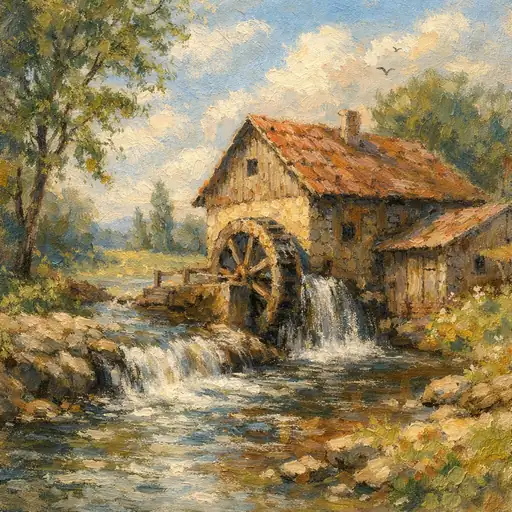 Rustic Watermill and Stream on a Sunny Day
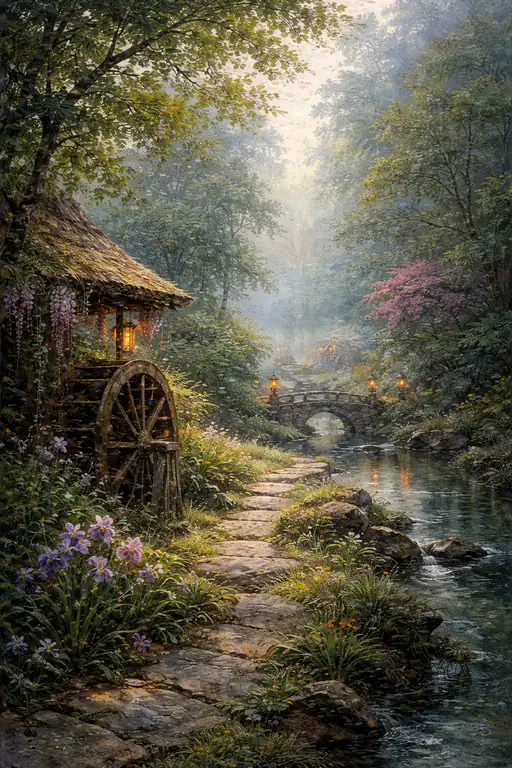 Whispers of the Waterwheel
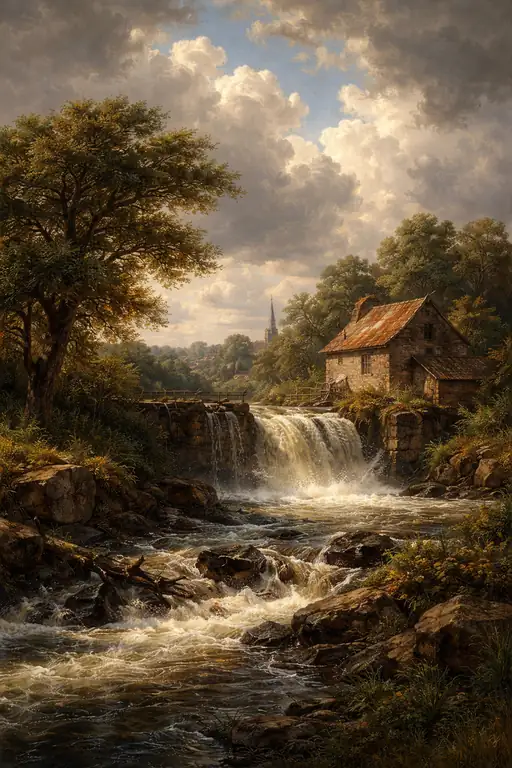 The Timeless Current
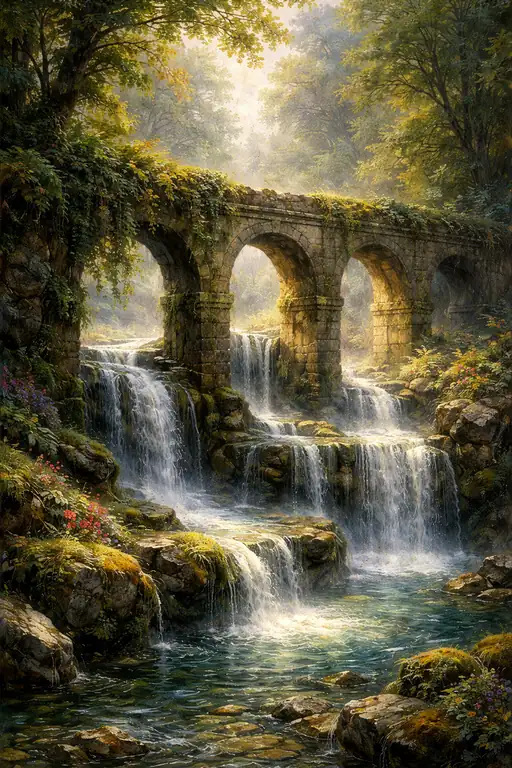 Harmony of Forgotten Ages
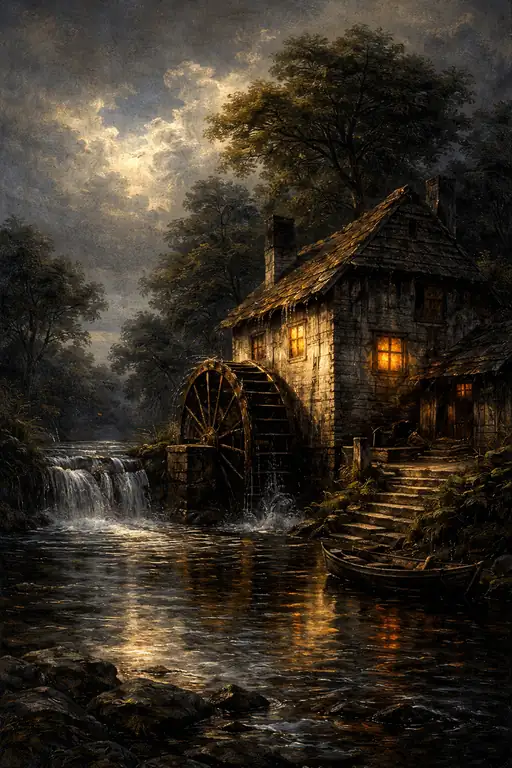 Moonlight over the Restless Wheel
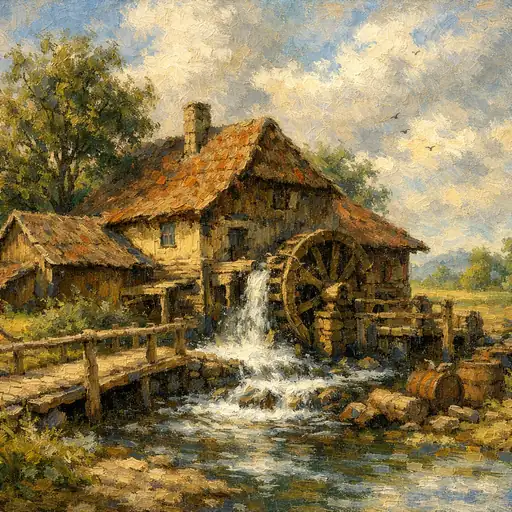 The Mill's Bright Pulse
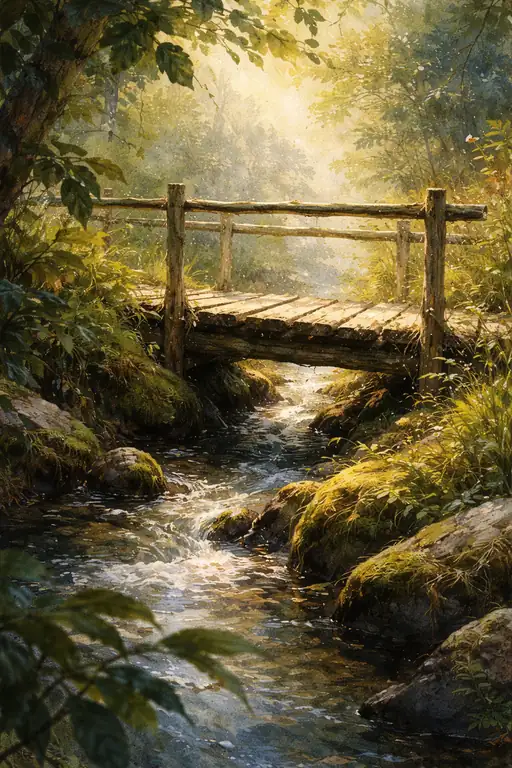 Bridge to the Sunlit Sanctuary
 Serenity in the Verdant Gorge
 The Eternal Wheel of Time
 Timeless Passage Over the Whispering Stream