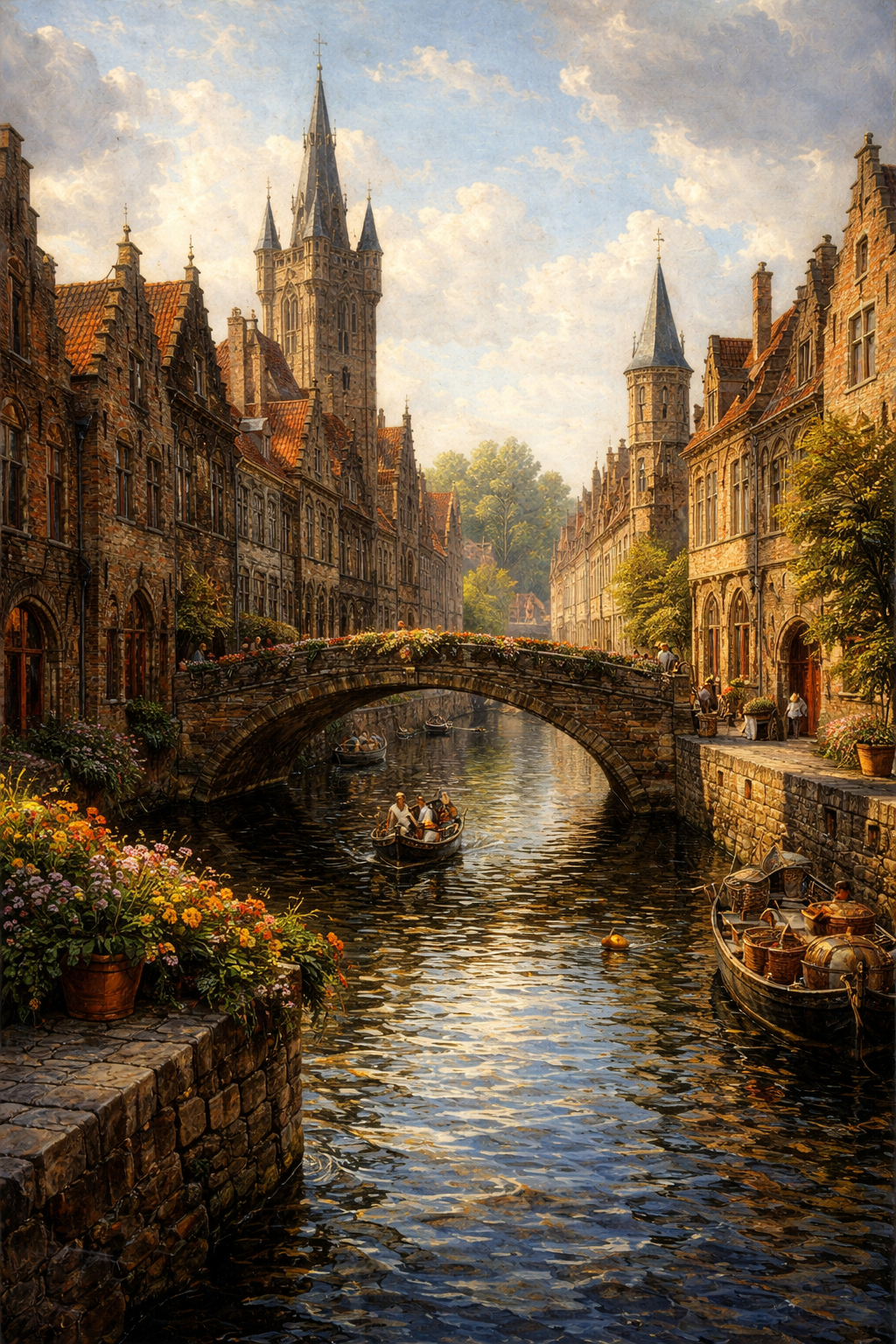
Dance of the Forgotten Shadows
Critique
1. Introduction This work depicts a quintessential European canal scene, capturing the harmonious relationship between historic architecture and water. The composition is centered on a graceful stone bridge that spans a narrow waterway, leading the viewer’s eye through a dense urban landscape characterized by medieval charm. 2. Description The canal is flanked by tall, narrow gabled buildings made of weathered brick and stone. In the background, a prominent church spire rises against a soft, cloud-filled sky, serving as a vertical anchor for the scene. Several small boats glide along the dark, shimmering water, while vibrant floral arrangements on the bridge and along the quays add splashes of orange and yellow to the earthy palette. 3. Analysis The artist employs a precise linear perspective that creates a profound sense of depth, drawing the gaze toward the vanishing point beyond the bridge. The rendering of the water is particularly effective, using dappled light and dark reflections to suggest movement and transparency. A warm, consistent light source illuminates the facades of the buildings, highlighting the intricate textures of the masonry and the play of shadow. 4. Interpretation and Evaluation The painting evokes a romantic and idealized view of historical urban life, emphasizing tranquility and aesthetic order. The balance between the rigid architectural forms and the organic flow of the water demonstrates a sophisticated understanding of spatial dynamics. Both the technical execution of the stone textures and the atmospheric use of color contribute to a work of significant evocative power. 5. Conclusion Through its meticulous attention to detail and masterful composition, the painting offers a captivating journey into a preserved historical moment. The initial appreciation of the scenic beauty evolves into a deeper recognition of the structural elegance that defines this coastal city.
Same Subcategory
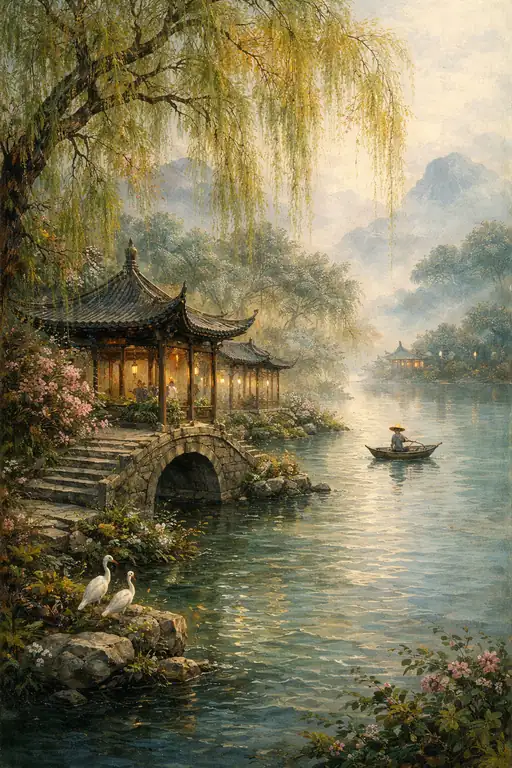 Serenade of the Heron's Oriental Haven
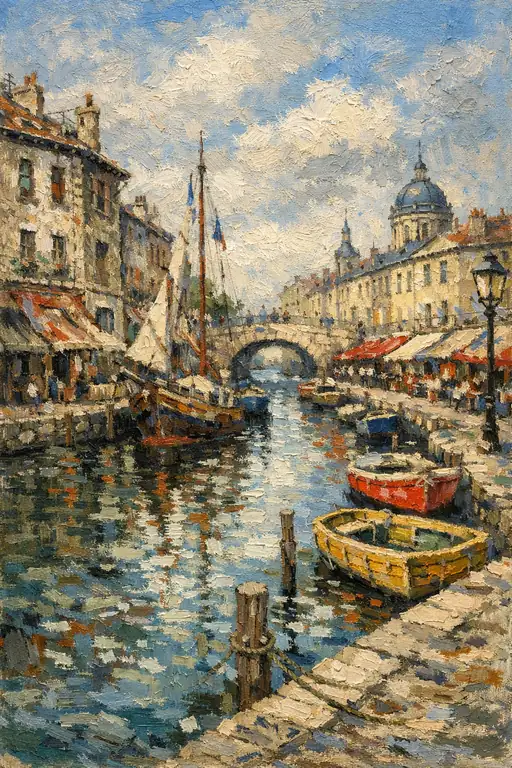 Dance of the Colorful Hulls
Similar Artworks
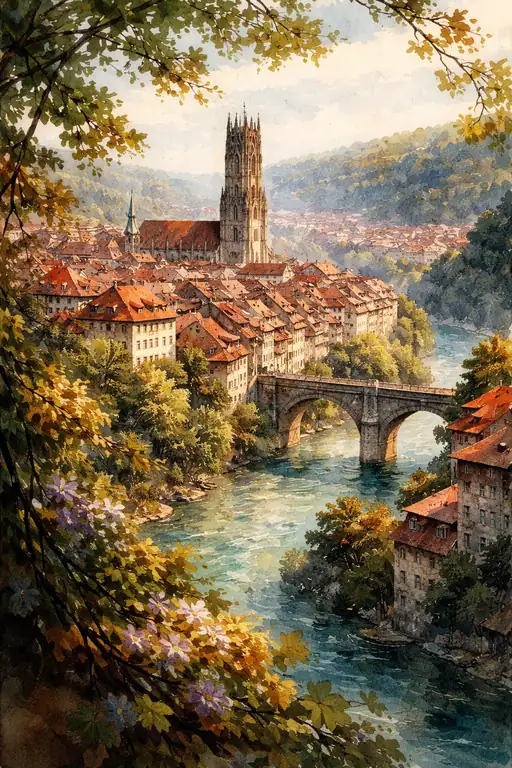 Autumn's Embrace on the Medieval River
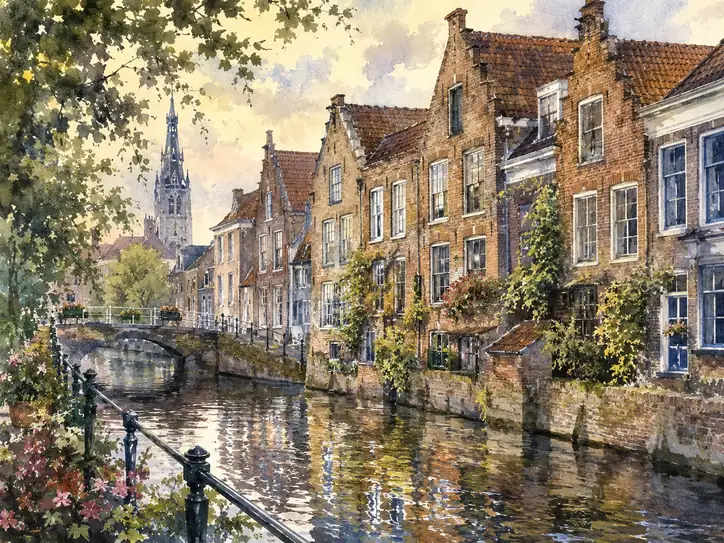 The Spire’s Silent Reflection
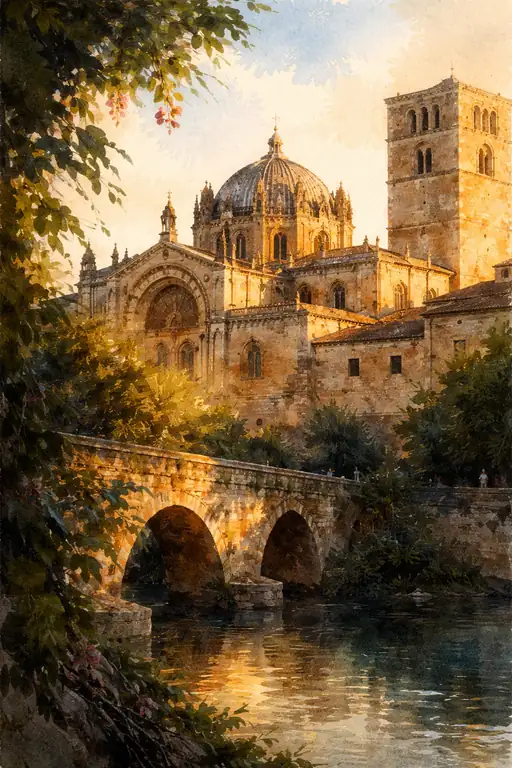 Eternal Grace Spanning the Still Waters
 Where Time Holds Its Breath
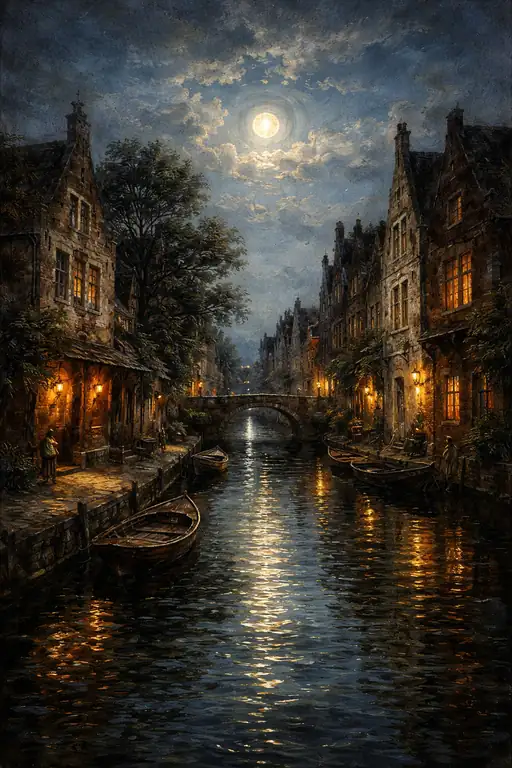 Silhouettes in Amber Light
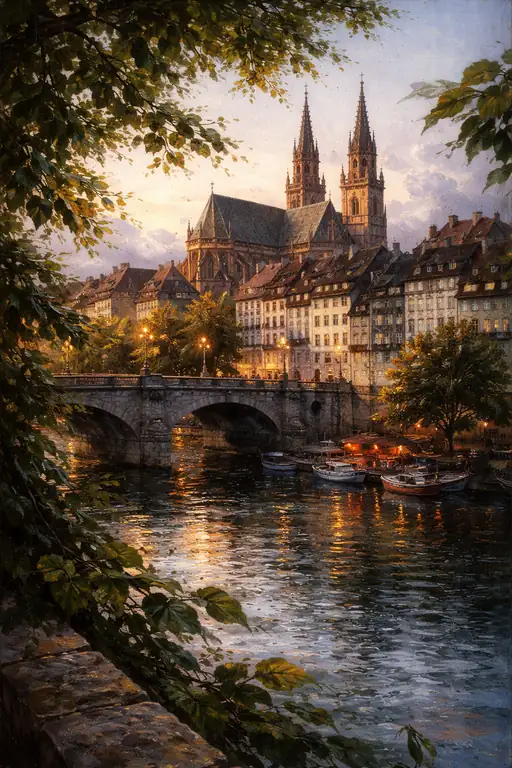 Cathedral's Lullaby in the Dusk
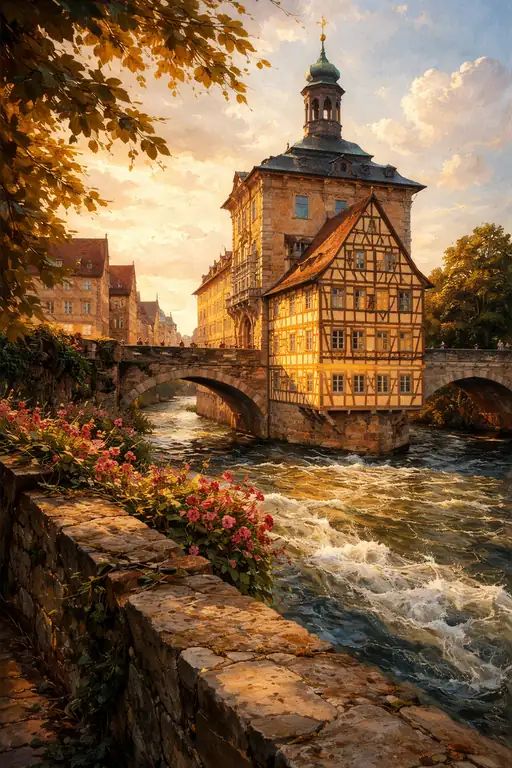 Vanguard of the Roaring River
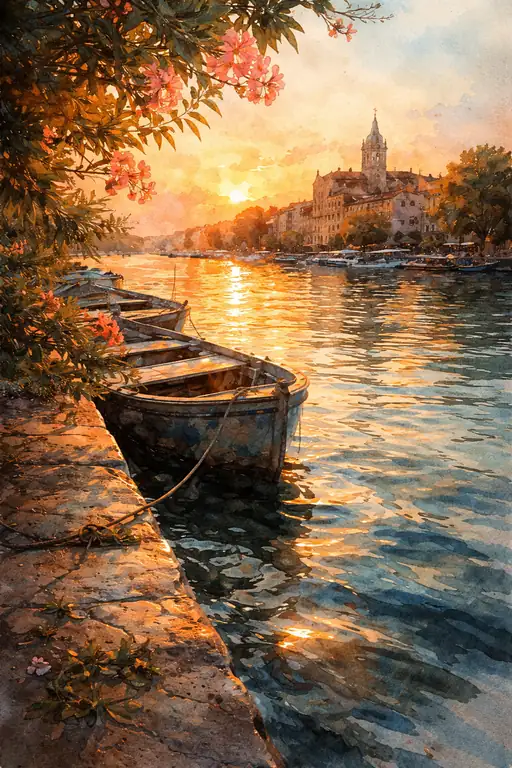 Golden Hour at the Village Square
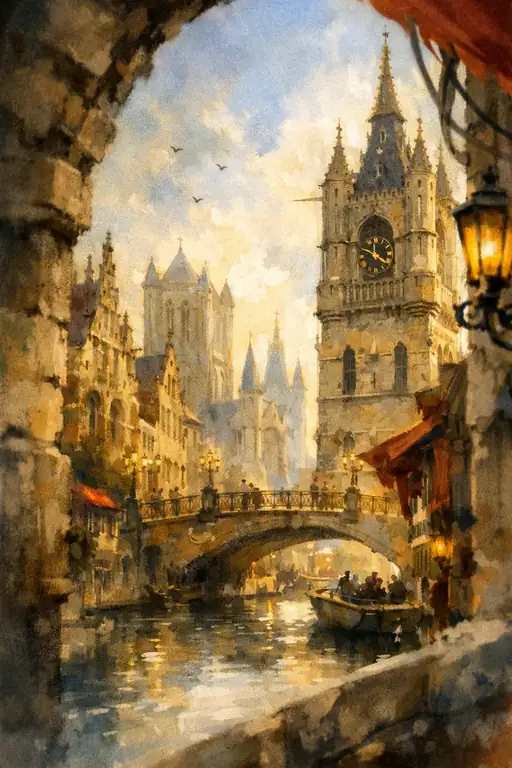 Serenade in the Shadows
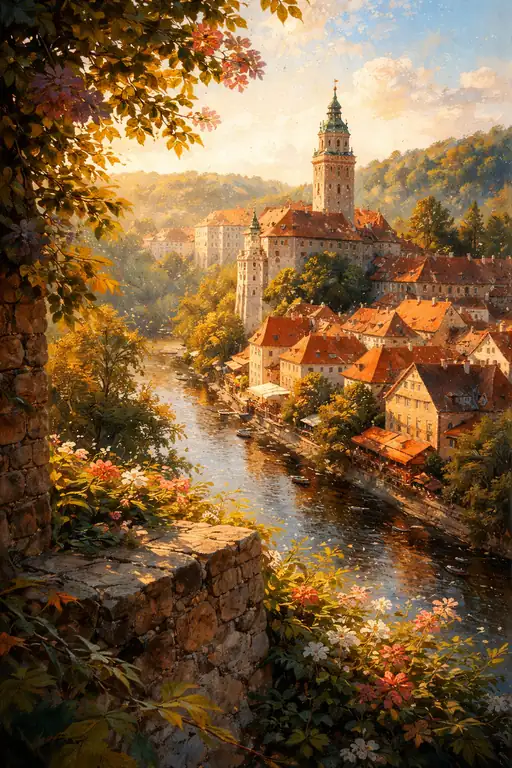 Golden Murmurs of the Bohemian River