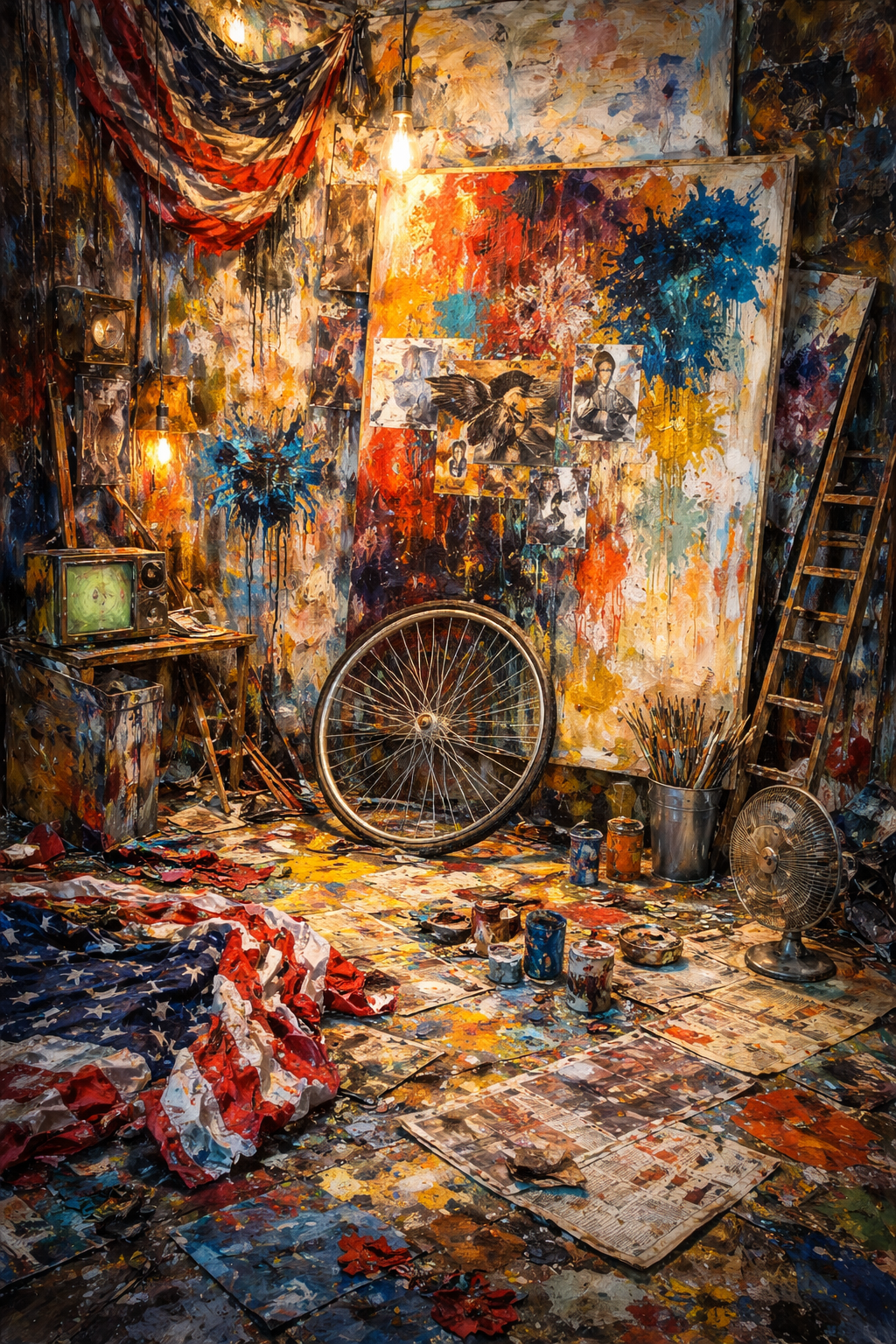
Echoes of a Cluttered Mind
Critique
1. Introduction This detailed oil painting depicts a cluttered and paint-splattered artist's studio, captured in a style that merges realistic observation with expressive Neo-Expressionist flair. The composition is a dense collection of objects, including a large leaning canvas, a bicycle wheel, and an American flag, all of which contribute to a sense of creative chaos and personal history. Through the meticulous rendering of this private workspace, the artist explores the relationship between the physical environment and the process of artistic creation. 2. Description The studio space is filled from floor to ceiling with the remnants and tools of artistic production. A large, unfinished canvas dominated by colorful splatters leans against the back wall, which is adorned with draped flags and smaller sketches. In the center, a solitary bicycle wheel rests on the paint-covered floor, surrounded by discarded newspapers, paint cans, a metal fan, and a bucket of brushes. Warm light from a single overhead bulb and a small desk lamp illuminates the scene, casting long shadows across the textured surfaces. 3. Analysis The artist employs a highly varied technique, ranging from precise detail in the rendering of the bicycle wheel and fan to broad, energetic splatters of paint that cover the walls and floor. The palette is remarkably diverse, featuring a chaotic mix of primary and secondary colors that contrast with the more neutral tones of the studio's structural elements. The complex lighting creates multiple focal points, highlighting the tactile qualities of various materials like crumpled paper, metal, and heavy oil paint. 4. Interpretation and Evaluation This work successfully captures the visceral energy of the creative process by presenting the studio as an extension of the artist's own mind. The inclusion of the American flag and specific sketches suggests a layering of cultural and personal identity within the workspace. Technical skill is evident in the artist's ability to organize a vast amount of visual information into a cohesive composition that feels authentic rather than merely cluttered. 5. Conclusion In summary, the painting is an evocative portrait of an artist's inner sanctum, rich with narrative potential and sensory detail. The interplay between the structured objects and the random paint splatters reflects the inherent tension between intention and chance in art-making. Closer inspection reveals a world where every stain and discarded item tells a story, ultimately offering a profound insight into the environment that nurtures creative expression.
Same Subcategory
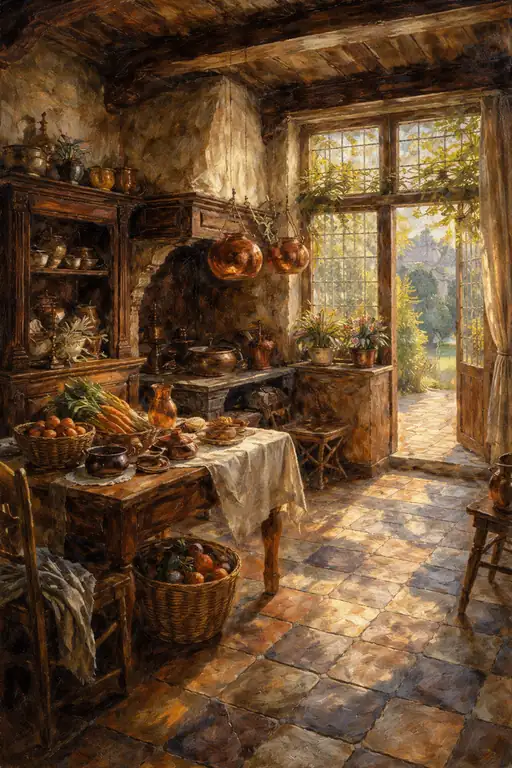 The Hearth's Bountiful Grace
Similar Artworks
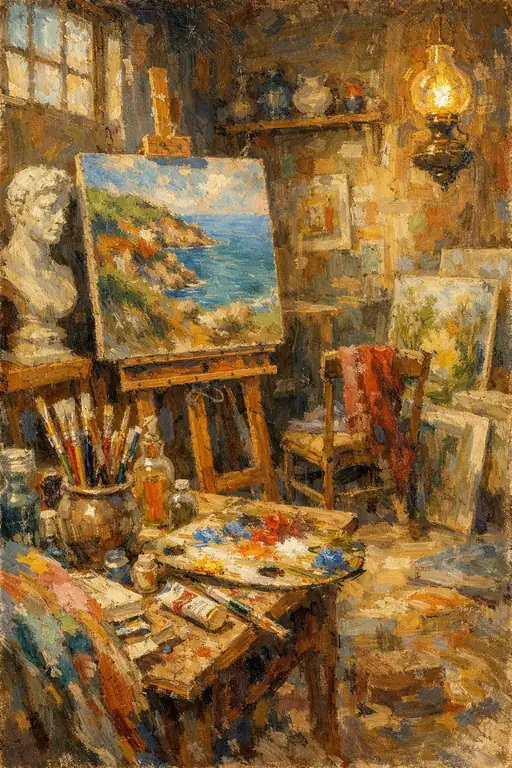 Heartbeat of the Cluttered Canvas
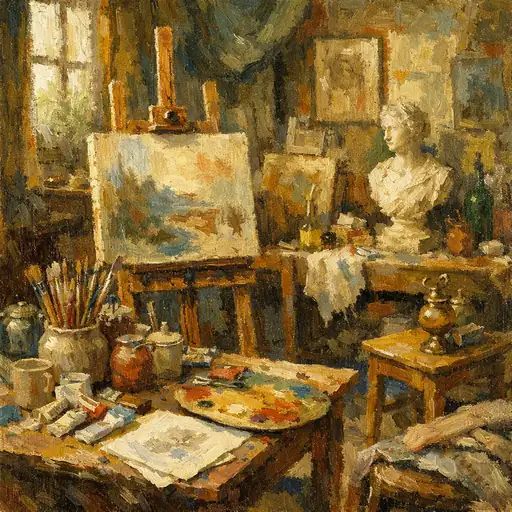 Harmony Within the Artistic Chaos
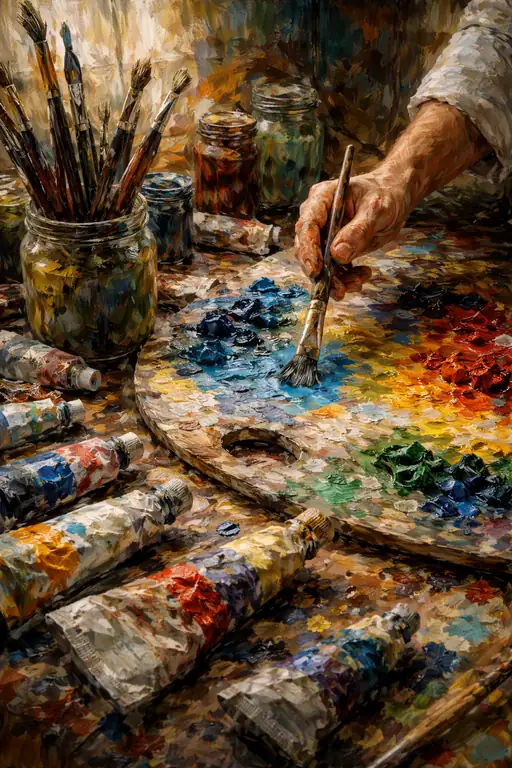 The Chaos of Radiant Hues
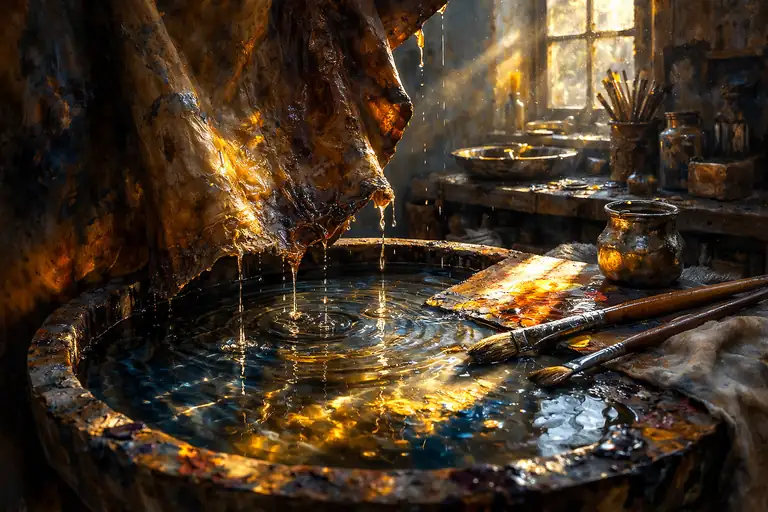 The Quiet Symphony of Shadows and Sunlight in the Artisan's Sanctuary
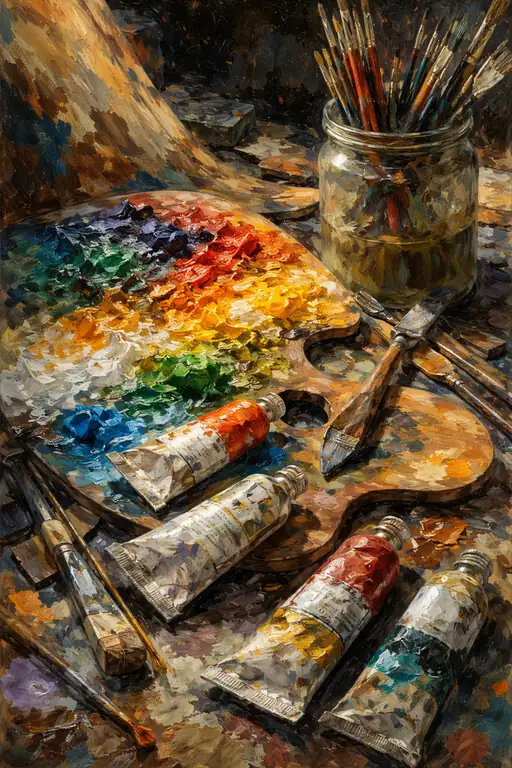 Genesis of the Chromatic Dream
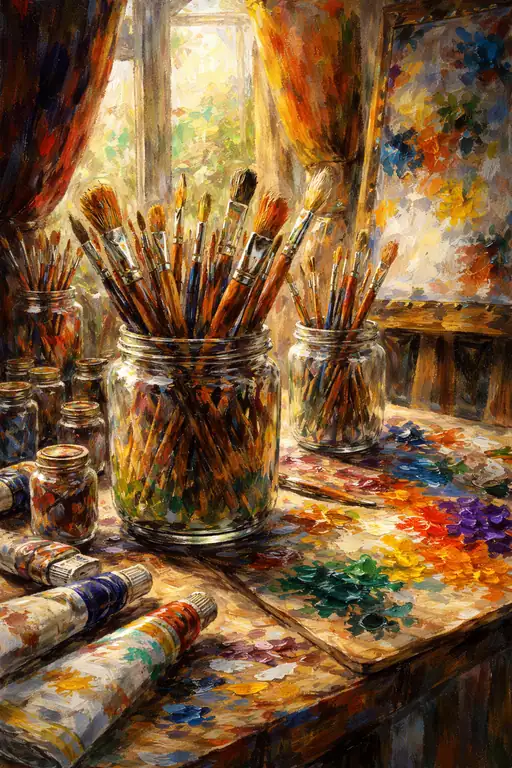 Sanctuary of the Chromatic Soul
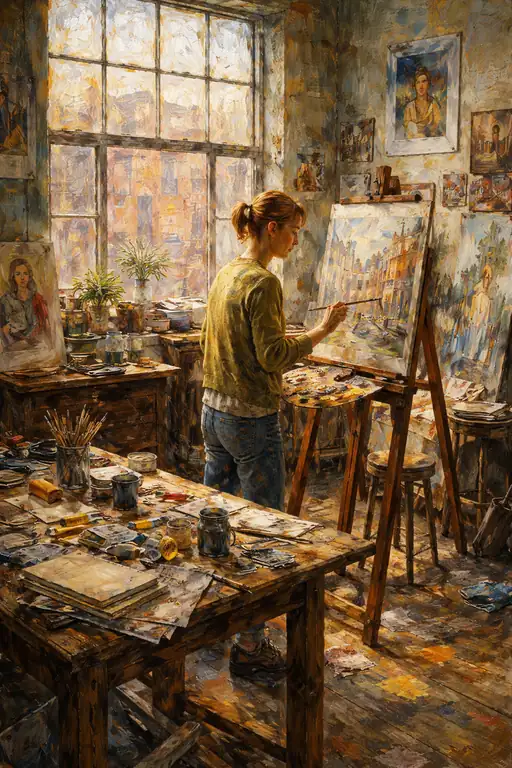 Whispers of the Canvas
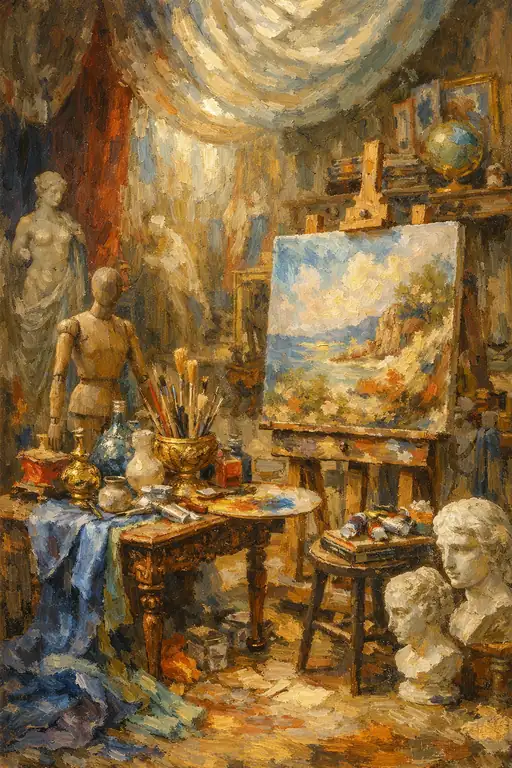 A Symphony of Scattered Dreams
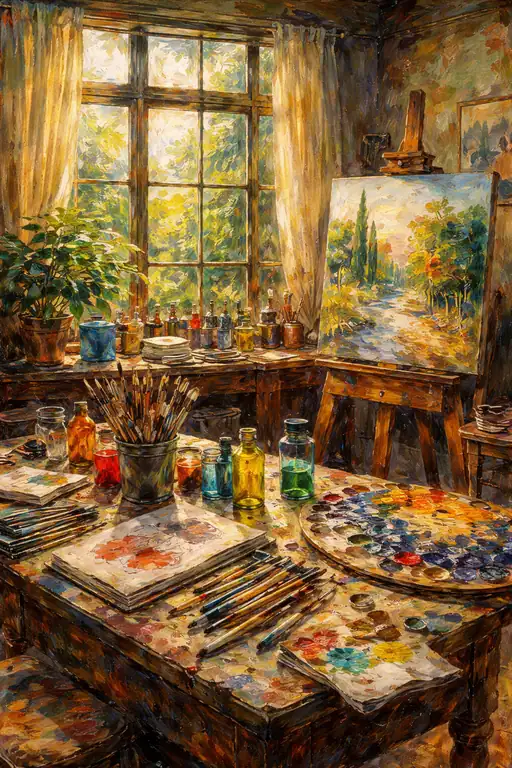 Golden Dust in the Creator's Haven
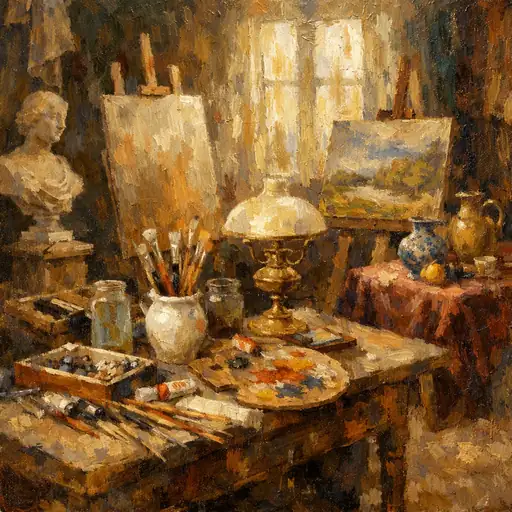 Echoes of Creation