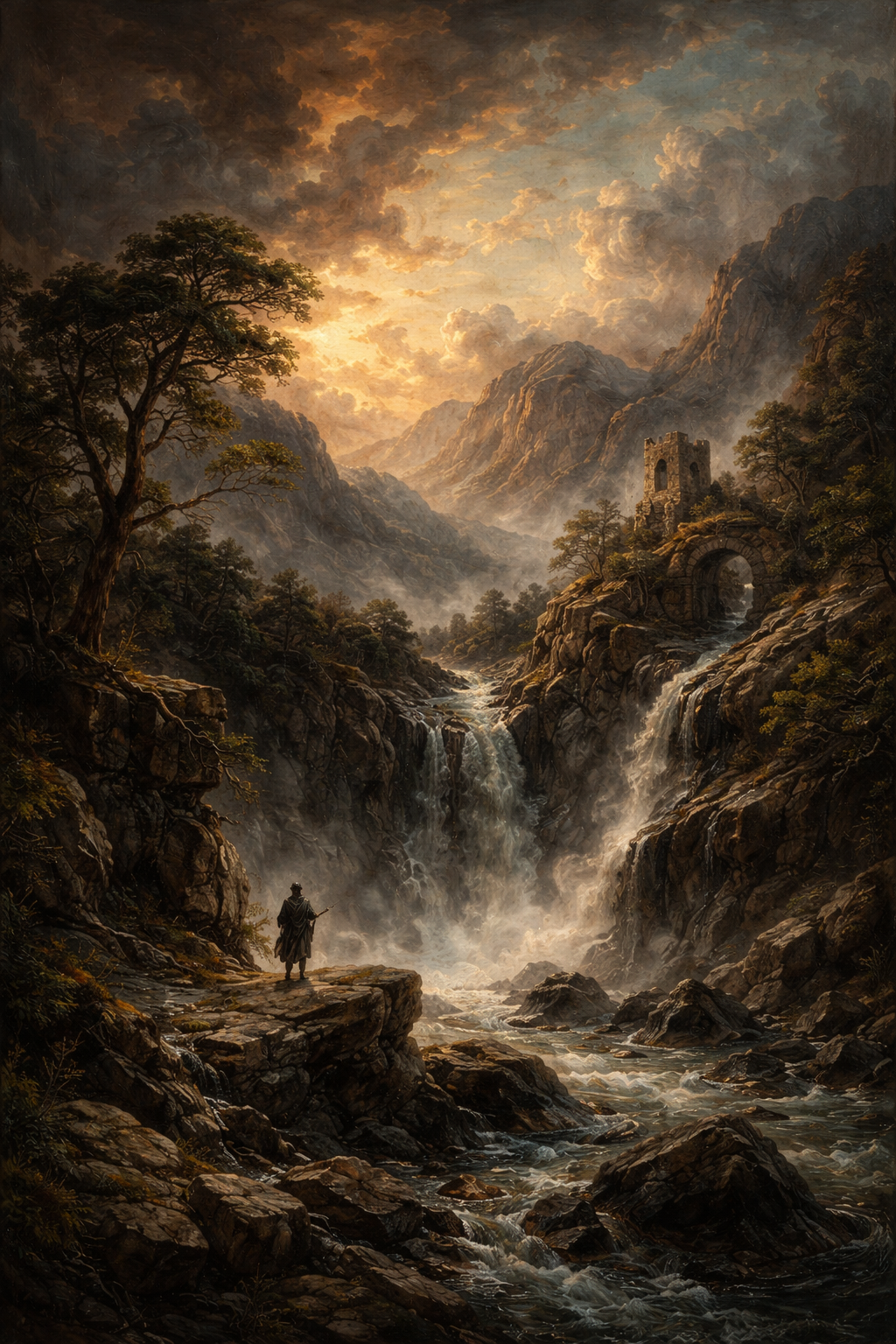
The Sublime Mist of Forgotten Canyons
Critique
1. Introduction This oil painting presents a breathtaking and sublime landscape centered on a series of powerful waterfalls in a rugged mountain valley. The work captures a sense of awe-inspiring natural scale and drama, characteristic of Romantic-era wilderness depictions. The composition effectively places a lone human figure against the vastness of the environment to emphasize the magnitude of the scene. 2. Description In the lower left, a solitary traveler stands on a rocky outcrop, surveying the valley below. Multiple waterfalls cascade down steep, dark cliffs into a rushing river that fills the foreground with white foam and mist. To the right, the ruins of a stone tower and bridge cling to a precipice, while layers of misty mountains rise toward a golden, sun-pierced sky. 3. Analysis The artist employs a strong diagonal composition, with the waterfalls and mountain slopes creating a sense of movement and depth. The palette is dominated by earthy browns, deep greens, and grays, which contrast sharply with the radiant, warm light of the breaking sun. Atmospheric perspective is used to render the distant peaks, enhancing the feeling of immense space. 4. Interpretation and Evaluation This work demonstrates a mastery of capturing the untamed beauty and power of nature. The inclusion of the lone figure and the ancient ruins suggests themes of human insignificance and the passage of time relative to the enduring landscape. The technical execution of the falling water and the swirling mist is particularly skillful, creating a highly immersive and tactile experience. 5. Conclusion Initially appearing as a traditional mountain view, the painting reveals itself as a profound meditation on the sublime. It stands as a powerful tribute to the dramatic beauty of the natural world and the evocative potential of light. The work leaves the viewer with a lasting impression of the grandeur and mystery of the wilderness.
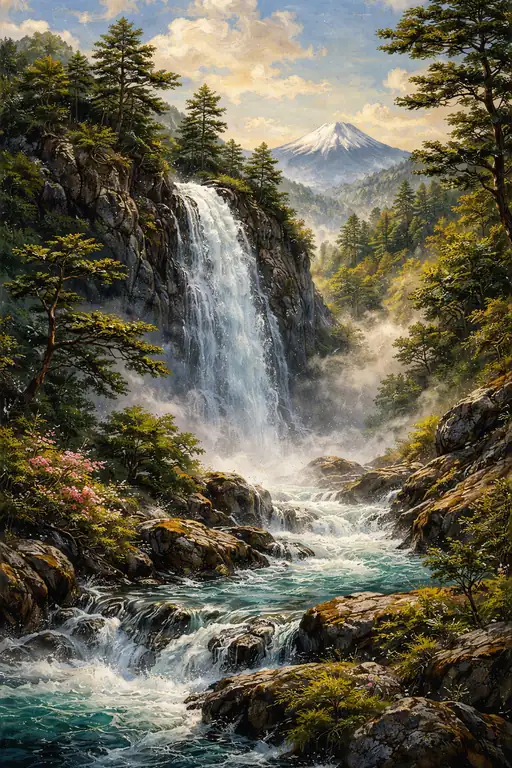 Echoes of the Eternal Peak
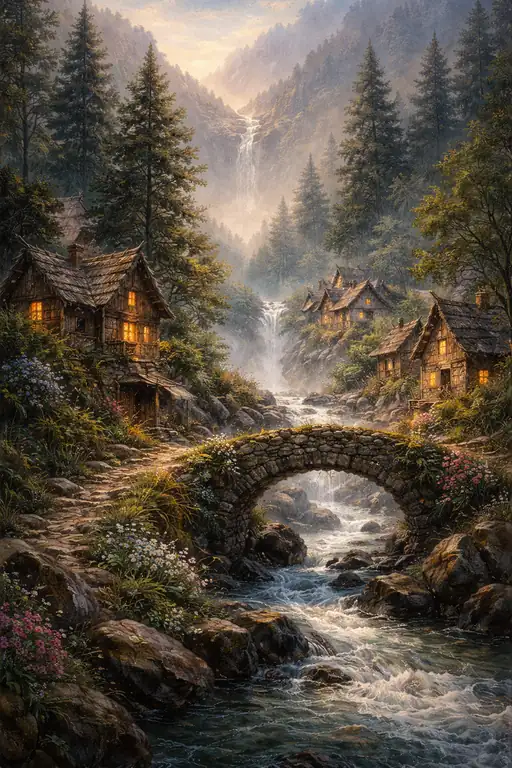 Twilight Haven by the Roaring Stream
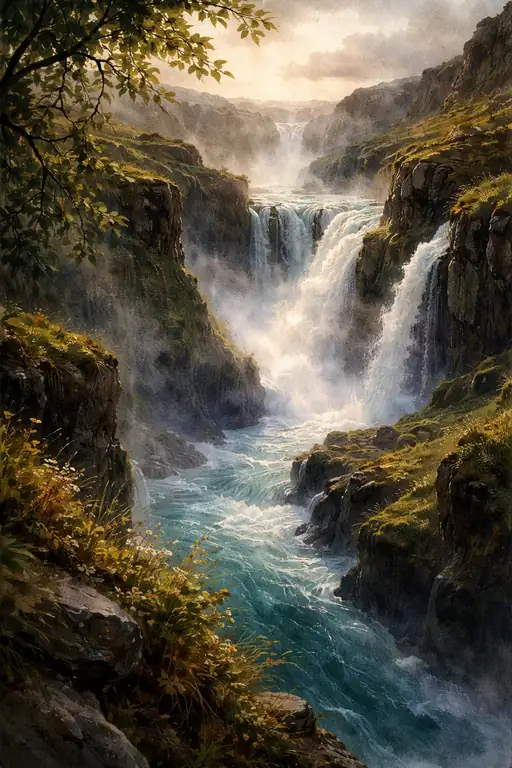 Whispers of the Sacred Abyss
 Echoes of the Torrent
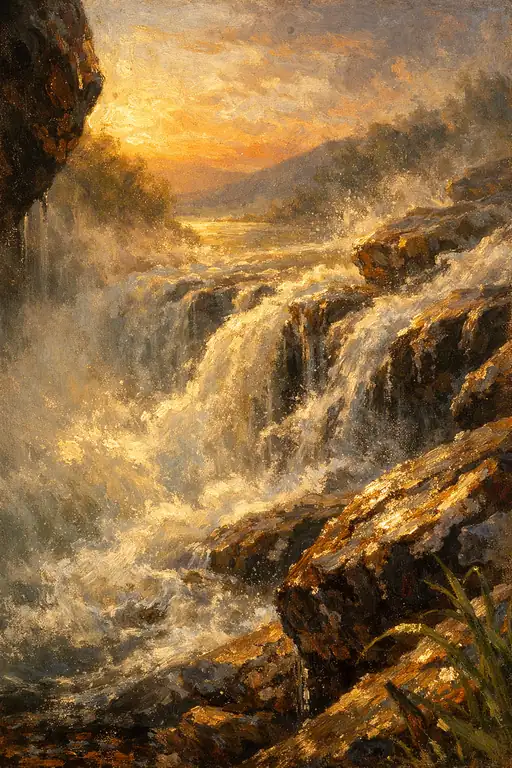 Radiance Piercing the Mist
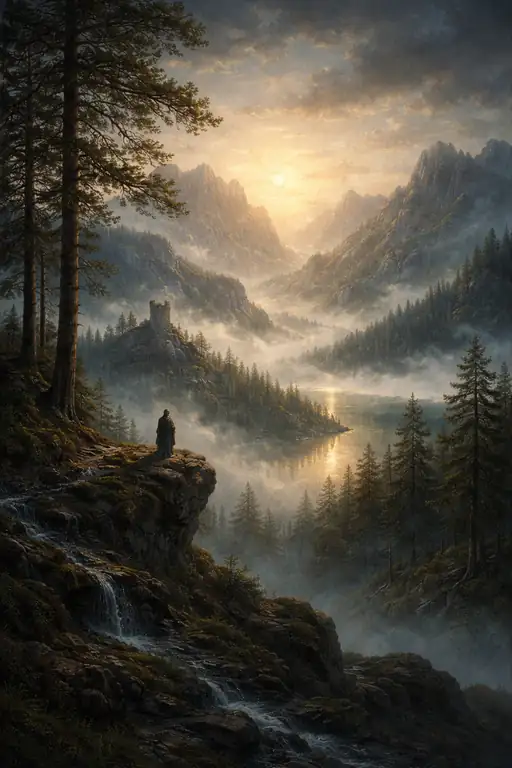 Mysterious Fog Enveloping the Epic Valley
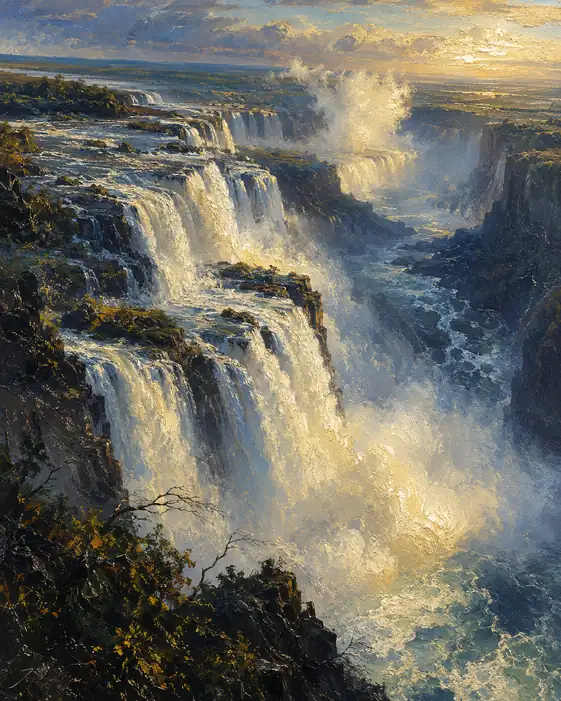 The Roar of Gilded Waters
 The Golden Roar and the Silent Citadel
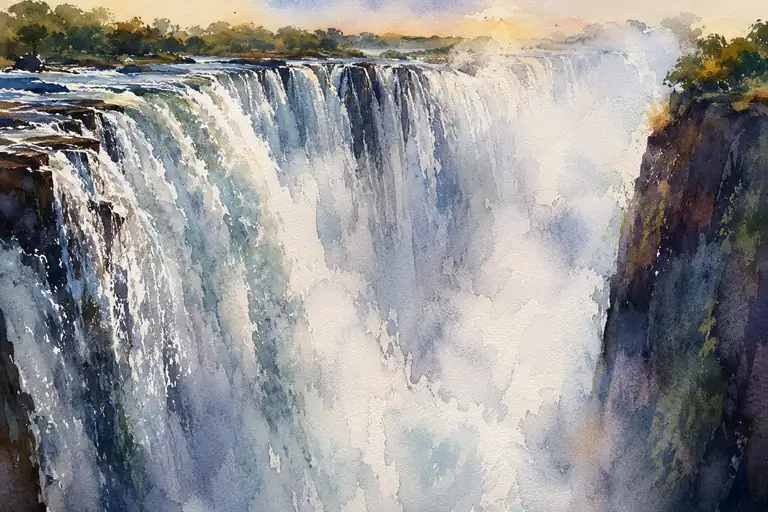 The Silent Roar
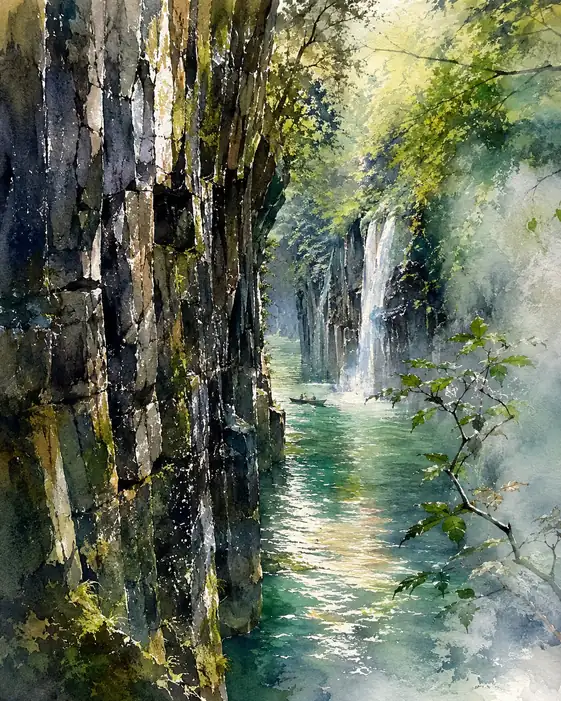 Breath of the Emerald Gorge
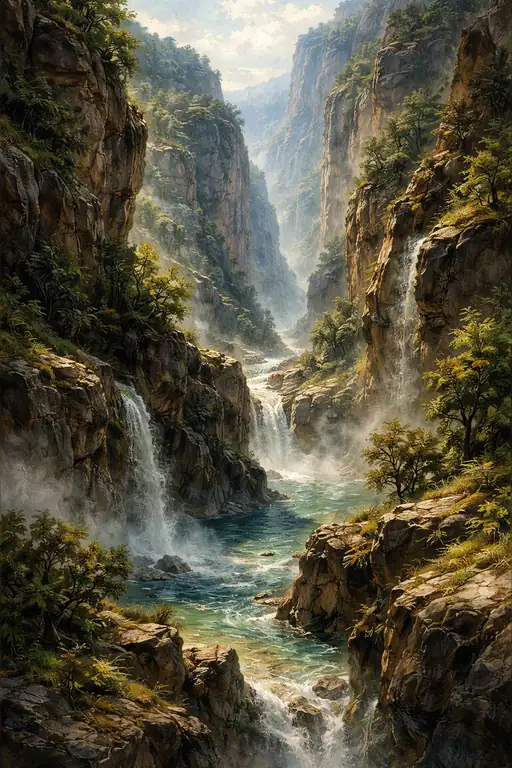 Song of the Wilderness
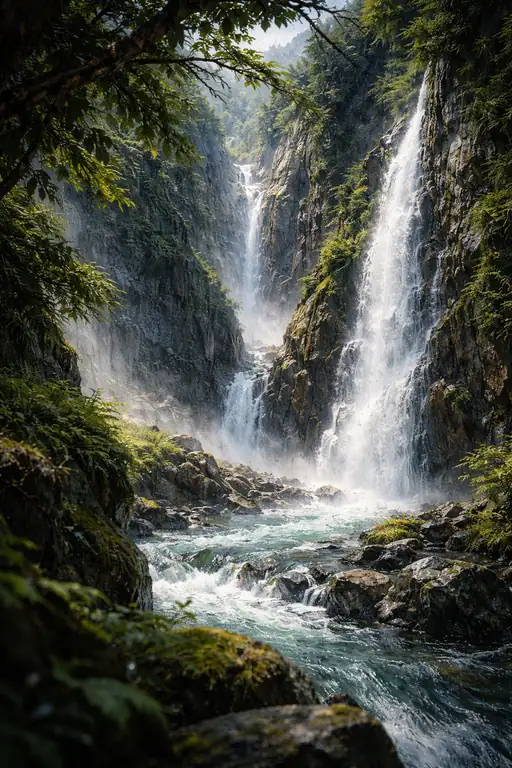 The Untamed Roar of the Gorge