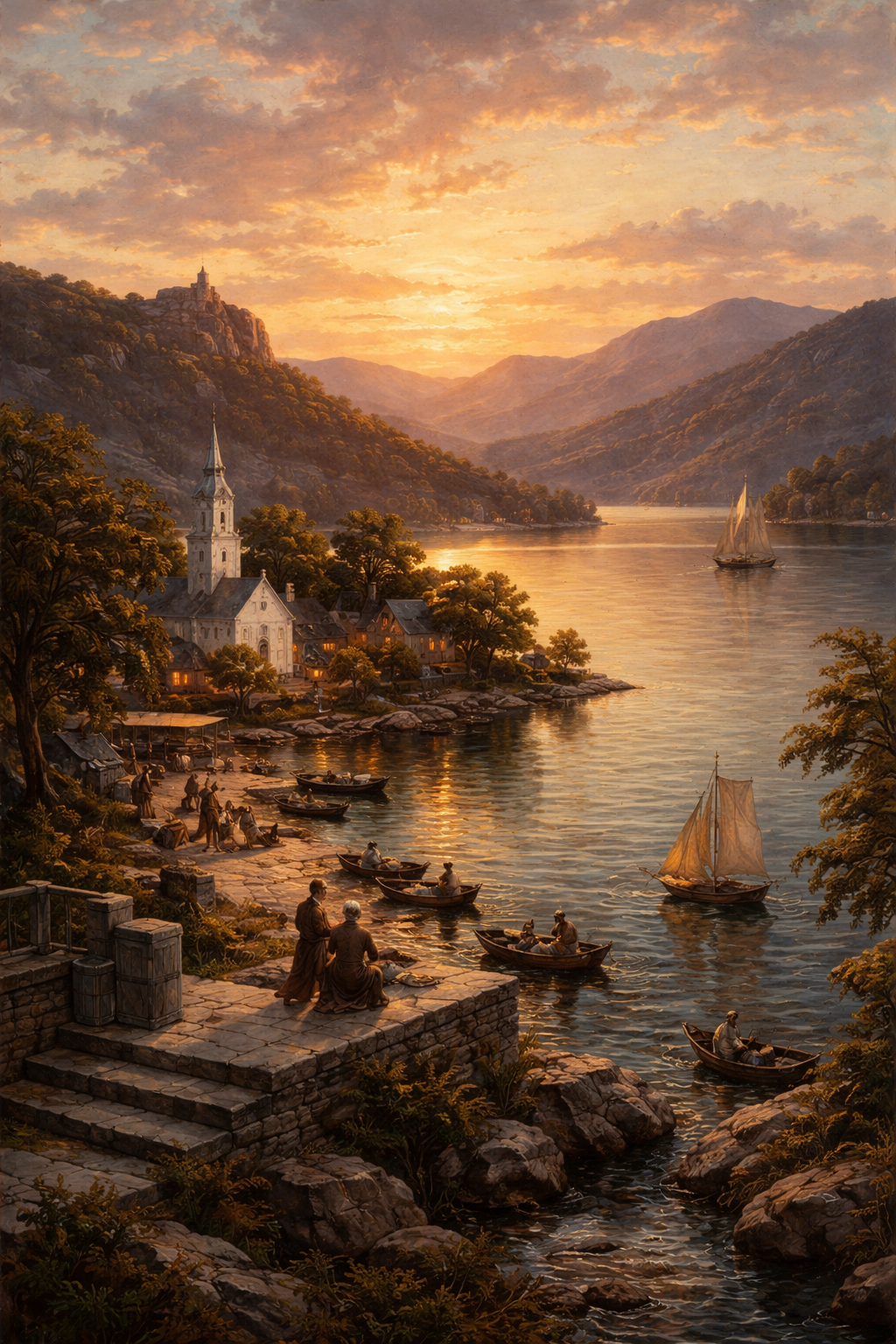
Golden Hour's Embrace over the Sleeping Bay
Critique
1. Introduction This landscape painting presents a tranquil coastal settlement captured during the peak of the golden hour. The composition is centered around a serene body of water, likely a lake or a deep bay, surrounded by undulating hills and architectural landmarks. The artist effectively establishes a peaceful atmosphere through a focus on natural lighting and human-scale architecture. 2. Description In the middle ground, a white church with a distinctive spire serves as a focal point, situated amidst a cluster of stone dwellings on the shoreline. The foreground features a weathered stone terrace where figures observe the activity on the water, including several small wooden boats manned by rowers. In the distance, a formidable mountain peak is crowned by a fortified structure, all set against a sky filled with soft, luminous clouds. 3. Analysis The work utilizes a strong diagonal arrangement to guide the viewer’s eye from the shadowed foreground toward the distant sun. Light functions as the primary structural element, with the sun positioned centrally behind the mountains to create a brilliant reflection on the water's surface. The color palette is restricted to warm ochres, deep browns, and vibrant oranges, which enhances the overall sense of atmospheric unity and depth. 4. Interpretation and Evaluation The scene can be interpreted as a celebration of pastoral harmony and the quiet dignity of communal life. Technically, the artist demonstrates exceptional skill in rendering the subtle gradations of light and its interaction with various textures, from stone to water. The balance between the detailed architectural elements and the broad, expressive sky reflects a sophisticated understanding of classical landscape traditions. 5. Conclusion This painting succeeds in capturing a fleeting moment of atmospheric beauty with remarkable clarity and emotional resonance. The initial perception of a traditional scenic view deepens into an appreciation for the artist's meticulous control over light and shadow. Ultimately, the work serves as a testament to the enduring appeal of the idealized natural landscape.
Same Subcategory
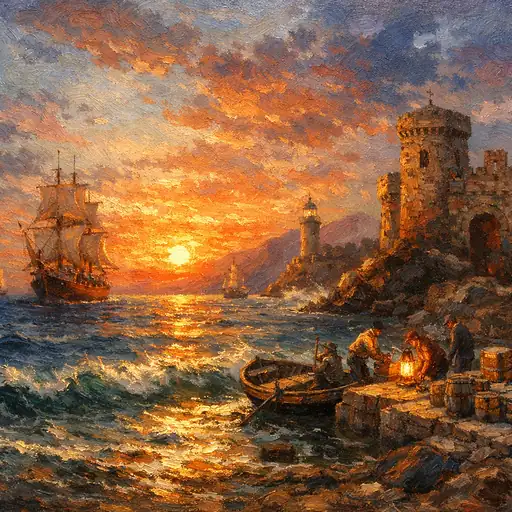 The Glorious Return at Dusk
Similar Artworks
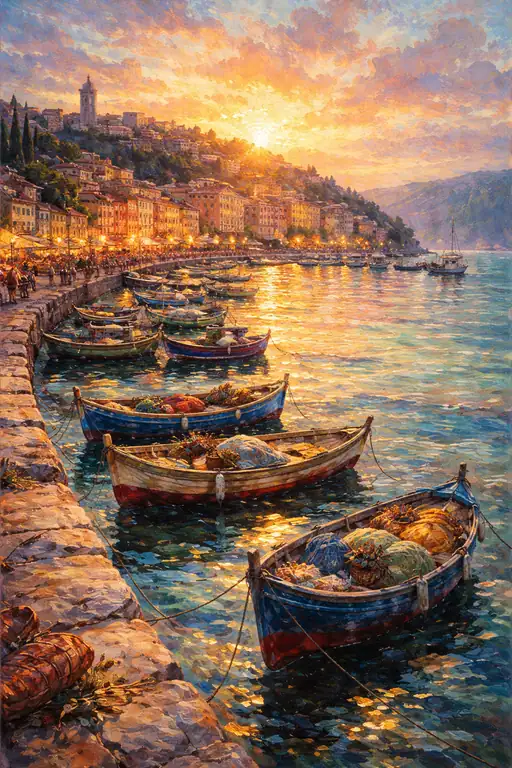 Golden Embrace of the Evening Tide
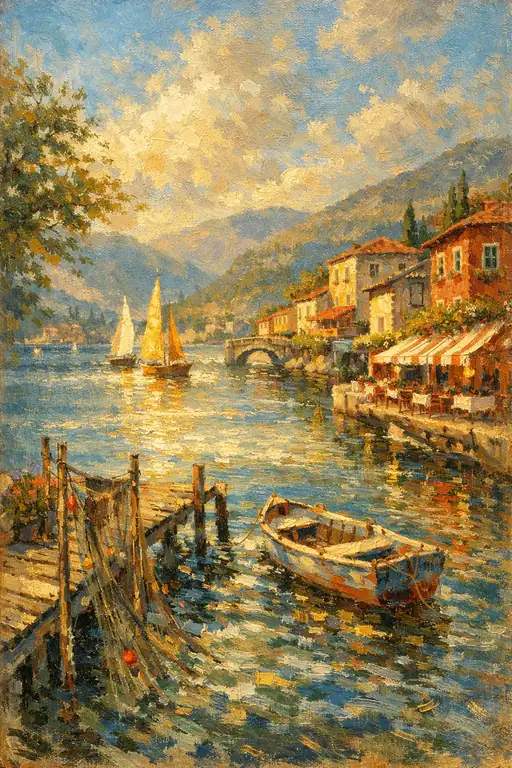 Golden Splendor of the Coastal Haven
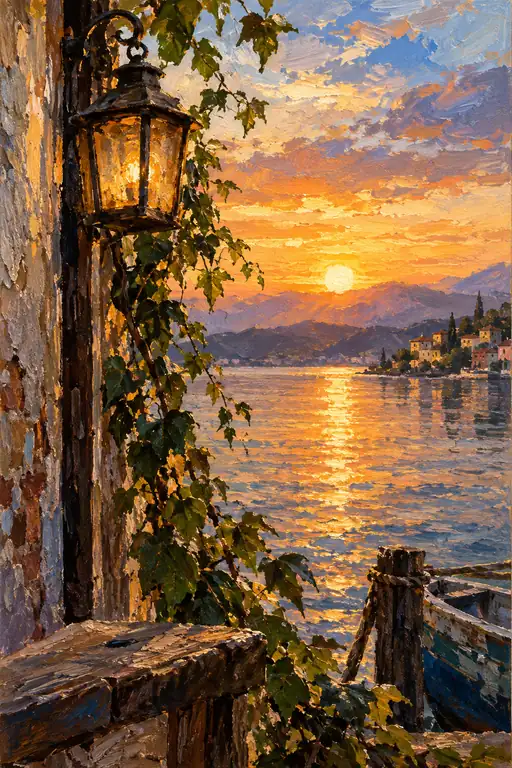 Magenta Cascade Over White Plaster
 Golden Hour at the Village Square
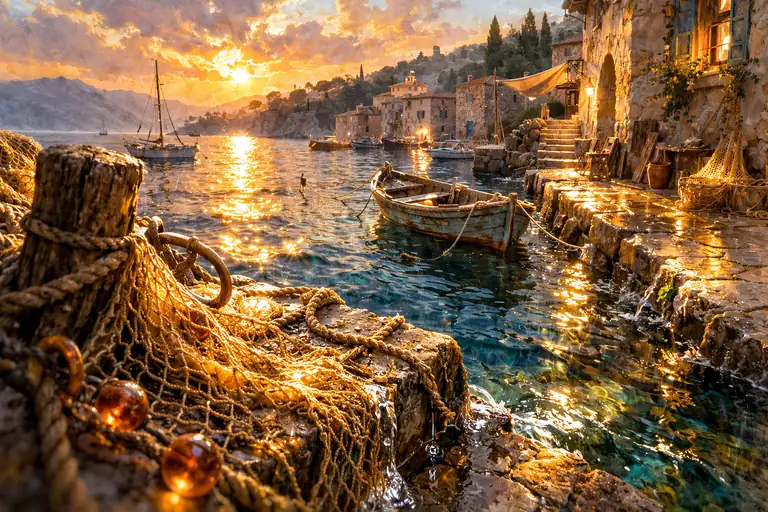 The Gentle Slumber of a Coastal Haven
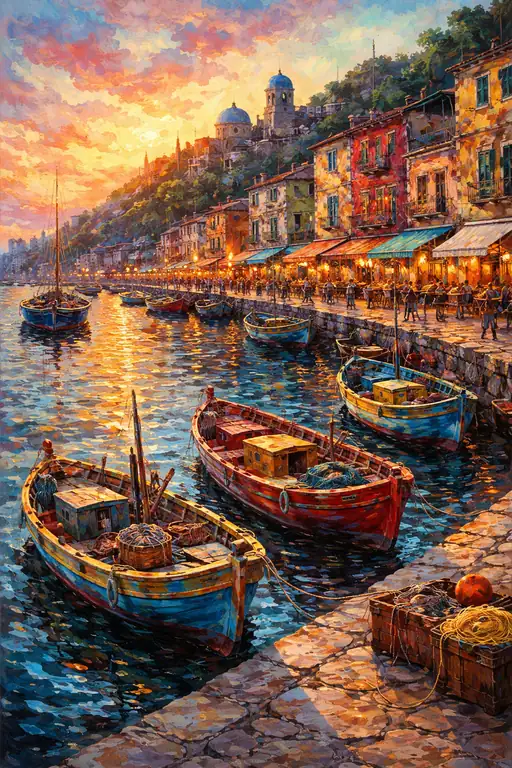 The Harbor’s Golden Lullaby
 Farewell of the Golden Hour
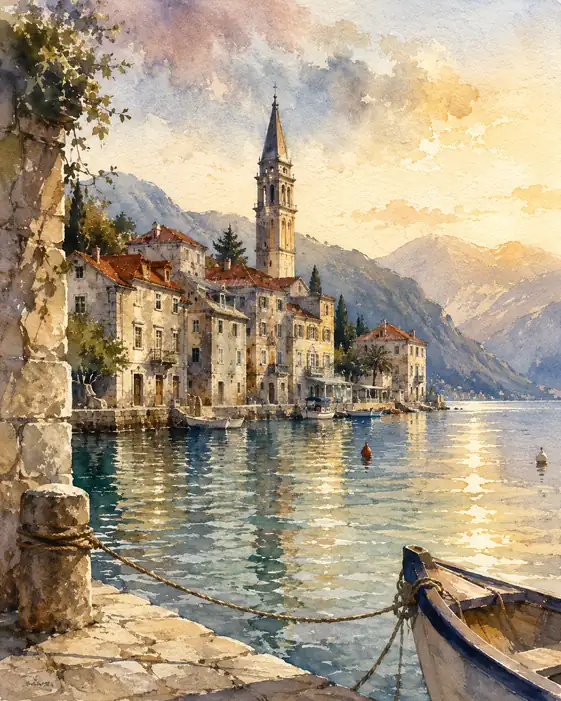 Sunlit Silence of the Harbor
 Where the Evening Light Rests
 Echoes of a Forgotten Age