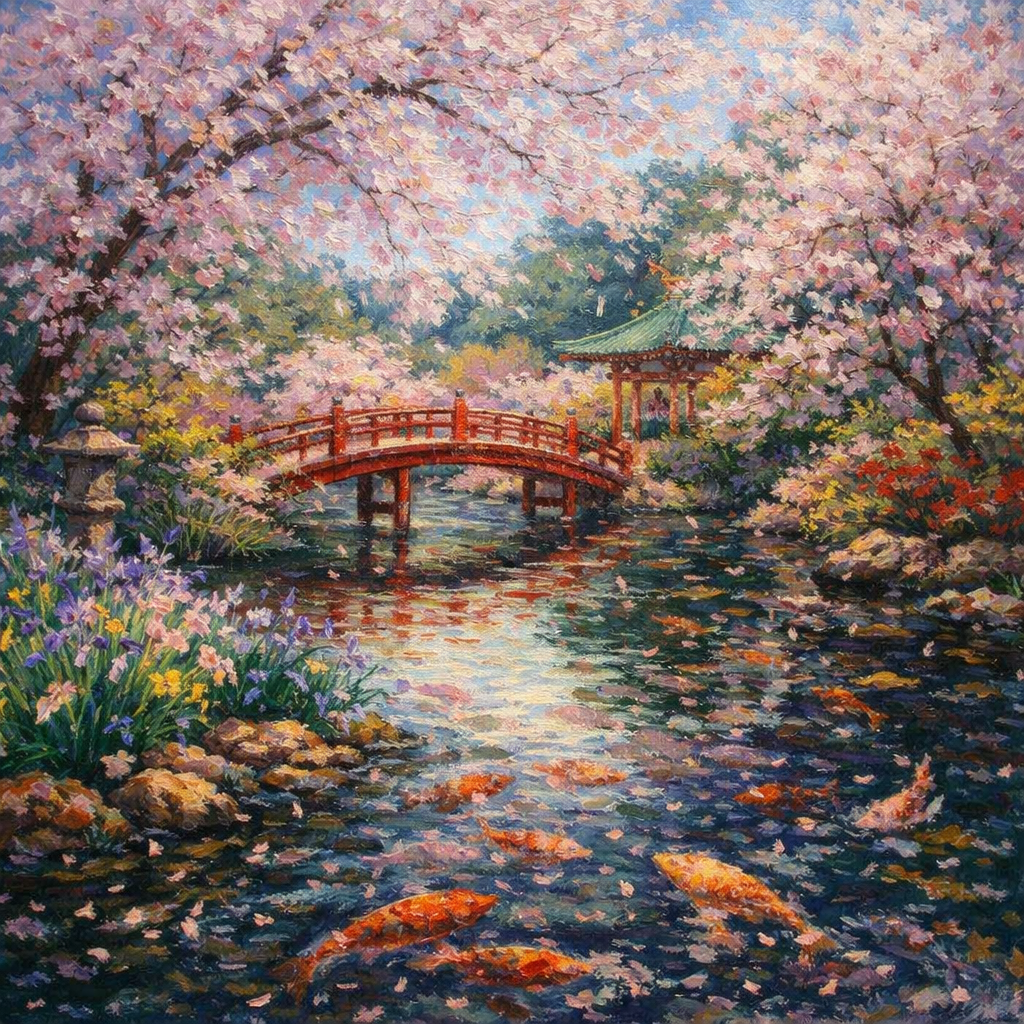
Whispers of Cherry Petals
Critique
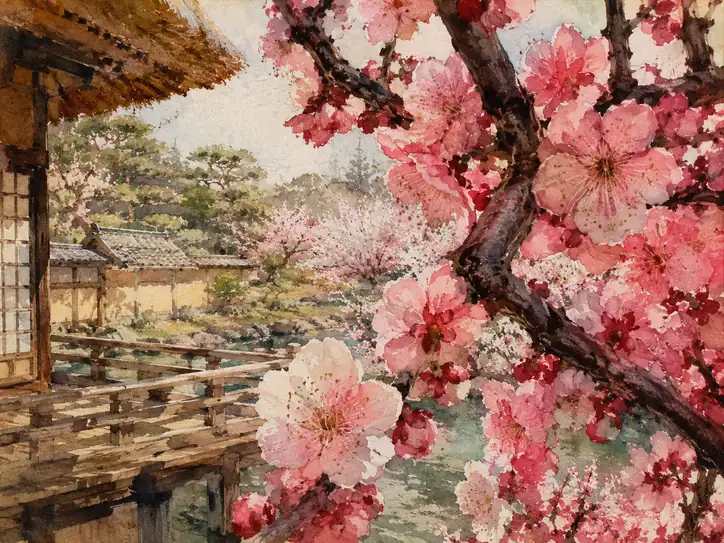
1. Introduction This impressionistic oil painting depicts a serene Japanese garden during the height of the cherry blossom season, utilizing a rich impasto technique to evoke a sense of ethereal beauty. The scene features a traditional arched red bridge and a koi pond, enveloped in a cloud of soft pink and white blossoms. Through its textured surface and delicate use of light, the work captures the fleeting essence of spring, inviting the viewer into a tranquil space that balances architectural precision with the organic abundance of nature. 2. Description The composition is anchored by a vibrant red wooden bridge that spans a clear pond in the middle ground, where several orange koi fish are visible beneath the water's surface. Overhanging branches of cherry trees fill the upper portion of the canvas, their petals rendered in thick, stippled strokes that suggest both volume and fragility. In the background, a small, green-roofed pavilion is nestled among the foliage, while the foreground is adorned with purple irises and rough stones that frame the water. The interplay of soft pastels and deep earthy tones creates a harmoniously layered landscape. 3. Analysis Technical skill is particularly evident in the artist's ability to represent light filtering through the dense canopy of blossoms, creating a dappled effect on the water and the bridge. The use of the impasto technique adds a physical dimension to the floating petals, making them appear to drift across the pond's surface. Color-wise, the bold red of the bridge serves as a powerful focal point that guides the eye through the sea of pink, while the subtle transitions in the water’s reflections establish a convincing sense of depth. The energetic brushwork provides a rhythmic vitality to the otherwise still garden. 4. Interpretation and Evaluation The work can be interpreted as a celebration of "mono no aware," the poignant appreciation of the transient nature of things. By choosing a moment where the blossoms are at their fullest, yet already beginning to shed petals, the artist captures the peak of natural beauty and its inevitable decline. The evaluation of the painting emphasizes its successful synthesis of traditional Japanese motifs with a Western-inspired textured style. Its strength lies in the evocative power of its palette and the expert management of complex botanical forms without sacrificing clarity or emotional resonance. 5. Conclusion A deeper understanding of the garden’s tranquility is achieved as the viewer explores the intricate details of the koi and the reflected sky in the pond. The initial impression of a romantic landscape evolves into a contemplation of the harmony between human-made structures and the wild growth of spring. Ultimately, the painting stands as a timeless tribute to the beauty of the seasons, revitalized through a modern commitment to texture and light.
Same Subcategory
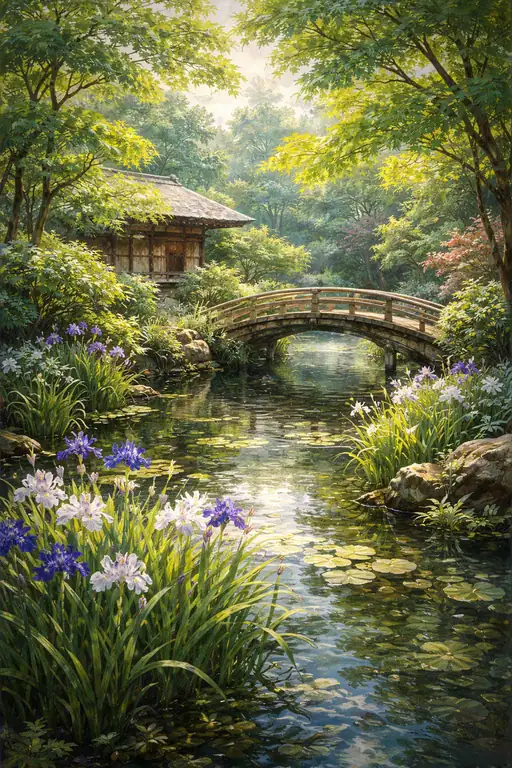 Morning Reflection on the Wooden Arch
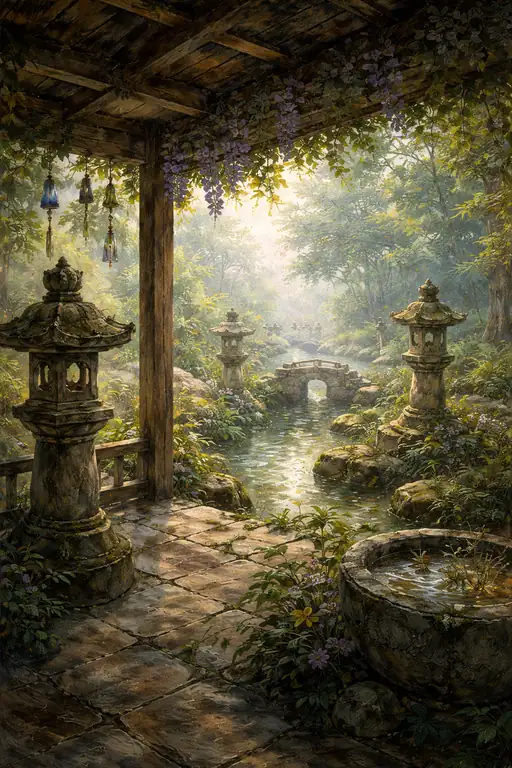 Solace in the Summer Verdure
Similar Artworks
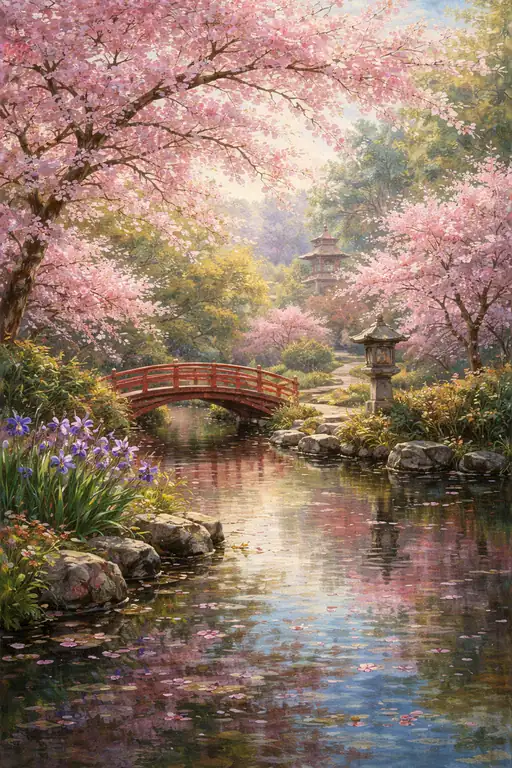 Tranquility in the Zen Garden
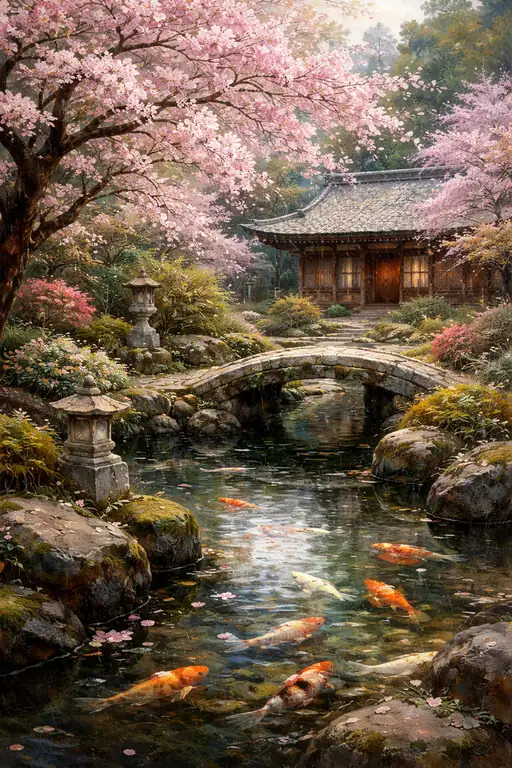 Reflections in the Koi Pond
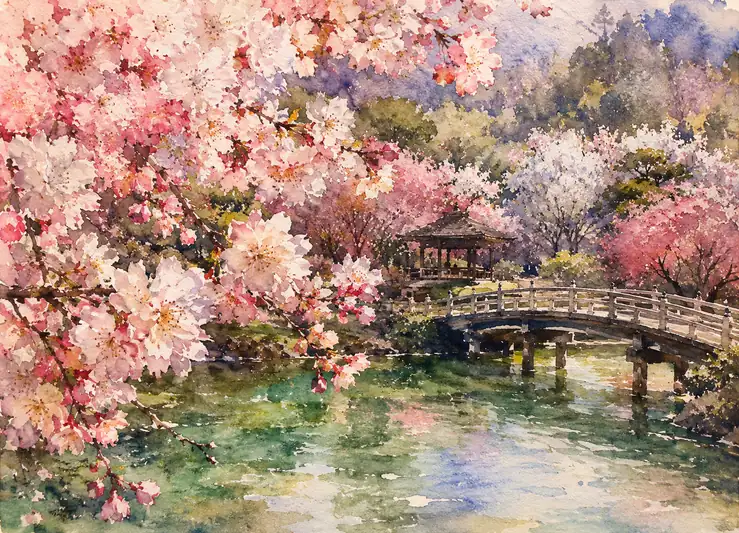 The Waltz of Sakura and Stone
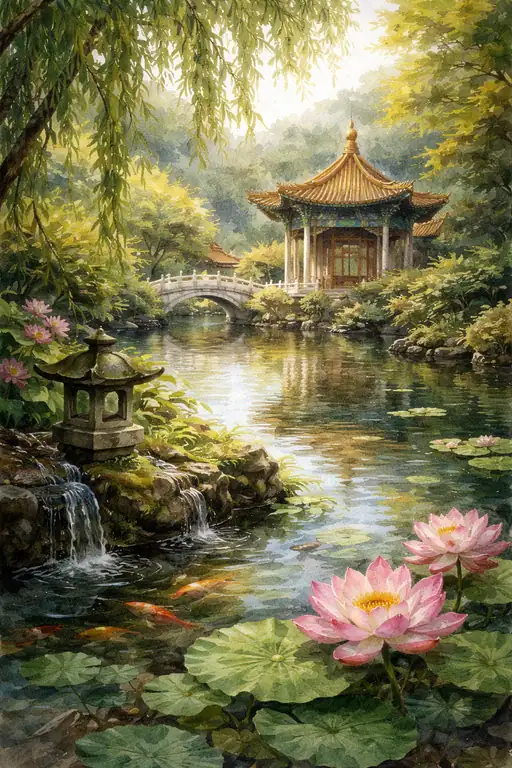 Serenity of the Gilded Pavilion
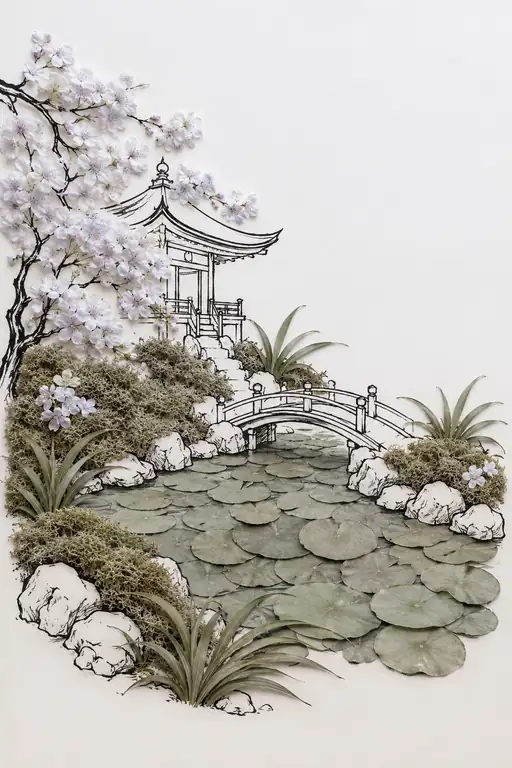 Spring Solitude at the Curved Bridge
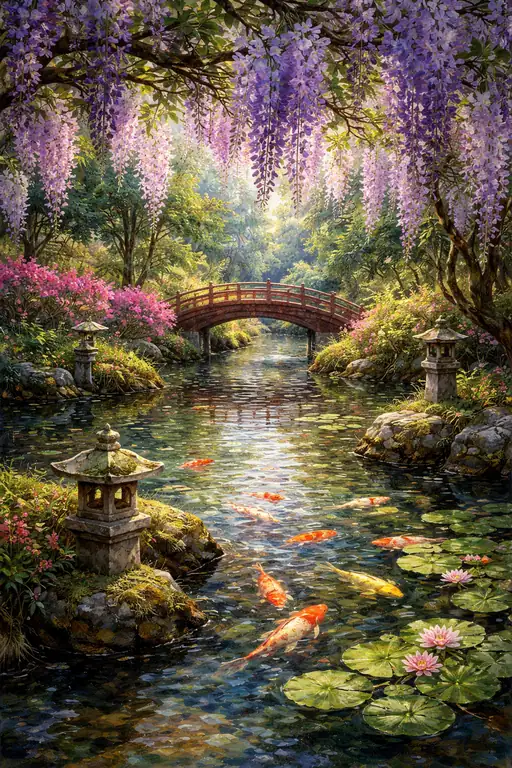 The Wisteria's Whisper Over Sacred Waters
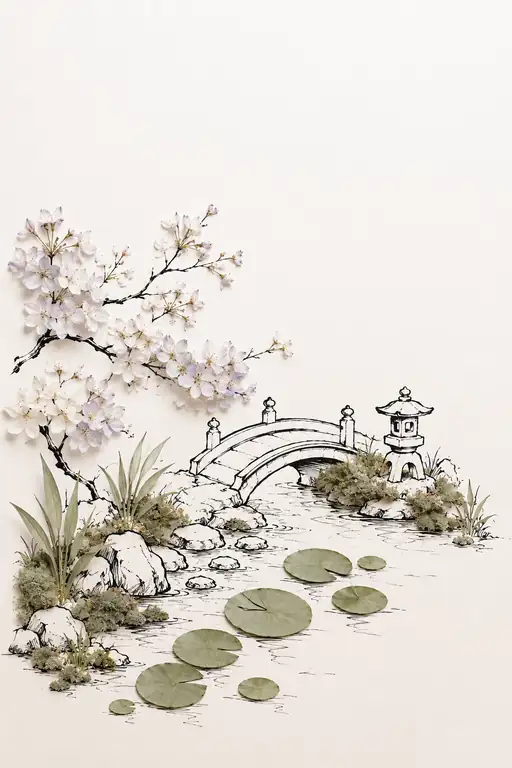 Arched Bridge by the Blossoming Cherry Tree
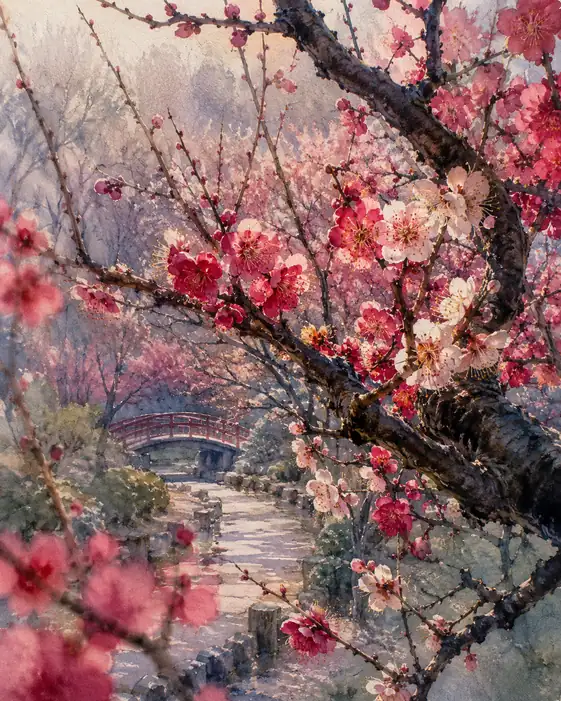 Bridge of Blossoming Dreams
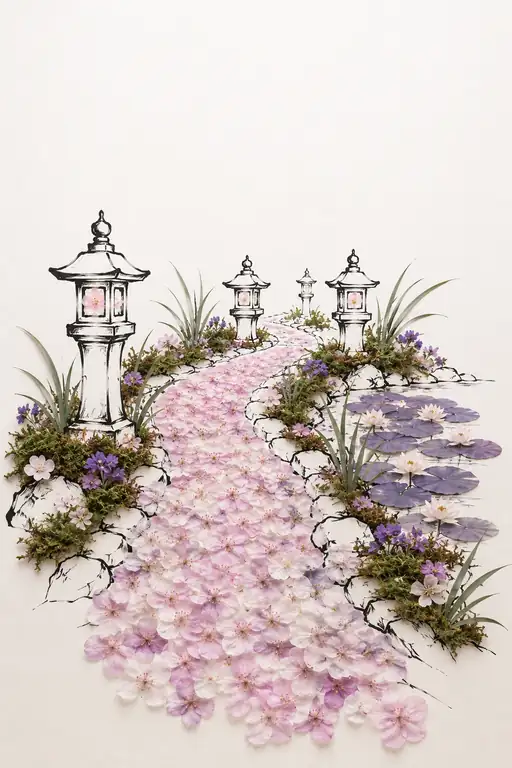 Blossom-Carpeted Pathway by the Stone Lanterns
 Where the Spring Wind Pauses