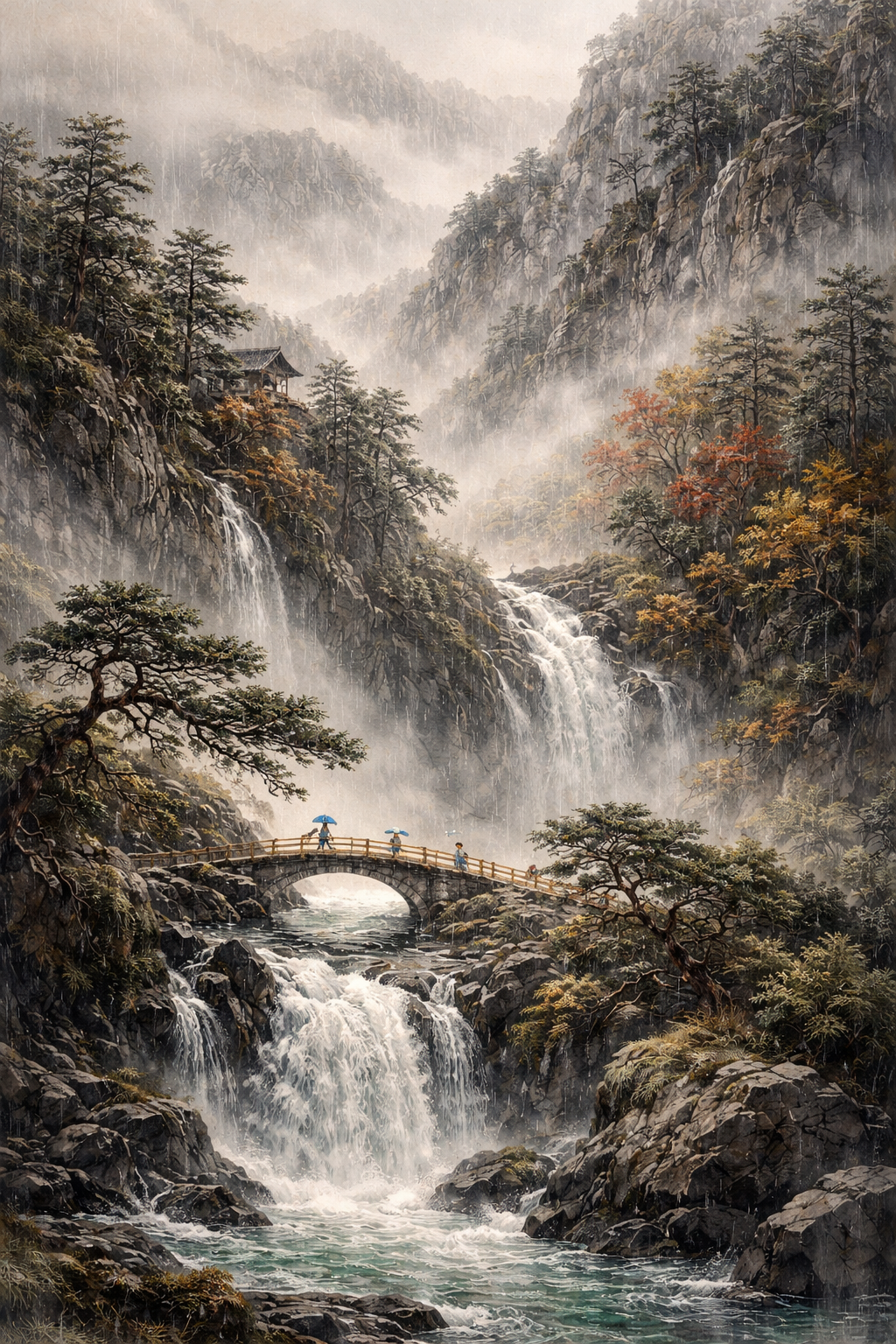
Tears of the Mountain
Critique
1. Introduction This landscape painting offers a somber yet deeply atmospheric depiction of a rainy day in a rugged mountainous region. The composition is defined by several powerful waterfalls cascading down steep, rocky slopes, all enveloped in a thick mist and the steady fall of rain. A stone arch bridge serves as a critical focal point, connecting the disparate parts of the landscape and providing a human element to the otherwise untamed environment. The artist's use of a muted palette and delicate textures successfully captures the specific mood of a wet, temperate wilderness. 2. Description The artwork features a series of dramatic waterfalls that descend through a narrow gorge filled with pine trees and autumn-colored foliage. In the lower-middle ground, a stone bridge with golden-hued railings spans the rushing water. Several small figures are seen crossing the bridge, protected by bright blue umbrellas that provide a stark contrast to the surrounding grays and browns. The upper portion of the painting is dominated by hazy, mist-covered peaks that disappear into a pale, overcast sky. The vertical streaks of rain are visible throughout the scene, adding a layer of kinetic energy to the static elements. 3. Analysis Technically, the artist employs a masterful use of atmospheric perspective to create depth within the mist-filled gorge. The color palette is restricted to earthy tones, muted greens, and cool grays, which emphasizes the damp and chilly environment. The brushwork used for the waterfalls and the rain is fluid and expressive, conveying the constant movement of water. The composition is structured around the verticality of the mountain and the waterfalls, which is balanced by the horizontal curve of the bridge. The strategic placement of the blue umbrellas creates a visual anchor, drawing the eye to the human presence within the vast landscape. 4. Interpretation and Evaluation The work can be interpreted as an exploration of the "sublime"—a concept that blends beauty with a sense of overwhelming natural power. The rain and mist act as veils that both hide and reveal the landscape, suggesting themes of mystery and the passage of time. The technical execution of the atmospheric effects is particularly noteworthy, demonstrating a high level of skill in rendering complex weather conditions. The inclusion of the figures with umbrellas adds a narrative layer of perseverance and the simple act of navigating through nature's forces. The painting is a successful example of mood-driven landscape art. 5. Conclusion While the initial impression may be one of gloom due to the overcast sky and rain, the powerful flow of the waterfalls and the vibrant blue of the umbrellas provide a sense of enduring vitality. The harmony between the architectural element of the bridge and the chaotic beauty of the mountain creates a compelling and balanced scene. Ultimately, the artwork leaves a lasting impression of the quiet majesty of nature, inviting the viewer to appreciate the beauty found within a rainy and misty world.
Same Subcategory
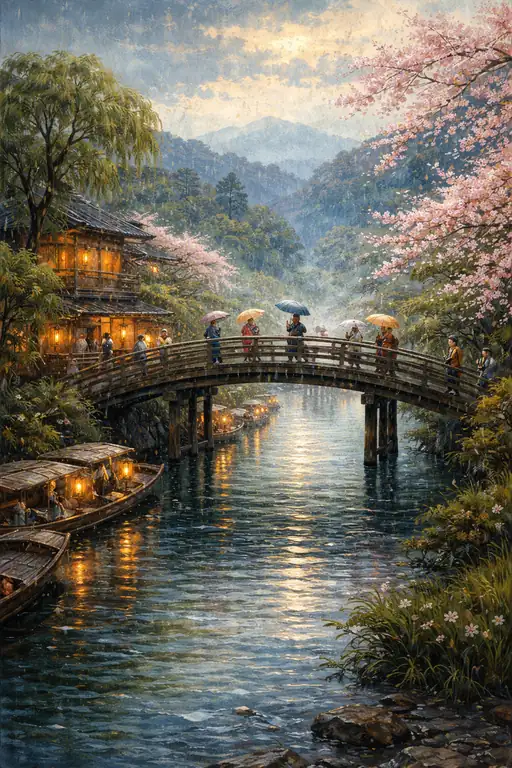 Whispers of the Spring Rain
 Crimson Tears on an Autumn Eve
Similar Artworks
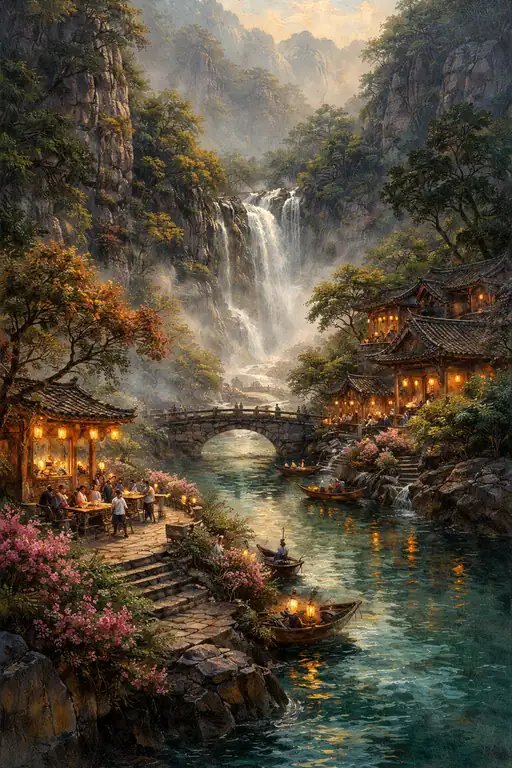 Majesty of the Cascading Peaks
 A Tiny Vessel on the Stream of Time
 Solitude by the Fog-Bound Pond
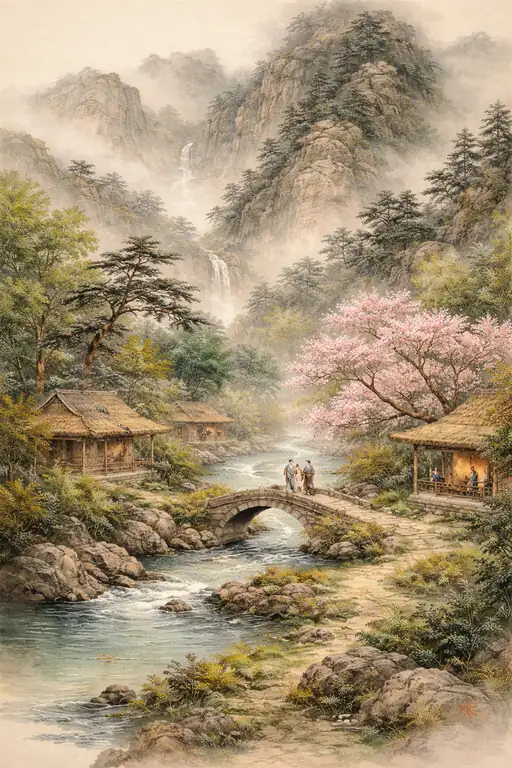 Slumbering Utopia in the Deep Valley — Whispers of Wind Across the Mossy Stone Bridge
 Golden Awakening Beyond the Misty Veil
 Silent Majesty of the Celestial Pillars
 Autumn Whispers in the Sunlit Gorge
 Song of the Wilderness
 Whispers of the Eternal Mist
 Awakening of the Sacred Garden Where Cranes Take Flight