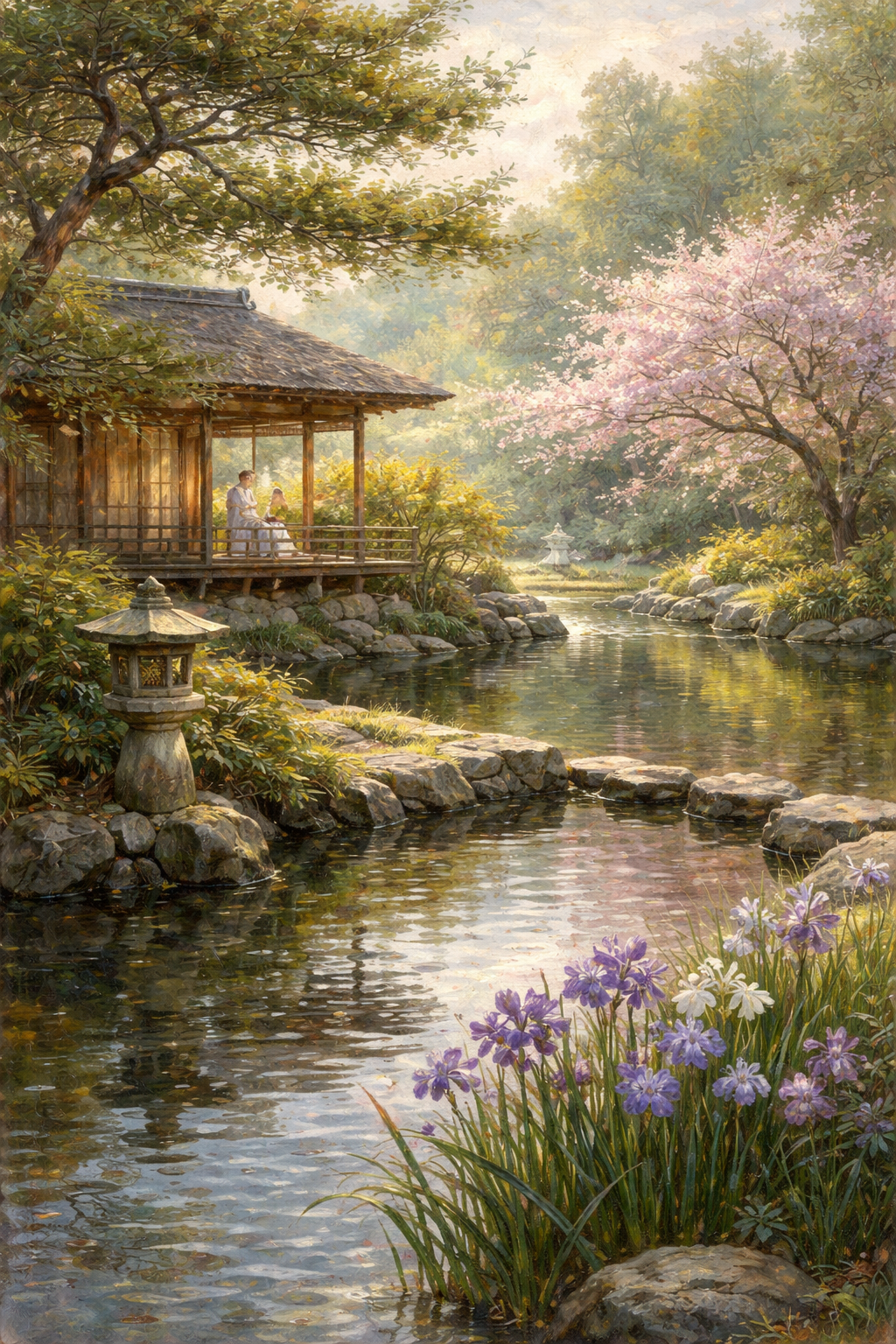
Sighs of the Sunlit Moss
Critique
1. Introduction This oil painting presents a tranquil scene of a traditional Japanese garden, where nature and architecture exist in harmony. The work blends Eastern aesthetic sensibilities with impressionistic techniques. Soft sunlight filters through the trees, creating a serene atmosphere that invites the viewer into a space of quiet contemplation. 2. Description A wooden pavilion sits gracefully above a still pond, with a figure observing the surroundings. The pond is framed by stones and a traditional stone lantern. To the right, trees covered in pink blossoms reflect their colors on the water. In the foreground, vibrant purple irises bloom, providing a sense of depth and focus. 3. Analysis The color palette is dominated by harmonious greens, pinks, and purples. The artist employs dabbing brushstrokes to represent the play of light, capturing the texture of the air. The composition utilizes diagonal lines to guide the eye from the foreground toward the pavilion. Each element is rendered with meticulous detail. 4. Interpretation and Evaluation The painting represents an idealized sanctuary where time seems to slow down. The integration of the structure within nature symbolizes a balance between humanity and the earth. The work is successful in its technical execution, particularly in its handling of light. It creates a world that feels both realistic and dreamlike. 5. Conclusion Initially struck by the scenery, further observation reveals a profound spiritual quality in the details. This transition to an emotional connection is a testament to the artist’s skill. Ultimately, the painting provides spiritual fulfillment as the garden’s silence permeates the observer’s mind. It celebrates the enduring elegance of nature.
Same Subcategory
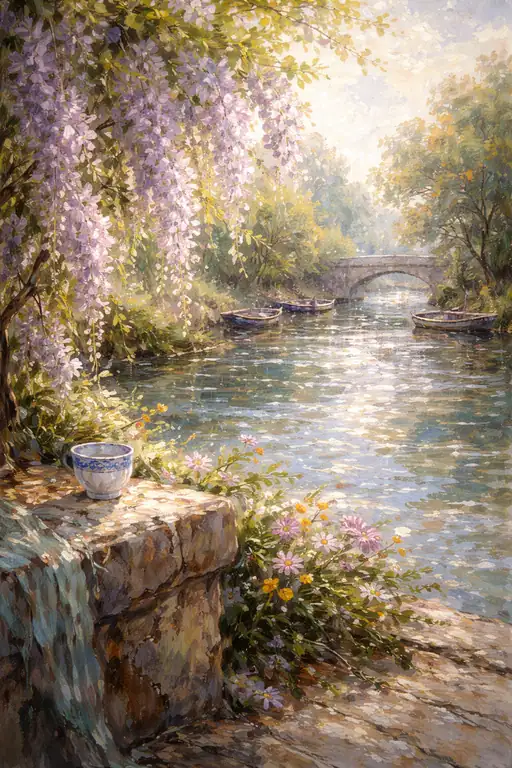 Whispers of Wisteria by the Sunlit River
Similar Artworks
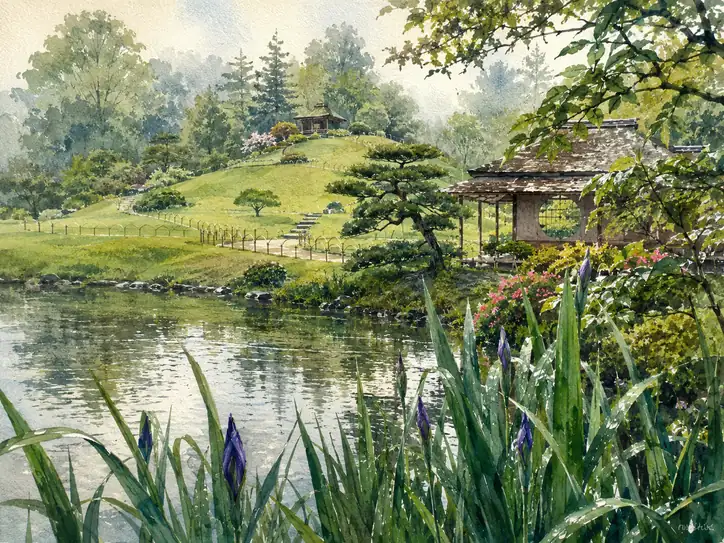 The Garden's Silent Breath
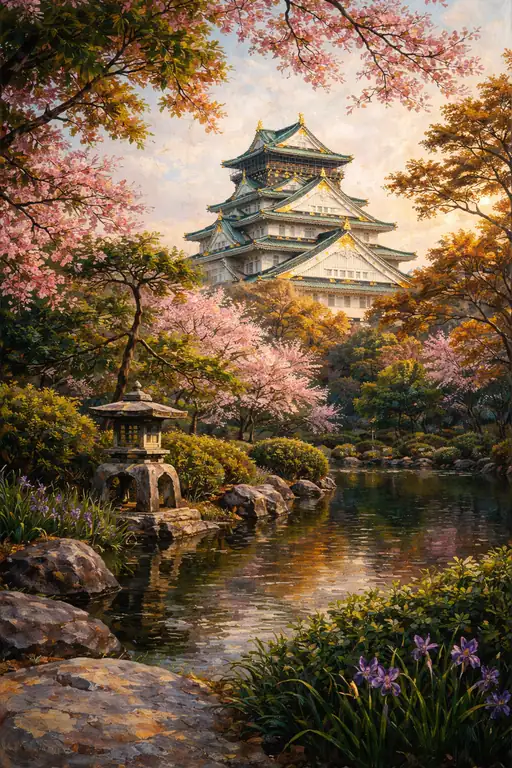 Spring's Golden Vigil Over the Castle
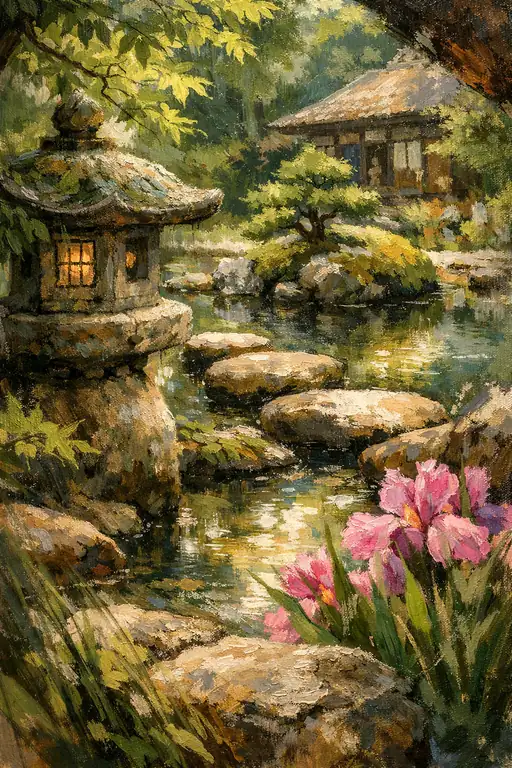 Whispers of Summer in the Garden
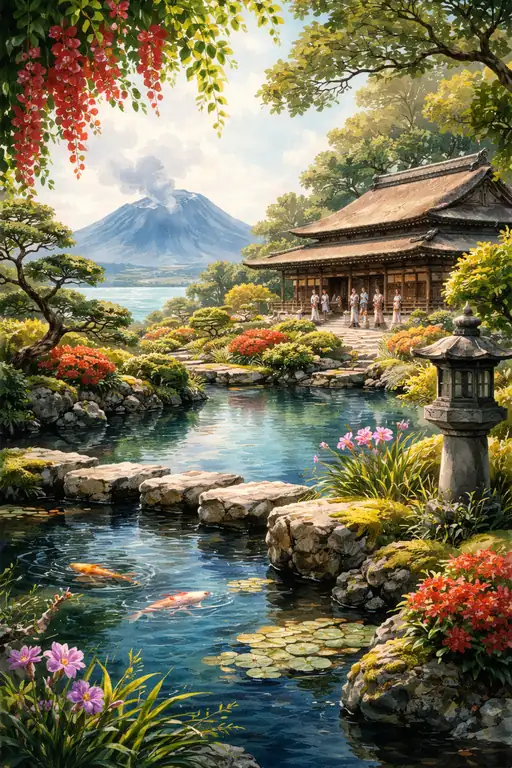 Echoes of Eternity: The Garden and the Volcano
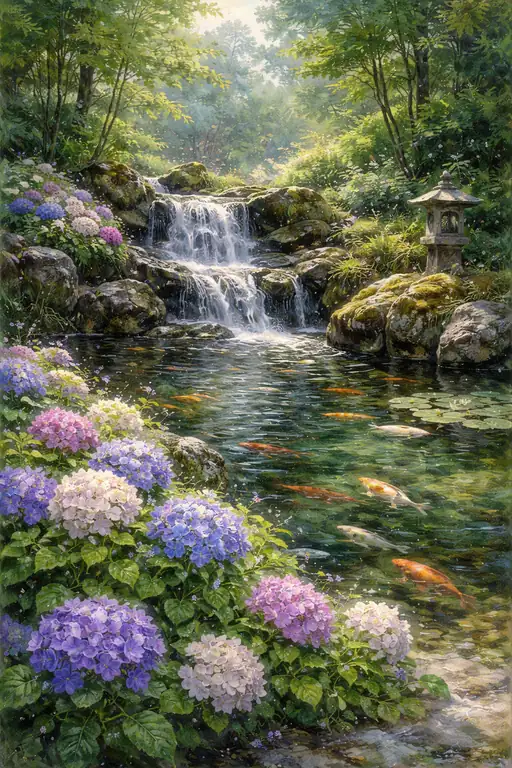 Summer’s Dream in the Koi Pond
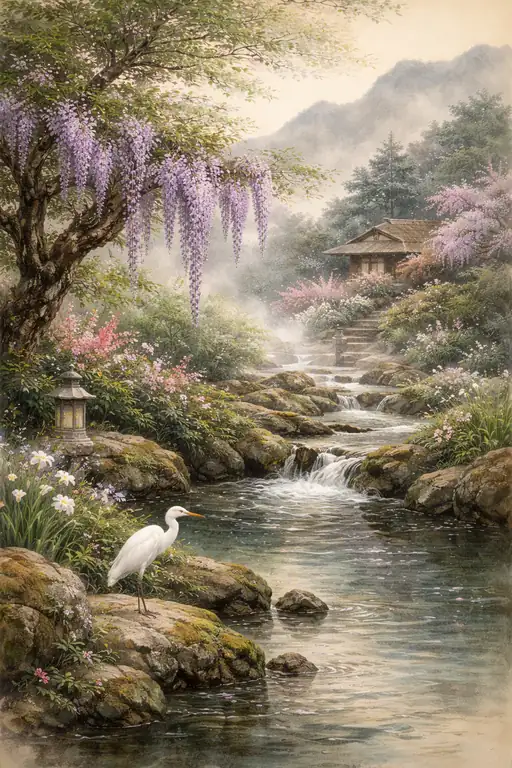 The Serene Breath of the Hidden Stream
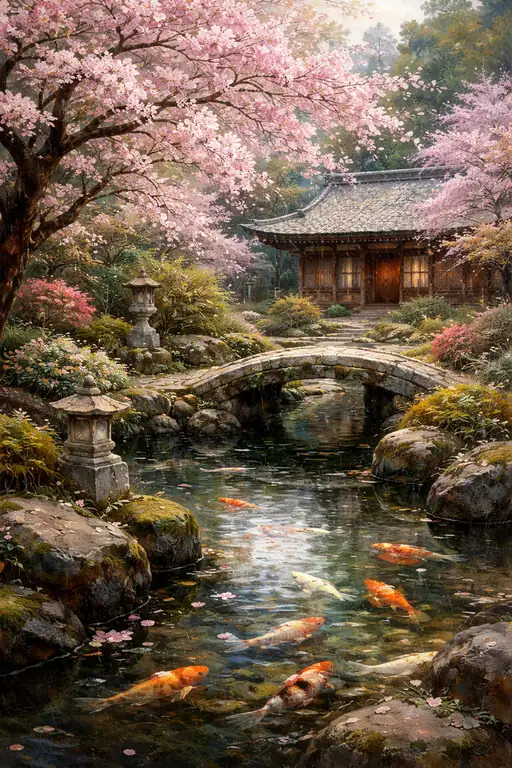 Reflections in the Koi Pond
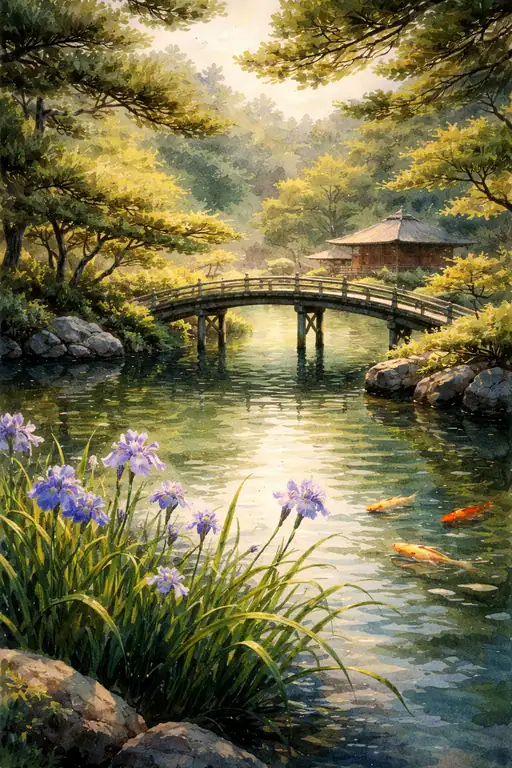 Whispers of the Golden Pond
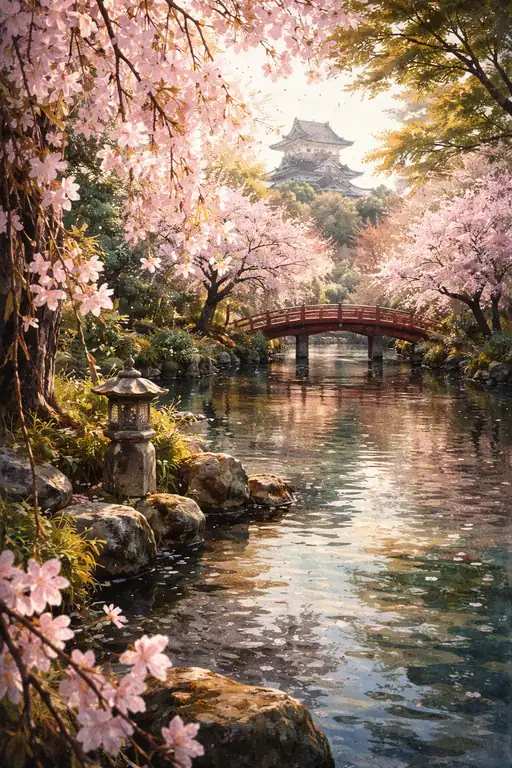 Echoes of Spring by the Crimson Bridge
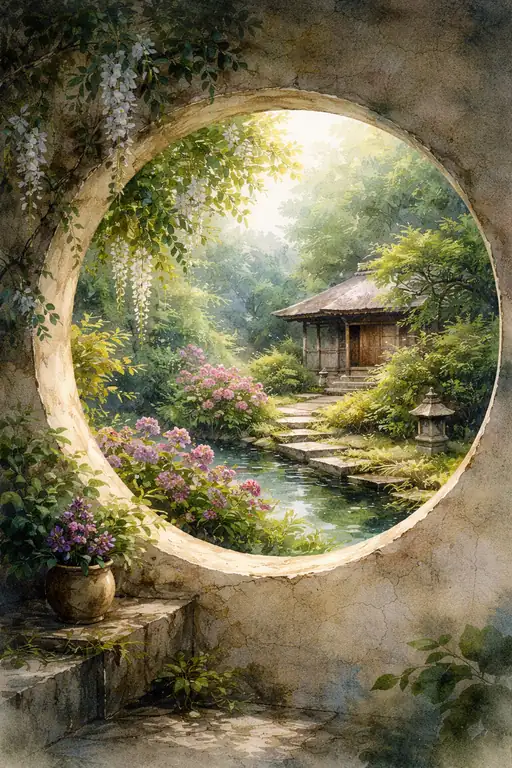 The Moon Window’s Quiet Embrace of the Sleeping Garden