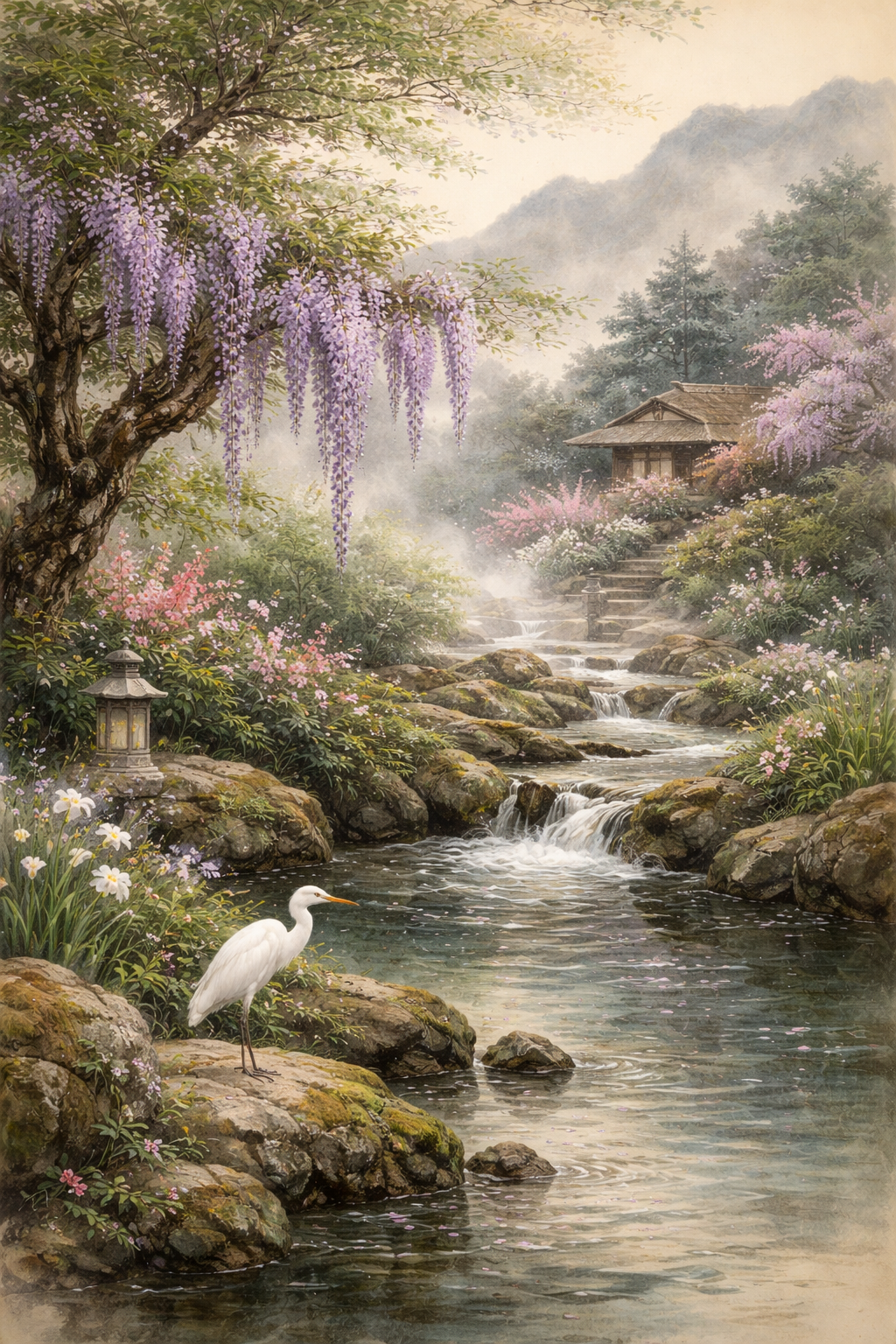
The Serene Breath of the Hidden Stream
Critique
1. Introduction This painting presents a lyrical and harmonious vision of a traditional Japanese garden, capturing the essence of spring's delicate beauty. The scene is centered around a cascading mountain stream that meanders through a landscape of blossoming trees and misty peaks. This work invites the viewer into a state of contemplative peace, celebrating the refined aesthetics of nature in balance. 2. Description In the foreground, an elegant white egret stands poised on a moss-covered rock beside the clear water. To the left, a mature tree is draped with long clusters of purple wisteria, while a weathered stone lantern sits among the flora. The middle ground features small waterfalls and rocky pools, leading the eye toward a traditional thatched-roof cottage on the hillside. Flowering trees with soft pink blossoms and distant, fog-shrouded mountains complete the tranquil scene. 3. Analysis The artist employs a soft and airy color palette dominated by pastel purples, pinks, and greens, effectively conveying the freshness of the season. The use of atmospheric perspective, with mountains receding into a pale mist, creates a sense of depth and vastness. The composition follows a gentle S-curve formed by the stream, providing a dynamic yet soothing flow. Meticulous detail in the rendering of the water's surface and flower petals demonstrates exceptional technical precision. 4. Interpretation and Evaluation This work can be interpreted as a poetic expression of the appreciation for the fleeting beauty of nature. The garden represents a carefully cultivated paradise where every element is designed for spiritual harmony. The painting is highly successful in its ability to evoke a sense of timelessness and serenity. The integration of architecture into the natural landscape is particularly well-executed, suggesting a humble and respectful human presence within the wilder elements. 5. Conclusion Ultimately, the painting serves as a masterful tribute to the enduring allure of the Japanese landscape tradition. While the initial impression is one of idyllic charm, closer observation reveals a sophisticated understanding of balance and spatial arrangement. The work successfully captures the quiet majesty of the natural world, leaving the viewer with a lasting feeling of tranquility and a deep appreciation for the artistry of the garden.
Same Subcategory
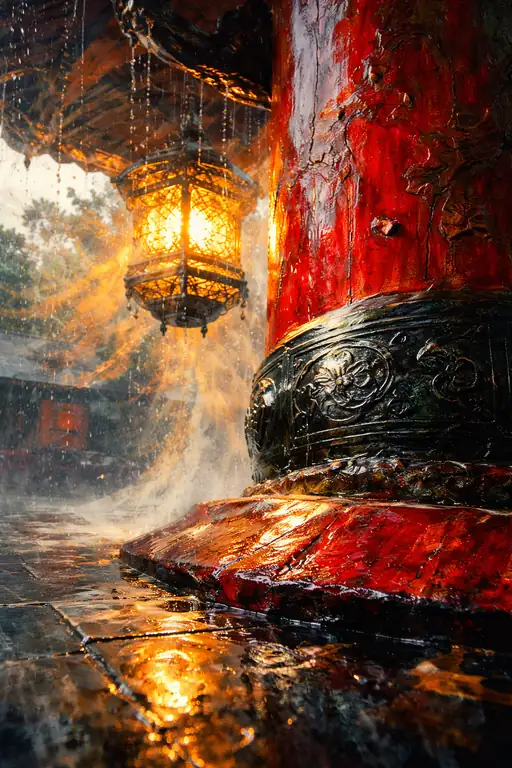 A Warm Glow Cutting Through the Tears of the Evening Rain
Similar Artworks
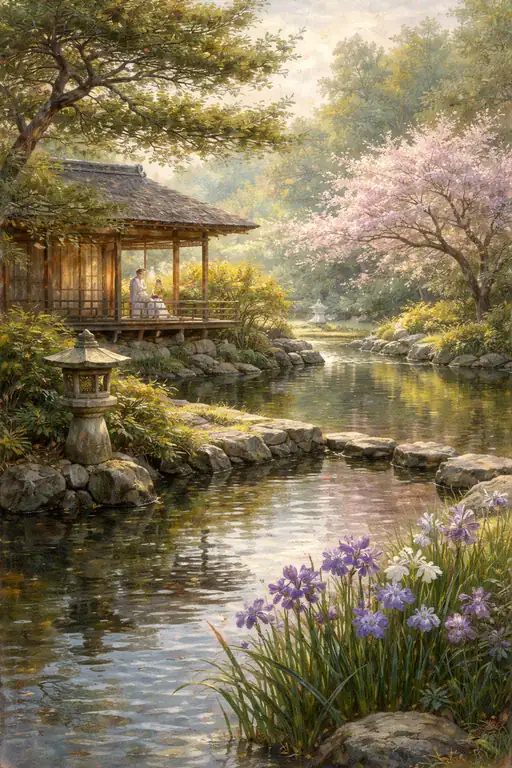 Sighs of the Sunlit Moss
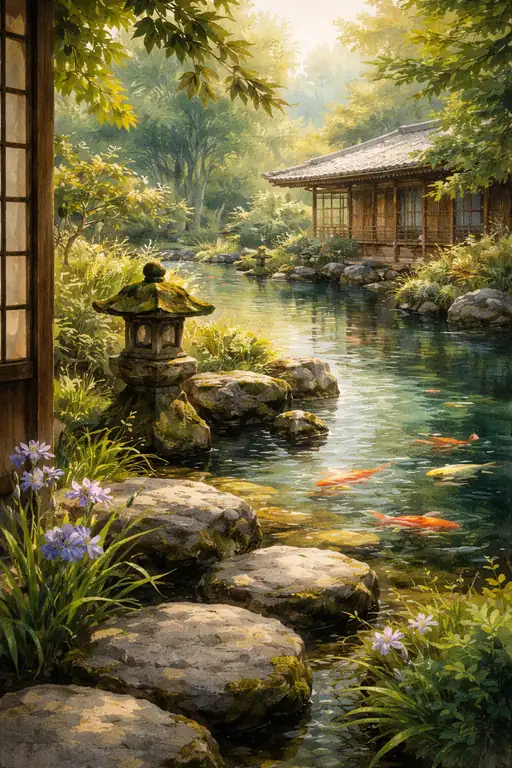 The Gentle Pulse of Stillness
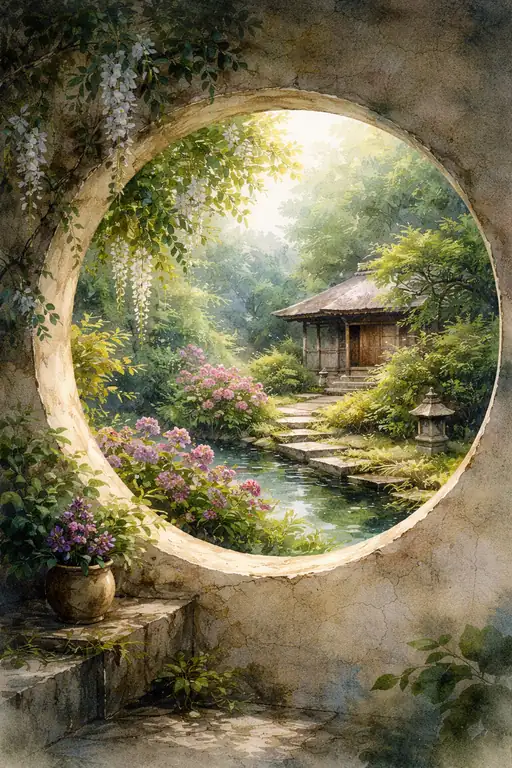 The Moon Window’s Quiet Embrace of the Sleeping Garden
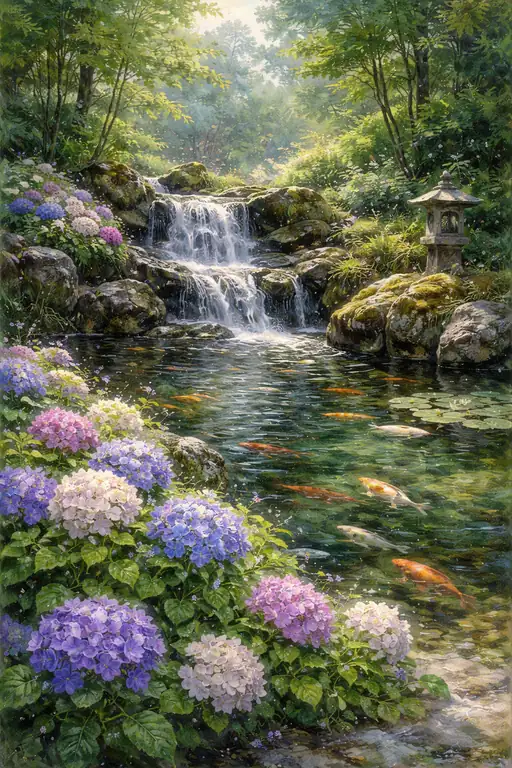 Summer’s Dream in the Koi Pond
 Where the Spring Breeze Lingers
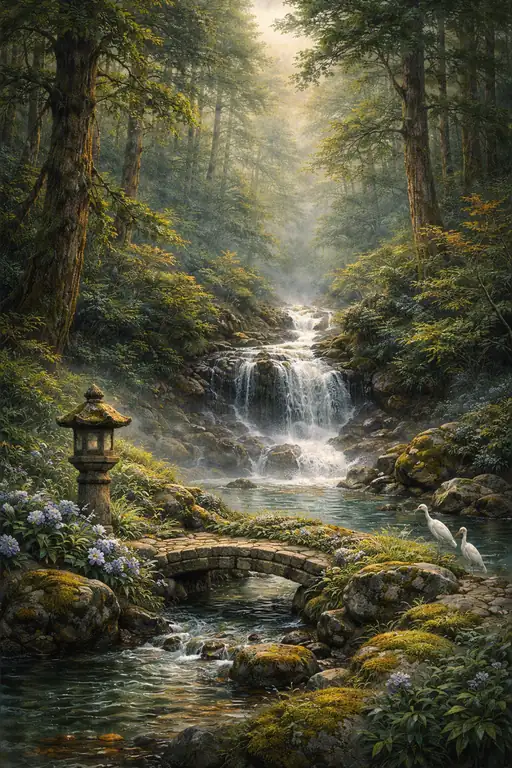 Sanctuary of the Emerald Stream
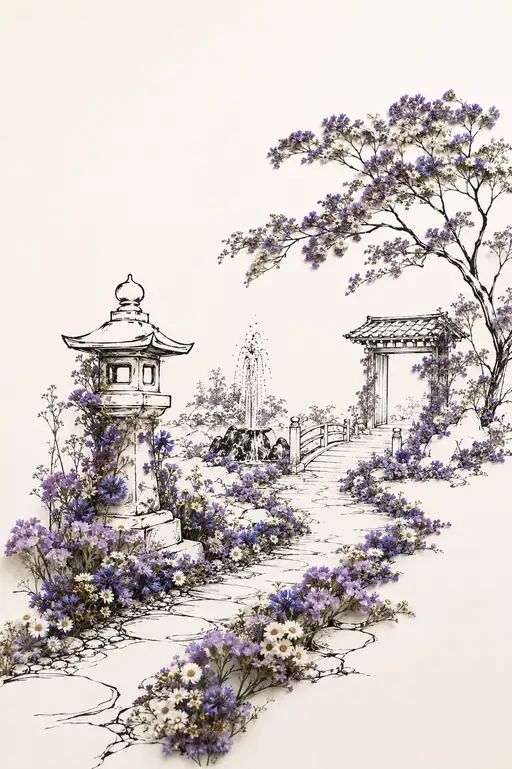 Stepping Stones Through the Violet Zen
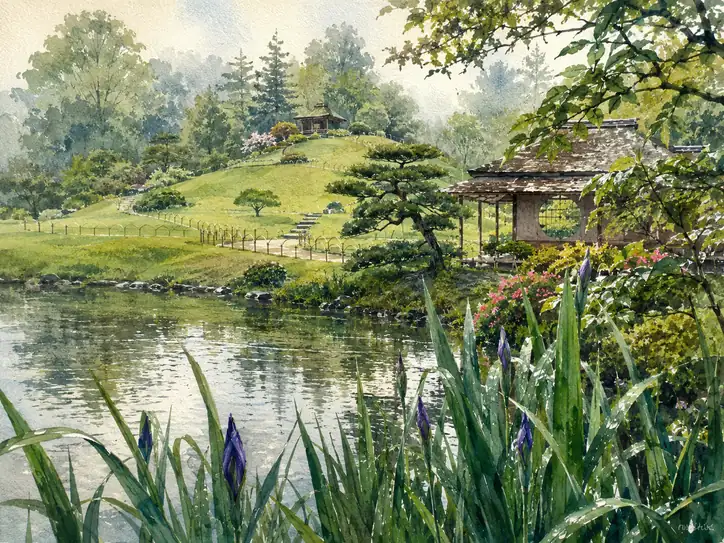 The Garden's Silent Breath
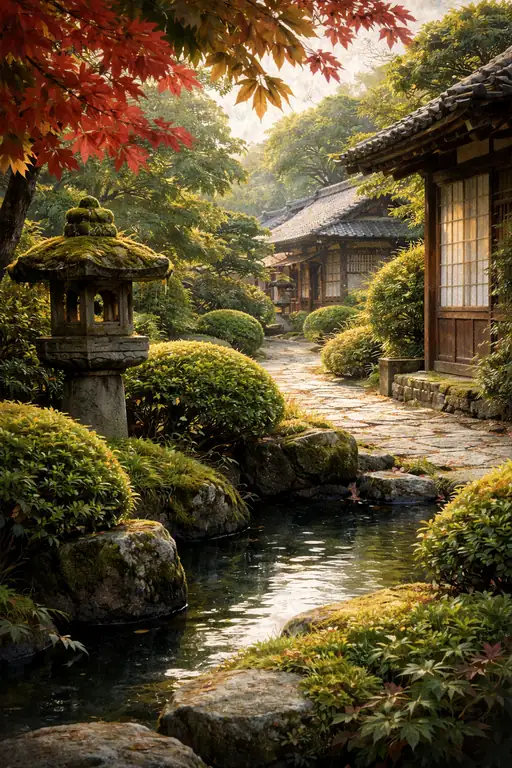 Autumn's Quietude: Reflections of a Timeless Garden
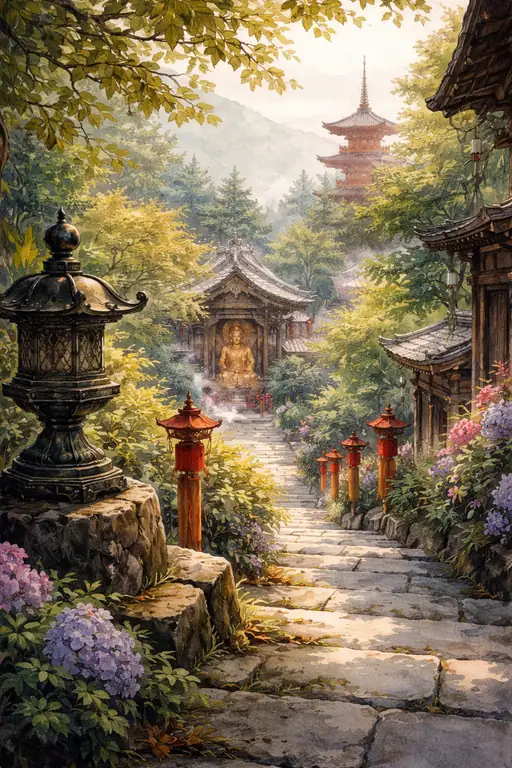 A Journey Toward the Light