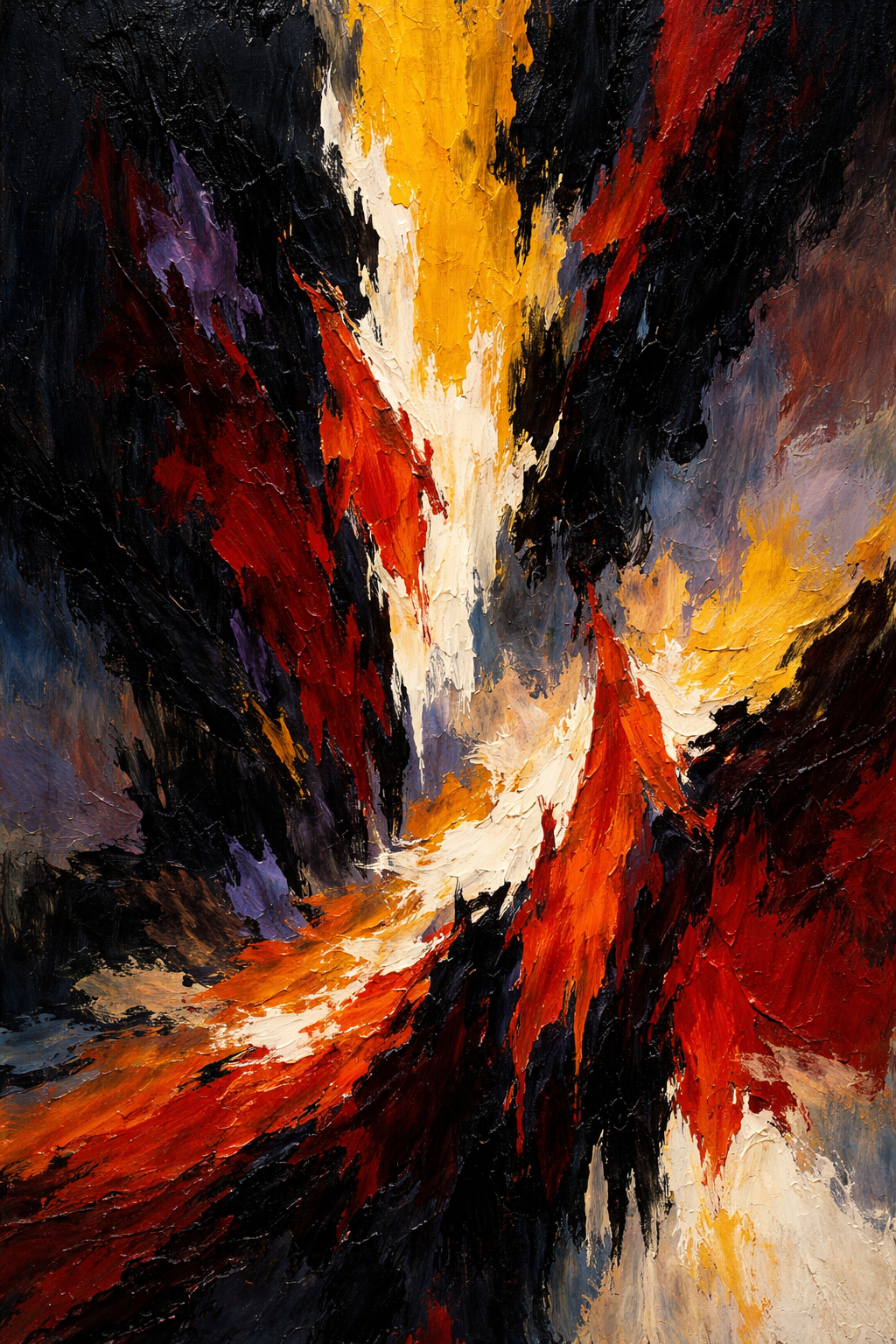
Symphony of Chaos and Color
Critique
1. Introduction This abstract expressionist work features a dynamic explosion of color and texture against a dark, dramatic background. The composition is characterized by sharp, angular forms that suggest movement and intense energy. The artist utilizes thick impasto techniques to create a physical presence that transcends traditional two-dimensional representation. 2. Description The painting is dominated by bold strokes of crimson red, bright yellow, and intense orange that appear to radiate from the center toward the edges. These vibrant tones are countered by deep blacks and dark purples that fill the periphery, creating a powerful sense of depth. The surface is heavily textured, with visible ridges and peaks of paint that catch the light and create natural shadows within the work itself. 3. Analysis The composition is built on a series of diagonal lines and jagged shapes, which contribute to a feeling of chaotic yet intentional motion. The high contrast between the luminous central colors and the surrounding darkness creates a focal point that draws the viewer's eye immediately to the core of the action. The use of a palette knife is evident in the broad, flat planes of color that overlap and intersect throughout the canvas. 4. Interpretation and Evaluation The work can be interpreted as a visual representation of raw emotion or a cosmic event, such as the birth of a star. The artist's mastery of texture and color intensity allows the piece to communicate a sense of power and vitality. The deliberate balance between the expansive warm tones and the restrictive dark background suggests a struggle between creation and void. The overall execution is confident, showing a high degree of control over a medium that often appears spontaneous. 5. Conclusion While the painting may initially seem like a random assortment of colors, it reveals a highly structured and energetic composition upon closer viewing. It successfully captures the essence of abstract expressionism by prioritizing the physical act of painting and the emotional impact of color. The piece ultimately stands as a testament to the evocative power of non-representational art in conveying complex internal states.
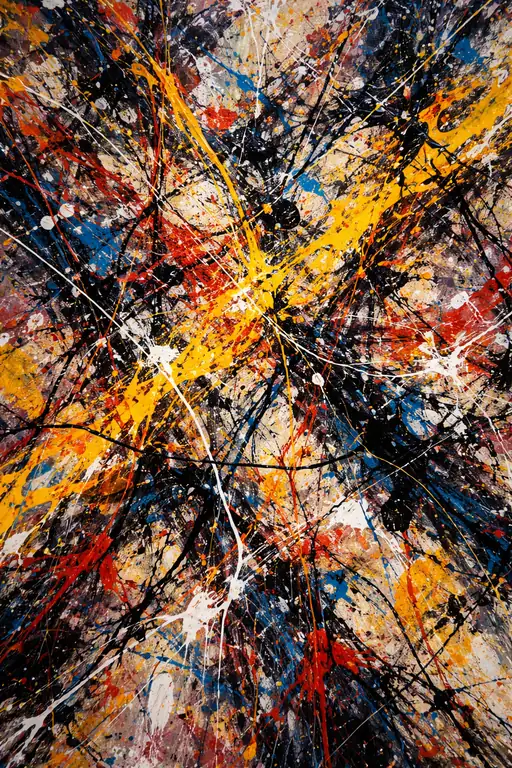 Pulse of the Chromatic Abyss
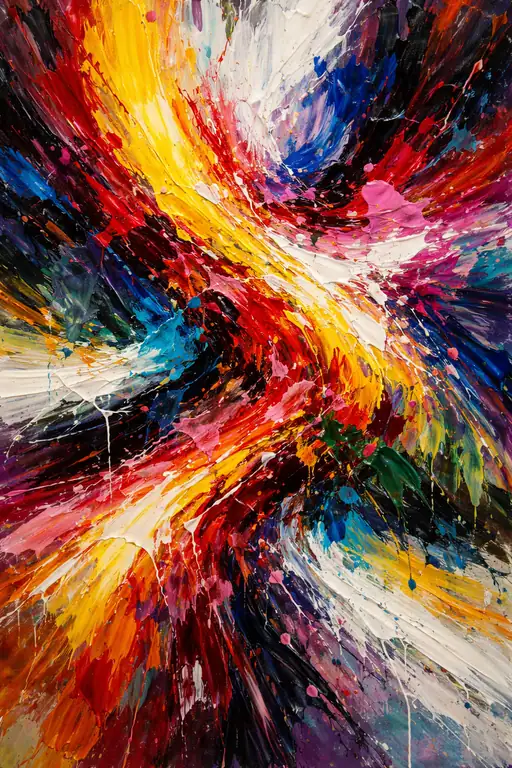 Vortex of the Soul's Palette
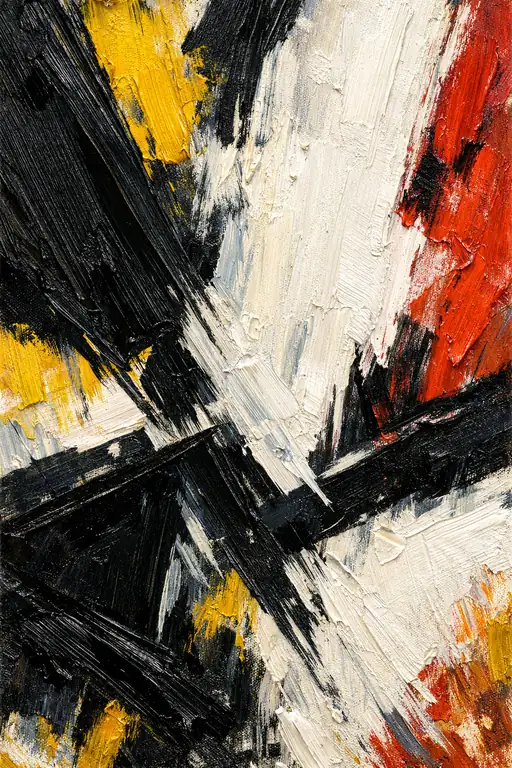 Echoes of Crimson and Gold
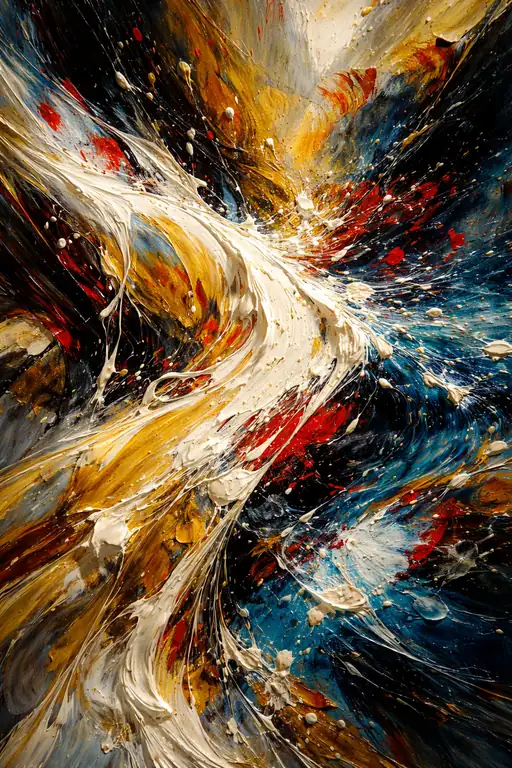 Dynamic Explosion of Energy
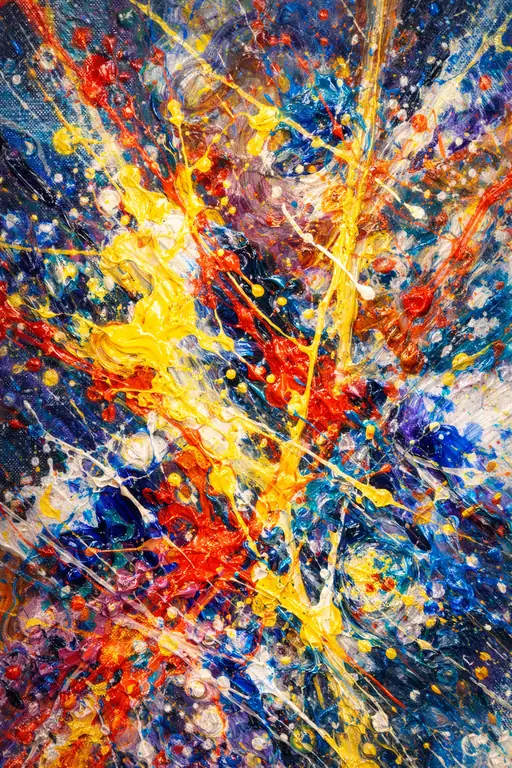 Chaos in Vibrant Hues
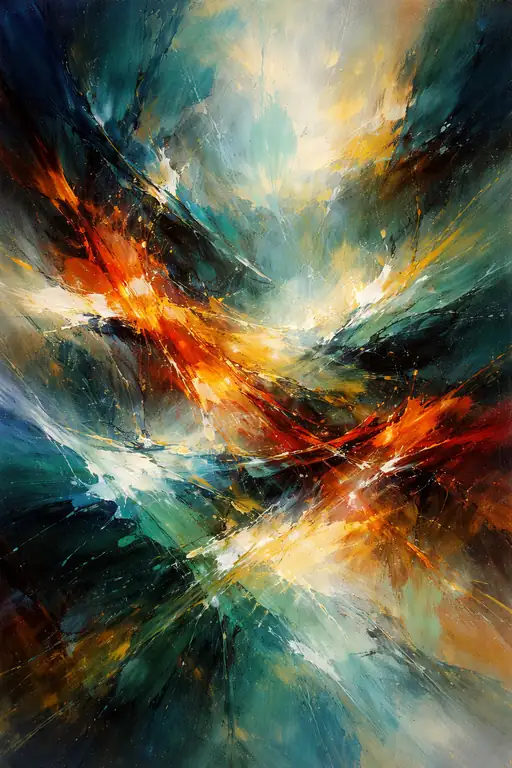 Collision of Flames in the Void
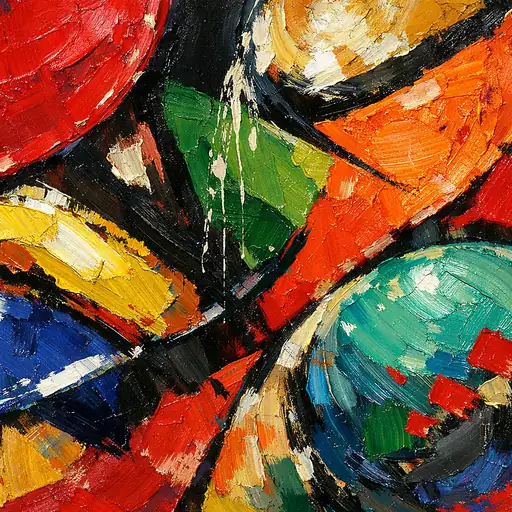 Tears and Tides of Time
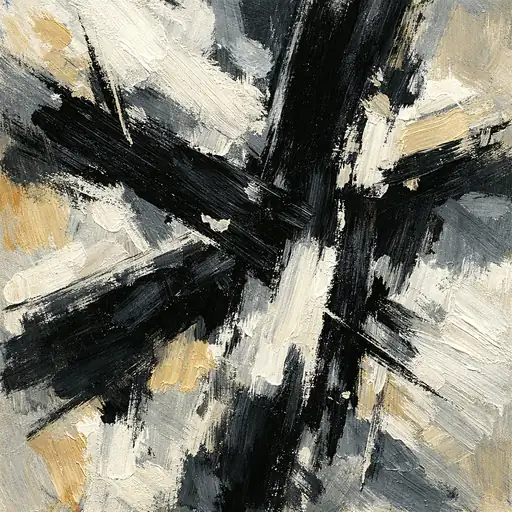 Echoes of a Shattered Soul
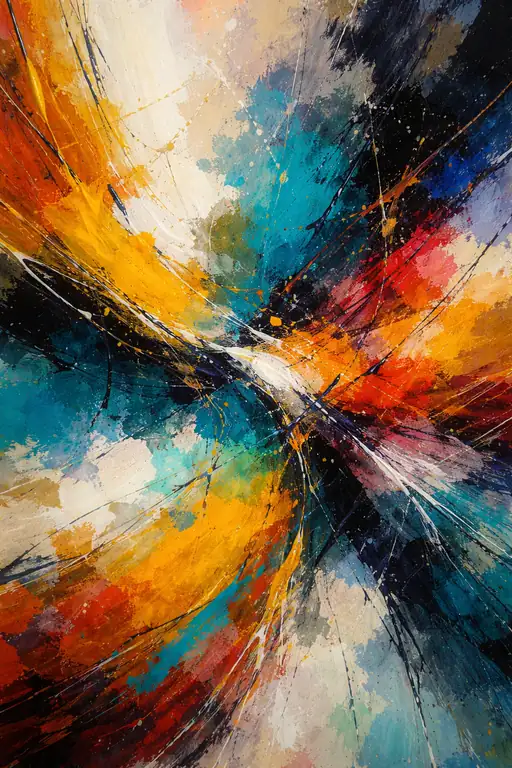 Explosion of Vitality
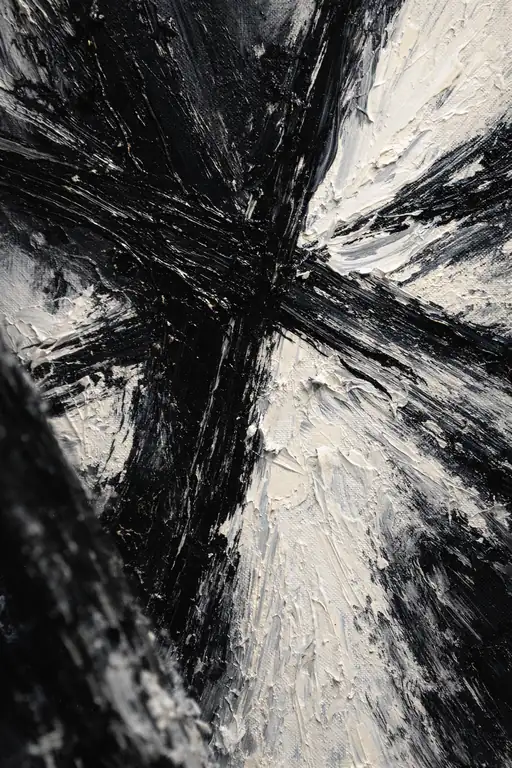 Silence in Monochrome
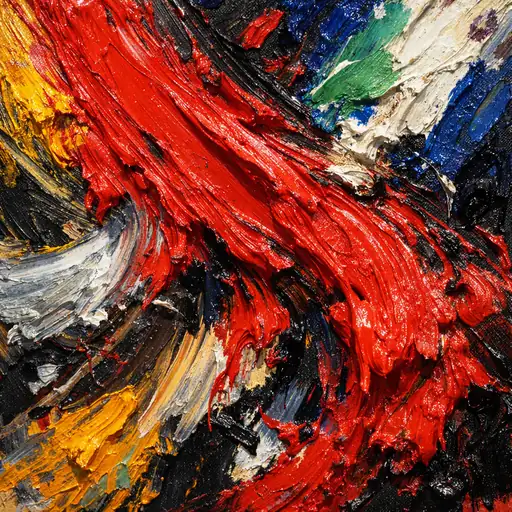 The Pulse of Chaos