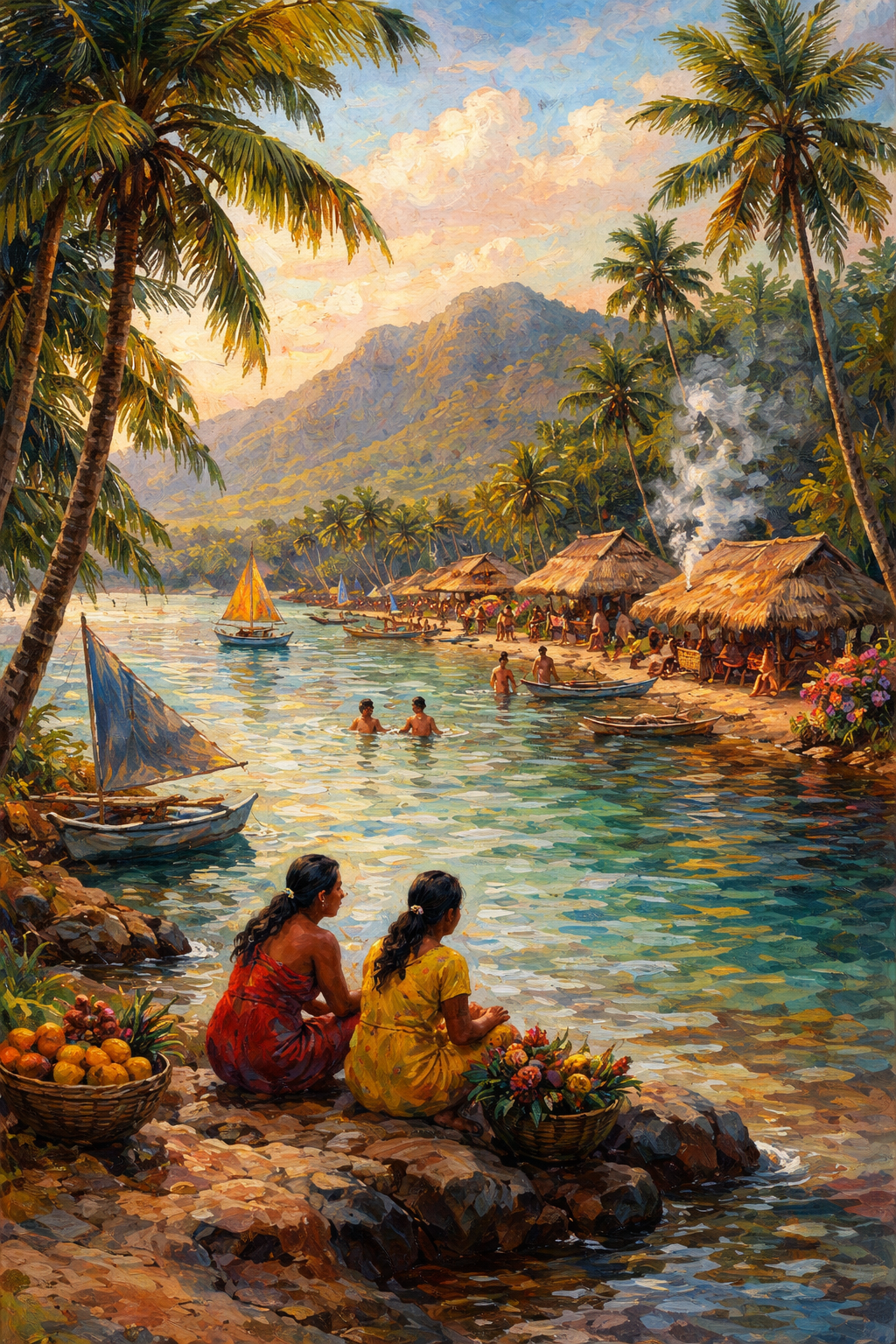
Lagoon of the Whispering Palms
Critique
1. Introduction This oil painting presents a vibrant and idyllic scene of life in a tropical coastal village. The work captures a harmonious moment where human activity and natural beauty coexist in a lush, sun-drenched environment. Through its rich palette and expressive brushwork, the painting evokes a sense of timeless tranquility and the cultural vitality of island life. 2. Description In the foreground, two women in colorful traditional attire sit on dark rocks by the water’s edge, looking toward the center of the composition. They are accompanied by baskets overflowing with tropical fruits and flowers. The middle ground features a clear turquoise lagoon where figures are swimming and navigating outrigger canoes and sailboats. On the sandy shore, a village of thatched-roof huts is bustling with people, set against a backdrop of towering palm trees and a verdant mountain peak under a warm, glowing sky. 3. Analysis The artist employs a post-impressionistic style characterized by bold, rhythmic brushstrokes and a highly saturated color palette. Dominant hues of golden yellow, deep red, and vibrant turquoise create a strong visual impact and convey the intensity of tropical light. The composition uses the rocky shoreline in the foreground as an anchor, while the vertical lines of the palm trees and the triangular shape of the mountain provide structural balance and depth. 4. Interpretation and Evaluation The work succeeds in portraying a romanticized yet deeply felt vision of a Pacific paradise. By placing the two women in the foreground as observers, the artist invites the viewer to share in their quiet contemplation of the communal activities on the water. The integration of domestic details, such as the fruit baskets, with the grand scale of the landscape demonstrates a masterful ability to balance intimate and epic elements. 5. Conclusion Through this lush depiction of island life, the painting celebrates the enduring beauty of tropical nature and the resilience of traditional communities. The initial impression of exotic splendor matures into an appreciation for the work’s formal cohesion and its evocative power. It is a significant example of how color and texture can be used to construct a narrative of peace and abundance.
Same Subcategory
 Path of the Sunlit Bloom
 Farewell to the Golden Port
Similar Artworks
 Where the Sky Melts into the Emerald Sea
 Whispers of the Turquoise Wave
 The Sentinel of the Turquoise Lagoon
 Embrace of the Sapphire Horizon
 Crimson Blooms on the Golden Edge
 Whispers of the Aegean Sunset
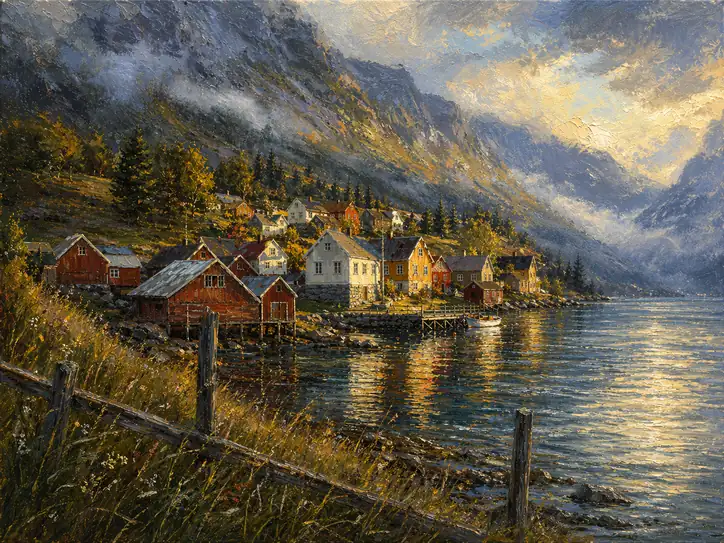 Village at the Base
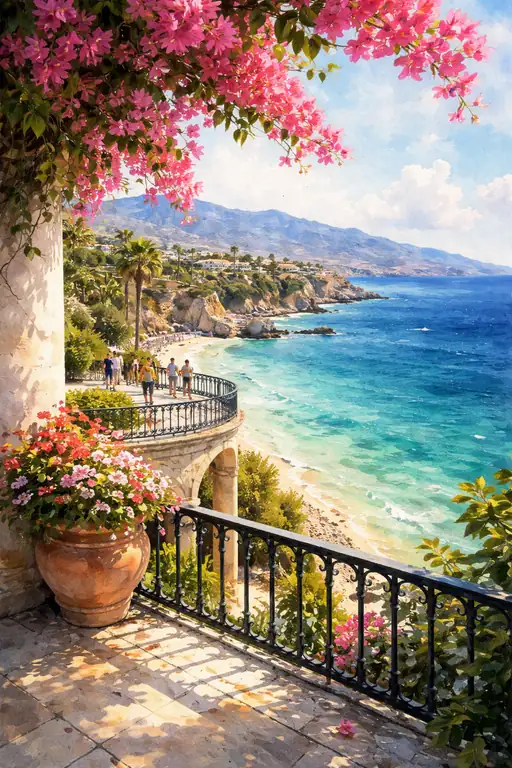 Balcony Over the Sapphire Sea
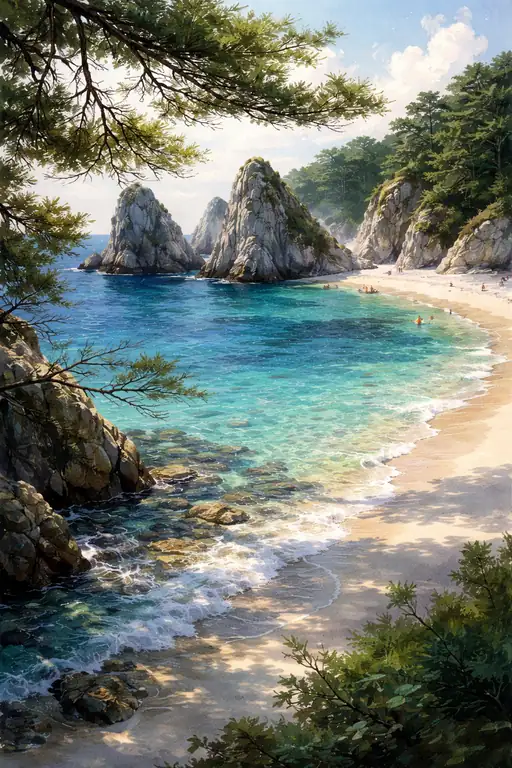 Summer Radiance: The Turquoise Coast
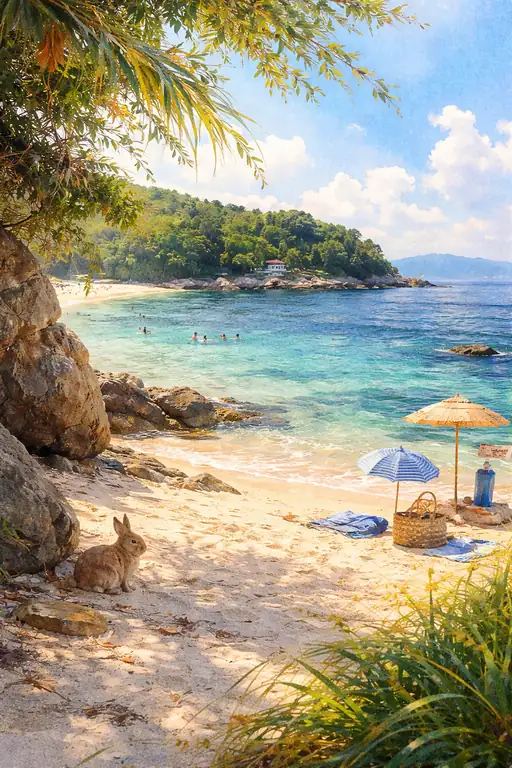 The Secret Shore