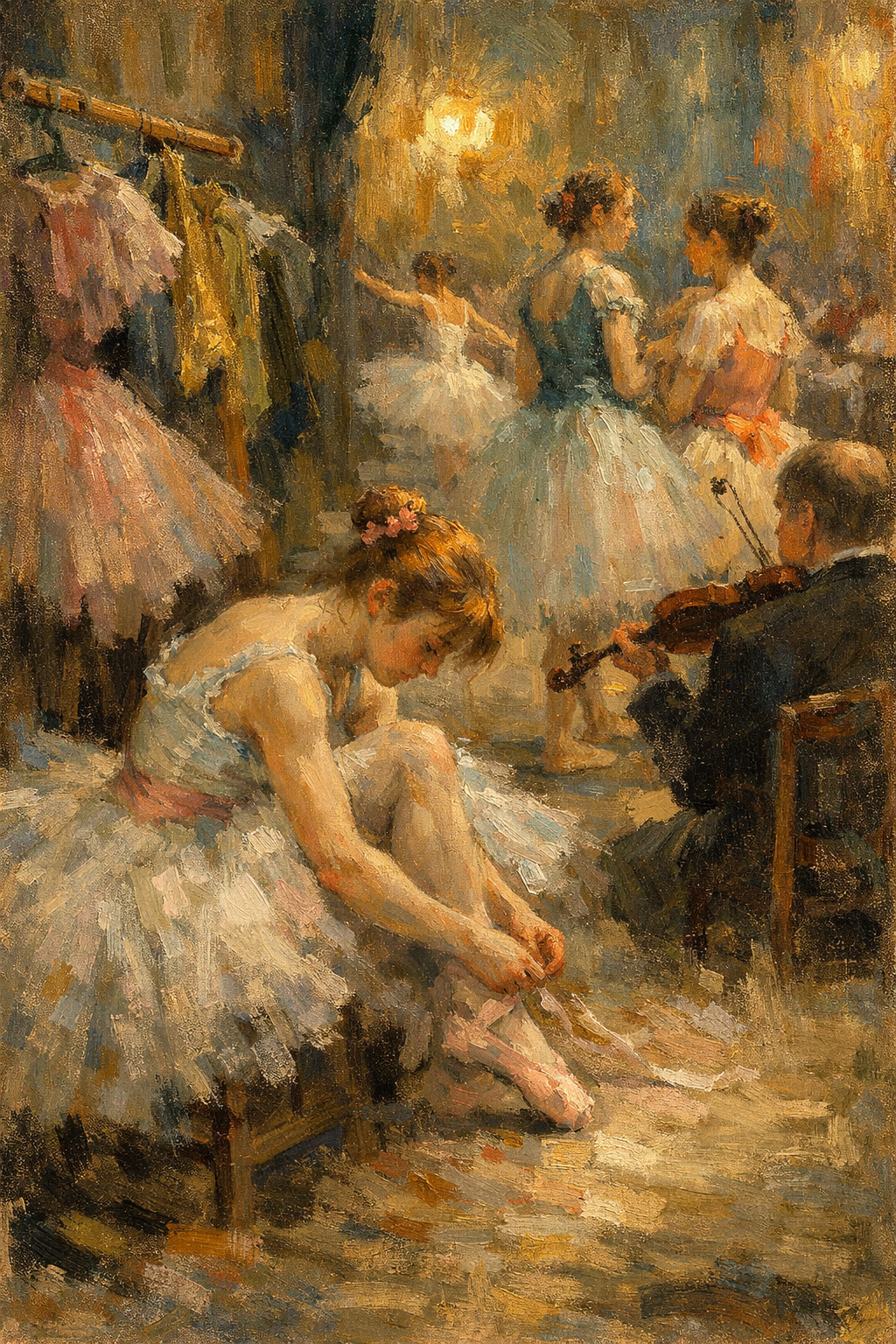
Silent Grace in the Shadows
Critique
1. Introduction The painting captures an intimate and quiet moment within the backstage area of a theater, focusing on a group of ballerinas in various states of preparation. In the foreground, a seated dancer meticulously adjusts her pointe shoes, while other figures and a musician occupy the dimly lit space behind her. This work effectively portrays the intersection of private concentration and the collaborative atmosphere of a performing arts environment. 2. Description The primary subject is a ballerina in a white tutu situated in the lower-left foreground, her body angled as she leans over her foot. To the right, a violinist is seated, his back to the viewer as he appears to be practicing or tuning his instrument. The background features several other dancers in light blue and white costumes, standing under a warm, glowing light source that illuminates the upper-central portion of the canvas. Costumes are also visible hanging on a rack at the far left, adding to the cluttered reality of the scene. 3. Analysis The artist employs an impressionistic technique characterized by broad, visible brushstrokes that prioritize light and texture over sharp detail. A warm, golden light dominates the upper half of the composition, contrasting with the cooler tones and shadows in the lower areas. The diagonal arrangement of the foreground dancer and the violinist creates a sense of depth, leading the eye toward the figures in the background. The varied textures of the fabric tutus are rendered through rhythmic impasto strokes, giving the scene a vibrant, tactile quality. 4. Interpretation and Evaluation This work offers a compelling look at the labor and discipline behind the elegance of a ballet performance. The choice to depict the backstage area instead of the stage itself emphasizes the humanity and preparation required for artistic excellence. The painting demonstrates strong technical skill in its handling of light and atmospheric perspective, creating a space that feels both expansive and personal. The balance between the solitary focus of the foreground dancer and the presence of the ensemble provides a nuanced narrative of the performer's life. 5. Conclusion While the initial impression is one of chaotic backstage activity, a closer examination reveals a harmonious study of dedication and light. The artist succeeds in transforming a routine moment of preparation into a dignified and evocative exploration of the arts. It is a masterful depiction of the quiet intervals that precede the public spectacle of the dance.
Same Subcategory
Similar Artworks
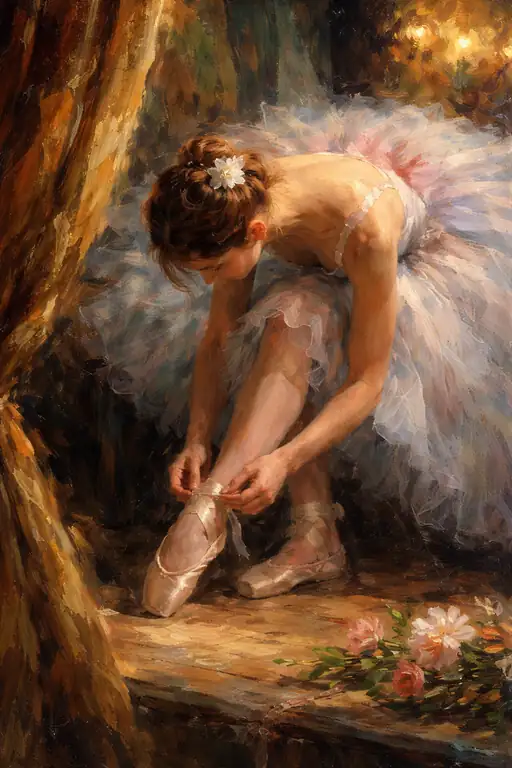 A Moment of Grace in the Shadows
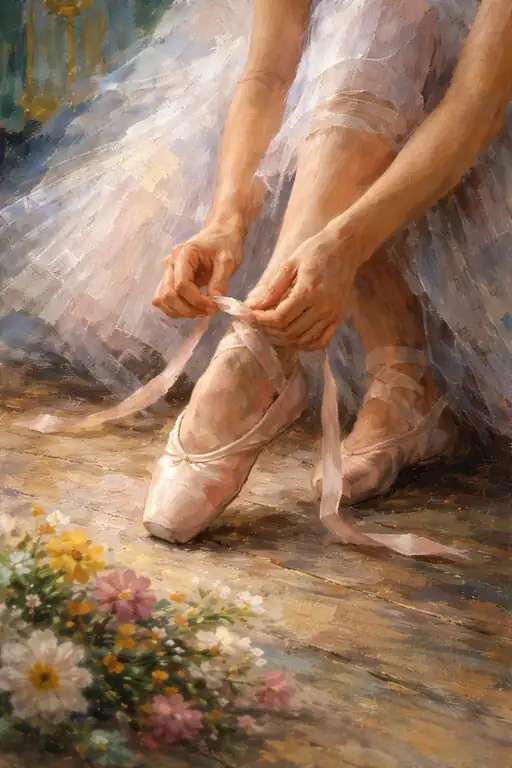 Whispers Before the Curtain
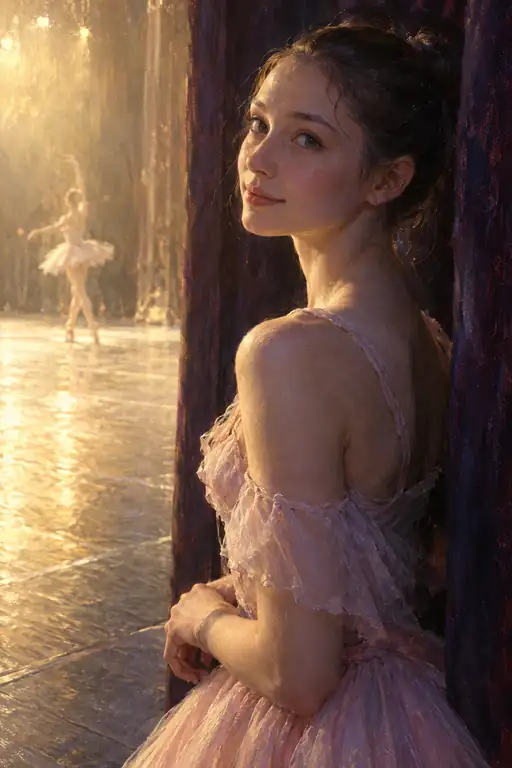 Breath in the Velvet Shade
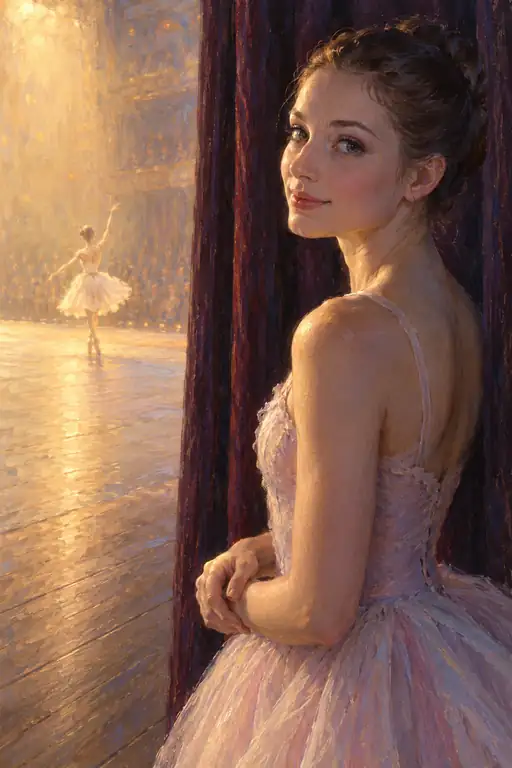 Just Before the Light Unfolds
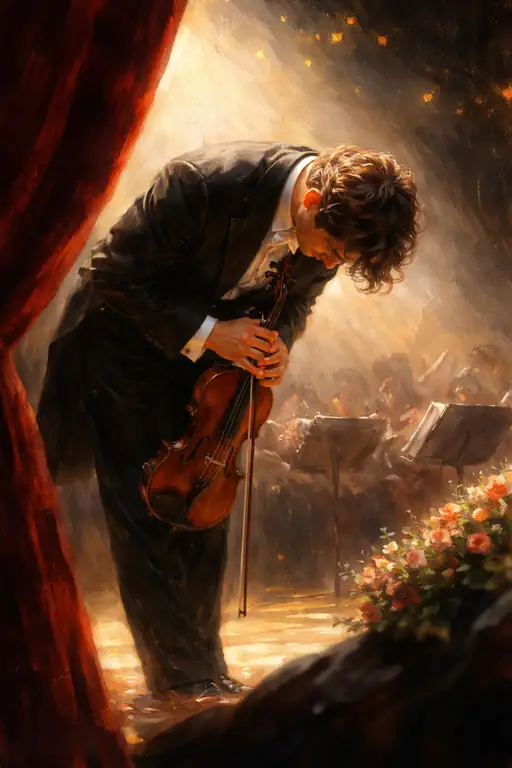 A Maestro's Humble Bow in the Spotlight
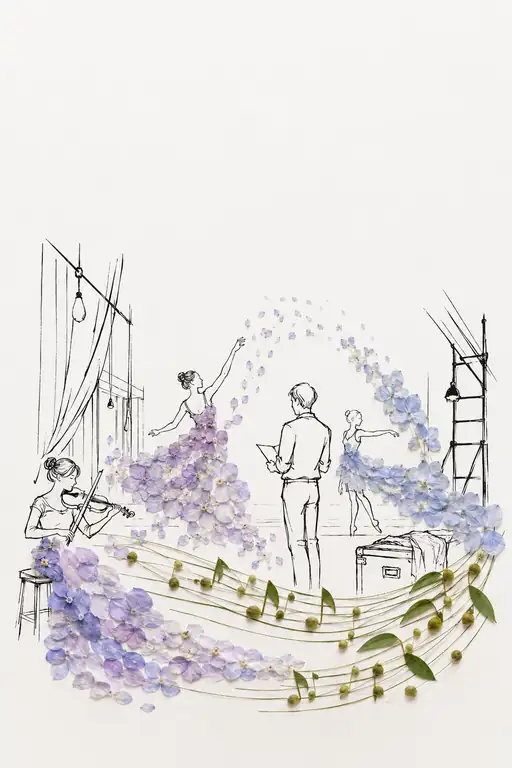 Rehearsal of Blossoms and Melodies
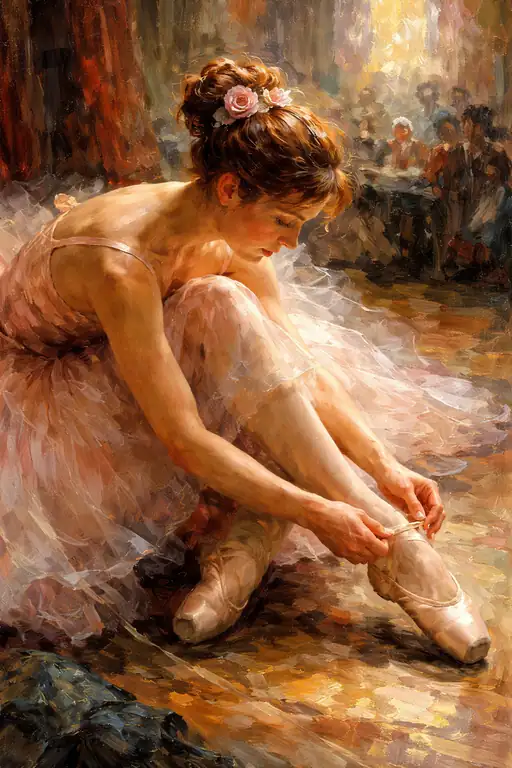 Whispers Before the Curtain Rises
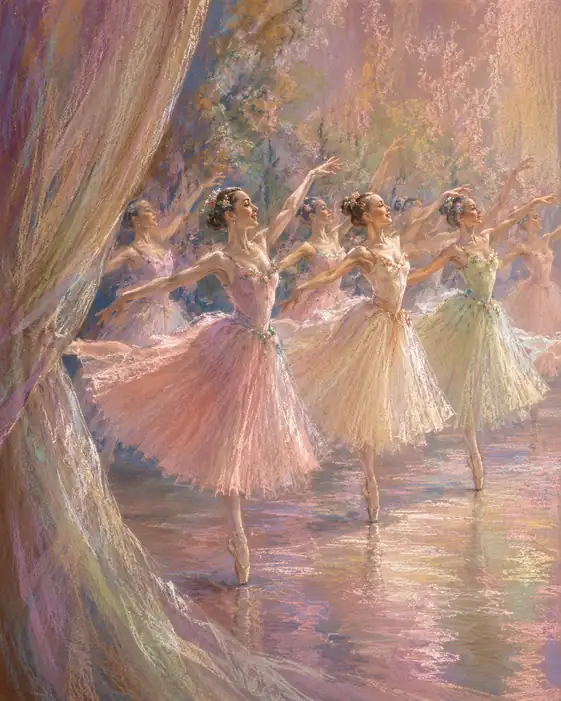 Whispers from the Wings
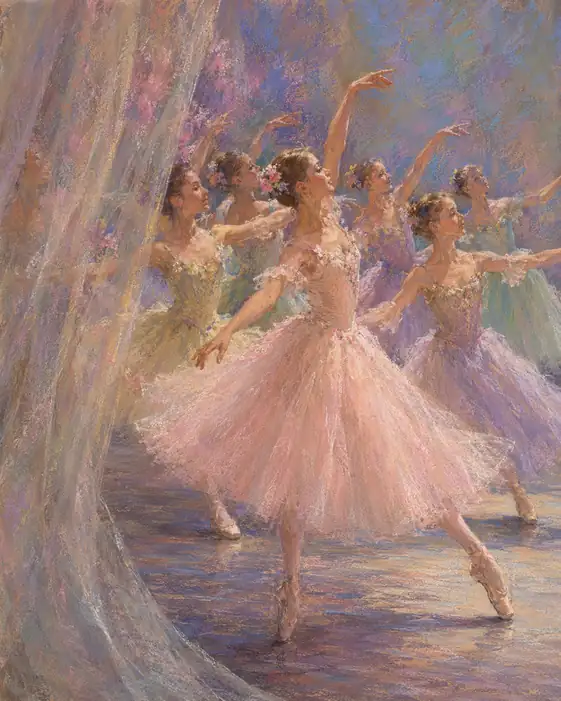 A Waltz in the Fleeting Light
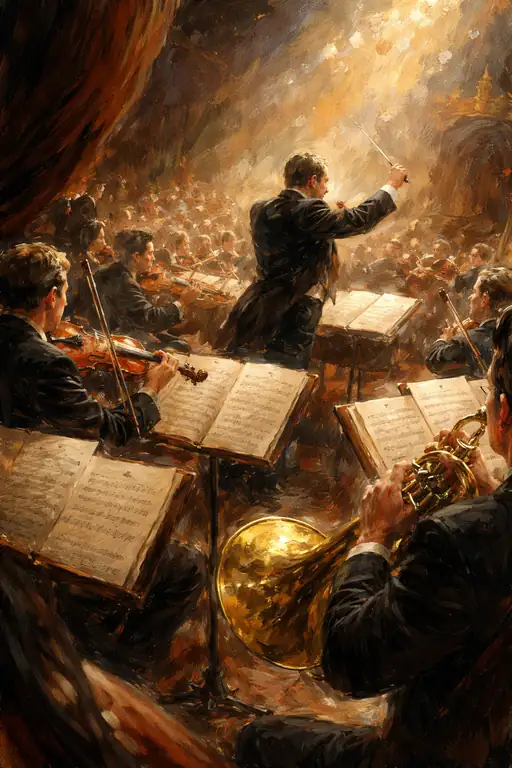 The Golden Crescendo