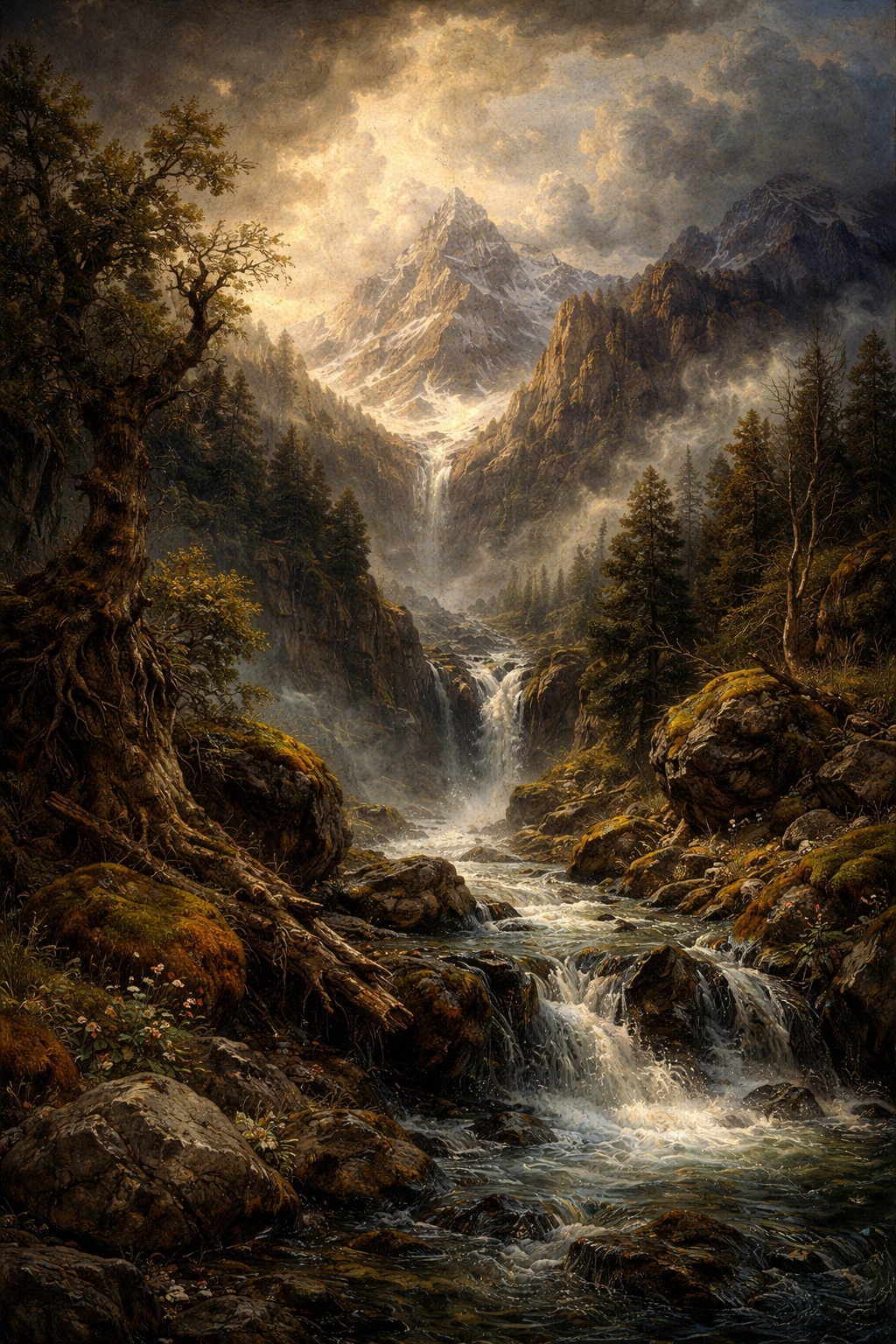
Eternal Roots at the Roaring Summit
Critique
1. Introduction This vertical landscape painting presents a majestic mountain peak that dominates the composition, framed by a dense forest and a cascading stream. The work captures a moment of dramatic natural transition, where light and shadow play across a complex geological and botanical landscape. 2. Description A central, snow-capped peak is illuminated by sunlight breaking through heavy, turbulent clouds, creating a brilliant focal point. Below the mountain, a thin waterfall descends into a rugged valley, feeding a turbulent stream that flows over jagged rocks in the foreground. On the left side, a massive, gnarled tree with exposed, skeletal roots stands as a silent observer to the rushing water. 3. Analysis The composition utilizes a strong vertical axis that leads the eye from the dark, detailed textures of the foreground rocks and tree roots up to the radiant mountain summit. The artist employs a rich palette of earthy browns, mossy greens, and deep ochres, contrasted sharply against the brilliant whites and golds of the sky. The handling of light suggests a late afternoon or early morning hour, enhancing the depth of the valley. 4. Interpretation and Evaluation The painting reflects a deep appreciation for the sublime and untamed aspects of nature, where the permanence of the mountain meets the ephemeral flow of water. The technical execution of the water's mist and the intricate bark of the tree demonstrates a high level of descriptive skill. The balanced composition and atmospheric perspective create a sense of profound solitude and grandeur. 5. Conclusion The initial impression of a chaotic wilderness gradually transforms into a structured study of natural power and light. This landscape serves as a compelling exploration of the intersection between geological stability and the relentless movement of the elements.
Same Subcategory
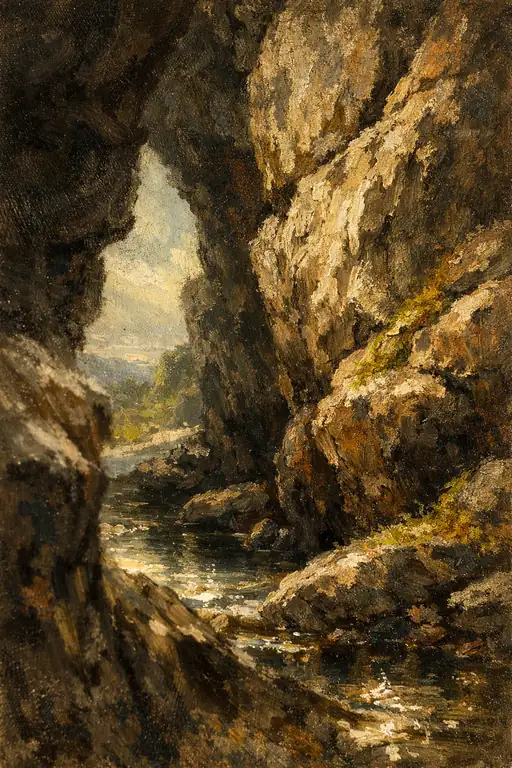 A Glimmer of Hope Through the Monoliths
Similar Artworks
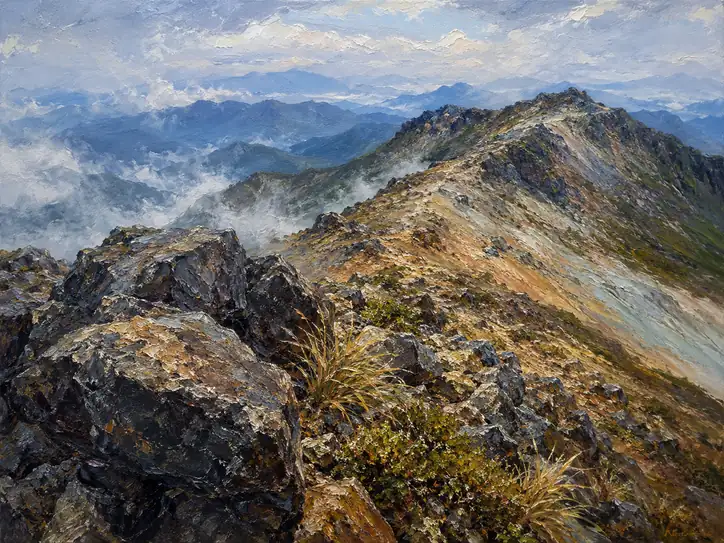 Echoes from the Alpine Crest
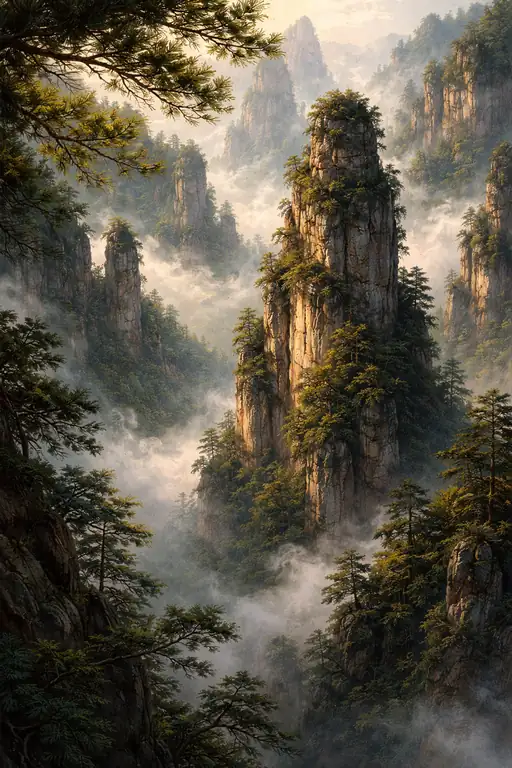 Eternal Pillars in the Mist
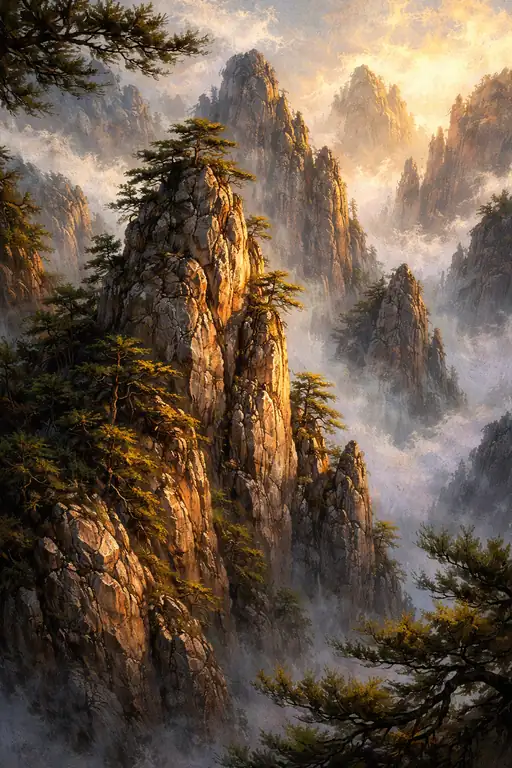 Pines Anchored in Golden Mist
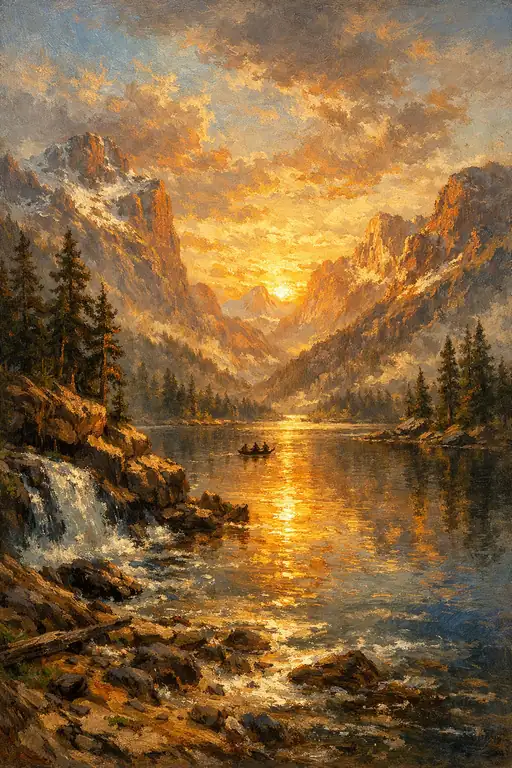 Golden Embers of the Wild Valley
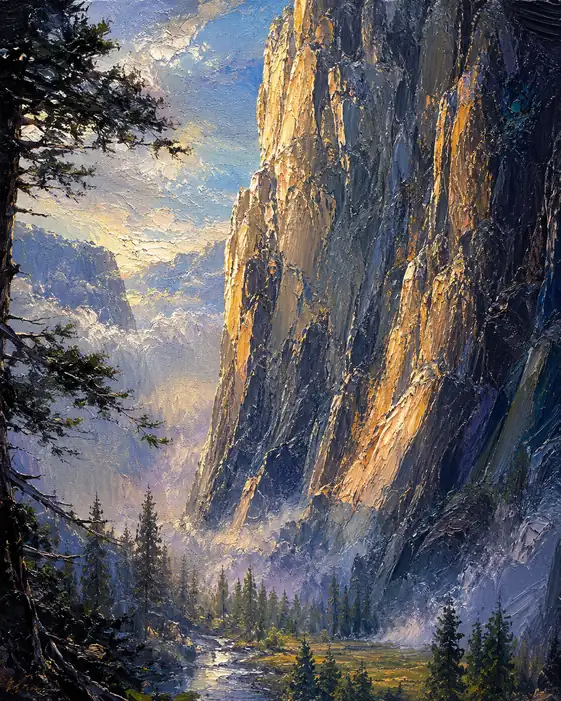 Eternal Sentinel in Gold
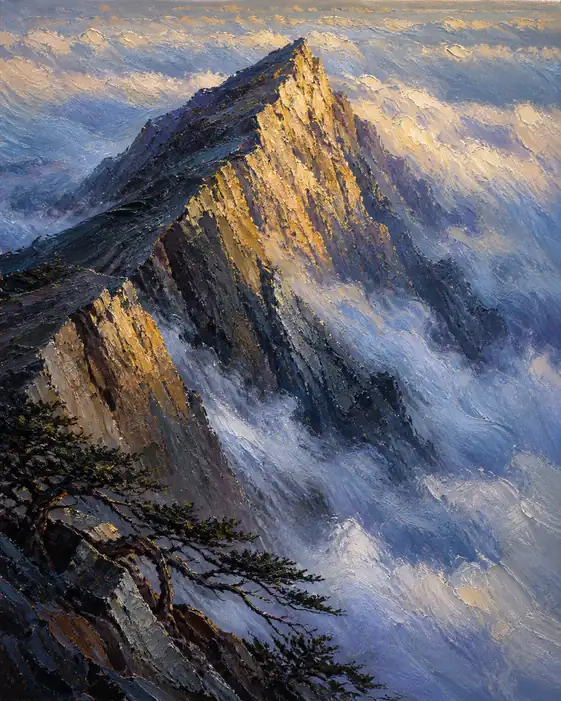 Sovereign of the Sea of Clouds
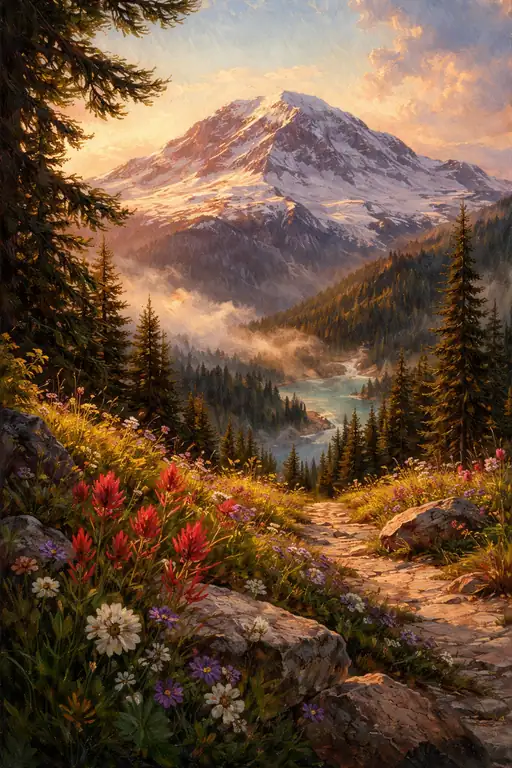 Path to the Alpine Splendor
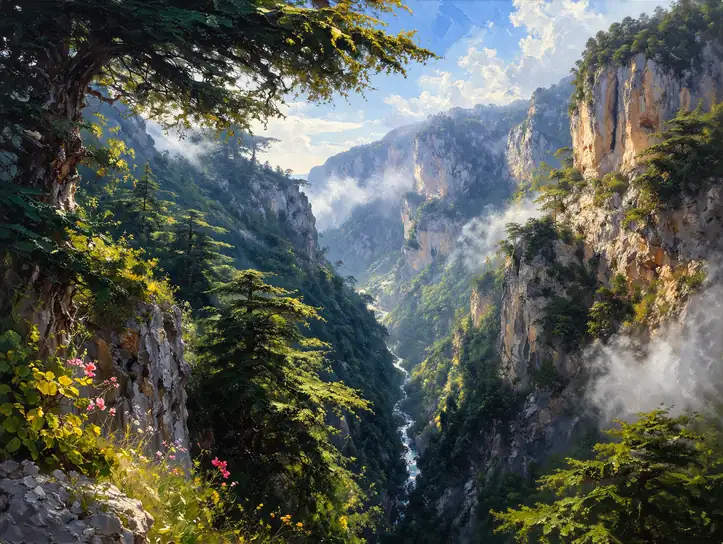 A Solitary Pause
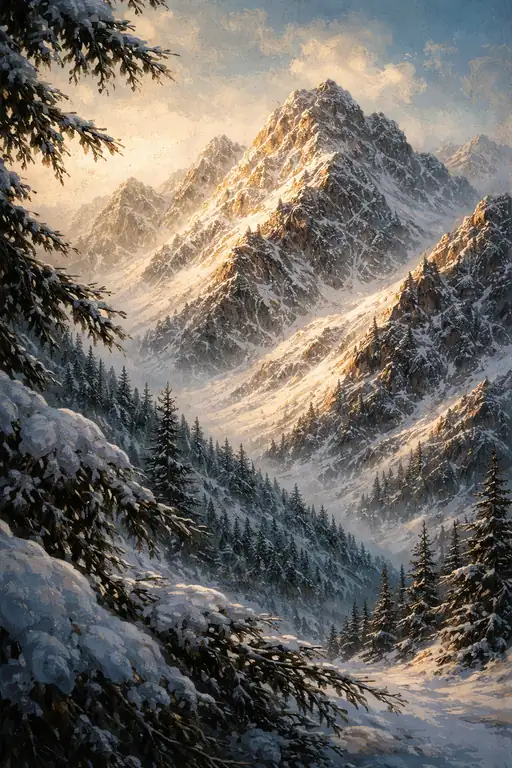 Alpenglow: The Summit's Golden Silence
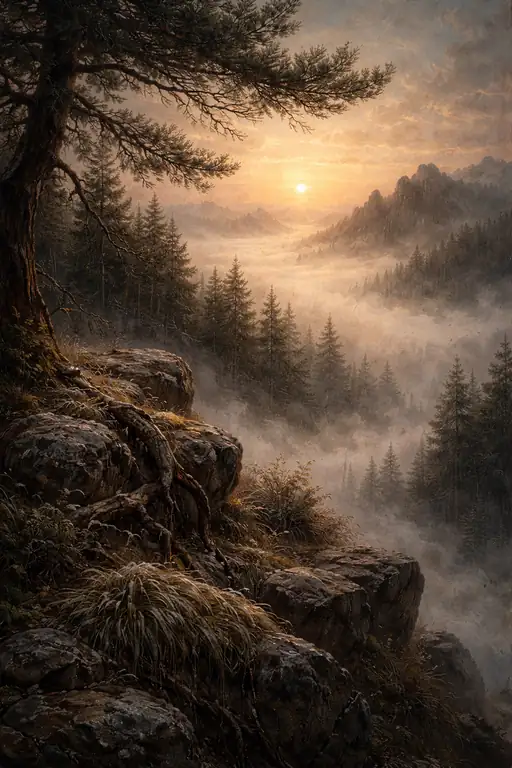 Ethereal Awakening: The Gilded Veil of Dawn