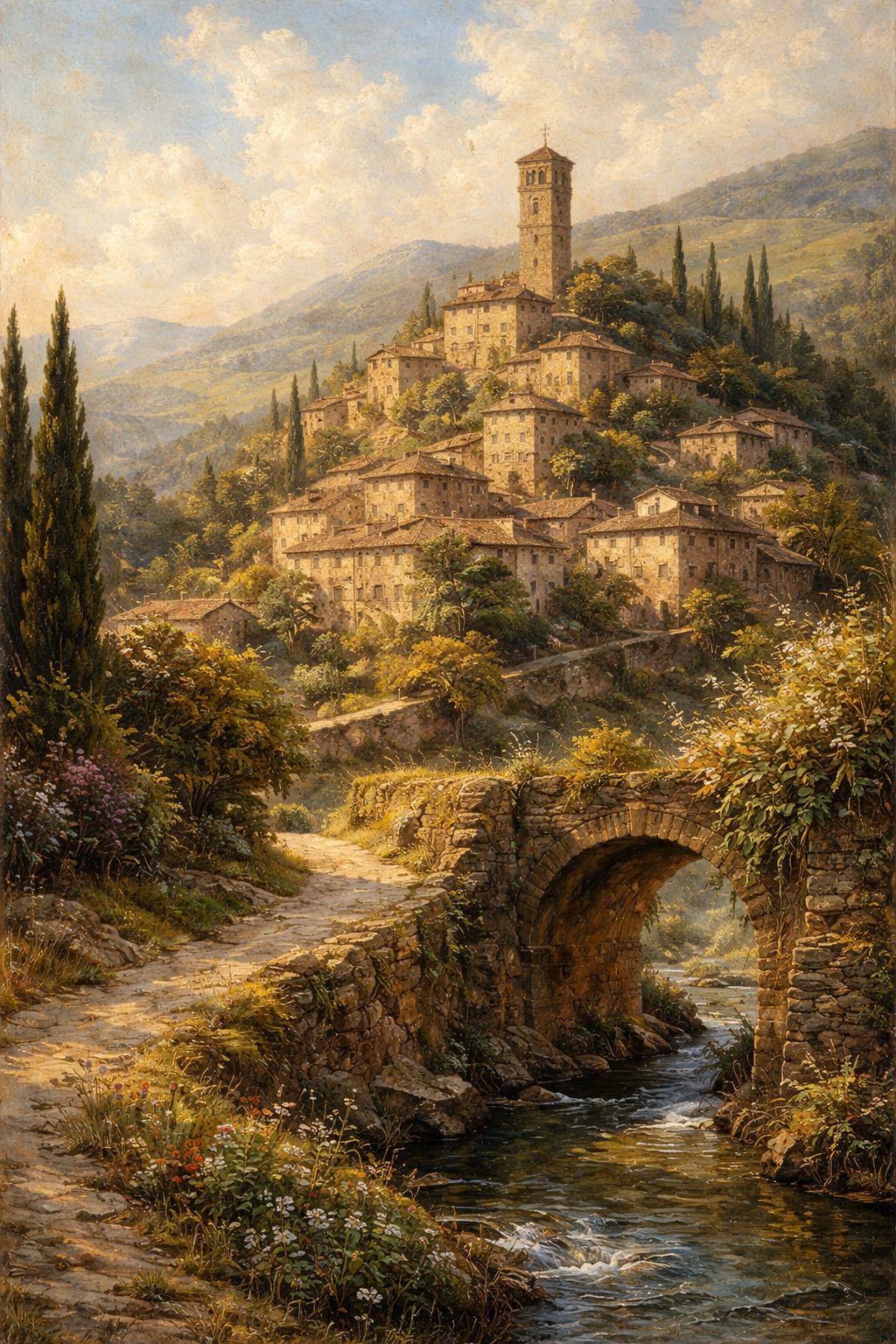
A Tuscan Lullaby in Stone and Sky
Critique
1. Introduction This oil painting presents a picturesque view of a historic hillside village, emphasizing the verticality of the landscape. The composition is grounded by an ancient stone bridge in the lower foreground, leading the viewer's gaze toward a dense cluster of stone houses that ascend the mountain. A prominent bell tower stands at the peak, serving as the focal point against a sky filled with soft, billowy clouds. 2. Description The foreground features a weathered stone arch bridge spanning a narrow, fast-moving stream. A dirt path, illuminated by dappled sunlight, winds its way from the left side toward the village. The hillside is densely packed with multi-story stone buildings characterized by tiled roofs and small, dark windows. Cypress trees and lush green foliage are interspersed among the structures, while the background reveals distant, hazy mountain peaks under a luminous sky. 3. Analysis The artist utilizes a triangular composition, with the bridge and the ascending path forming a strong diagonal that directs attention to the central tower. Atmospheric perspective is skillfully employed, as the colors of the distant mountains transition to a muted blue-gray, enhancing the sense of scale. The interplay of light and shadow is particularly effective on the rough textures of the stone walls and the varied greens of the vegetation. The use of a warm, earthy palette creates a cohesive and inviting atmosphere. 4. Interpretation and Evaluation The work evokes a sense of nostalgia and the enduring presence of history within a natural setting. The technical precision in rendering the architectural details, combined with a painterly approach to the sky and foliage, demonstrates a high level of craftsmanship. The balanced distribution of visual weight ensures that neither the massive bridge nor the towering village overwhelms the composition. The painting successfully captures the serene beauty of a Mediterranean-style mountain community, offering a romanticized yet grounded perspective. 5. Conclusion A thorough analysis of this piece highlights the artist's ability to integrate complex architectural forms with a rugged natural landscape. The harmonious relationship between the man-made structures and the surrounding environment is a testament to the classical landscape tradition. This painting stands as a significant contribution to the genre, providing a timeless window into a tranquil world. The final impression is one of profound stability and aesthetic unity.
Same Subcategory
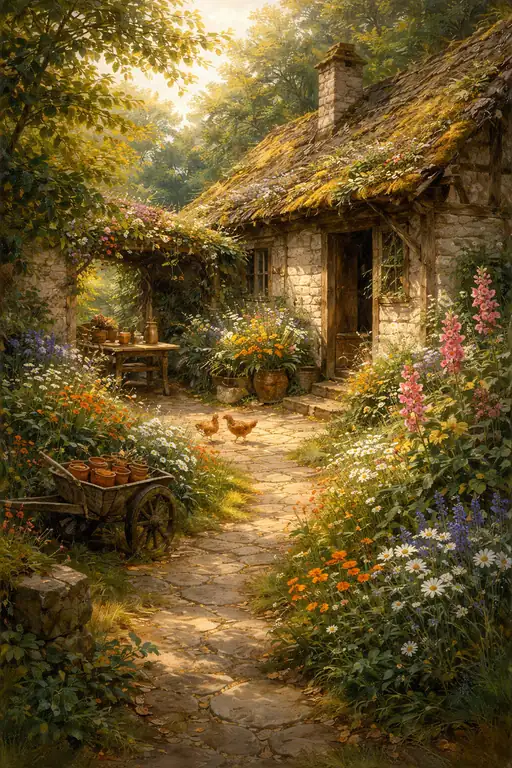 Sunlit Harmony in the Hidden Cottage
Similar Artworks
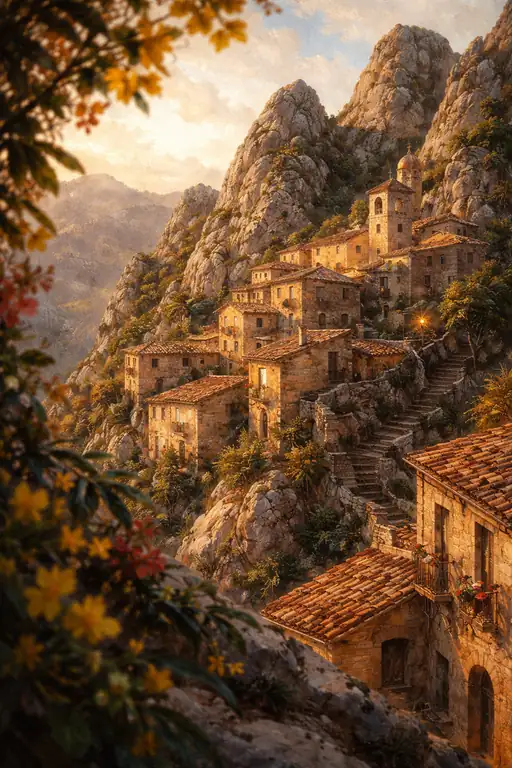 Golden Embrace of the Mountain Village
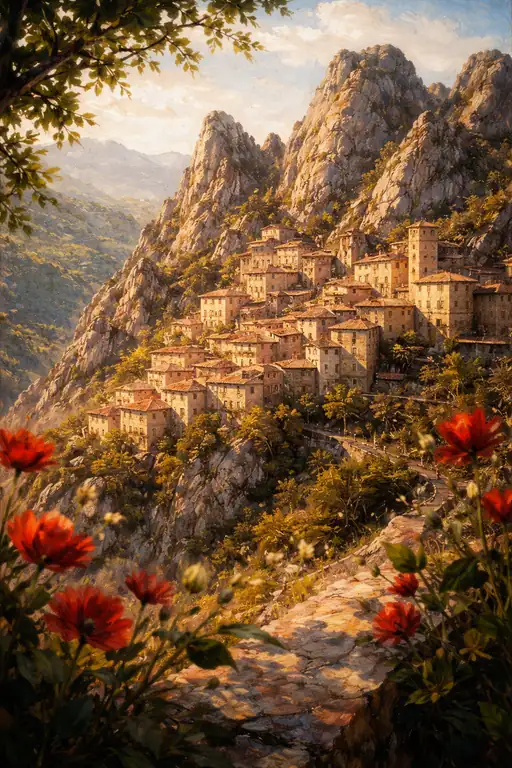 Crimson Ascent
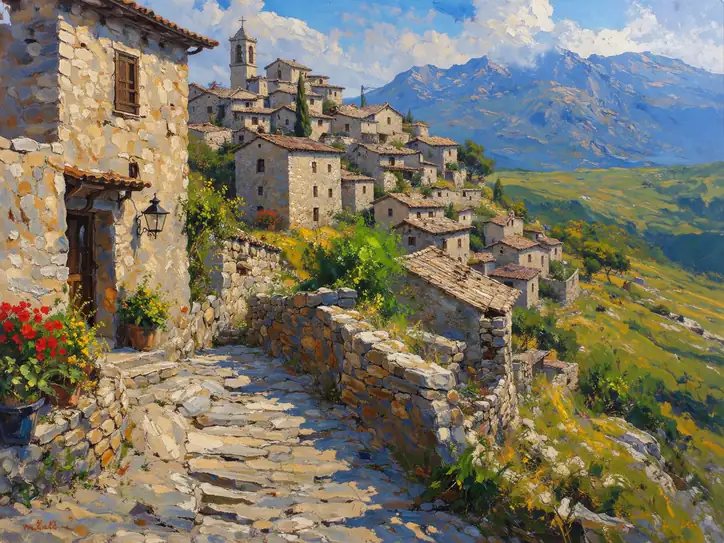 Whispers of a Sun-Drenched Hillside
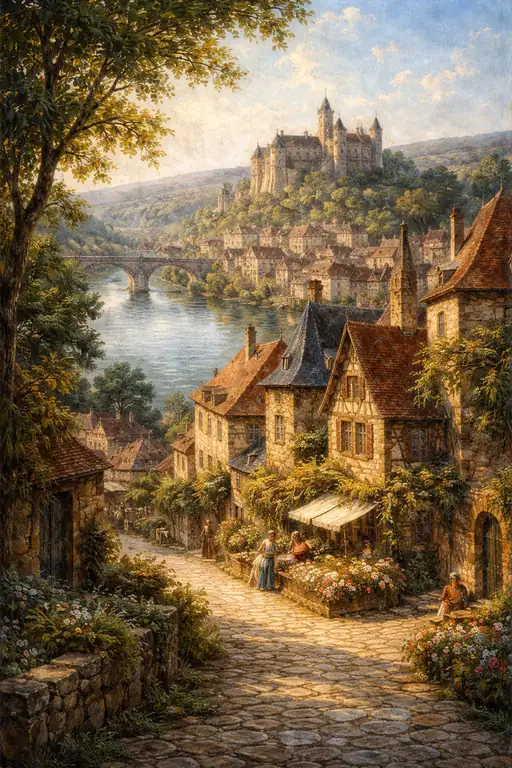 Fragments of a Fleeting Dream
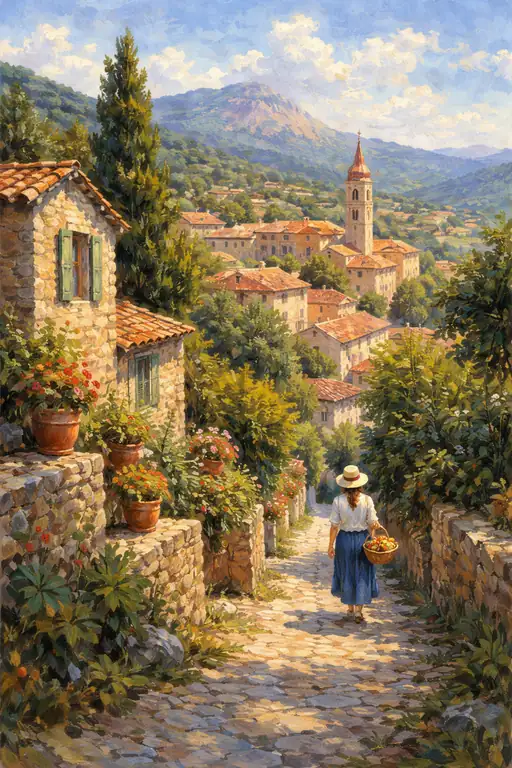 A Sun-Kissed Stroll Through Time
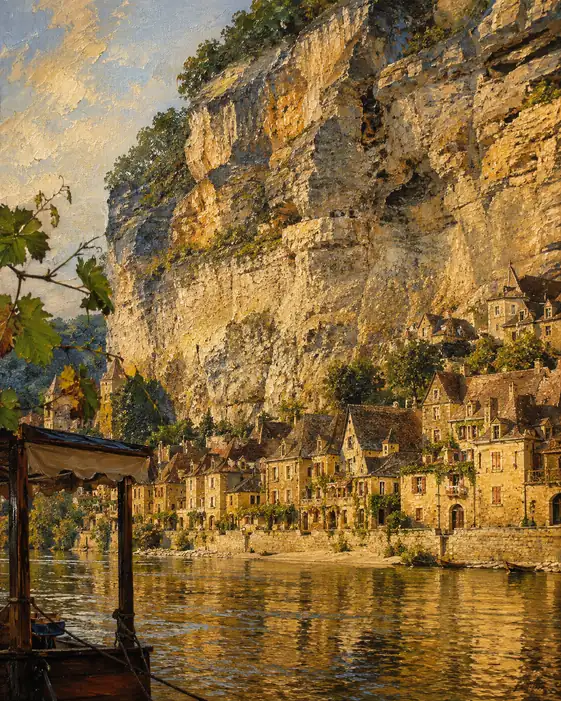 The Haven Under the Golden Cliff
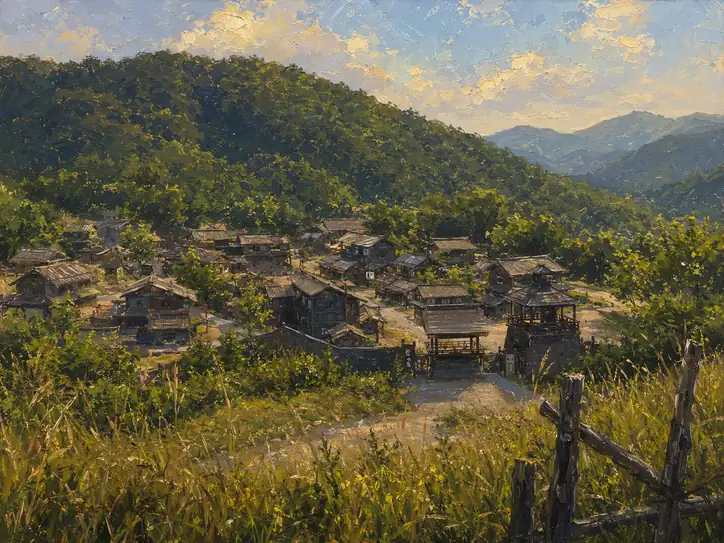 Mountain Village in the Golden Hour
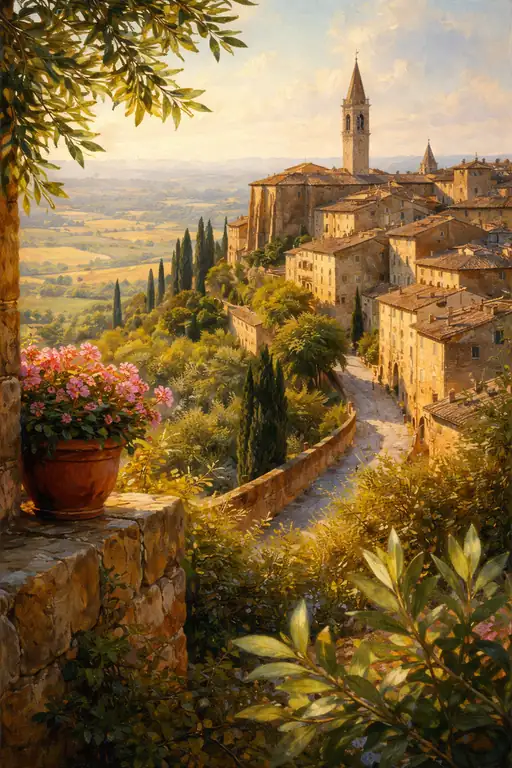 Mediterranean Heritage
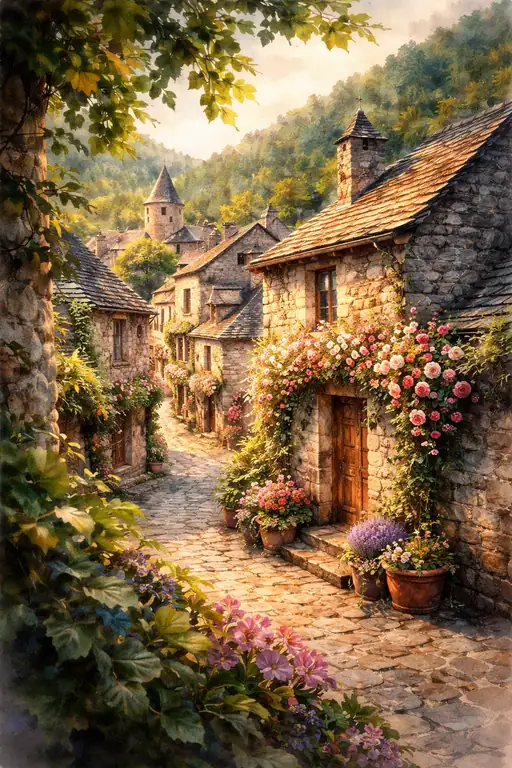 A Floral Path in the Village
 Steps Toward the Silent Heights