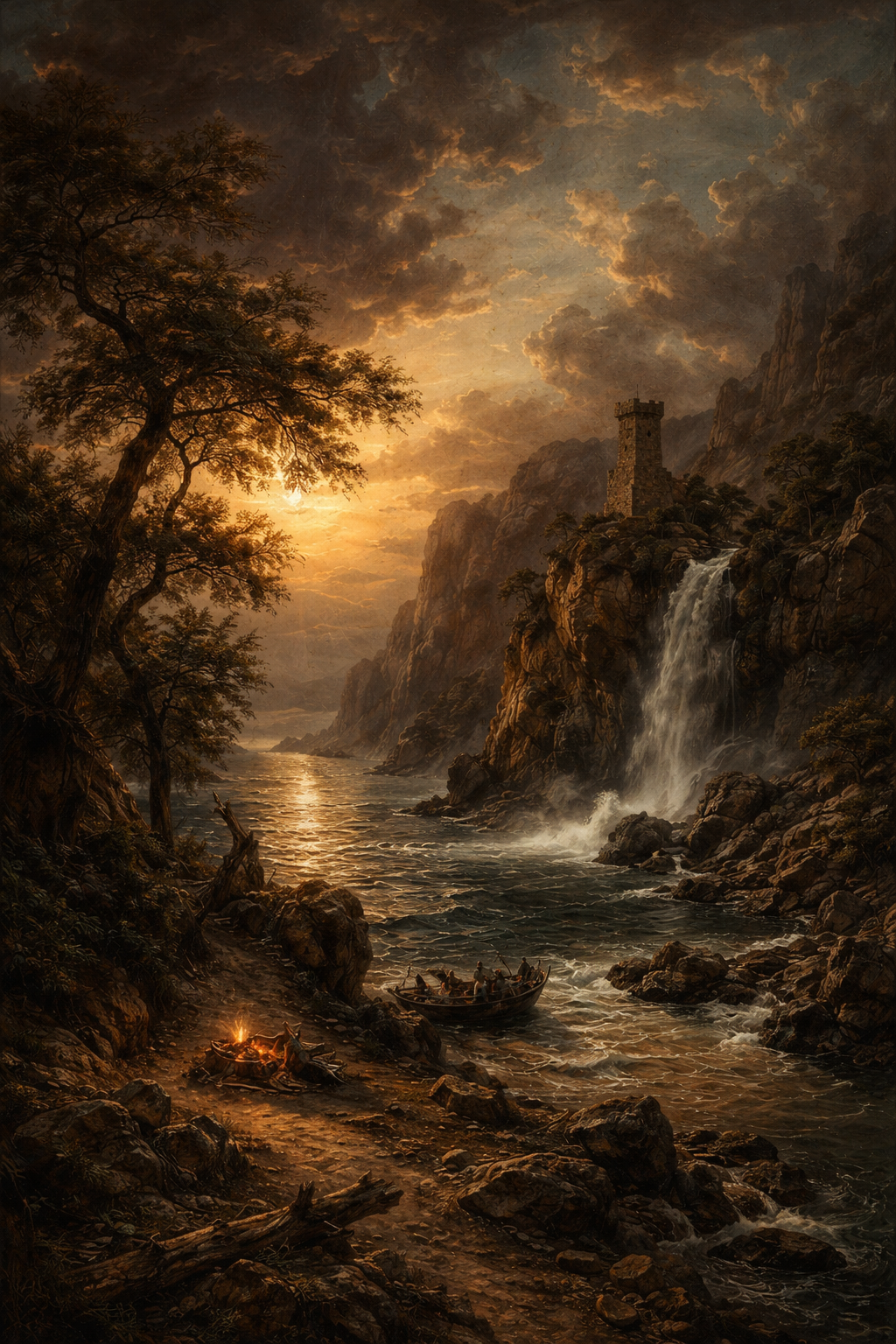
A Blazing Soul at the Edge of the World
Critique
1. Introduction This painting presents a grand romantic landscape capturing a coastal scene at sunset. The composition is characterized by its dramatic interplay of light and shadow, featuring architectural and natural elements that evoke a sense of timeless majesty. It serves as a classic example of a landscape that prioritizes atmospheric depth and emotional resonance. 2. Description The scene is dominated by a setting sun positioned behind a large, ancient tree on the left. On the right, a rugged cliff supports a solitary stone tower, with a powerful waterfall cascading into the churning sea below. In the foreground, a small campfire glows on the rocky shore, while a boat carrying several figures navigates the waves near the center. 3. Analysis The vertical composition utilizes a strong chiaroscuro effect, where the brilliant golden light of the sun contrasts sharply with the deep shadows of the rocky terrain. The artist employs a warm palette of ambers and browns, meticulously rendering the textures of the foliage, the crystalline spray of the waterfall, and the reflective surface of the water. The perspective creates a vast sense of scale. 4. Interpretation and Evaluation The work explores themes of nature's sublime power and the quiet presence of humanity within it. The campfire and the boat suggest a narrative of travel or refuge, grounding the monumental scenery in human experience. The technical execution is exceptional, particularly in the handling of the luminous atmosphere and the complex lighting from both the sun and the fire. 5. Conclusion Ultimately, the painting succeeds in transforming a traditional landscape into a profound meditation on light and endurance. The initial impression of a mere scenic view evolves into an appreciation for the harmonious balance between rugged wilderness and human passage. This work stands as a testament to the enduring appeal of the romantic tradition in visual art.
Same Subcategory
 Secrets of the Azure Grotto
 Echoes of the Hidden Grotto
Similar Artworks
 Where Seagulls Dance in the Golden Mist
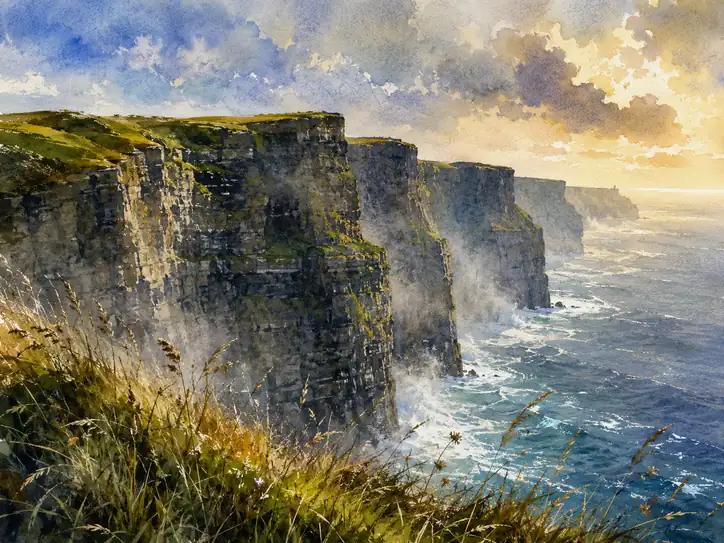 The Eternal Song of the Shore
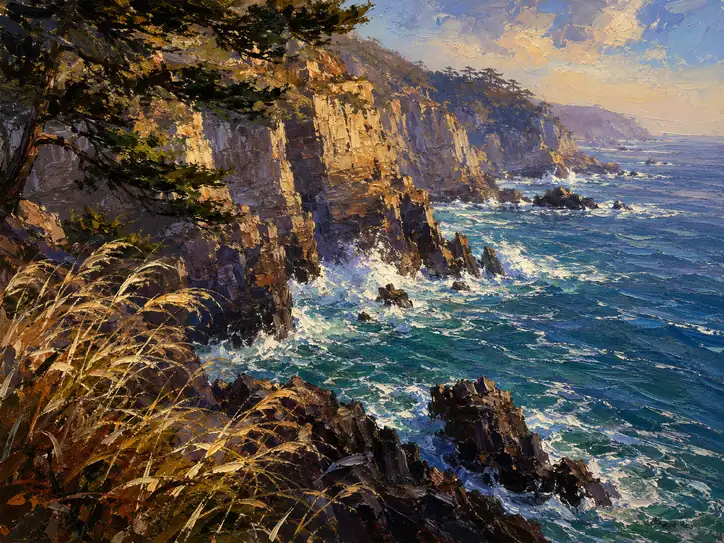 Gilded Sentinel of the Tide
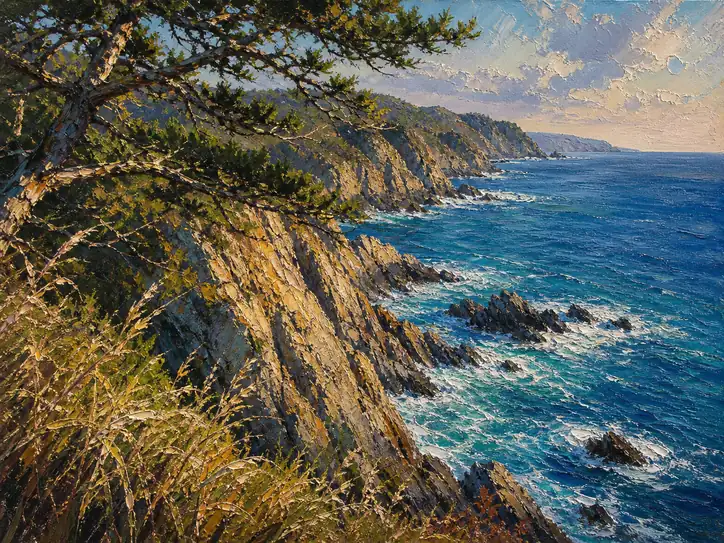 The Golden Precipice over the Cerulean Surge
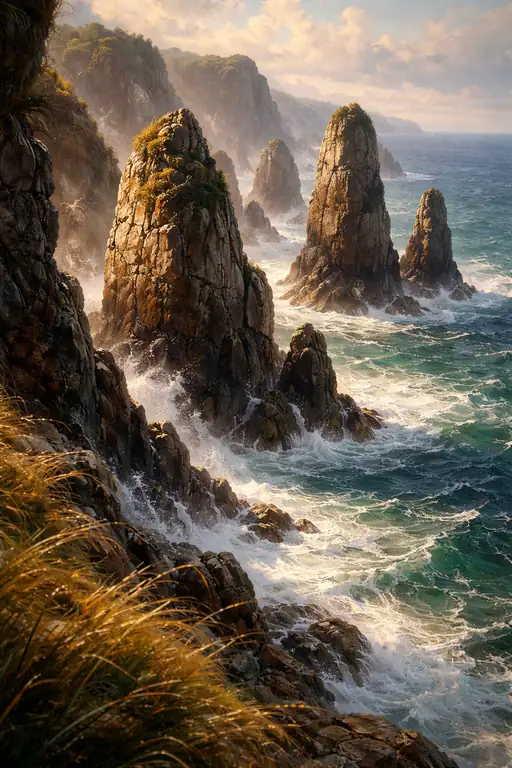 The Eternal Embrace of the Waves
 Morning Descends the Coast in Beams
 Where Dreams Set Sail on Golden Tides
 Dreaming Castle on the Golden Crest
 The Eternal Dialogue of Rock and Wave
 The Golden Bastion Against the Tide