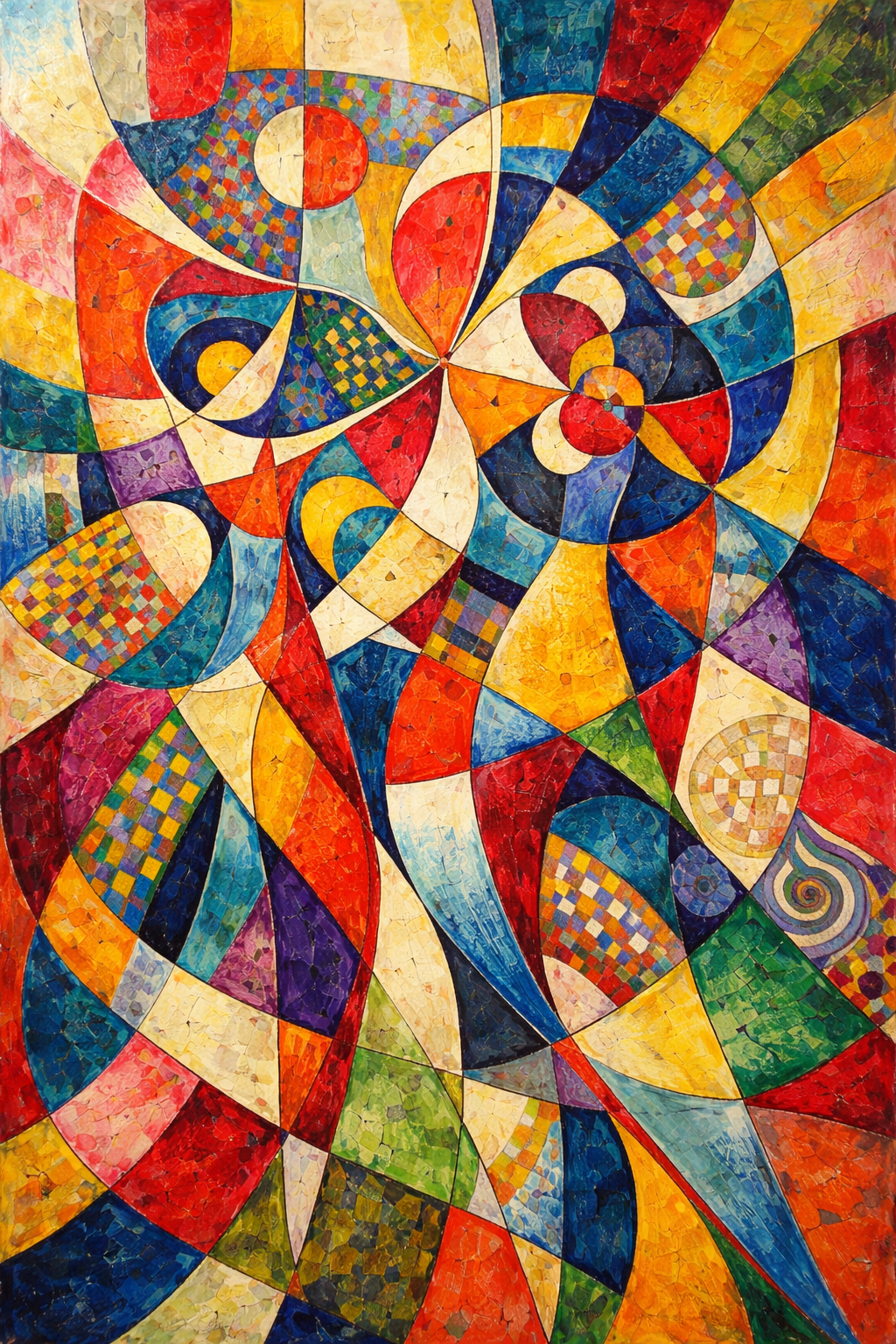
Rhapsody in Geometric Fire
Critique
1. Introduction This abstract painting presents a vibrant and complex arrangement of geometric forms and primary colors. The composition is characterized by a dynamic interplay between curved and linear elements, creating a sense of rhythmic movement across the canvas. As an example of contemporary abstraction, the work prioritizes the emotional impact of color and shape over representative imagery. 2. Description The canvas is densely populated with a variety of overlapping shapes, including fragmented circles, elongated triangles, and sweeping arcs. A bold palette of primary reds, blues, and yellows is complemented by secondary greens and purples, all applied with a distinct, mosaic-like texture. Within several of the larger sections, intricate checkered patterns of contrasting colors add a layer of fine detail to the broader structural divisions. 3. Analysis The artist employs a strong use of line to guide the viewer's eye through the multi-layered space. The central point of the composition serves as a focal area where multiple curves converge, radiating outward like a series of interconnected waves. The balance is achieved through the careful distribution of color weight, with darker blues providing a grounding contrast to the more luminous yellows and whites scattered throughout the piece. 4. Interpretation and Evaluation This work can be interpreted as a visual exploration of order within chaos, where individual geometric units harmonize to form a cohesive whole. The use of stained-glass aesthetics and repetitive patterning demonstrates a high level of technical precision and a deep understanding of color theory. The overall effect is one of energetic stability, showcasing an original approach to traditional geometric abstraction that remains both accessible and sophisticated. 5. Conclusion In summary, the painting is a compelling study of the relationships between color, form, and texture. The initial impression of overwhelming complexity gradually yields to an appreciation for the artist's structural discipline and chromatic harmony. The piece stands as a successful realization of the expressive potential inherent in non-representational art, leaving a lasting impression of vitality and structural integrity.
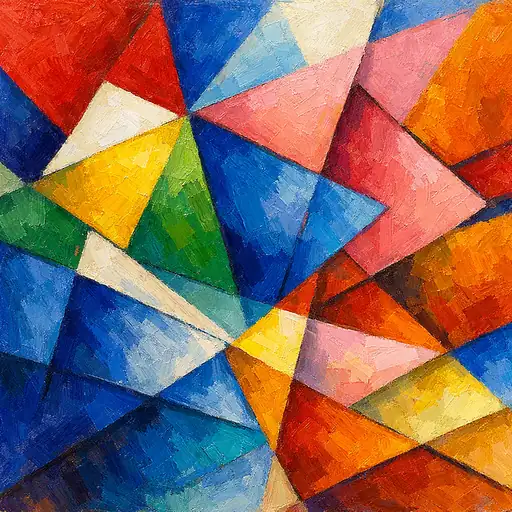 Colorful Abstract Geometry of Triangles
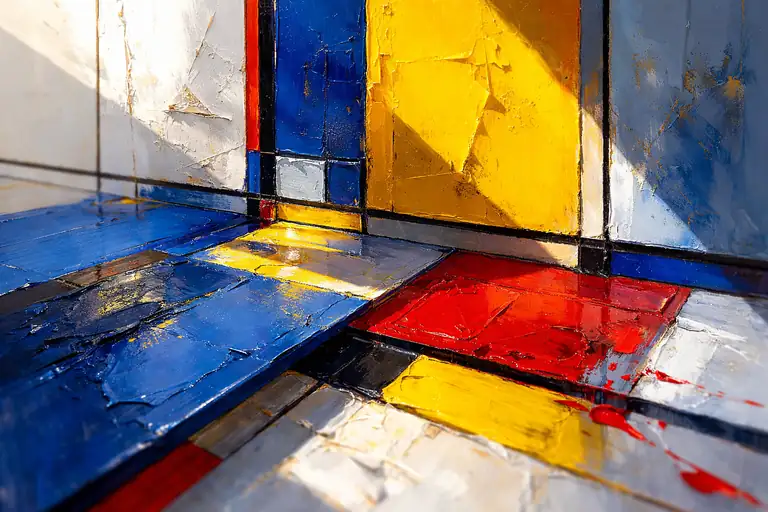 Symphony of the Concrete Soul
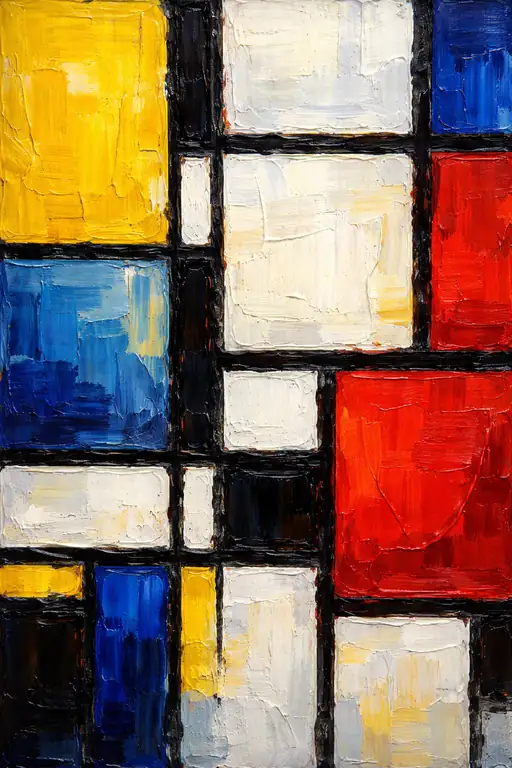 Order and Impulse
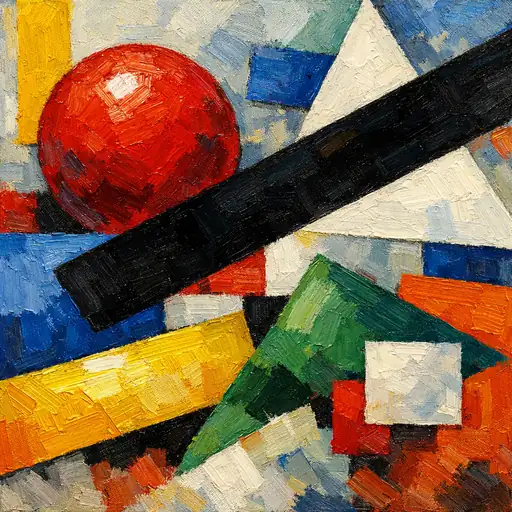 Suprematist Intersection of the Void
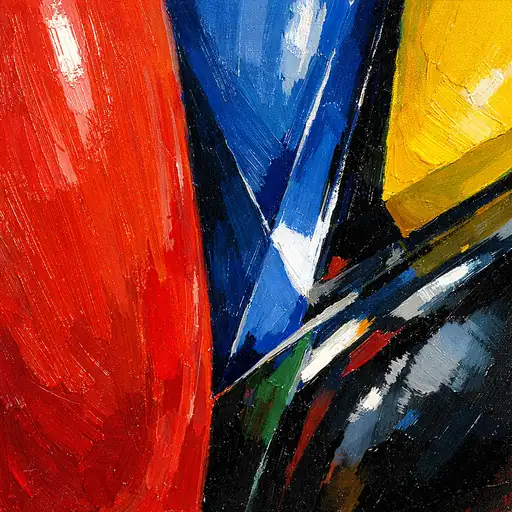 Collision of Primary Truths
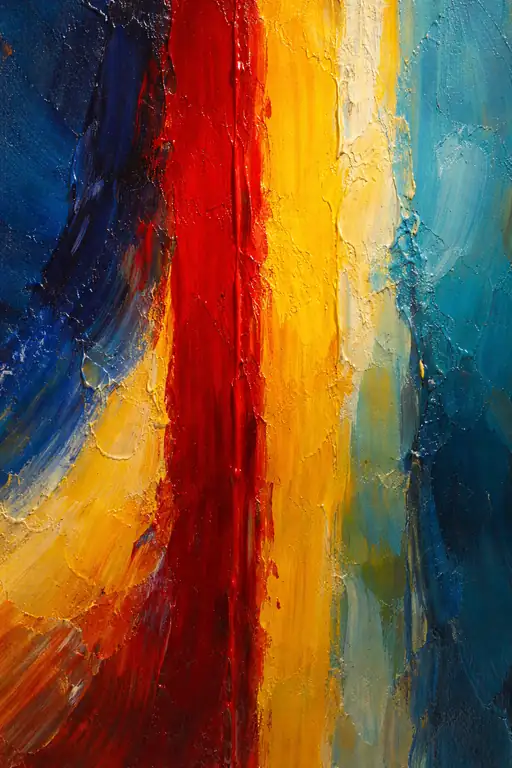 Echoes of the Abstract Mind
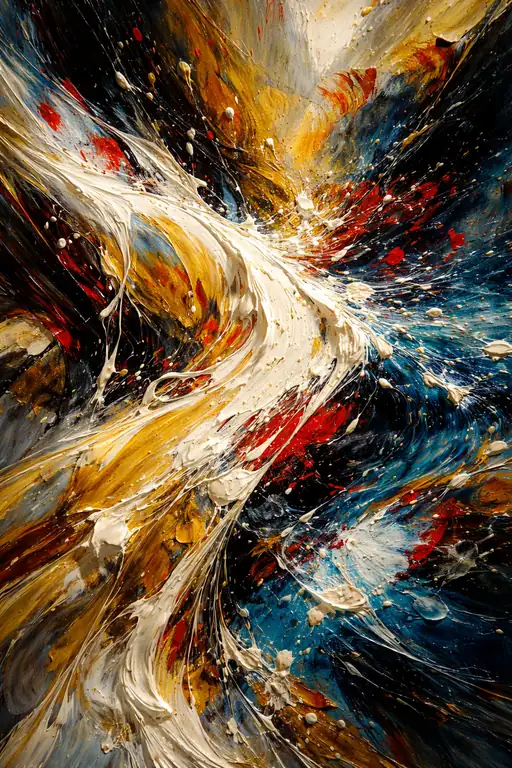 Dynamic Explosion of Energy
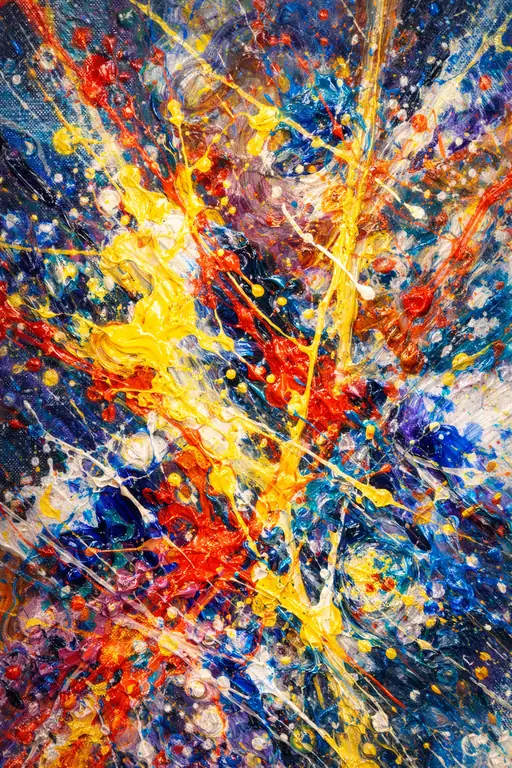 Chaos in Vibrant Hues
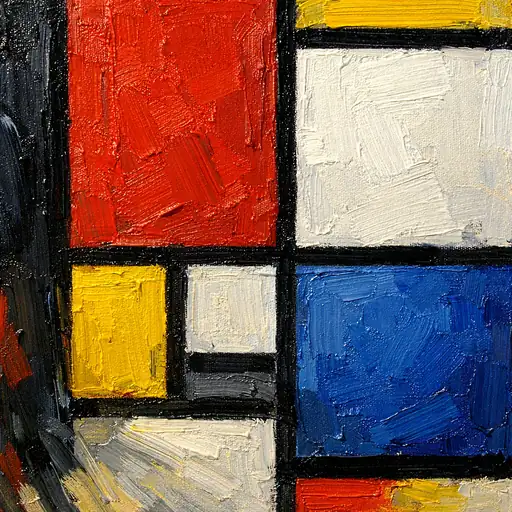 Equilibrium within the Primary Grid
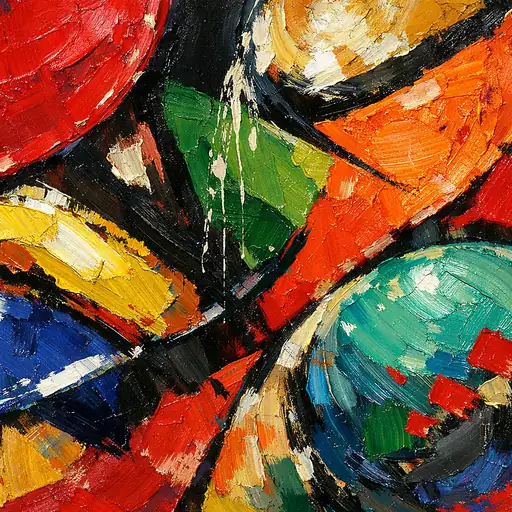 Tears and Tides of Time