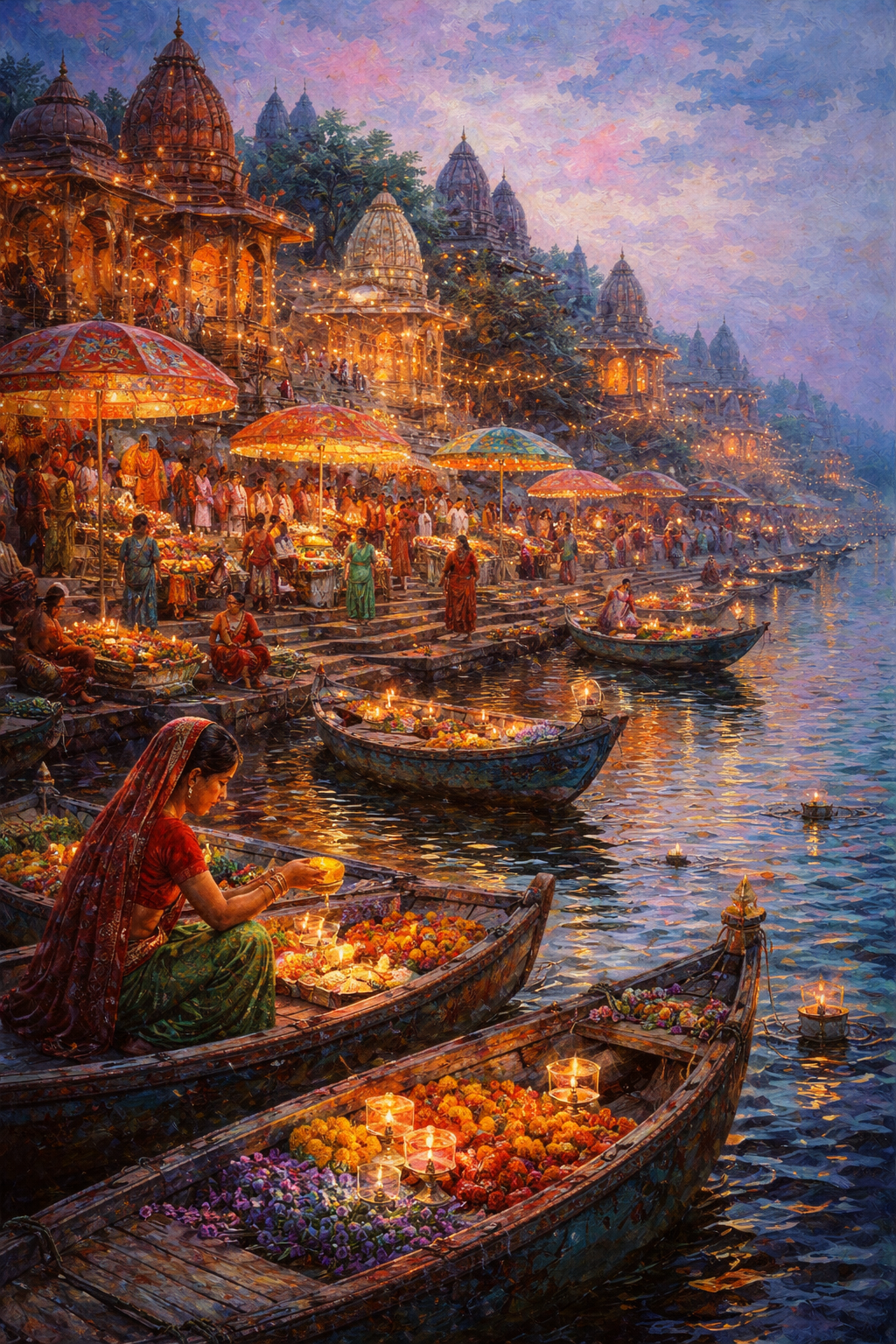
River of Twilight Prayers
Critique
1. Introduction This expansive oil painting captures a vibrant ritual scene on a riverbank, reminiscent of a traditional Indian festival at twilight. The composition is masterfully organized to lead the viewer from an intimate foreground moment to a sprawling, illuminated architectural backdrop. Through rich color and light, the work explores themes of spirituality, community, and the passage of time. 2. Description In the lower left, a woman dressed in a red and green sari sits in a wooden boat, carefully arranging small lamps and vibrant flowers. The midground is filled with similar boats drifting on dark water, each carrying flickers of candlelight that reflect off the surface. Beyond the water, the riverbank rises in stone steps crowded with people and colorful umbrellas, leading to a series of ornate temples adorned with strings of golden lights. 3. Analysis The artist employs a vivid palette dominated by warm oranges and cool purples, creating a strong atmospheric contrast. The brushwork is impressionistic, using small, energetic strokes to depict the multitude of people and the shimmering water. Perspective is achieved through the receding line of temples and the diminishing scale of the boats, while the high horizon line emphasizes the crowded, lively nature of the sacred site. 4. Interpretation and Evaluation The painting successfully conveys a sense of profound devotion and collective energy. The choice to focus on a single figure in the foreground provides a human connection to the larger, almost overwhelming scene of the festival. Technically, the rendering of artificial light against the natural fading light of the sky is exceptionally handled, imbuing the entire canvas with a transcendent, nearly mystical quality. 5. Conclusion While the initial impact of the work is one of sensory overload, closer observation reveals a delicate balance between the individual and the crowd. The integration of light, color, and cultural tradition results in a powerful visual narrative. This painting serves as a testament to the enduring beauty of ritual and the transformative power of light in a communal setting.
Same Subcategory
Similar Artworks
 Golden Whispers of the Sacred River
 Flames of the Ganges
 Cradled by the Sacred Mist
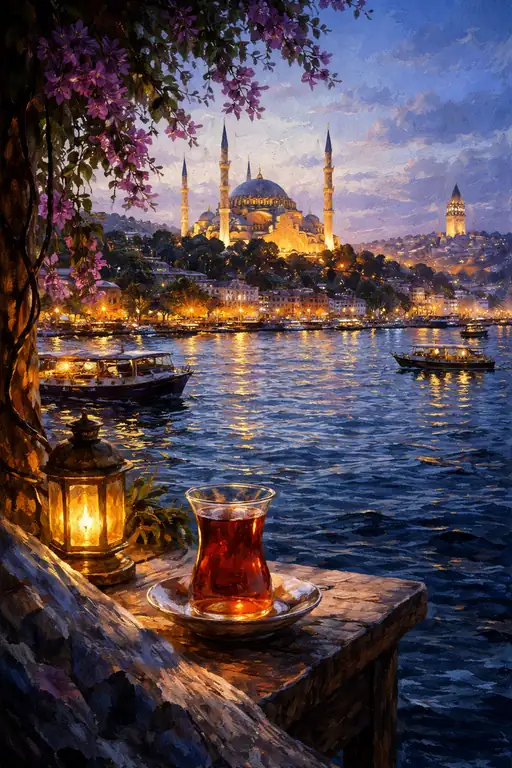 Istanbul's Golden Hour Tapestry
 Boardwalk to the Water Sanctuary
 Whispers of the Bodhi Tree
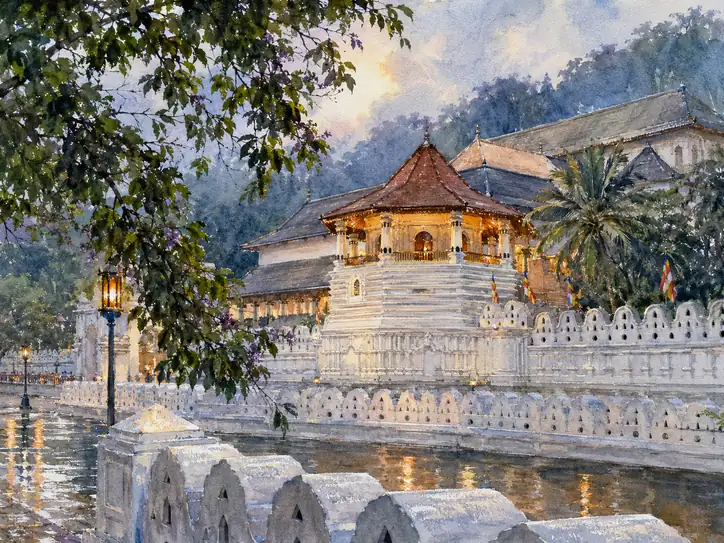 Whispers on the Sacred Water
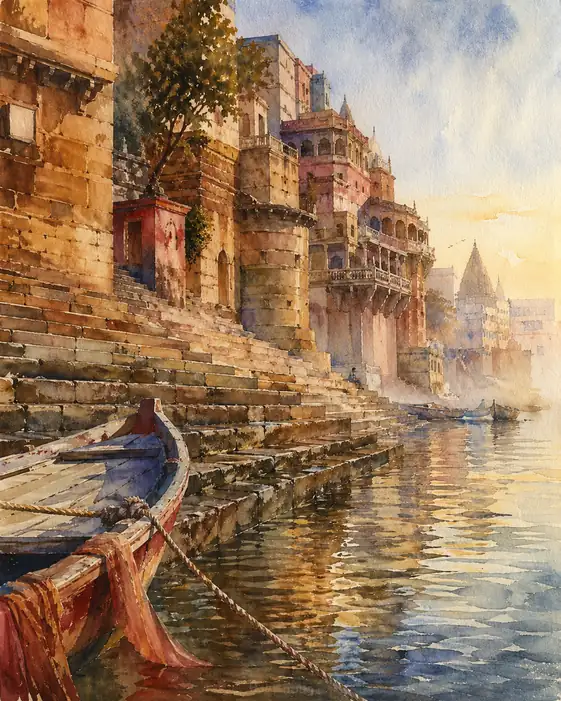 Silent Mornings on the Sacred Shore
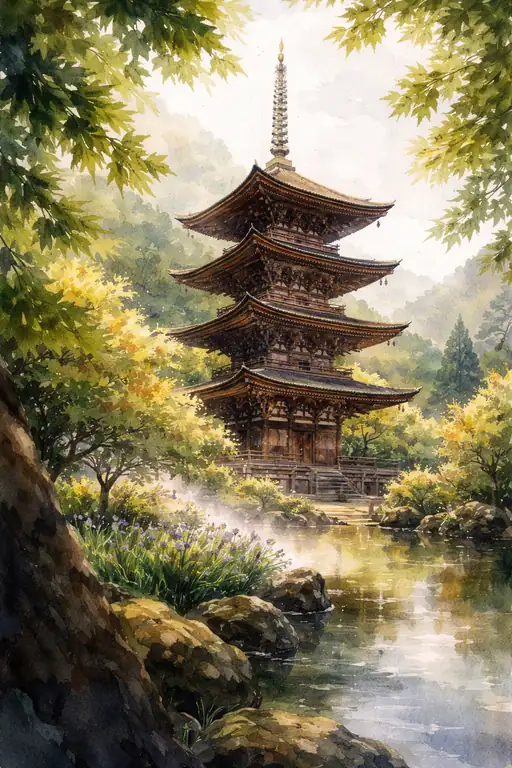 Reflection of the Silent Pagoda
 Spiritual Glow of the Forgotten Shrine