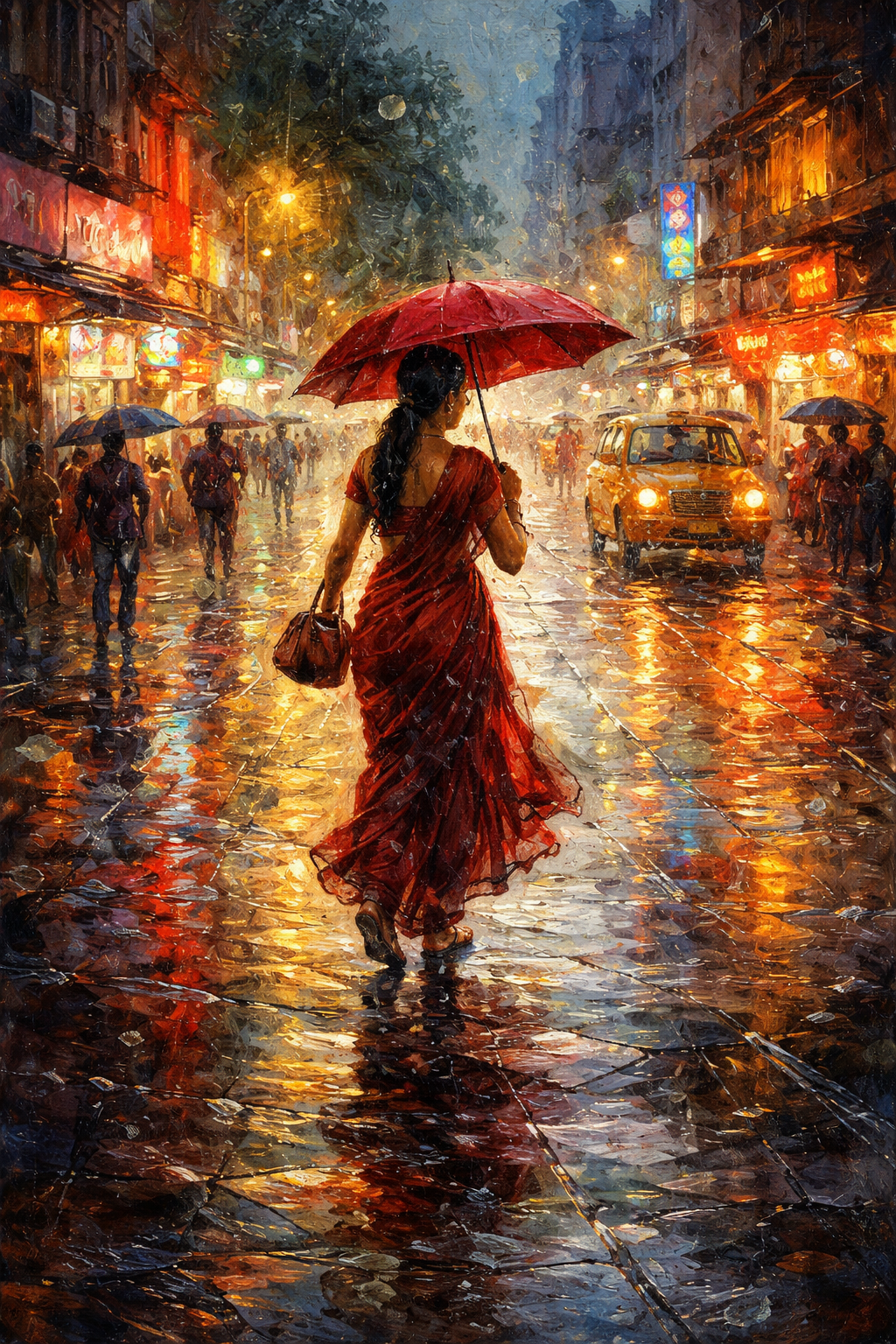
Crimson Steps in the Neon Rain
Critique
1. Introduction This oil painting presents a dramatic and atmospheric portrayal of a rainy city street at night. The composition centers on a solitary woman in a vibrant red saree, walking away from the viewer under a matching umbrella. By setting this figure against the bustling, neon-lit backdrop of an urban landscape, the artist captures a moment of individual grace amidst the chaotic energy of city life. This work effectively uses the reflective properties of rain-slicked pavement to create a symphony of light and color, evoking a deep sense of mood and place. 2. Description The central figure, a woman in a flowing red saree, dominates the mid-ground as she navigates a wet, shimmering street. To her right, a classic yellow taxi with its headlights glowing navigates through the crowded thoroughfare, where other pedestrians with umbrellas are visible in the background. The street itself is a complex mosaic of reflections, mirroring the warm oranges and cool blues of the surrounding shop signs and streetlights. The architecture of the narrow city street rises on either side, partially obscured by the hazy, rain-filled atmosphere. 3. Analysis The artist employs a vivid and high-contrast color palette, where the primary red of the saree and umbrella serves as a powerful focal point against the darker tones of the night. The lighting is masterfully executed, with multiple light sources—the taxi’s headlights, shop signs, and streetlamps—creating a complex interplay of highlights and shadows on the wet surfaces. The brushwork is vigorous and impressionistic, particularly in the rendering of the water on the ground and the misty air, which adds a sense of movement and immediacy. The perspective is deep, drawing the viewer’s eye along the shimmering tracks on the road towards the hazy distance. 4. Interpretation and Evaluation This piece successfully communicates the sensory experience of a rain-soaked urban environment. The choice of the red saree is a brilliant narrative and aesthetic device, providing a sense of warmth and resilience in the cool, damp setting. Technically, the artist demonstrates exceptional skill in depicting reflections; the street almost appears as a secondary source of light. While the background figures are somewhat loosely rendered, this helps to maintain the focus on the central subject and the overall atmospheric quality of the scene. 5. Conclusion In conclusion, the work is a compelling and evocative study of light, color, and urban atmosphere. The initial impression of a rain-blurred city street evolves into an appreciation for the structured beauty of the reflections and the poise of the central figure. The painting masterfully balances the mundane elements of city traffic with a poetic, almost cinematic quality. Ultimately, it serves as a vivid reminder of the beauty that can be found in the most transient and rain-darkened moments of daily life.
Same Subcategory
Similar Artworks
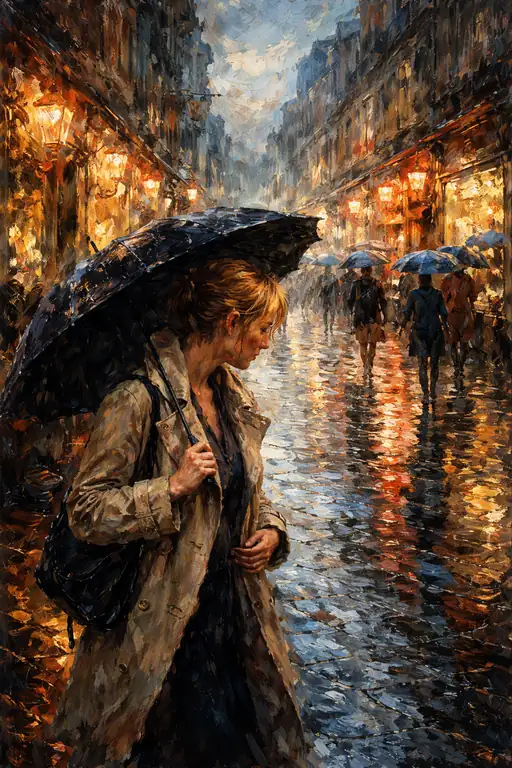 Midnight Melancholy in the Golden Rain
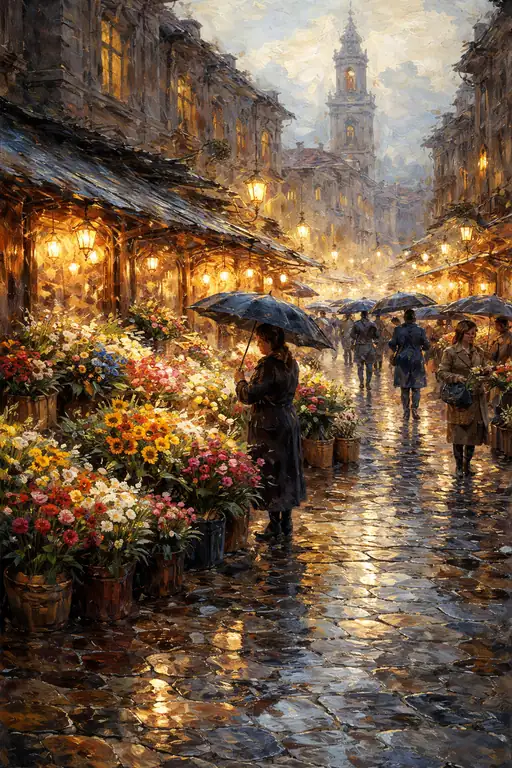 Tears of the Glowing City
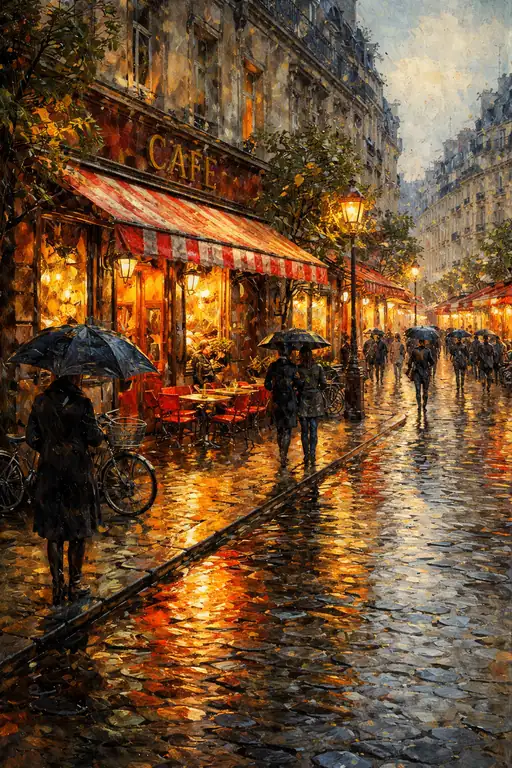 Whispers of the Rain: A Golden Haven in the Weeping City
 Scarlet Sanctuary in the Rain
 Echoes of Warmth in the Urban Downpour
 Twilight Reflections: The City's Golden Glow
 Tears of the Prismatic Night
 Silver Hesitation
 The Glow of Twilight: Warmth on a Rainy Street
 Illuminated Solitude