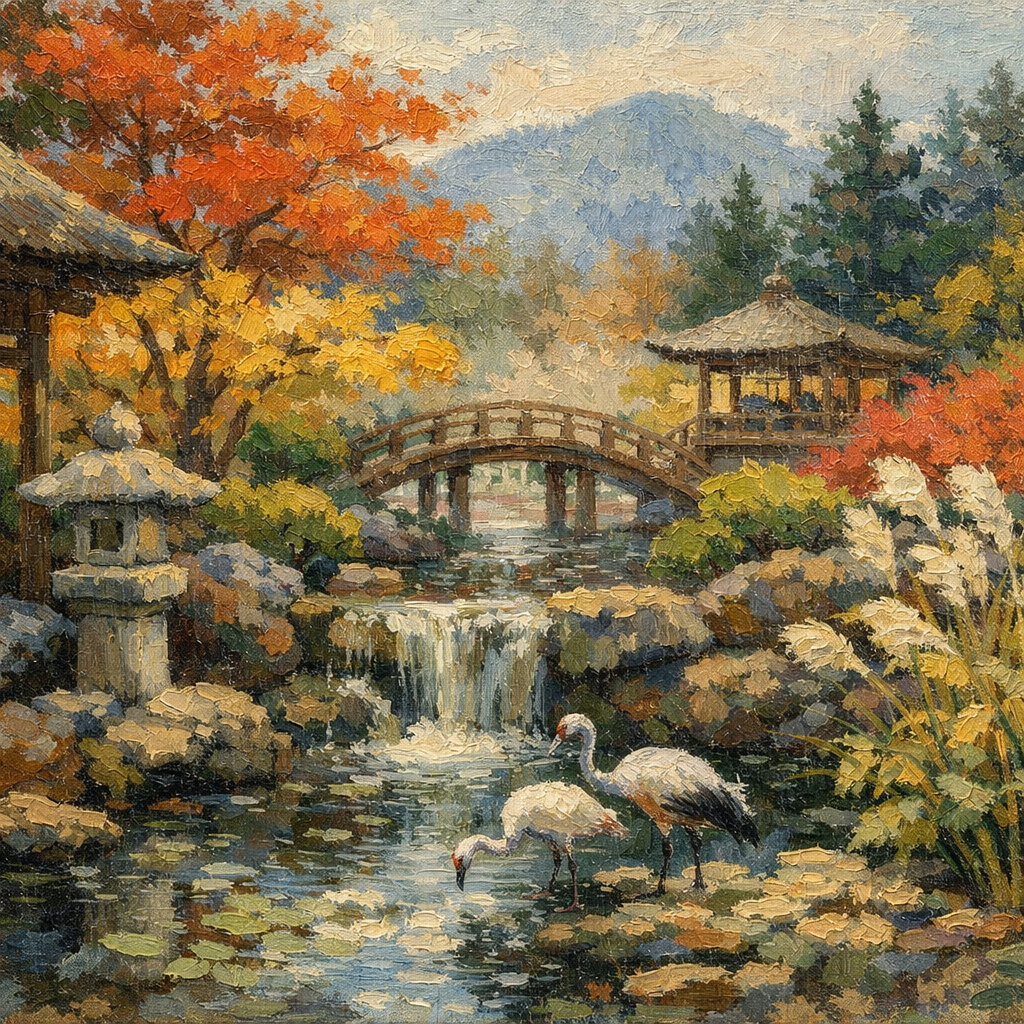
Awakening of the Sacred Garden Where Cranes Take Flight
Critique
1. Introduction The artwork is a vibrant impressionistic landscape depicting a traditional Japanese garden brimming with life and seasonal color. This painting brings together several iconic elements of Eastern garden design, including a cascading waterfall, a wooden bridge, and a pair of cranes, which are powerful symbols of longevity and peace. By employing a bold, textured technique, the piece captures the dynamic energy of the natural environment while maintaining a sense of structural balance. It serves as an uplifting celebration of nature’s bounty and the harmonious integration of wildlife within a curated landscape. 2. Description In the foreground, two white cranes are positioned near a shallow pond filled with lily pads, with one bird gracefully leaning down toward the water. A small, energetic waterfall flows over a rocky ledge in the mid-ground, creating a focal point of movement. A curved wooden bridge spans the upper part of the stream, leading toward a pavilion partially obscured by autumn foliage. On the left, a classic stone lantern stands sentinel, while the right side is adorned with tall, feathery pampas grass. The background features a soft blue mountain under a pale, atmospheric sky. 3. Analysis The artist utilizes an impasto technique, where thick, visible brushstrokes create a rich tactile surface that emphasizes the play of light and shadow. The color palette is exceptionally diverse, contrasting the cool blues and greys of the mountain and water with the warm, saturated reds, oranges, and yellows of the autumnal trees. The composition is skillfully layered, using the foreground pond and cranes to ground the viewer before leading the eye through the waterfall and bridge toward the distant mountain. This multi-layered approach creates a profound sense of space and environmental complexity. 4. Interpretation and Evaluation This work can be interpreted as a modern homage to traditional themes, where the impressionistic style breathes new life into classical garden motifs. The presence of the cranes adds a spiritual dimension to the scene, suggesting a sanctuary where all forms of life can flourish in peace. In terms of evaluation, the painting is highly successful in its use of texture to convey emotion and atmosphere. While the individual details are suggestively rendered rather than precisely defined, the overall impact is one of intense vitality and aesthetic cohesion. The artist’s ability to balance such a wide array of colors and textures is a testament to their technical command. 5. Conclusion A closer inspection of the work reveals a joyous appreciation for the sensory richness of the garden, from the sound of the waterfall to the delicate movement of the cranes. The successful marriage of bold brushwork with traditional subject matter results in a painting that is both visually stimulating and spiritually resonant. It stands as a unique interpretation of the Japanese garden, capturing its essence with a modern, expressive energy. Ultimately, the initial impression of a lively garden scene matures into a deeper understanding of the interconnected beauty of life, water, and the changing seasons.
Same Subcategory
Similar Artworks
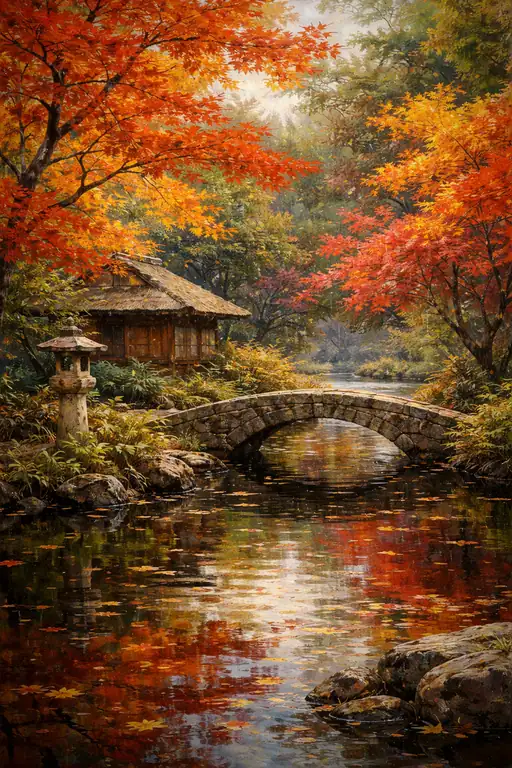 Serenity Reflected in the Fiery Autumn Waters
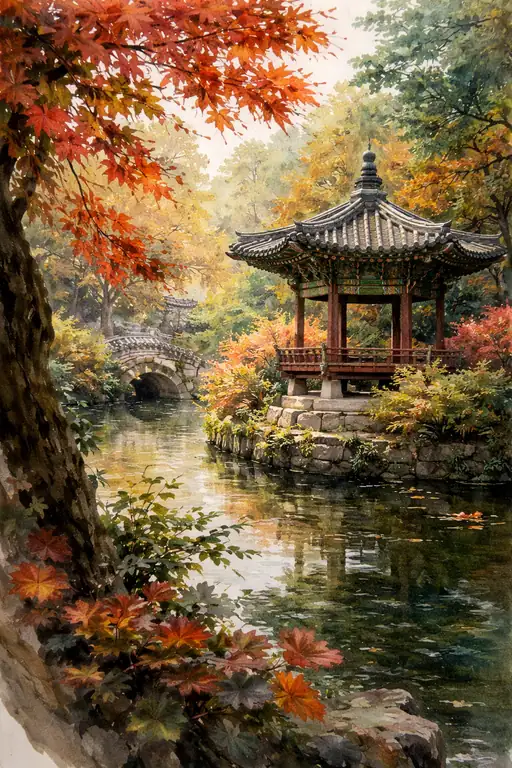 Crimson Leaves Reflected in Autumn's Mirror
 Crimson Reflections
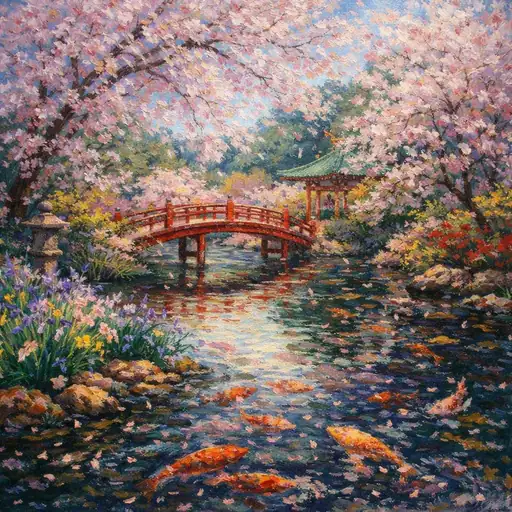 Whispers of Cherry Petals
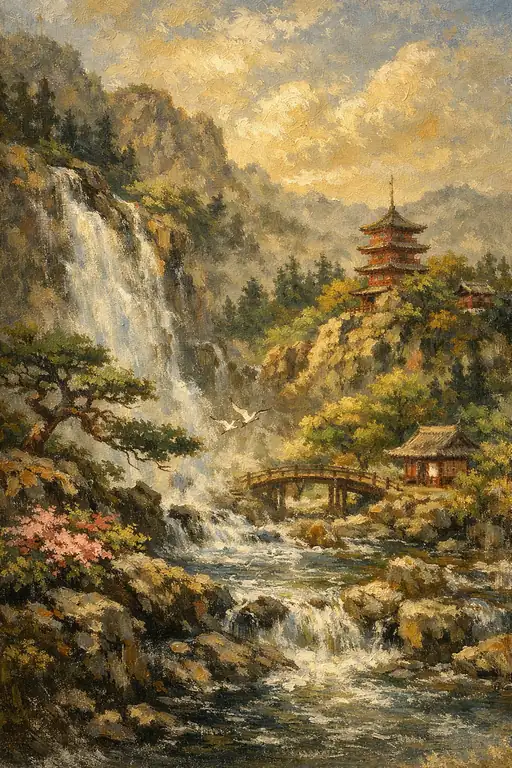 Golden Light Upon the Sacred Pagoda
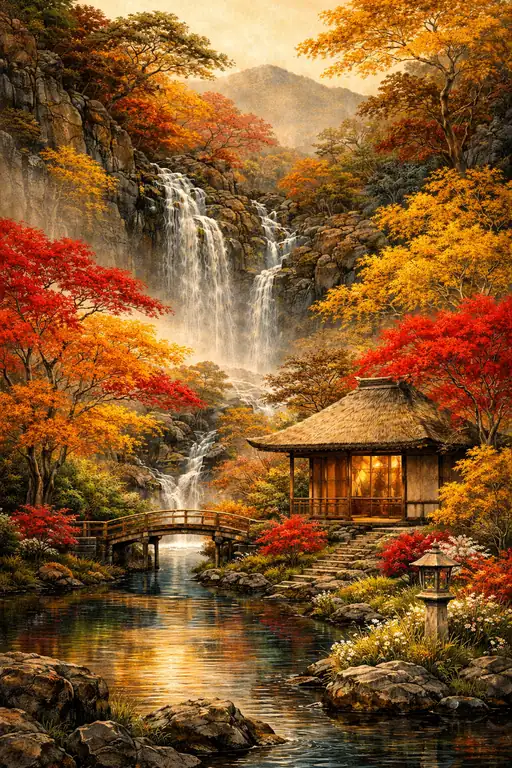 Crimson Waterfall and the Golden Bridge
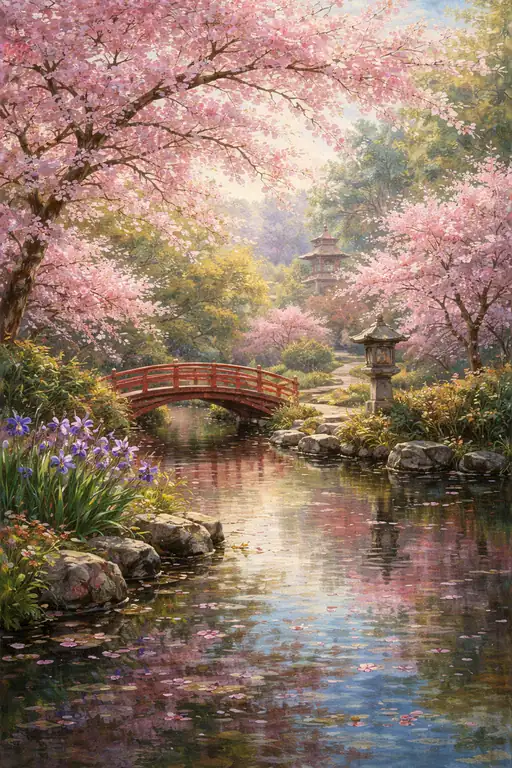 Tranquility in the Zen Garden
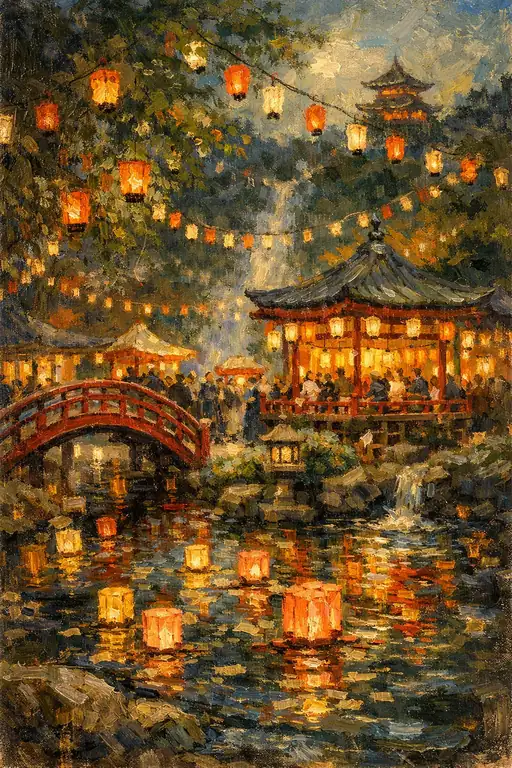 Whispers of the Glowing Tide: A Lantern Festival's Luminous Embrace
 Sunlit Melody of the Arch and Lantern
 Serenity of the Gilded Pavilion