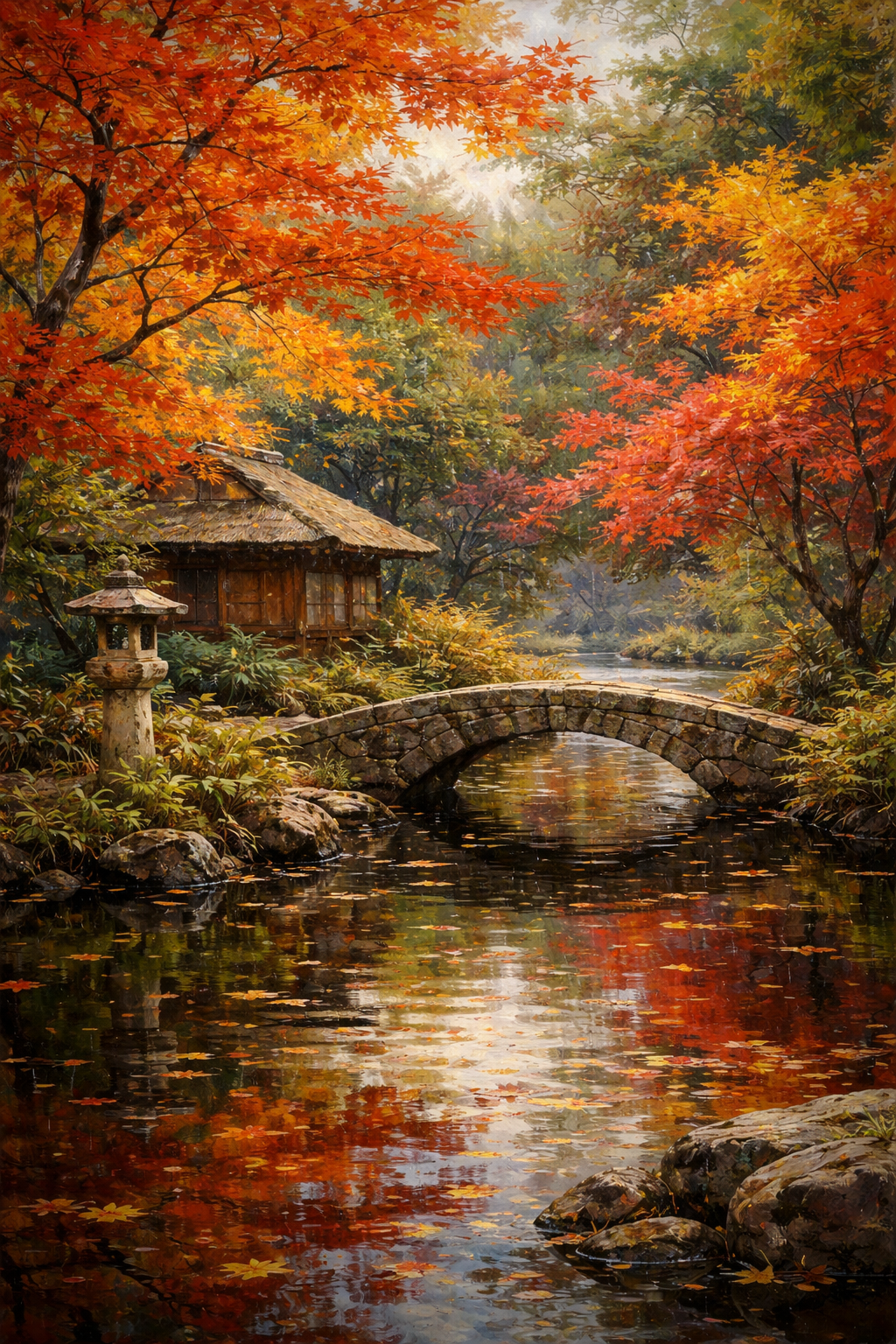
Serenity Reflected in the Fiery Autumn Waters
Critique
1. Introduction The artwork presents a breathtaking vision of a traditional Japanese garden at the height of the autumn season. This landscape painting focuses on the serene interplay between man-made structures and the vibrant transformation of nature. By featuring iconic elements such as a stone bridge and a thatched-roof pavilion, the piece captures the essence of classical garden design and its inherent spiritual tranquility. It serves as a vivid celebration of seasonal beauty, inviting the viewer into a world of balanced harmony and contemplative stillness. 2. Description In the foreground, a calm pond is scattered with fallen maple leaves, its surface acting as a mirror that reflects the fiery reds and oranges of the overhanging trees. A weathered stone lantern stands on the left bank, partially obscured by lush green plants. An arched stone bridge spans the water, leading the eye toward a rustic wooden pavilion with a thick, thatched roof nestled among the foliage. The trees are a riot of color, with leaves in various stages of turning from deep crimson to brilliant gold under a clear, bright sky. 3. Analysis The artist utilizes a centered composition, with the arched bridge serving as a strong focal point that connects the reflective foreground to the architectural mid-ground. The color palette is remarkably intense, dominated by warm autumnal hues that are amplified by their mirrored images in the water. Technical excellence is evident in the detailed rendering of the stone’s texture, the intricate patterns of the thatch, and the delicate veins of the fallen leaves. The lighting is crisp and direct, enhancing the saturated colors and creating a sense of clarity throughout the scene. 4. Interpretation and Evaluation This work can be interpreted as a masterpiece of "shakkei," or borrowed scenery, where every element is carefully placed to create a perfect aesthetic experience. The inclusion of the stone lantern and the bridge highlights the human desire to harmonize with the environment, reflecting a deep-seated respect for the natural order. In terms of evaluation, the painting is exceptionally successful in its handling of reflections and its ability to manage a complex array of warm tones without losing structural clarity. The artist’s skill in capturing both the grand scale and the minute details of the garden provides a rich, multi-layered viewing experience. 5. Conclusion A closer inspection of the painting reveals a profound understanding of the principles that govern traditional Japanese aesthetics. The successful integration of color, composition, and cultural symbolism results in a work that is both visually stunning and emotionally grounding. It stands as a significant contribution to contemporary landscape art, breathing new life into a classical theme with technical mastery and seasonal fervor. Ultimately, the initial impression of a colorful garden scene deepens into a profound appreciation for the meticulous artistry and the enduring peace it represents.
Same Subcategory
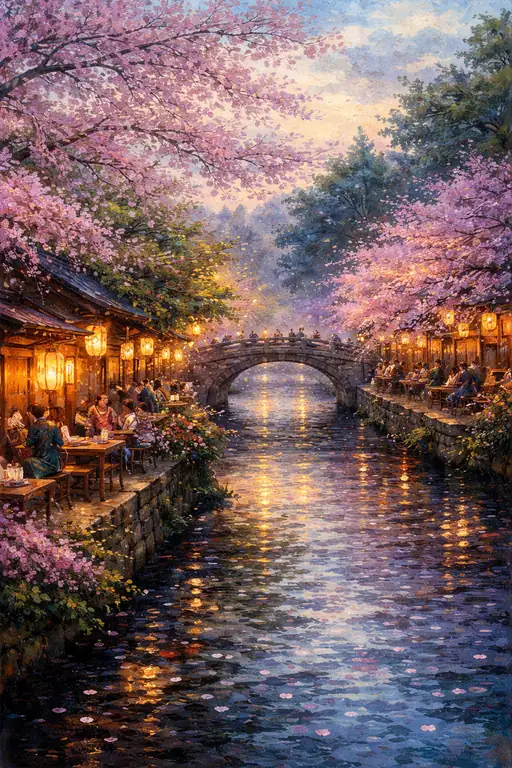 Golden Reflections of Spring's Ephemeral Embrace
Similar Artworks
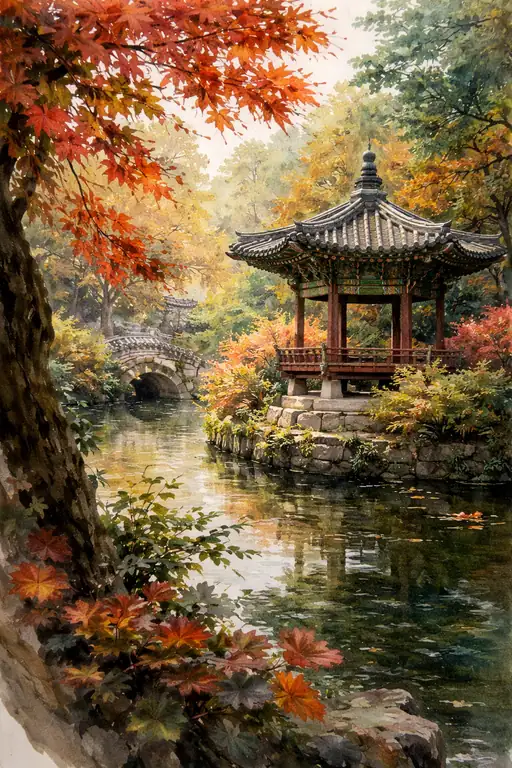 Crimson Leaves Reflected in Autumn's Mirror
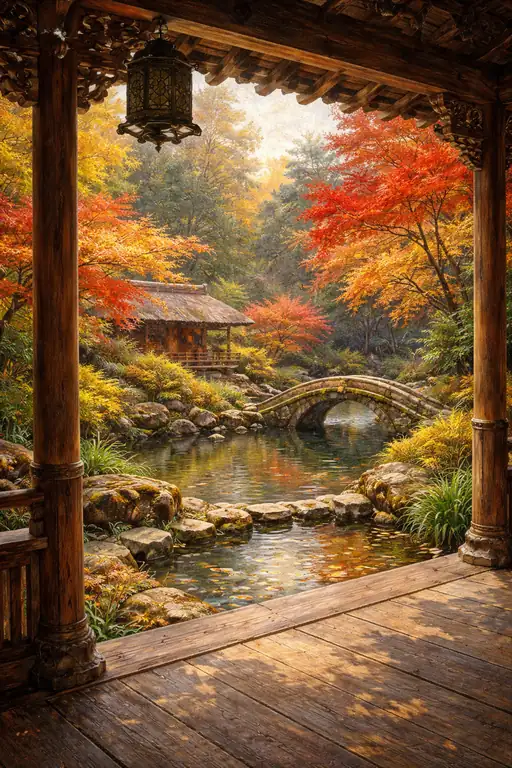 Crimson Reflections
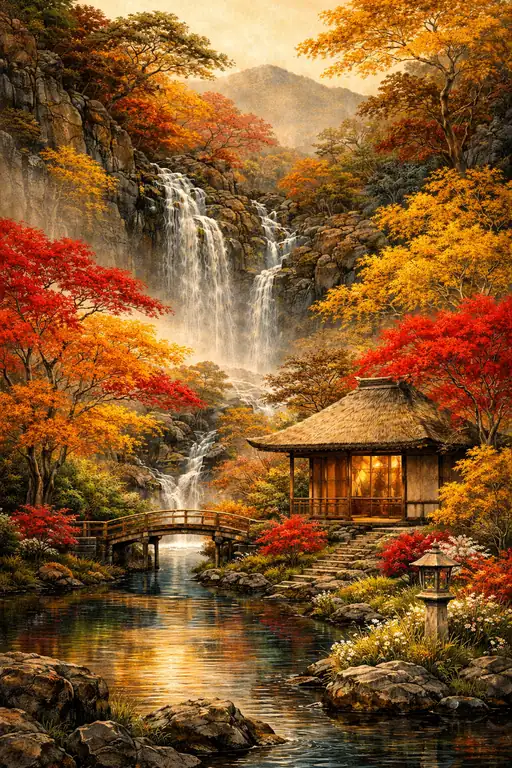 Crimson Waterfall and the Golden Bridge
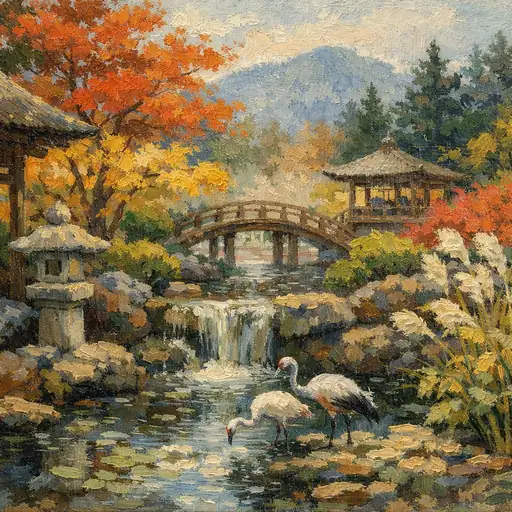 Awakening of the Sacred Garden Where Cranes Take Flight
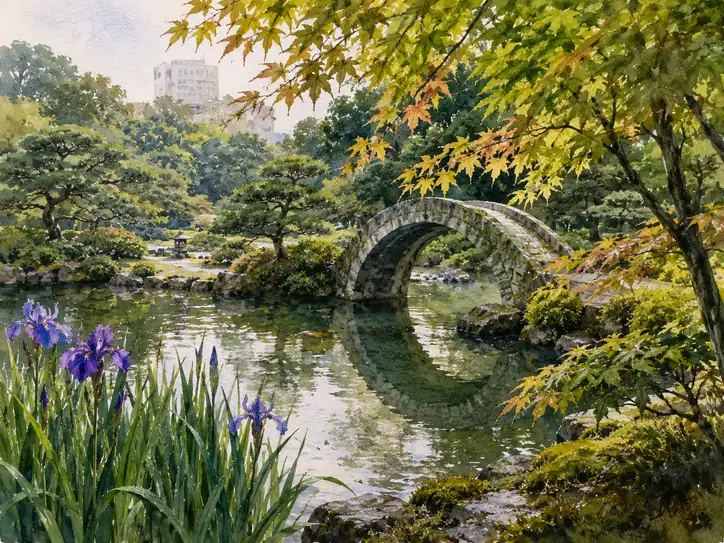 Where the Heart Finds Its Circle
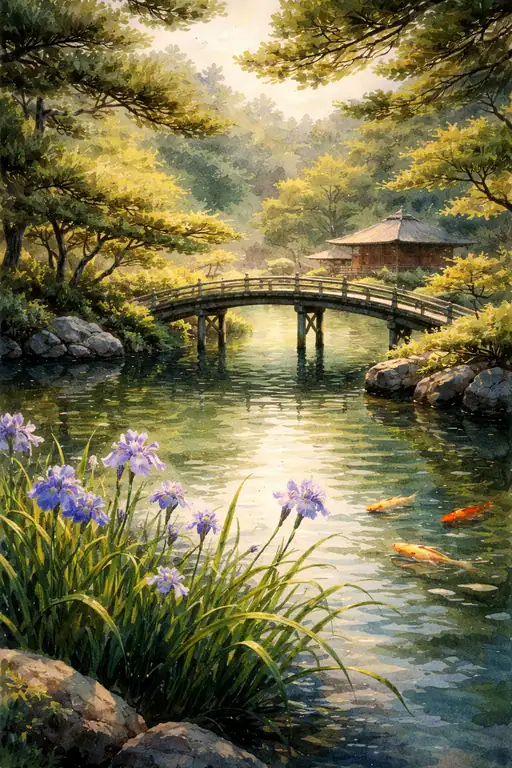 Whispers of the Golden Pond
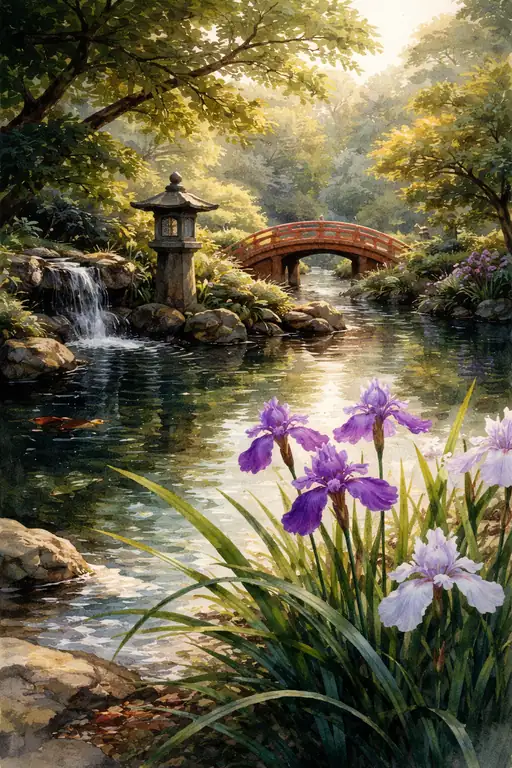 Sunlit Melody of the Arch and Lantern
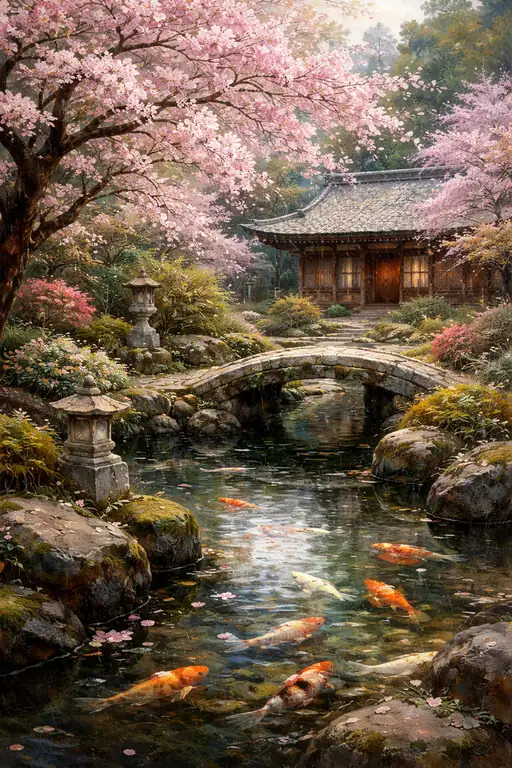 Reflections in the Koi Pond
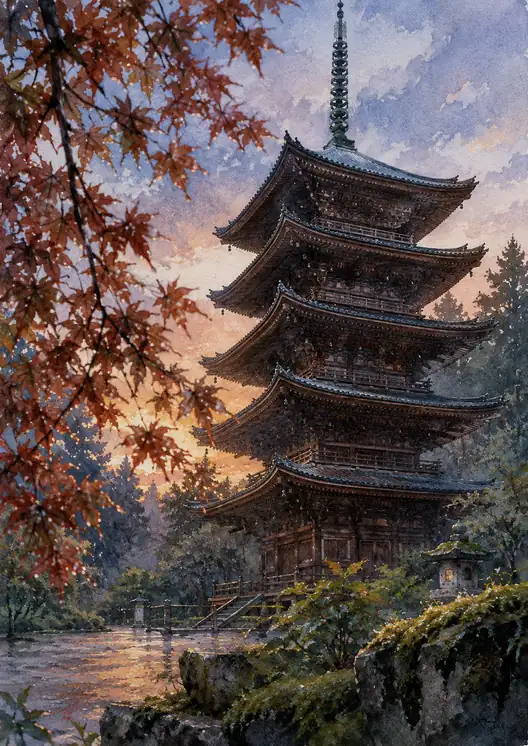 Autumn twilight, the Pagoda’s Silent Prayer
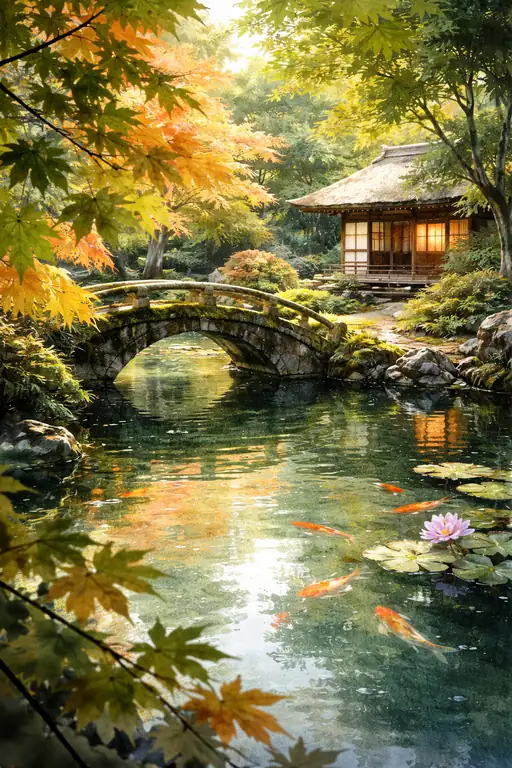 The Autumn Sanctuary of Koi